Professional and high-quality metal alloys, ceramic products and concrete additives | RBOSCHCO


PRODUCT PARAMETERS
Description
Overview of Direct bonding to copper substrates
Direct bonding to copper substrates is an advanced packaging technology. It directly connects copper substrates to chips or other substrates through special bonding materials or processes. At the same time, it can also simplify the package structure, reduce the size of the package, suitable for high-power, high-density electronic device packaging, widely used in semiconductors, microelectronics and other fields, to meet the demand for high-performance packaging of modern electronic equipment.
Features of Direct bonding to copper substrates
Direct Bond Copper (DBC) is a high-performance packaging material technology with the following significant features:
Excellent heat dissipation: The extremely high thermal conductivity of copper enables it to conduct heat quickly, effectively lowering the operating temperature of the chip and improving the stability and life of the device.
High reliability: through the high temperature and high pressure process, the copper layer forms a strong metallurgical bond with the ceramic substrate (such as alumina, aluminum nitride), which has good mechanical strength and thermal shock resistance, and is able to withstand extreme temperature changes and mechanical stress.
Good electrical insulation: The ceramic substrate provides good electrical insulation, preventing short circuits and leakage and ensuring the safe operation of the circuit.
Precise line patterning: The copper layer allows for high-precision patterning to meet the needs of complex circuit design and is suitable for high-density, high-performance electronic packaging.
Adaptable: DBC substrates can be used for a variety of power semiconductor devices, such as IGBTs, MOSFETs, etc., and are widely used in the fields of power electronics, new energy vehicles, and 5G communications.
Environmentally friendly and lead-free: the manufacturing process usually does not involve lead and other hazardous substances, in line with environmental requirements.
Specifications table of Direct bonding to copper substrates
| Parameter | Description | Typical Values |
| Material Composition | Base material and copper layer | – Ceramic: Alumina (Al₂O₃), Aluminum Nitride (AlN), Silicon Nitride (Si₃N₄)<br>- Copper purity: >99.9% |
| Ceramic Thickness | Thickness of the ceramic substrate | – Alumina: 0.25 mm to 3.0 mm<br>- Aluminum Nitride: 0.3 mm to 6.0 mm<br>- Silicon Nitride: 0.5 mm to 10 mm |
| Copper Thickness | Thickness of the copper layer | – Single layer: 100 µm to 400 µm<br>- Double layer: 200 µm to 800 µm (total) |
| Thermal Conductivity | Ability to conduct heat | – Alumina: 20 – 35 W/(m·K)<br>- Aluminum Nitride: 170 – 220 W/(m·K)<br>- Silicon Nitride: 80 – 120 W/(m·K) |
| Thermal Expansion Coefficient | Coefficient of thermal expansion (CTE) | – Alumina: 6.5 – 7.5 ppm/K<br>- Aluminum Nitride: 4.5 – 5.0 ppm/K<br>- Silicon Nitride: 3.0 – 3.5 ppm/K |
| Dielectric Strength | Electrical insulation capability | – Alumina: >15 kV/mm<br>- Aluminum Nitride: >10 kV/mm<br>- Silicon Nitride: >10 kV/mm |
| Bonding Temperature | Temperature required for bonding copper to ceramic | – Alumina: 1065°C – 1085°C<br>- Aluminum Nitride: 1065°C – 1085°C<br>- Silicon Nitride: 1065°C – 1085°C |
| Bonding Pressure | Pressure applied during bonding process | – Typically 1 – 10 MPa (varies with material and thickness) |
| Surface Roughness | Roughness of the copper surface | – Ra: 0.1 µm to 1.0 µm (typically controlled for good bonding) |
| Adhesion Strength | Strength of the bond between copper and ceramic | – Typically > 30 MPa (shear strength) |
| Operating Temperature Range | Temperature range for stable operation | – -55°C to +200°C (depending on application) |
| Maximum Power Density | Maximum power density that can be handled | – Varies widely based on application and cooling system; typically up to 100 W/cm² for high-power devices |
| Surface Finish | Final surface treatment of copper layer | – Electroplated, chemically etched, or polished as required for specific applications |
Applications of Direct bonding to copper substrates
Direct Bond Copper (DBC) is a high-performance packaging material that is widely used in a variety of fields, especially in scenarios where heat dissipation and reliability are critical.
Power Electronics: DBC substrates are ideal for packaging power semiconductor devices such as IGBTs, MOSFETs, diodes, etc. These devices are used in power conversion, motor drives, and other applications. These devices in the power conversion, motor drive and other applications will generate a lot of heat, DBC’s high thermal conductivity and good heat dissipation performance can effectively reduce the chip temperature, to ensure that the device in the high-power, high-frequency conditions, stable operation, widely used in frequency converters, inverters, power supply modules and other equipment.
New Energy Vehicles: The core components of new energy vehicles, such as electric drive systems and charging piles, have very high requirements for heat dissipation and reliability, and DBC substrates can meet the working requirements of these components in high temperature, high humidity and high vibration environments, ensure the efficient operation of power devices, and improve the performance and safety of automobiles.
5G communication: 5G base station RF power amplifiers, filters and other key components need efficient heat dissipation and reliable packaging, DBC substrate’s high thermal conductivity and good electrical insulation properties can meet the 5G equipment in high-frequency, high-power conditions of heat dissipation and electrical isolation requirements, to protect the stable operation of communication equipment.
Industrial automation: In industrial automation equipment, such as robots, industrial motor drives, etc., DBC substrates are used to encapsulate power modules to ensure that the equipment maintains high efficiency and stability during long-term, high-load operation.
Aerospace and Military: Due to its high reliability, high temperature resistance and mechanical shock resistance, DBC substrates are also suitable for aerospace and military electronic equipment, such as radar, satellite communications, flight control systems, etc., which are able to withstand extreme environmental conditions and safeguard the stable operation of critical equipment.
Company Profile
RBOSCHCO is a trusted global chemical material supplier & manufacturer with over 12 years of experience in providing super high-quality chemicals and Nanomaterials. The company exports to many countries, such as the USA, Canada, Europe, UAE, South Africa, Tanzania, Kenya, Egypt, Nigeria, Cameroon, Uganda, Turkey, Mexico, Azerbaijan, Belgium, Cyprus, Czech Republic, Brazil, Chile, Argentina, Dubai, Japan, Korea, Vietnam, Thailand, Malaysia, Indonesia, Australia, Germany, France, Italy, Portugal etc. As a leading nanotechnology development manufacturer, RBOSCHCO dominates the market. Our professional work team provides perfect solutions to help improve the efficiency of various industries, create value, and easily cope with various challenges. If you are interested, please send an email to sales1@rboschco.com
Payment Term
T/T, Western Union, Paypal, Credit Card etc.
Shipment Term
By air, by sea, by express, as customers request.

5 FAQs of Direct bonding to copper substrates
Q 1: What is the basic principle of the direct bonded copper substrate?
Direct bonded copper substrate is a composite substrate formed by bonding a pure copper layer directly to a ceramic insulator (e.g., alumina, aluminum nitride, etc.) through a high-temperature melting and diffusion process. The principle is based on the metallurgical combination of copper and ceramics formed at high temperature, which makes the copper layer and ceramic substrate tightly bonded with both the high electrical conductivity of copper and ceramic, high thermal conductivity, high electrical insulation, and other characteristics.
Q2: What is the thermal conductivity of the DBC substrate?
The thermal conductivity of DBC substrates is related to the ceramic substrate material used. Common alumina ceramic copper cladding boards have a thermal conductivity of 15W~35W/(m・K), aluminum nitride ceramic copper cladding boards have a thermal conductivity of 170W~260W/(m・K), and silicon nitride ceramic copper cladding boards have a thermal conductivity of 80W~120W/(m・K), which are all of high thermal conductivity and are able to satisfy the heat dissipation requirements of high power applications.
Q3: What is the coefficient of thermal expansion of the DBC substrate?
The coefficient of thermal expansion of DBC substrates varies from material to material. Alumina DBC has a coefficient of thermal expansion of 7.1 ppm/K, and aluminum nitride DBC has a coefficient of thermal expansion of 4.7 ppm/K, which is close to that of silica gel (4 ppm/K), which effectively reduces thermal stresses due to differences in coefficients of thermal expansion when bonded to semiconductor devices such as chips.
Q4: What are the fabrication methods for DBC substrates?
Common fabrication methods for DBC substrates include direct bonding and active metal brazing (AMB). Direct bonding is to bond copper foil directly to the surface of the ceramic substrate at high temperature, while active metal brazing is to utilize the active metal elements in the solder to realize the bonding of ceramic and metal.
Q5: What are the key process parameters in the fabrication of DBC substrates?
In the direct bonding process, the key process parameters include bonding temperature, pressure, and time. Generally speaking, the bonding temperature needs to be higher than the melting point of copper, usually above 1064°C, and the pressure is adjusted according to the size and thickness of the ceramic substrate to ensure sufficient contact and bonding between the copper layer and the ceramic substrate.
REQUEST A QUOTE
RELATED PRODUCTS

Customized Corrosion Resistant High Precision Silicon Nitride Welded Locating Pins

High quality high temperature resistant customizable ceramic pads
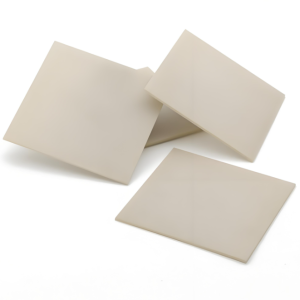
High Thermal Conductivity AlN Aluminum Nitride Ceramic Substrate

Customized Precision Heat Resistant High Quality Silicon Nitride Ceramic Casing

High quality customizable aluminum nitride isostatic ceramics
