Professional and high-quality metal alloys, ceramic products and concrete additives | RBOSCHCO

In the field of fine chemicals, cationic surfactants play an irreplaceable role in connecting basic raw materials with terminal industrial applications. Among them, Hexadecyl Trimethyl Ammonium Chloride (CTAC), also known as Cetyltrimethylammonium Chloride, with its unique molecular structure and excellent comprehensive performance, has become a core raw material in industries such as daily chemicals, materials science, water treatment, and textiles. With the global industrial upgrading and the increasing demand for high-performance chemical products, CTAC is ushering in a new round of market growth, contributing important power to the innovation and development of various industries.
The Core Advantage of CTAC Lies in Its Molecular Structure
As a typical long-chain quaternary ammonium salt cationic surfactant, CTAC has clear and stable chemical characteristics. Its CAS number is 112-02-7, molecular formula is C₁₉H₄₂ClN, and molecular weight is 320.00 g/mol. The linear formula is CH₃(CH₂)₁₅N(Cl)(CH₃)₃, which consists of a hydrophobic long carbon chain (hexadecyl group) and a hydrophilic quaternary ammonium cation group. This amphiphilic structure endows CTAC with excellent surface activity and interface regulation capabilities.
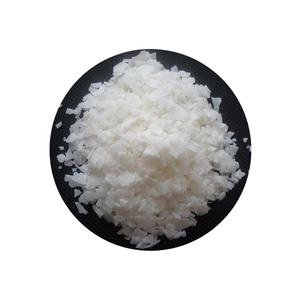
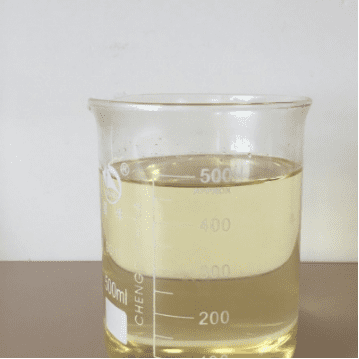
In terms of physical and chemical properties, CTAC shows outstanding stability and adaptability. It usually appears as a colorless to pale yellow liquid, cream, or solid, with active content ranging from 48% to 72% according to different specifications. It is easily soluble in water, methanol, ethanol, and other polar solvents, and has good compatibility with cationic, nonionic, and amphoteric surfactants. More importantly, CTAC has excellent chemical stability, heat resistance, light resistance, pressure resistance, and acid and alkali resistance, and at the same time exhibits superior permeability, softness, emulsification, antistatic, and bactericidal properties. Its melting point is between 232-237 °C, and the purity can reach more than 98.0%, which can fully meet the strict requirements of high-end industrial applications.
| Item | Standard |
| Appearance | White to light yellow, clear liquid |
| Colour(APHA) | Max 100 |
| Free amine | Max 2.0% |
| PH value 10% | 6.0-8.0 |
| Active Matter | 28.0-30.0% |
| PH value | 7.0-9.0 |
Widely Used of CTAC
Thanks to its comprehensive performance, CTAC has formed a diversified application pattern covering daily chemicals, materials synthesis, industrial water treatment, textiles and printing and dyeing, and medical and health care. It has become an indispensable “link” in the industrial chain of various fields.
Daily Chemicals: Creating a High-Quality Care Experience
In the daily chemical industry, CTAC is widely used in the production of hair care, skin care, and cleaning products, and its core value lies in its excellent conditioning and emulsifying properties. In shampoos and conditioners, CTAC can strongly adsorb on the surface of hair (the hair surface is negatively charged, which can form a stable combination with cationic groups), fill the damage of hair cuticles, and form a smooth protective film on the hair surface. This not only reduces friction and breakage during combing, making hair soft, smooth, and shiny, but also has a long-lasting antistatic effect, avoiding hair frizz caused by static electricity. For damaged hair caused by perming and dyeing, CTAC can effectively repair the hair quality and restore its elasticity.
In addition, CTAC is also used as an emulsifier in skin care products such as creams and lotions, which can stably disperse oil and water phases, making the product texture delicate and easy to absorb. In shaving creams and foams, it acts as a lubricant and foaming agent, reducing the friction between the blade and the skin, relieving skin irritation, and improving the comfort of use. With the upgrading of consumer demand for high-end daily chemical products, the demand for high-purity CTAC in the industry is also increasing.
Material Science: A Key Template for Advanced Material Synthesis
In the field of advanced material synthesis, CTAC has become a key template agent and modifier due to its ability to form ordered micelle structures. It is widely used in the preparation of mesoporous materials, nanocomposites, and other new materials, opening up new directions for the development of material science. For example, CTAC can be used as a template together with cetyltrimethylammonium bromide (CTAB) to prepare rod-like mesoporous silica with sodium silicate as a precursor. It can also be used as a precursor to synthesize MCM-41, a uniform mesoporous material, through a two-step sol-gel process at room temperature. These mesoporous materials have regular pore structures and large specific surface areas, and are widely used in catalyst carriers, adsorption materials, and drug delivery systems.
In addition, CTAC can be used as a clay modifier. Through ion exchange, it is inserted between clay layers, introducing hydrophobic groups into clay, thereby improving the compatibility between clay and polymers such as plastics and rubber, and preparing high-performance nanocomposites. In the field of aerogel preparation, CTAC can be used to prepare polymethylsilsesquioxane aerogels through hydrolysis and polycondensation reactions, which have broad application prospects in thermal insulation, sound insulation, and other fields.
Industrial Water Treatment & Disinfection: Guarding Production Safety and Efficiency
CTAC has efficient bactericidal and algicidal properties, which can destroy the structure and permeability of microbial cell membranes, and has a significant killing effect on bacteria, fungi, algae, and other microorganisms. This makes it widely used in industrial water treatment and disinfection fields. In the circulating cooling water systems of power plants, chemical plants, and other enterprises, CTAC can effectively inhibit the growth of bacteria and algae and the formation of biological slime, prevent pipeline blockage and corrosion, ensure the stable operation of the circulating water system, and reduce maintenance costs.
In addition, CTAC can be used as a disinfectant in medical and health care, food processing, and other fields. It can be used for the disinfection of medical devices, operating room surfaces, and low-concentration skin and mucous membranes, especially for Gram-positive bacteria and some viruses. In the paper industry, adding CTAC to paper pulp can inhibit the growth of microorganisms, prevent pulp corruption, and extend the storage period of pulp. Its bactericidal effect is stable and efficient, and it has little impact on the environment when used in compliance with regulations, conforming to the development trend of green environmental protection.
Textile & Printing Dyeing: Improving Fabric Quality and Processing Performance
In the textile, printing, and dyeing industry, CTAC is used as a softener, antistatic agent, and leveling agent, which significantly improves the quality of fabrics and the efficiency of printing and dyeing processing. As a fabric softener, CTAC can adsorb on the surface of fibers to form a hydrophobic layer, reduce the friction coefficient between fibers, and endow fabrics with a soft, fluffy,y and comfortable hand feel Compared with short-chain quaternary ammonium salt softeners, CTAC has longer-lasting effects, especially suitable for the post-finishing of cotton, wool, chemical fibers, and other fabrics.
As an antistatic agent, CTAC can neutralize the negative charge on the fiber surface, significantly reduce static accumulation, prevent fabrics from absorbing dust and pilling, and improve the processing performance and wearing comfort of fabrics. In the printing and dyeing process, CTAC acts as a cationic leveling agent, which can promote the uniform adsorption of dyes on fibers, improve the dyeing fastness, avoid color spots and uneven dyeing, and ensure the consistency of product quality, especially for dark or thick fabrics In addition, CTAC can also be used as a processing agent for glass fibers, improving the softness and processability of glass fibers.

Market Prospects of CTAC
With the continuous expansion of application fields and the increasing demand for high-performance products, the global CTAC market is showing a steady growth trend. According to industry research reports, the global CTAC market size is expected to grow at a compound annual growth rate of more than 8% from 2025 to 2030, and is expected to exceed 5 billion yuan by 2030 From a regional perspective, the Asia-Pacific region, led by China, has become the world’s largest consumer market, accounting for more than 35% of the global total demand, followed by North America and Europe, accounting for 25% and 20% respectively. Multiple factors drive the rapid growth of the Chinese CTAC market. On the one hand, with the improvement of residents’ living standards, the demand for high-quality daily chemical products is increasing, driving the growth of CTAC demand in the daily chemical field. On the other hand, the industrial upgrading of textiles, water treatment, materials, and other industries has put forward higher requirements for high-performance chemical raw materials, and CTAC, with its comprehensive performance, has become the preferred raw material for many enterprises. It is predicted that the market size of China’s CTAC industry will grow from about 15 billion yuan in 2025 to about 35 billion yuan in 2030, with a compound annual growth rate of about 12%
In terms of market competition, the current CTAC market is mainly dominated by several large enterprises, which have obvious advantages in technology research and development, production scale, nd market channels. With the continuous improvement of environmental protection policies and product quality standards, enterprises with advanced production technology, stable product quality, and perfect environmental protection facilities will gain more market share. For investors, the CTAC industry has high investment value, but it is also necessary to pay attention to risks such as raw material price fluctuations and increased market competition.
Our Advantages: Providing High-Quality CTAC Solutions for Global Customers
Facing the booming market demand, we are committed to providing high-quality Hexadecyl Trimethyl Ammonium Chloride products and professional application solutions for global customers. Our CTAC products strictly comply with international quality standards, with a purity of up to 98.0% or more, and a variety of specifications such as liquid, cream, and solid to meet the diverse needs of differentindustries
In terms of production, we adopt advanced production processes and strict quality control systems to ensure the stability and consistency of product quality. From the selection of raw materials to the final product delivery, we have established a complete quality inspection process to effectively control indicators such as active content, pH value, and free amine content. At the same time, we pay attention to environmental protection and sustainable development, optimize production processes, reduce energy consumption and pollutant emissions, and meet the increasingly strict environmental protection requirements of various countries.
In terms of technical support, our professional R&D team has in-depth research on the application of CTAC in various fields, and can provide customized solutions according to customers’ specific needs. Whether it is optimizing the formula of daily chemical products, developing new material synthesis processes, or solving problems in industrial water treatment and textile printing and dyeing, we can provide professional technical guidance and after-sales service to help customers improve product quality and production efficiency.
Hexadecyl Trimethyl Ammonium Chloride, as a multifunctional cationic surfactant, has become an important driving force for the development of multiple industries with its excellent performance and wide application. With the continuous advancement of global industrialization and technological innovation, the application fields of CTAC will be further expanded, and the market potential will be fully released. We will adhere to the concept of quality first and customer-centric, continue to increase R&D investment, optimize product structure, and work with global customers to create a better future for the fine chemical industry.]
Supplier
If you are looking for high-quality CTAC products and professional application solutions, please contact us. We will provide you with thoughtful services and high-quality products to help your business achieve greater development.
RBOSCHCO is a trusted global Hexadecyl Trimethyl Ammonium Chloride supplier & manufacturer with over 12 years of experience in providing super high-quality chemicals and Nanomaterials. The company export to many countries, such as USA, Canada, Europe, UAE, South Africa, Tanzania, Kenya, Egypt, Nigeria, Cameroon, Ugand, Turkey, Mexico, Azerbaijan Be lgium, Cyprus, Czech Republic, Brazil, Chile, Argentina, Dubai, Japan, Korea, Vietnam, Thailand, Malaysia, Indonesia, Australia, Germany, France, Italy, Portugal etc. As a leading nanotechnology development manufacturer, RBOSCHCO dominates the market. Our professional work team provides perfect solutions to help improve the efficiency of various industries, create value, and easily cope with various challenges. If you are looking for Hexadecyl Trimethyl Ammonium Chloride, please feel free to contact us.