Professional and high-quality metal alloys, ceramic products and concrete additives | RBOSCHCO

Copper is one of the most versatile and widely used non-ferrous metals in modern industry, valued for its exceptional electrical conductivity, thermal conductivity, corrosion resistance, and ductility. These inherent properties make it indispensable in sectors ranging from electrical engineering and construction to automotive manufacturing and renewable energy. Copper profiles, as semi-finished products, serve as the foundation for countless end-use components, and their performance is directly determined by the manufacturing process employed. Among the most common production methods for copper profiles are extrusion, rolling, and drawing—three distinct techniques that shape copper into diverse forms while modifying its mechanical, physical, and surface properties. Understanding the manufacturing differences, advantages, limitations, and application scenarios of extruded, rolled, and drawn copper profiles is critical for engineers, manufacturers, and procurement professionals to make informed decisions that align with project requirements, cost constraints, and performance goals. This article provides a comprehensive comparison of these three key processes, exploring their technical nuances, property variations, and industry applications in detail.
1. Overview of Copper Profiles: Key Properties and Industrial Significance
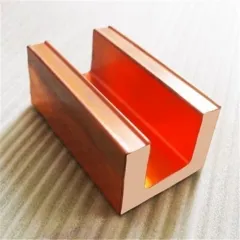
Copper profiles are defined as semi-finished copper products with a consistent cross-sectional shape, produced through plastic deformation processes. Unlike copper ingots or raw materials, profiles are tailored to specific dimensional and performance requirements, eliminating the need for extensive post-processing. The primary properties that make copper profiles irreplaceable in industrial applications include: high electrical conductivity (second only to silver, with a conductivity of 100% IACS for pure copper), excellent thermal conductivity (401 W/m·K at 20°C), superior ductility (allowing for complex shaping without fracture), and strong corrosion resistance (forming a protective oxide layer in atmospheric and aqueous environments). Additionally, copper is recyclable with no loss of performance, making it a sustainable choice for green manufacturing initiatives.
The global demand for copper profiles continues to grow, driven by the expansion of electrical infrastructure, the rise of electric vehicles (EVs), and the development of renewable energy systems (e.g., solar panels, wind turbines). According to industry reports, the global copper profile market is projected to grow at a CAGR of 5.2% from 2024 to 2030, with electrical and electronics applications accounting for the largest share. However, not all copper profiles are created equal—each manufacturing process (extrusion, rolling, drawing) imparts unique characteristics to the final product, making certain profiles better suited for specific applications than others. The following sections break down each process, highlighting their manufacturing steps, key differences, and resulting properties.
2. Manufacturing Processes: Extrusion, Rolling, and Drawing
Extrusion, rolling, and drawing are all plastic deformation processes that shape copper by applying mechanical force, but they differ significantly in terms of force direction, temperature control, equipment requirements, and the resulting cross-sectional shapes. Each process is designed to produce profiles with distinct geometries, dimensional tolerances, and mechanical properties, catering to different industrial needs.
2.1 Extruded Copper Profiles: Forcing Copper Through a Die
Extrusion is a versatile manufacturing process that involves forcing a heated copper billet through a die with a predetermined cross-sectional shape. The process relies on compressive force to deform the copper, allowing for the production of complex, custom-shaped profiles that are difficult or impossible to achieve with other methods. Extrusion can be performed at elevated temperatures (hot extrusion) or room temperature (cold extrusion), with hot extrusion being the most common for copper profiles due to the metal’s ductility at high temperatures.
2.1.1 Key Manufacturing Steps
The extrusion process for copper profiles typically follows these critical steps:
- Billet Preparation: The process begins with the preparation of a copper billet—a cylindrical block of raw copper or copper alloy (e.g., brass, bronze). The billet is cast from molten copper to ensure a homogeneous composition, then undergoes homogenization heat treatment (500-700°C for several hours) to eliminate internal stress and achieve a uniform grain structure. This step ensures the material behaves predictably during deformation, preventing cracks or uneven flow. The billet is then precisely cut to a length compatible with the extrusion press’s capacity (usually 300-1500 mm).
- Heating: The billet is heated to temperatures between 700°C and 900°C (depending on the copper grade) in a controlled-environment furnace. Heating occurs in an inert gas atmosphere (nitrogen or argon) or vacuum to prevent oxidation, which degrades surface quality and electrical conductivity. Advanced furnaces ensure precise temperature uniformity (±5°C) using thermocouples, avoiding overheating that could cause partial melting and compromise structural integrity.
- Extrusion Press Setup: The heated billet is placed into a cylindrical container of an extrusion press, which consists of a hydraulic ram, container, and die. The die—made from hardened tool steel or tungsten carbide—is machined to match the final profile’s cross-sectional shape (e.g., hollow tubes, complex cavities, undercuts). For hollow shapes, a mandrel is used to create the internal cavity.
- Extrusion: A hydraulic ram applies high compressive force (typically 100-1000 MPa) to the billet, forcing it through the die opening. The copper flows plastically under pressure, taking on the shape of the die. The extrusion ratio—the ratio of the billet’s cross-sectional area to the profile’s cross-sectional area—varies from 10:1 to 100:1, depending on the desired shape and mechanical properties. Higher extrusion ratios result in more severe deformation and increased strength.
- Cooling and Finishing: The extruded profile is cooled rapidly (either by air or water) to stabilize its structure and prevent further deformation. After cooling, the profile is cut to the desired length, and additional finishing steps (e.g., annealing, surface polishing, or coating) may be performed to improve ductility, surface quality, or corrosion resistance. Annealing involves heating the profile to 300-500°C to relieve residual stress and restore ductility, which is particularly important for profiles used in bending or forming applications.
2.1.2 Key Characteristics of Extruded Copper Profiles
Extruded copper profiles offer several distinct advantages, along with some limitations:
- Complex Geometries: Extrusion excels at producing profiles with complex cross-sections, including hollow shapes, cavities, undercuts, and custom designs. This makes it ideal for applications requiring unique shapes, such as architectural trim, heat exchanger tubes, and electrical bus bars. Extrusion tools can be customized to create nearly any cross-sectional shape, with maximum cross-sections up to 2000 mm².
- Uniform Grain Structure: Hot extrusion results in a homogeneous, fine-grained structure due to recrystallization during heating and deformation. This ensures consistent mechanical properties (e.g., strength, ductility) across the entire profile, making it suitable for high-performance applications.
- High Production Efficiency: Extrusion is a continuous process, allowing for high-volume production of long-length profiles (up to several meters). This makes it cost-effective for large-scale manufacturing, with some facilities capable of producing over 15,000 tons of extruded copper profiles per year.
- Limitations: Extruded profiles typically have lower dimensional accuracy compared to rolled or drawn profiles, with tolerances ranging from ±0.1 mm to ±0.5 mm. The surface finish is also less smooth, often requiring additional polishing or coating. Cold extrusion, while offering better precision, is limited to simpler shapes and smaller cross-sections due to higher force requirements.

2.2 Rolled Copper Profiles: Compressing Between Rollers
Rolling is a widely used manufacturing process that involves passing a copper billet or ingot through a series of rotating rollers to reduce its thickness and shape it into a flat or contoured profile. The process relies on compressive force applied by the rollers, which deform the copper incrementally. Rolling can be performed at high temperatures (hot rolling) or room temperature (cold rolling), each producing profiles with distinct properties. Rolled copper profiles are primarily used for flat or slightly curved shapes, such as sheets, strips, and plates, but can also be used to produce simple cross-sections like bars or rods.
2.2.1 Key Manufacturing Steps
The rolling process for copper profiles involves the following steps:
- Billet Preparation: Similar to extrusion, the process starts with a copper billet (or ingot) that is cast and homogenized to ensure uniform composition and grain structure. For hot rolling, the billet is typically larger (up to several meters in length) to maximize production efficiency. For cold rolling, the starting material is often a hot-rolled slab or strip, which is further processed to achieve tighter tolerances and better surface finish.
- Heating (for Hot Rolling): For hot rolling, the billet is heated to 800-900°C (above copper’s recrystallization temperature of 200-250°C) to reduce its yield strength and improve ductility. This allows for larger reductions in thickness with lower force. Hot rolling is typically used for (blooming), reducing thick cast ingots to thinner slabs or strips. The heating process is controlled to avoid oxidation and ensure uniform temperature distribution.
- Rolling: The heated billet is passed through a series of roller pairs, each set of rollers rotating in opposite directions. The gap between the rollers is gradually reduced, compressing the copper and increasing its length. The number of rolling passes depends on the desired thickness and mechanical properties—more passes result in thinner profiles and higher strength (due to work hardening in cold rolling). For cold rolling, the process is performed at room temperature, with each pass reducing the thickness by 10-30%. Cold rolling does not require heating, but the copper becomes work-hardened, so intermediate annealing steps are often needed to restore ductility and prevent fracture.
- Finishing: After rolling, the profile is cooled (for hot rolling) and cut to the desired length. Hot-rolled profiles may undergo pickling (acid treatment) to remove oxide scale from the surface, while cold-rolled profiles may be polished or annealed to improve surface finish and ductility. Some rolled profiles also undergo tension leveling to eliminate flatness defects, ensuring uniform thickness across the entire length. Advanced rolling processes, such as the Conti-M® process, allow for continuous production from molten copper to finished strip, bypassing traditional hot-rolling steps and improving efficiency.
2.2.2 Key Characteristics of Rolled Copper Profiles
Rolled copper profiles offer unique advantages that make them suitable for specific applications:
- Flat and Uniform Shapes: Rolling is ideal for producing flat profiles (e.g., sheets, strips, plates) with consistent thickness and width. The process ensures uniform mechanical properties across the profile’s surface, making it suitable for applications requiring flatness and stability, such as electrical conductors, heat sinks, and architectural cladding.
- High Dimensional Accuracy (Cold Rolling): Cold-rolled copper profiles have tight dimensional tolerances (±0.01 mm to ±0.1 mm) and a smooth surface finish (Ra ≤ 0.8 μm), eliminating the need for additional finishing steps. This makes them ideal for precision applications, such as electronic components and automotive parts.
- Controlled Mechanical Properties: By adjusting the number of rolling passes and annealing steps, manufacturers can tailor the mechanical properties of rolled profiles. For example, cold-rolled profiles with minimal annealing have high strength and hardness (due to work hardening), while fully annealed profiles have high ductility and low strength. Hot-rolled profiles have a more ductile, coarse-grained structure, making them suitable for bending and forming applications.
- Limitations: Rolling is limited to simple cross-sections (flat, cylindrical, or slightly curved) and cannot produce complex shapes with cavities or undercuts. Hot-rolled profiles have a rougher surface finish and lower dimensional accuracy compared to cold-rolled profiles, requiring additional processing for precision applications. The process is also less flexible for custom shapes, as changing the roller configuration is time-consuming and costly.

2.3 Drawn Copper Profiles: Pulling Through a Die
Drawing is a precision manufacturing process that involves pulling a copper blank (e.g., wire, rod, or tube) through a die with a smaller cross-sectional area than the blank. The process relies on tensile force to deform the copper, reducing its diameter or cross-sectional area while increasing its length. Drawing is typically performed at room temperature (cold drawing), as copper’s ductility allows for significant deformation without heating. Drawn copper profiles are known for their high precision, smooth surface finish, and enhanced mechanical properties, making them suitable for high-performance applications.
2.3.1 Key Manufacturing Steps
The drawing process for copper profiles involves the following steps:
- Blank Preparation: The starting material is a copper blank, which can be an extruded or rolled rod, wire, or tube. The blank is cleaned to remove surface contaminants (e.g., oxide, oil) and coated with a lubricant (e.g., graphite, oil) to reduce friction between the blank and the die. This lubrication is critical to prevent surface defects (e.g., scratches, cracks) and ensure smooth deformation. For precision applications, the blank may also be annealed to improve ductility and reduce work hardening.
- Die Setup: The die is a hardened tool (usually made of tungsten carbide or diamond) with a conical or cylindrical opening that matches the desired cross-sectional shape of the final profile. The die’s opening is slightly smaller than the blank’s cross-sectional area, creating the necessary reduction during drawing. The die may have multiple sections (e.g., entry, reduction, and exit zones) to ensure gradual deformation and minimize stress concentrations.
- Drawing: The copper blank is pulled through the die using a tensile force applied by a drawing machine (e.g., bull block, continuous drawing machine). The force required depends on the reduction ratio (the ratio of the blank’s cross-sectional area to the profile’s cross-sectional area), which typically ranges from 10:1 to 50:1. As the blank is pulled through the die, it undergoes plastic deformation, reducing its cross-sectional area and increasing its length. Multiple drawing passes may be required to achieve the desired dimensions, with intermediate annealing steps to restore ductility and prevent fracture (due to work hardening).
- Finishing: After drawing, the profile is cleaned to remove lubricant and surface contaminants. Additional finishing steps may include annealing (to relieve residual stress and adjust mechanical properties), polishing (to improve surface finish), or coating (to enhance corrosion resistance). Drawn profiles are cut to the desired length, and dimensional checks are performed to ensure compliance with tolerances. The final profile has a smooth, uniform surface and tight dimensional control, making it suitable for precision applications.
2.3.2 Key Characteristics of Drawn Copper Profiles
Drawn copper profiles offer several distinct advantages, particularly for precision applications:
- High Precision and Surface Finish: Drawn profiles have extremely tight dimensional tolerances (±0.001 mm to ±0.05 mm) and a smooth surface finish (Ra ≤ 0.2 μm), making them ideal for applications requiring precision, such as electronic components, medical devices, and aerospace parts. The process ensures uniform dimensions across the entire length of the profile.
- Enhanced Mechanical Properties: Cold drawing induces work hardening, which increases the profile’s tensile strength, yield strength, and hardness. For example, drawn copper wire has a tensile strength of 300-500 MPa, compared to 200-300 MPa for extruded wire. This makes drawn profiles suitable for applications requiring high strength and durability, such as springs, fasteners, and electrical connectors.
- Versatility in Cross-Sections: While drawing is most commonly used for cylindrical profiles (e.g., wire, rod, tube), it can also produce non-cylindrical shapes (e.g., square, rectangular, hexagonal) by using custom dies. This versatility makes it suitable for a wide range of applications, from electrical wires to automotive components.
- Limitations: Drawing is a batch process (or semi-continuous process) and is less efficient for high-volume production compared to extrusion or rolling. The process is also limited to smaller cross-sections, as larger profiles require excessive tensile force, which can cause fracture. Additionally, multiple drawing passes and intermediate annealing steps increase production time and cost, making drawn profiles more expensive than extruded or rolled profiles.
3. Comparative Analysis: Manufacturing Differences and Property Variations
To better understand the differences between extruded, rolled, and drawn copper profiles, this section provides a detailed comparison of their manufacturing parameters, mechanical properties, surface quality, dimensional accuracy, and cost. This comparison helps identify the most suitable process for specific applications.
3.1 Manufacturing Parameter Comparison
| Parameter | Extruded Copper Profiles | Rolled Copper Profiles | Drawn Copper Profiles |
|---|---|---|---|
| Force Direction | Compressive | Compressive (from rollers) | Tensile |
| Temperature | Hot (700-900°C) or cold (room temperature) | Hot (800-900°C) or cold (room temperature) | Cold (room temperature, typically) |
| Reduction Ratio | 10:1 to 100:1 | 5:1 to 50:1 (multiple passes) | 10:1 to 50:1 (multiple passes) |
| Cross-Sectional Shapes | Complex (hollow, cavities, undercuts), custom | Simple (flat, cylindrical, slightly curved) | Cylindrical, non-cylindrical (square, hexagonal), precision shapes |
| Production Efficiency | High (continuous process, large volumes) | High (continuous process, large volumes) | Medium (batch/semi-continuous, smaller volumes) |
| Equipment Complexity | High (extrusion press, custom dies) | High (rolling mills, multiple roller pairs) | Medium (drawing machine, precision dies) |
3.2 Mechanical Property Comparison
The mechanical properties of copper profiles are strongly influenced by the manufacturing process, due to differences in grain structure, work hardening, and recrystallization. The following table compares the typical mechanical properties of pure copper profiles produced by each process (annealed state, unless specified):
| Mechanical Property | Extruded (Hot) | Rolled (Hot) | Rolled (Cold, Annealed) | Drawn (Cold, Annealed) | Drawn (Cold, Unannealed) |
|---|---|---|---|---|---|
| Tensile Strength (MPa) | 200-300 | 200-280 | 220-320 | 250-350 | 300-500 |
| Yield Strength (MPa) | 80-120 | 70-110 | 90-130 | 100-140 | 250-450 |
| Elongation (%) | 30-40 | 35-45 | 25-35 | 20-30 | 5-15 |
| Hardness (HB) | 50-70 | 45-65 | 60-80 | 70-90 | 100-150 |
| Electrical Conductivity (% IACS) | 95-100 | 95-100 | 90-98 | 90-98 | 85-95 |
Key observations from the table: Hot-extruded and hot-rolled profiles have high ductility and moderate strength, making them suitable for bending and forming. Cold-rolled and cold-drawn profiles (annealed) have higher strength and lower ductility, while unannealed cold-drawn profiles have the highest strength but the lowest ductility. Electrical conductivity is highest in hot-processed profiles, as cold working (work hardening) slightly reduces conductivity due to lattice defects.
3.3 Surface Quality and Dimensional Accuracy Comparison
| Parameter | Extruded Copper Profiles | Rolled Copper Profiles (Hot) | Rolled Copper Profiles (Cold) | Drawn Copper Profiles |
|---|---|---|---|---|
| Surface Finish (Ra, μm) | 1.6-6.3 | 3.2-12.5 | 0.4-1.6 | 0.1-0.8 |
| Dimensional Tolerance | ±0.1 to ±0.5 mm | ±0.1 to ±0.3 mm | ±0.01 to ±0.1 mm | ±0.001 to ±0.05 mm |
| Surface Defects | Oxide scale, die marks | Oxide scale, roller marks | Minor scratches (easily polished) | Minimal (smooth, uniform) |
Drawn profiles have the best surface finish and dimensional accuracy, followed by cold-rolled profiles. Hot-extruded and hot-rolled profiles have rougher surfaces and looser tolerances, requiring additional finishing steps for precision applications.
4. Applications of Extruded, Rolled, and Drawn Copper Profiles
The choice of manufacturing process depends on the application’s requirements for shape, precision, mechanical properties, and cost. The following sections outline the key applications of each type of copper profile, highlighting how their unique characteristics align with industry needs.
4.1 Extruded Copper Profiles: Applications for Complex Shapes and High Volume
Extruded copper profiles are ideal for applications requiring complex cross-sections, high ductility, and cost-effective large-scale production. Key applications include:
- Electrical Engineering: Bus bars (used in power distribution systems, switchgear, and substations) are commonly extruded due to their complex cross-sections (e.g., rectangular, L-shaped, T-shaped) and need for high electrical conductivity. Extruded bus bars efficiently transfer large electrical currents with minimal energy loss. Extruded copper profiles are also used in circuit breaker contacts, where complex geometries are required to ensure reliable performance in protecting electrical circuits against overload and short circuits.
- Heat Exchangers: Hollow extruded copper profiles (e.g., tubes, fins) are used in heat exchangers for HVAC systems, refrigeration units, and industrial cooling systems. The complex hollow shapes allow for efficient heat transfer, while copper’s high thermal conductivity enhances performance. Extruded profiles can be designed with multiple cavities to maximize heat exchange surface area.
- Architecture and Construction: Extruded copper profiles are used for architectural trim, window frames, door frames, and cladding. The ability to produce custom shapes and finishes (e.g., anodized, patinated) makes them popular for aesthetic applications. Copper’s corrosion resistance ensures long-term durability in outdoor environments, with a natural patina that develops over time, adding visual appeal.
- Automotive and Transportation: Extruded copper profiles are used in automotive cooling systems (e.g., radiator tubes, heater cores) and electrical systems (e.g., battery bus bars for electric vehicles). The complex shapes and high ductility make them suitable for integration into tight spaces within vehicle designs. Extruded profiles are also used in railway electrical systems and shipbuilding components, where corrosion resistance and durability are critical.
- Renewable Energy: Extruded copper profiles are used in solar panel frames and wind turbine components, where their strength, corrosion resistance, and conductivity are essential. The ability to produce custom shapes allows for seamless integration into renewable energy systems.
4.2 Rolled Copper Profiles: Applications for Flat Shapes and Precision
Rolled copper profiles are best suited for applications requiring flat or simple shapes, uniform thickness, and (for cold-rolled profiles) high precision. Key applications include:
- Electrical Conductors: Cold-rolled copper strips and sheets are used in transformers, generators, and motors as windings and laminations. The tight dimensional tolerances and smooth surface finish ensure efficient electrical performance and reduce energy loss. Hot-rolled copper strips are used in cable sheathing and power distribution cables, where ductility and cost-effectiveness are prioritized.
- Heat Sinks: Cold-rolled copper sheets and plates are used as heat sinks in electronic devices (e.g., computers, smartphones, LED lights) due to their high thermal conductivity and flat surface, which allows for efficient heat dissipation. The smooth surface finish ensures good contact with electronic components, enhancing heat transfer.
- Architecture and Construction: Rolled copper sheets are used for roofing, cladding, and decorative panels. Hot-rolled sheets are cost-effective for large-scale roofing projects, while cold-rolled sheets are used for precision decorative elements. Copper’s natural patina makes it a popular choice for historic buildings and modern architectural designs.
- Automotive and Aerospace: Cold-rolled copper strips are used in automotive gaskets, connectors, and heat shields, where precision and strength are critical. Rolled copper profiles are also used in aerospace components (e.g., heat exchangers, electrical connectors) due to their lightweight and high performance. The uniform mechanical properties of rolled profiles ensure reliability in extreme environments.
- Packaging and Consumer Goods: Thin cold-rolled copper sheets are used in packaging (e.g., food cans, decorative packaging) and consumer goods (e.g., cookware, utensils) due to their corrosion resistance, malleability, and aesthetic appeal. Rolled copper is also used in musical instruments, where its acoustic properties and malleability are valued.

4.3 Drawn Copper Profiles: Applications for Precision and High Performance
Drawn copper profiles are ideal for applications requiring high precision, smooth surface finish, and enhanced mechanical properties. Key applications include:
- Electrical Wires and Cables: Drawn copper wire is the most common application of drawn copper profiles. The high precision and smooth surface finish ensure good electrical conductivity and flexibility, making it suitable for power cables, electronic wires, and communication cables. Drawn copper wire is also used in windings for motors and transformers, where tight tolerances and high strength are essential.
- Electronic Components: Drawn copper profiles (e.g., pins, connectors, terminals) are used in electronic devices (e.g., smartphones, computers, semiconductors) due to their high precision and smooth surface finish. The tight dimensional tolerances ensure a secure fit and reliable electrical contact. Drawn copper is also used in printed circuit boards (PCBs) and integrated circuits, where miniaturization and precision are critical.
- Medical Devices: Drawn copper tubes and wires are used in medical devices (e.g., catheters, surgical instruments, diagnostic equipment) due to their high precision, biocompatibility, and corrosion resistance. The smooth surface finish prevents bacterial growth and ensures compatibility with human tissue. Drawn copper’s high strength allows for the production of thin, flexible components that can navigate tight spaces in the human body.
- Aerospace and Defense: Drawn copper profiles are used in aerospace components (e.g., fuel lines, hydraulic tubes, electrical connectors) due to their high strength, precision, and resistance to extreme temperatures and corrosion. The tight dimensional tolerances ensure reliability in critical applications, such as aircraft engines and spacecraft systems.
- Fasteners and Springs: Drawn copper rods and wires are used in fasteners (e.g., screws, bolts) and springs due to their high strength and durability. The work hardening from the drawing process enhances the profile’s ability to withstand repeated stress, making it suitable for applications requiring long-term reliability. Drawn copper springs are used in automotive, electronic, and industrial applications.
Supplietr
RBOSCHCO is a trusted global Copper supplier & manufacturer with over 12 years of experience in providing super high-quality chemicals and Nanomaterials. The company export to many countries, such as USA, Canada, Europe, UAE, South Africa, Tanzania, Kenya, Egypt, Nigeria, Cameroon, Ugand, Turkey, Mexico, Azerbaijan Be lgium, Cyprus, Czech Republic, Brazil, Chile, Argentina, Dubai, Japan, Korea, Vietnam, Thailand, Malaysia, Indonesia, Australia, Germany, France, Italy, Portugal etc. As a leading nanotechnology development manufacturer, RBOSCHCO dominates the market. Our professional work team provides perfect solutions to help improve the efficiency of various industries, create value, and easily cope with various challenges. If you are looking for Copper, please feel free to contact us.
RELATED POSTS
From Batteries to Glass — What Can One Batch of Lithium Carbonate Actually Do?
Core Characteristics and Applications of Titanium Diboride Powder and Boride Powder
Nano Manganese Tetroxide (Mn₃O₄): Superior Air Stability and Cycling Performance Beyond MnO for Advanced Battery Anodes
Sodium-Ion Battery O3-Na(Cu-Fe-Mn)O₂ Cathode Material: Performance, Preparation, and Comparison
The Other Side Of Titanium Dioxide: A Photocatalyst For Purifying Air And Water
