Professional and high-quality metal alloys, ceramic products and concrete additives | RBOSCHCO

Introduction
As a potential alternative to lithium-ion batteries (LIBs), sodium-ion batteries (SIBs) have shown significant advantages in the field of large-scale energy storage. Their core cathode materials directly affect the energy density, cycle life and cost-effectiveness of the battery. Fe-Mn-based oxide cathode materials have become a research hotspot due to their low cost, high theoretical capacity and environmental friendliness. In this paper, the preparation methods, electrochemical and physical properties are systematically discussed, and current challenges are analyzed.

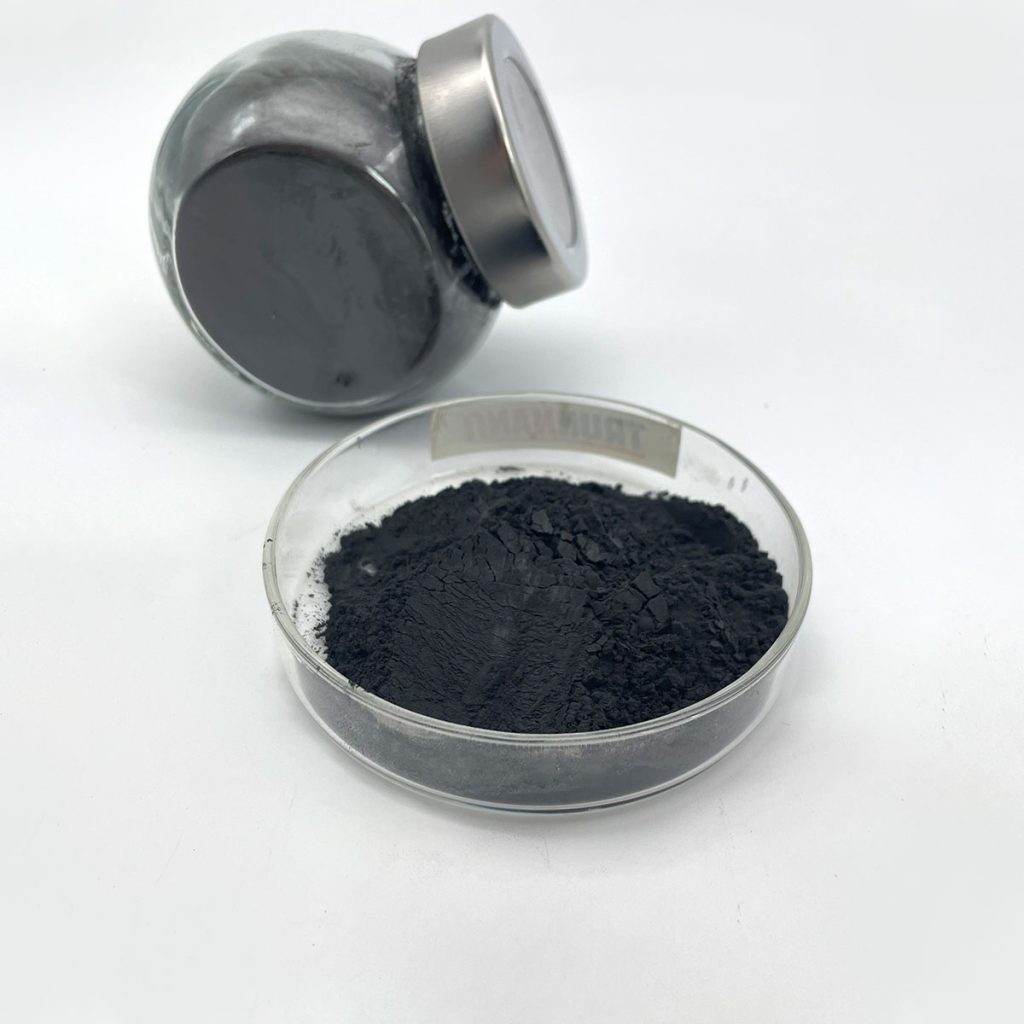
Preparation Methods for Fe-Mn-Based Layered Oxides
The synthesis of Fe-Mn-based oxides mainly adopts the solid phase method, the sol-gel method and the coprecipitation method; each method has its own characteristics in terms of process control, cost-effectiveness and material properties.
1. Solid-State Method
The solid-state method is widely adopted due to its simple process and ease of scale-up production. The specific steps are as follows:
(1)Raw material ratio: Weigh Na ˇ CO, Fe ˇ O and Mn ˇ O according to stoichiometric ratios, and Li ˇ CO is used as a lithium source in excess of 5% to compensate for sintering losses.
(2)Mixing and sintering: The raw materials are ball milled and mixed before tabletting, and sintered at a heating rate of 3℃/min in an air atmosphere of 1000℃ for 6 hours.
(3) Performance: Within a voltage range of 1.5-4.2V, the initial charge/discharge specific capacity can reach 125 mAh/g at a 0.1C rate. After 100 cycles, the capacity retention rate remains as high as 99.0%-99.5%, demonstrating excellent cycling stability.
2. Sol-Gel Method
The sol-gel method achieves microstructure control and improves material properties by accurately controlling reaction conditions:
(1)Solution preparation: Mix high-purity Fe and Mn raw materials according to a certain molar ratio, add organic acid and chelating agent to form a uniform solution.
(2)Gelization and sintering: Gelization of the sol under temperature and humidity control conditions, forming a precursor and sintering at high temperature.
(3)Performance advantage: The material prepared by this method has a first charging capacity of more than 160mAh/g in the voltage range of 2.0-4.2V, and the first discharge efficiency is about 90%. The coulombic efficiency can be further improved through morphology control.
3. Coprecipitation method
The coprecipitation method is suitable for preparing nanoscale materials and optimizes ion diffusion kinetics:
(1) Solution Preparation: Prepare a solution by weighing sulfate salts according to a nickel salt to manganese salt molar ratio of 96:0.04, and adjust the pH to 11 using NH₄OH and NaOH.
(2) Reaction and Treatment: The solution was gradually mixed at 50 ° C and 1000r/min, and washed, dried and calcined after reaction.
(3)Performance characteristics: At a voltage of 1.5-4V, the first discharge specific capacity of 0.5C rate is 168mAh/g, but the capacity retention rate drops to 77% after 50 cycles, indicating that cycle stability needs to be further optimized.
4. Coating Method
The coating method improves the electrochemical performance of materials through surface modification, offering simple operation and low cost:
(1) Process Steps: Uniformly mix Fe-Mn-based layered oxide with coating materials (such as ZnO, ZnCO₃, etc.), followed by calcination and cooling treatment.
(2) Performance Enhancement: Coating effectively improves comprehensive electrochemical performance while reducing side reactions with the electrolyte. It is applicable to P2, O3, and P2/O3 mixed-phase structures.
| Preparation Method | Process Characteristics | Voltage Range (V) | Initial Discharge Specific Capacity (mAh/g) | Cycling Stability (100 cycles) |
|---|---|---|---|---|
| Solid-State Method | Simple, Scalable | 1.5-4.2 | 125 | 99.0%-99.5% |
| Sol-Gel Method | Microstructure Control | 2.0-4.2 | >160 | High Coulombic Efficiency |
| Co-precipitation Method | Nano-scale Materials, Ion Diffusion Optimization | 1.5-4.0 | 168 | 77% (50 cycles) |
| Coating Method | Surface Modification, Reduces Side Reactions | Applicable to Multi-phase Structures | Significant Performance Enhancement | Extended Cycle Life |
5. electrochemical performance
The electrochemical properties of Fe-Mn-based oxides are the core indicators of their application potential, involving first charge and discharge, cycle stability and rate performance.
(1)first charge and discharge performance
The first charge and discharge test evaluated the interaction of the material with sodium ions and the charge storage mechanism. In the voltage range of 2.0-4.2V, Fe-Mn-based materials show a good reversible charge and discharge platform, with a first charge capacity exceeding 160mAh/g and a discharge efficiency of about 90%. Through cyclic voltammetry (CV) and electrochemical impedance spectroscopy (EIS) analysis, the kinetics of the redox reaction can be deeply understood.
(2)cycle stability
Cycle stability is the key to measuring the long-term reliability of materials. The capacity retention rate of materials prepared by the solid phase method is as high as 99.0%-99.5% after 100 cycles, while the coprecipitation method materials drop to 77% after 50 cycles, highlighting the significant impact of the preparation process on cycle life.
(3)rate capability
Rate performance reflects how the material behaves at high current densities. Fe-Mn-based materials provide additional charge compensation through anionic redox reactions (such as the redox of O²), theoretically achieving high specific capacity. However, in practical applications, the slow diffusion kinetics of sodium ions lead to insufficient rate performance, which needs to be optimized through nanoscale or structural design.
6. Physical properties
Physical properties include the structural stability, air stability and thermal stability of the material, which directly affect its practical application.
(1)structural stability
Fe-Mn-based oxides are prone to irreversible phase transition during charge and discharge, resulting in capacity degradation. For example, the Jahn-Teller effect of Mn³ causes lattice distortion and destroys the stability of the layered structure. Elemental doping (such as Ni, Cu) suppresses phase transition and improves structural integrity.
(2)air stability
Poor air stability is a significant challenge for Fe-Mn-based materials. After exposure to humid air, the material is prone to structural degradation (such as O3 phase transition to P3 phase) and electrochemical performance degradation. The coating method can effectively improve air stability and reduce side reactions through surface modification.
(3)thermal stability
Thermal stability is related to battery safety. The thermal behavior of Fe-Mn-based materials needs to be evaluated by differential scanning calorimetry (DSC) and thermogravimetric analysis (TGA). Optimizing thermal stability prevents thermal runaway and improves overall battery safety.

7. Challenges and Future Directions
Despite their cost advantages and theoretical potential, Fe-Mn-based layered oxides still face the following challenges:
(1) Insufficient Electrochemical Performance: Requires optimization of specific capacity and cycle life through multi-element synergistic doping and structural regulation.
(2) Poor Air Stability: Development of surface coating or chemical treatment technologies to reduce sensitivity to humid air.
(3) Scalable Production: Simplification of preparation processes, cost reduction, and promotion of industrial application.
(4) In-depth Mechanism Research: Utilization of in-situ characterization techniques (e.g., in-situ X-ray diffraction) to reveal structural evolution during charge/discharge processes, providing theoretical guidance for material design.
8. Conclusion
Fe-Mn-based layered oxide cathode materials have become a research hotspot in the field of sodium-ion batteries due to their cost-effectiveness and environmental friendliness. By optimizing preparation methods (e.g., solid-state, sol-gel, co-precipitation, and coating methods), their electrochemical and physical performance can be significantly enhanced. In the future, with improvements in preparation processes and deeper mechanistic understanding, Fe-Mn-based materials are expected to achieve commercial application in large-scale energy storage and low-speed electric vehicles, providing strong support for the energy transition.
Tags: Sodium-ion battery, Layered oxide, Fe-Mn-based, Solid-state method, Coprecipitation method, Sol-gel method, Coating method, High theoretical capacity
RELATED POSTS
Aluminum-Copper Alloy Forging: The Ultimate Choice for High-Performance Industrial Components
Ceramic Plates: Features, Applications, Price, and Supplier Information

Market Prospect Analysis of Aluminum Nitride Ceramic Products

Revolutionizing High-Tech Applications: How Silicon Carbide and Tantalum Carbide Lead the Charge in Advanced Material Solutions

Five Surprising Applications of Hollow Glass Microspheres
