Professional and high-quality metal alloys, ceramic products and concrete additives | RBOSCHCO

Tungsten Silicide Powder is a high-performance refractory ceramic material that has actually obtained widespread fostering across semiconductor production, high-temperature commercial systems, and advanced architectural ceramics. By chemically integrating tungsten and silicon into a secure intermetallic compound, WSi2 supplies an uncommon combination of metal electrical conductivity and ceramic-level thermal durability. This dual-functional nature allows Tungsten Silicide Powder to carry out dependably in atmospheres where typical steels struggle with rapid oxidation and traditional porcelains lack electrical capability.
With worldwide markets continually pushing towards higher operating temperatures, tighter digital assimilation, and longer component lifecycles, product selection has actually ended up being a decisive factor in product performance. Tungsten Silicide (WSi2) Powder has actually become a calculated remedy in this context, offering superb oxidation resistance, secure electrical habits, and strong compatibility with silicon-based technologies. These attributes make it a preferred product for makers looking for reliable efficiency under extreme thermal and chemical conditions.
Today, Tungsten Silicide Powder is thoroughly used in integrated circuits, thin-film electronic devices, industrial heating elements, ceramic matrix composites, and safety finishings. Its convenience sustains both accuracy in microelectronics and large-scale commercial systems, placing WSi2 as a foundational product in contemporary innovative manufacturing.
Material Features and Performance Advantages
One of the most vital properties of Tungsten Silicide (WSi2) Powder is its remarkably high melting point, which surpasses 2160 ° C. This allows WSi2-based parts to preserve structural stability during prolonged exposure to raised temperature levels. Unlike many metallic conductors that soften or creep under warmth, Tungsten Silicide protects its mechanical stability, making it appropriate for continuous high-temperature operation.
A defining advantage of Tungsten Silicide hinges on its oxidation behavior. When exposed to oxygen at raised temperature levels, WSi2 creates a dense silicon dioxide surface layer. This passive oxide movie functions as a protective barrier, drastically slowing down further oxidation and permitting dependable efficiency in oxidizing atmospheres as much as about 1200– 1400 ° C. This self-protecting device is a crucial reason WSi2 is widely adopted in burner and thermal security systems.
Electrically, Tungsten Silicide Powder exhibits relatively reduced resistivity compared with many ceramic products, while maintaining security throughout broad temperature arrays. This makes WSi2 especially ideal for applications needing both conductivity and thermal strength. In semiconductor gadgets, secure resistivity guarantees foreseeable electric actions, which is crucial for accuracy circuits and thin-film components.
From a mechanical viewpoint, WSi2 demonstrates excellent solidity and compressive strength. These properties allow its use not only as a practical conductive product, but also as a reinforcing phase in ceramic composites. When integrated into matrices such as alumina or silicon nitride, Tungsten Silicide Powder adds to improved thermal shock resistance, enhanced mechanical toughness, and added electric functionality. Chemically, WSi2 reveals strong resistance to many corrosive atmospheres and integrates well with silicon substrates, further supporting its duty in electronic devices and high-temperature systems.
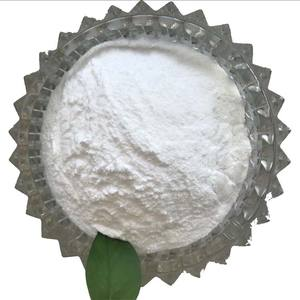
Business Tungsten Silicide Powder is readily available in pureness grades normally ranging from 99.0% to 99.9%, with adjustable particle dimensions from submicron to tens of microns. Fragment morphology might be uneven or spherical, depending upon the manufacturing route and application needs. These criteria directly impact sintering actions, coating top quality, electric efficiency, and general procedure efficiency, making specification control necessary for regular results.
Manufacturing Techniques and Powder Top Quality Considerations
Tungsten Silicide (WSi2) Powder is generated through several established commercial approaches, each influencing the final powder qualities. Solid-state reaction procedures entail reacting tungsten and silicon powders at elevated temperatures, offering a cost-efficient method for mass production. Carbothermal reduction methods use tungsten oxides and silicon resources in the presence of carbon, enabling improved control of chemical composition while needing cautious administration of recurring contaminations. Self-propagating high-temperature synthesis allows rapid production with exothermic responses and is commonly picked for large-scale manufacturing because of its effectiveness and relatively great fragment output.
For microelectronic thin-film applications, Tungsten Silicide is frequently transferred directly onto substrates using chemical vapor deposition rather than provided as bulk powder. Nonetheless, for structural ceramics, composite fabrication, and layer procedures, top-notch WSi2 powder continues to be vital.
Regardless of the synthesis route, powder quality is a crucial factor in downstream performance. Regular phase composition, regulated oxygen material, and steady particle dimension circulation are crucial for achieving reputable sintering behavior and uniform coatings. High-purity Tungsten Silicide Powder minimizes flaw development in electronic parts and enhances oxidation resistance in high-temperature applications. For global purchasers, dealing with suppliers that maintain rigorous quality control systems and supply detailed certificates of analysis makes sure foreseeable handling and long-lasting functional security.
Application Locations of Tungsten Silicide (WSi2) Powder
In the semiconductor and microelectronics sector, Tungsten Silicide Powder is extensively utilized to create conductive layers such as gateway electrodes, interconnects, diffusion obstacles, and thin-film resistors. Its compatibility with silicon substratums permits smooth integration right into existing construction workflows, while its steady resistivity sustains innovative CMOS processes that require accurate electrical control. As device geometries become smaller and running temperatures increase, WSi2 remains to supply reliable performance where different products battle to maintain uniformity.
In high-temperature industrial systems, Tungsten Silicide is a core material for heating elements utilized in heaters, kilns, and laboratory devices. Compared with typical metal home heating products, WSi2-based elements give superior oxidation resistance and longer service life in air, considerably reducing maintenance needs and operational downtime. This integrity is specifically beneficial in continuous manufacturing environments where equipment stability directly affects performance.
Advanced structural porcelains represent an additional crucial application area. Tungsten Silicide Powder is included in ceramic matrices to boost thermal shock resistance, mechanical toughness, and electrical conductivity. These multifunctional compounds are increasingly applied in aerospace structures, energy systems, and thermal protection components. On top of that, WSi2 is generally made use of in safety coverings used via thermal spraying or slurry methods, creating sturdy layers that shield generators, warmth exchangers, and industrial tooling from oxidation and wear.
The aerospace and energy sectors additionally gain from Tungsten Silicide’s capacity to withstand severe thermal gradients and chemically hostile atmospheres. From power generation hardware to propulsion-related components, WSi2-based materials contribute to prolonged service life and boosted system integrity.
Processing Actions and Manufacturing Integration
Tungsten Silicide (WSi2) Powder integrates well right into common ceramic and powder metallurgy processes. It can be densified using hot pushing, trigger plasma sintering, or pressureless sintering, with finer fragment sizes supporting reduced sintering temperatures and greater last thickness. These processing alternatives permit suppliers to dressmaker production techniques according to part geometry, efficiency demands, and cost factors to consider.
WSi2 also mixes effectively with a vast array of ceramic and metal powders, enabling the layout of composite products with customized electric and thermal features. After sintering, WSi2-containing components can be machined using ruby tooling, permitting exact shaping and dimensional control for intricate parts.
For finish applications, maximized Tungsten Silicide Powder morphology enhances flowability and deposition efficiency, especially in thermal spray systems. Consistent fragment size distribution adds to constant layer density and attachment, supporting long-lasting efficiency in demanding operating environments. These handling benefits make Tungsten Silicide Powder ideal for both high-volume industrial production and specialized engineering applications.
Choosing Tungsten Silicide Powder for Your Application
Choosing the proper Tungsten Silicide (WSi2) Powder requires mindful consideration of purity level, bit size distribution, morphology, and provider ability. Semiconductor and digital applications typically demand higher pureness qualities and tighter bit dimension control, while structural ceramics and burners might prioritize flowability and packaging habits.
Great powders usually boost sintering and layer harmony, whereas coarser qualities may be preferred for mass parts where mechanical stability is the key goal. Beyond material requirements, partnering with a reputable supplier is equally crucial. Expert suppliers offer a regular set of top-quality, technological documents, modification alternatives, and application support, aiding purchasers maximize handling problems and decrease development time.
Proper storage space and handling further shield powder efficiency. Tungsten Silicide needs to be stored in secured containers in completely dry atmospheres to reduce oxidation and moisture absorption. Maintaining these problems protects flowability and chemical security, making sure constant outcomes throughout production.
Supplier
RBOSCHCO is a trusted global Tungsten Silicide Powder supplier & manufacturer with over 12 years experience in providing super high-quality chemicals and Nanomaterials. The company export to many countries, such as USA, Canada, Europe, UAE, South Africa,Tanzania,Kenya,Egypt,Nigeria,Cameroon,Uganda,Turkey,Mexico,Azerbaijan,Belgium,Cyprus,Czech Republic, Brazil, Chile, Argentina, Dubai, Japan, Korea, Vietnam, Thailand, Malaysia, Indonesia, Australia,Germany, France, Italy, Portugal etc. As a leading nanotechnology development manufacturer, RBOSCHCO dominates the market. Our professional work team provides perfect solutions to help improve the efficiency of various industries, create value, and easily cope with various challenges. If you are looking for Tungsten Silicide Powder, please feel free to contact us.
Tags:tungsten silicide,tungsten silicate
RELATED POSTS
Nanoultrafine Molybdenum Disulfide MoS2 for Enhanced Lubrication and Antiwear Applications

O3-Nax(FeyMn1-y)O2: A Promising Cathode Material for Sodium-Ion Batteries
Choosing the Best Termal Insulation Material: Fumed Silica vs. Aerogel vs. Hollow Glass Microspheres

Comparison Of Comprehensive Performance Of Mainstream Aerogel Powders: SiO₂ Vs. Carbon-Based Vs. Others
Silicon Nitride vs. Boron Nitride Ceramic Shafts: A Comprehensive Comparison and Applications Overview
