Professional and high-quality metal alloys, ceramic products and concrete additives | RBOSCHCO

Industrial flooring often faces a challenge: cracking.
Cracks affect surface flatness, reduce lifespan, and increase maintenance costs. How to solve this problem? An effective solution is to join concrete fibers into the concrete flooring. The concrete fibers strengthen the concrete inside, obviously reducing crack formation. This article will explain why industrial floor needs concrete fibers and how to use them correctly to achieve long-term, stable flooring results.
Why are industrial floors prone to cracking?
There are many reasons why industrial flooring cracks.
First, concrete shrinks during the hardening process. Large-area flooring experiences more concentrated shrinkage stress, making it prone to cracking.
Second, the flooring needs to withstand the loads, impacts, and abrasion from heavy equipment. These external forces generate repeated tensile and bending stresses on the ground. When they exceed the concrete’s inside strength, it will cause cracking.
Furthermore, temperature changes and foundation settlement can also lead to structural cracks in the flooring. Once these cracks form, they are difficult to repair and accelerate the deterioration of the flooring.
How do concrete fibers protect industrial floors?
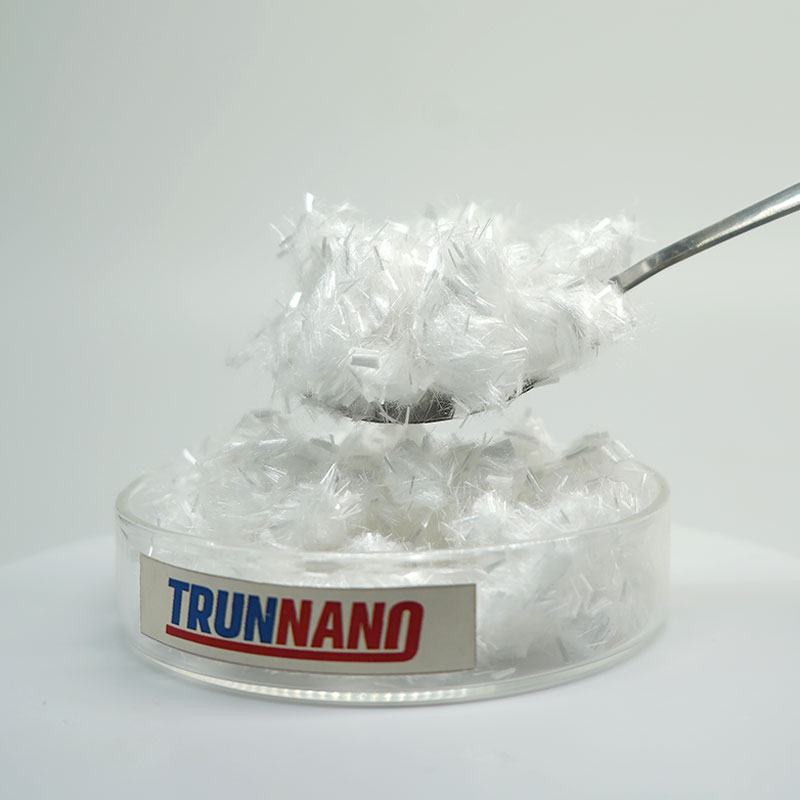
Concrete fibers are distributed three dimensionally within concrete, forming an internal microscopic reinforcing network. This network functions both before and after the concrete hardens.
In the early stages of concrete hardening, the fibers resist plastic shrinkage stress, preventing surface cracking. After it is put into use, this fiber network becomes crucial for resisting external forces.
When loads or impacts attempt to crack the floor, the fibers spanning the cracks bear tensile forces. This prevents the cracks from widening, dispersing potentially large cracks into many harmless microcracks, thus maintaining the structural integrity of the floor.
How to Choose the Right Concrete Fiber for Industrial Flooring
Choosing the right type of concrete fiber is important. They are mainly divided into synthetic fibers and steel fibers.
For most industrial floors, synthetic concrete fibers (such as polypropylene fibers) are a commonly used and economical choice. They effectively control plastic shrinkage cracks and temperature cracks, improving the floor’s impact and abrasion resistance.
For floors subjected to extremely heavy loads, high intensity impacts, or frequent traffic. Such as main aisles in logistics warehouses or heavy equipment operating areas, steel fibers or high performance synthetic fibers are needed. These provide higher toughness and load dispersion capabilities, significantly increasing the floor’s service life.
Key Construction Steps: Ensuring Fiber Flooring Quality
Proper construction is fundamental to ensuring the performance of fiber flooring. Please follow these key steps:
Step 1: Mix Design. Communicate with the concrete supplier to clarify the objectives for using concrete fibers. How to choose the type and dosage of fibers? This is based on load requirements and floor thickness.
Step 2: Mixing. Ensure the fibers are evenly dispersed. Typically, concrete fibers are added to the mixer in the same way. Appropriately increase the mixing time until the fibers are completely dispersed, and there are no lumps.
Step 3: Pouring and Leveling. The pouring method for fiber-reinforced concrete is the same as for ordinary concrete. Due to its potentially slightly increased viscosity, ensure thorough vibration. The finishing process should be performed immediately; final smoothing will result in a denser, more durable surface.
Frequently Asked Questions about Using Fiber Concrete in Industrial Flooring
Q: Will adding fibers change the difficulty of floor construction?
A: Generally not. As long as the mixture is thoroughly mixed, the pumping, spreading, and leveling processes are essentially the same as for ordinary concrete floors.
Q: Does fiber flooring require special curing?
A: Curing requirements are the same as for high quality ordinary concrete floors. Timely water retention curing (such as covering with a film or spraying a curing agent) is crucial for achieving the final performance of both the concrete and the fibers.
Q: How much will fiber flooring increase the cost?
A: Although the material cost is slightly higher, the overall cost is usually lower, considering the long term benefits of significantly reducing cracking, lower maintenance costs, and extending service life.
About RBOSCHCO
Choosing the right concrete fiber solution for industrial flooring, it requires specialized knowledge and product support. RBOSCHCO offers high performance concrete fiber products specifically designed for industrial flooring.
Our technical team can recommend the most suitable fiber solution and provide detailed application guidance based on your specific use case (such as load conditions, equipment type, and substrate condition). We hope to help our customers build stronger, more durable, and lower-maintenance industrial floors. If you are planning a new flooring project or renovating an existing floor, RBOSCHCO is a partner you can trust.