Professional and high-quality metal alloys, ceramic products and concrete additives | RBOSCHCO

In the relentless pursuit of high-performance electronic devices, thermal administration continues to be a critical obstacle. As devices reduce in dimension while demanding higher power thickness, typical materials struggle to satisfy the ruthless demands of modern-day applications. Go into spherical lightweight aluminum nitride (AlN), an advanced material that redefines heat dissipation in digital packaging. With its exceptional thermal conductivity, special spherical morphology, and compatibility with sophisticated manufacturing procedures, spherical lightweight aluminum nitride is not just an improvement– it is a paradigm change in thermal monitoring. This article discovers just how this material attains a shocking 50% boost in warm dissipation performance and why it is becoming vital in industries ranging from semiconductors to electric vehicles.
1. Chemical framework of Spherical Aluminum Nitride
1.1 What is spherical Aluminum Nitride?
Spherical aluminum nitride (AlN) is a highly crafted ceramic material identified by its isotropic particle form and hexagonal wurtzite crystal structure. Unlike conventional AlN powders, which are irregular in shape, spherical AlN is synthesized with progressed processes like gas-phase synthesis or high-temperature sintering, causing uniformly formed fragments with smooth surface areas and very few issues. This one-of-a-kind morphology improves its performance in thermal interface products (TIMs), potting compounds, and encapsulants.
The term “spherical” refers not only to its physical kind but also to its functional superiority over standard materials. Spherical fragments lower interfacial resistance, enhance flowability throughout handling, and optimize call location with heat-generating elements. These homes make spherical AlN a foundation of next-generation thermal solutions.
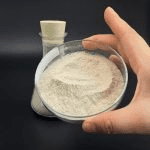
1.2 What is the chemical structure of Spherical Aluminum Nitride?
The chemical structure of spherical lightweight aluminum nitride is specified by strong covalent bonds between aluminum (Al) and nitrogen (N) atoms, organized in a hexagonal latticework comparable to that of zinc sulfide (ZnS). This structure gives integral thermal stability, chemical inertness, and low dielectric loss, making it ideal for high-frequency and high-power applications.
Secret structural advantages consist of:
High Thermal Conductivity: spherical AlN shows thermal conductivity of 170– 320 W/m · K, matching even beryllium oxide (BeO), which is renowned for its thermal efficiency, however, poses toxicological threats.
Reduced Thermal Development: Its coefficient of thermal expansion (CTE) of 4.5 × 10 ⁻⁶/ K matches silicon (Si) and gallium arsenide (GaAs), lessening thermal stress and anxiety in semiconductor product packaging.
Dielectric Excellence: With a dielectric constant of 8- 10 and reduced loss tangent (<0.001), it ensures minimal interference with high-speed signal transmission.
These structural attributes position spherical AlN as a game-changer in thermal management, particularly in applications where reliability and performance are nonnegotiable.
2. Core characteristics of Spherical Aluminum Nitride.
2.1What are the physical and chemical properties of Spherical Aluminum Nitride?
Spherical aluminum nitride combines remarkable physical and chemical properties:.
Thermal Stability: Stable up to 1800°C, it resists degradation in high-temperature environments, such as LED packaging or power modules.
Chemical Inertness: Resistant to acidic, alkaline, and oxidizing agents, ensuring long-term durability in corrosive conditions.
Low Density: With a density of 3.25 g/cm³, it is lighter than alumina (Al₂O₃), enabling lightweight thermal solutions without compromising performance.
High Purity: Typically >< 0.001), it makes sure very little interference with high-speed signal transmission. These architectural qualities of placement spherical AlN as a game-changer in thermal monitoring
, particularly in applications where reliability and performance are nonnegotiable. 2. Core attributes of Spherical Lightweight Aluminum Nitride 2.1 What are the physical and chemical properties of Spherical Aluminum Nitride?
spherical lightweight aluminum nitride integrates amazing physical and chemical properties: Thermal Stability: Stable up to 1800 ° C, it stands up to degradation in high-temperature atmospheres, such as LED product packaging or power modules. Chemical Inertness: Resistant to acidic, alkaline, and oxidizing representatives, ensuring long-term durability in corrosive conditions. Reduced Density: With a thickness of 3.25 g/cm, it is lighter than alumina (Al two O TWO), allowing lightweight thermal services without compromising efficiency. High Pureness: Commonly > 99.9% pure, it stays clear of contamination dangers in delicate applications like optoelectronics. These residential properties are crafted to fulfill the demanding needs of sectors where thermal efficiency and product stability are vital. 2.2 What are the useful characteristics of spherical Lightweight aluminum Nitride? Functionally, spherical AlN supplies transformative benefits: Boosted Thermal User Interface Performance: Its spherical form reduces spaces and air gaps in TIMs, attaining< 10 µm density with 99.9 %call performance. Boosted Flowability: Smooth, consistent fragments ensure easy dispersion in materials, epoxies, and silicone-based substances, reducing processing time. AntiWicking Habits: Stops resin migration in potting applications, maintaining structural honesty under thermal cycling. EMI Protecting: When integrated with conductive fillers, it provides double performance as a thermal and electro-magnetic disturbance (EMI) guard.
As an example, in 5G base station modules, spherical AlN-filled TIMs lower thermal resistance by 40- 60%, enabling sustained high-power operation without overheating.
| Aluminum Nitride Properties | |
| Other Names | Aluminium nitride |
| CAS No. | 24304-00-5 |
| Compound Formula | AlN |
| Molecular Weight | 40.9882 |
| Appearance | White to pale yellow powder |
| Melting Point | 2200 °C |
| Boiling Point | 2517 °C (dec.) |
| Density | 2.9 to 3.3 g/cm3 |
| Solubility in H2O | N/A |
| Electrical Resistivity | 10 to 12 10x Ω-m |
| Poisson’s Ratio | 0.21 to 0.31 |
| Specific Heat | 780 J/kg-K |
| Thermal Conductivity | 80 to 200 W/m-K |
| Thermal Expansion | 4.2 to 5.4 µm/m-K |
| Young’s Modulus | 330 GPa |
| Exact Mass | 40.9846 |
| Monoisotopic Mass | 40.9846 |
3. Benefits and negative aspects of spherical Aluminum Nitride
3.1 What are the advantages of spherical Aluminum Nitride?
The benefits of spherical AlN are unparalleled in thermal administration:
Superior Thermal Conductivity: Exceeds boron nitride (BN) and alumina (Al two O SIX) by 2– 3x, making it perfect for high-power electronic devices.
Cost Efficiency: Regardless of a greater preliminary price, its long-term savings in power intake, upkeep, and downtime warrant adoption.
Environmental Safety: Unlike BeO, it is nontoxic and compliant with RoHS and REACH regulations.
Scalability: Appropriate for automation via precision sintering or nanocoating technologies.
In electric car (EV) battery loads, spherical AlN-based potting substances reduce thermal resistance by 50– 70%, extending battery life and safety margins.
3.2 What are the drawbacks of Spherical Lightweight aluminum Nitride?
Nevertheless, difficulties remain:
Higher Expense: Production intricacy makes it 30- 50% more expensive than traditional TIM materials.
Processing Level of sensitivity: Calls for specialized tools to maintain bit honesty throughout worsening.
Minimal Accessibility: High-purity spherical AlN is still limited compared to standard ceramics.
In spite of these difficulties, the performance-to-cost ratio of spherical AlN is rapidly improving, driven by innovations in nanoscale synthesis and mass production.
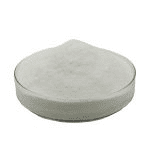
4. Application areas of spherical Aluminum Nitride
spherical aluminum nitride is common in industries where thermal management is essential:
Semiconductors: Made Use Of in GaNonSiC and SiC power modules to dissipate heat from joint temperatures surpassing 200 ° C. LED Illumination: Enhances thermal conductivity in high-power LED substrates, lowering lumen depreciation by 30– 50%.
Electric Autos: Integrated into inverter housings and battery thermal management systems to prevent thermal runaway.
Aerospace: Used in satellite electronic devices and jet engine sensors for extreme temperature stability.
Customer Electronics: Makes it possible for slim, fanless laptops and 5G smartphones with continual high performance.
In each application, spherical AlN bridges the gap between thermal efficiency and layout adaptability, setting brand-new criteria for dependability.
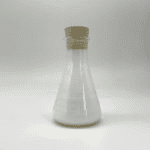
5. Just How Does Spherical Aluminum Nitride Improve The Heat Dissipation Effectiveness Of Electronic Packaging By Greater Than 50%?
The effectiveness of spherical AlN in thermal administration is rooted in its multifaceted advantages:
Reduced Thermal Resistance: Spherical fragments eliminate voids in TIMs, achieving <0.15 K · cm ²/ W thermal resistance– 50– 70% less than uneven AlN powders.
Study: In SiC power modules, spherical AlN TIMs reduced junction-to-case thermal resistance by 65%, making it possible for 150A/mm two present densities.
Boosted Warmth Dispersing: Its high thermal diffusivity ensures quick heat circulation throughout huge surface areas, avoiding hotspots in GPU coolers and server shelves.
Example: Information centers utilizing spherical AlN-filled TIMs record 40% reduced PUE (Power Use Performance).
Compatibility with Advanced Processes: Works seamlessly with straight bonding, conformal layer, and additive manufacturing, enabling complicated geometries in heat sinks and heat spreaders.
Application: Miniaturized 5G RF amplifiers utilize spherical AlN to preserve <80 ° C operating temperatures under 100W/mm ² power tons.
Long-term Stability: Withstands thermal fatigue and outgassing, guaranteeing 10,000+ hours of reliable operation in auto electronics and industrial IoT sensing units.
Expense Financial savings: By minimizing the need for active air conditioning systems (e.g., followers, fluid cooling), spherical AlN cuts energy intake and upkeep prices by 30- 50%.
As electronic devices evolve toward higher power thickness and smaller footprints, the function of spherical AlN will only grow. Whether you’re designing next-gen semiconductors, EV batteries, or wise IoT tools, integrating spherical AlN is the key to unlocking unmatched thermal efficiency.
Supplier
RBOSCHCO is a trusted global Spherical Aluminum Nitride supplier & manufacturer with over 12 years experience in providing super high-quality chemicals and Nanomaterials. The company export to many countries, such as USA, Canada, Europe, UAE, South Africa,Tanzania,Kenya,Egypt,Nigeria,Cameroon,Uganda,Turkey,Mexico,Azerbaijan,Belgium,Cyprus,Czech Republic, Brazil, Chile, Argentina, Dubai, Japan, Korea, Vietnam, Thailand, Malaysia, Indonesia, Australia,Germany, France, Italy, Portugal etc. As a leading nanotechnology development manufacturer, RBOSCHCO dominates the market. Our professional work team provides perfect solutions to help improve the efficiency of various industries, create value, and easily cope with various challenges. If you are looking for Spherical Aluminum Nitride, please send an email to: sales1@rboschco.com
Tags: spherical aluminum nitride,aluminum nitride powder
RELATED POSTS

Advanced copper nickel alloy powder ignites a global supply chain revolution: an unstoppable force reshapes the future map of corrosion protection and trade battlefields!

Changing Industries: Just How Zinc Sulfide is Sustaining the Environment-friendly Revolution with Unparalleled Adaptability
NbB powder: paving the way for advanced material innovation

Aluminum Carbide
What is the function of tungsten powder
