Professional and high-quality metal alloys, ceramic products and concrete additives | RBOSCHCO

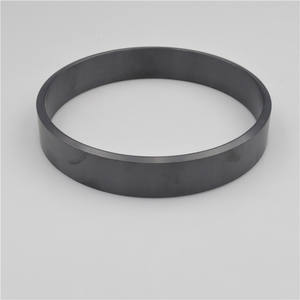
Silicon Nitride Ceramic Rings are advanced engineering components that have revolutionised multiple industrial sectors with their exceptional mechanical, thermal, and chemical properties. As industries worldwide pursue higher efficiency, longer equipment lifespan, and greater reliability in extreme operating conditions, these ceramic rings have emerged as a superior alternative to traditional metal and other ceramic materials. Whether in high-speed machinery, corrosive chemical processes, or high-temperature environments, Silicon Nitride Ceramic Rings deliver consistent performance that helps businesses reduce maintenance costs, minimise downtime, and improve overall operational efficiency. In this comprehensive guide, we will explore everything you need to know about Silicon Nitride Ceramic Rings—from their core properties and manufacturing process to their key applications, advantages over competing materials, and how to choose the right product for your specific needs.

Core Properties of Silicon Nitride Ceramic Rings
Silicon nitride ceramic rings are widely used due to their excellent comprehensive performance, surpassing traditional materials in physical, mechanical, and chemical properties, making them an ideal choice for meeting various demanding industrial needs. The following are its most prominent features:
Mechanical performance
Silicon nitride ceramic rings have excellent mechanical strength and toughness, and remain stable even under extreme conditions. Compared to most brittle ceramics, it has high fracture toughness and bending strength, as well as impact and vibration resistance. Its hardness is as high as 9.2 Mohs, second only to diamond, and it exhibits excellent wear resistance and long service life in high-speed friction environments. At the same time, this type of ceramic ring has a lower density (about 3.2 g/cm ³), significantly lighter than steel (7.8 g/cm ³) and zirconia ceramics (6.0 g/cm ³), which helps to reduce the overall weight of the equipment, lower energy consumption, and reduce the load on other components.
In addition, silicon nitride ceramic rings also have excellent fatigue resistance and can withstand repeated stress and load cycles without permanent deformation or failure, making them very suitable for high-speed rotating equipment such as pumps, turbines, and bearings. Its compressive strength is extremely high, with hot-pressed silicon nitride reaching up to 3000 MPa, which can withstand heavy loads without cracking or damage.
Thermal properties
Silicon nitride ceramic rings exhibit excellent performance in high-temperature environments, with both good thermal stability and thermal shock resistance. They can work continuously at 1200 ° C without losing mechanical strength, and can even withstand high temperatures of 1400 ° C in the short term. They are suitable for high-temperature industrial applications such as furnaces and combustion systems, avoiding common softening, deformation, or performance degradation problems of metal materials.
Its thermal shock resistance is particularly outstanding. Thermal shock is usually caused by rapid temperature changes, leading to internal stress and material cracking, while silicon nitride ceramics have a low coefficient of thermal expansion (3.0 × 10 ⁻⁶/° C in the range of 40-400 ° C) and high thermal conductivity, which can quickly absorb and transfer heat. Therefore, they can maintain stability in environments with rapid alternation of hot and cold, making them very suitable for applications with frequent temperature fluctuations.
Chemical properties
Silicon nitride ceramic rings have stable chemical properties and exhibit good corrosion resistance to most acids, bases, salts, and organic compounds. They are suitable for corrosive environments such as chemical, pharmaceutical, food, and beverage industries. Unlike metal materials that are prone to corrosion and pollution, this type of ceramic can maintain chemical purity and structural stability, ensuring the cleanliness of the production process and product quality.
Even under high temperature conditions, silicon nitride ceramics have good oxidation resistance. When exposed to high temperature environments containing oxygen, a dense silica (SiO ₂) protective layer forms on its surface, effectively preventing further oxidation and material performance degradation, thereby maintaining a long service life in high temperature and oxygen-rich environments.
Electrical performance
Silicon nitride ceramics are excellent electrical insulation materials, with a room temperature volume resistivity exceeding 10 ¹⁴Ω· cm (still higher than 10 ¹⁰Ω· cm at 500 ° C). This characteristic makes it suitable for electrical and electronic fields that require strict insulation, such as high-voltage equipment, semiconductor manufacturing, and electronic sensors. Combined with its high temperature resistance, silicon nitride ceramics have become an ideal component material for high temperature, high voltage, and electrical insulation environments.
Manufacturing Process of Silicon Nitride Ceramic Rings
The production of Silicon Nitride Ceramic Rings is a precise, multi-step process that requires strict quality control to ensure the final product meets the high-performance standards required for industrial applications. Below is a detailed overview of the key steps involved in manufacturing these advanced ceramic components:
Raw material preparation
The preparation of silicon nitride ceramic rings begins with the preparation of high-purity raw materials. The main raw material is silicon nitride powder, and its purity is usually required to be no less than 99% to avoid the influence of impurities on the final performance of the product. The powder particle size needs to be strictly graded to ensure uniformity, which is crucial for forming a dense and defect-free structure during the subsequent sintering process. In addition, a small amount of sintering aids (such as yttrium oxide, aluminum oxide, magnesium oxide, etc.) needs to be added to reduce the sintering temperature and promote material densification.
Mixing and homogenization
After weighing the raw materials, they are thoroughly mixed in high-energy mixing equipment to ensure uniform distribution of silicon nitride powder and sintering aids. The uniformity of the mixing process directly affects the quality of the finished product, and local compositional differences may lead to defects after sintering. To improve the formability of the mixture and prevent the green body from breaking, an appropriate amount of binder (such as wax or polymer) is usually added during mixing.
Forming
The mixture is then formed into a circular billet through a molding process. According to the product size, shape accuracy, and batch requirements, different molding methods can be used:
- Cold isostatic pressing: Fill the mixed powder into a flexible mold (such as rubber or plastic) and apply uniform high pressure from all directions through a liquid medium. This method is suitable for ceramic rings with complex shapes and large sizes, and can obtain high-density and structurally uniform bodies.
- Injection molding: suitable for ceramic rings that are small, structurally complex, and require high dimensional accuracy. After heating the mixture, it is injected into a metal mold under high pressure, and after cooling and demolding, the blank is obtained.
- Extrusion molding: mainly used for circular billets witha consistent cross-section. The mixture is extruded under pressure through a specific-shaped mold and then cut into sections as needed.
Degreasing
The formed green body contains a large amount of organic binders, which need to be removed through a degreasing process before sintering to avoid porosity or cracking during the sintering process. Defatting is usually carried out under air or nitrogen protection, slowly raising the temperature to 200-600 ° C to gradually decompose or evaporate the binder. At this stage, it is necessary to strictly control the heating rate to avoid damage to the billet caused by rapid gas release.
Sintering
Sintering is a key process that endows silicon nitride ceramic rings with high performance. After degreasing, the green body is placed in a sintering furnace and heated to 1600-1800 ° C under a protective atmosphere such as nitrogen or argon for high-temperature sintering. During this process, silicon nitride particles gradually combine, and sintering aids form a liquid phase to fill the gaps between particles, promoting complete densification of the body and ultimately forming ceramic components with a uniform structure and excellent mechanical and thermal properties.
Precision machining
The sintered ceramic rings often require precision machining to meet the requirements for dimensional accuracy and surface quality in practical applications. Common processing methods include using diamond tools for grinding, grinding, and polishing. Due to the extremely high hardness of silicon nitride, diamond processing has become a necessary means to ensure the precision required for industrial applications such as bearings, seals, valves, etc.
Silicon Nitride Ceramic Rings vs. Other Materials: A Comparative Analysis
To fully understand the advantages of Silicon Nitride Ceramic Rings, it is essential to compare them to traditional metal rings and other ceramic alternatives. Below is a detailed comparison of Silicon Nitride Ceramic Rings with Steel Rings, Zirconia Ceramic Rings, and Alumina Ceramic Rings—three of the most common competing materials.
| Property | Silicon Nitride Ceramic Rings | Steel Rings | Zirconia Ceramic Rings | Alumina Ceramic Rings |
|---|---|---|---|---|
| Density (g/cm³) | 3.2 | 7.8 | 6.0 | 3.9 |
| Mohs Hardness | 9.2 | 6.0 | 8.5 | 9.0 |
| Max Operating Temperature (°C) | 1200 | 500 | 800 | 1000 |
| Thermal Shock Resistance (°C) | 800 (hot-pressed) | 200 | 300 | 250 |
| Corrosion Resistance | Excellent (resistant to most acids, bases, salts) | Poor (prone to rust and corrosion) | Good (resistant to most chemicals) | Good (resistant to acids and bases, except strong alkalis) |
| Wear Resistance | Excellent | Poor | Good | Good |
| Electrical Insulation | Excellent | Poor (conductive) | Excellent | Excellent |
| Cost | High | Low | Medium-High | Medium |
Silicon Nitride Ceramic Rings, despite their higher cost, offer the best overall performance—combining exceptional hardness, wear resistance, thermal stability, corrosion resistance, and lightweight design. For industries that rely on high-performance equipment in harsh conditions, the long-term cost savings from reduced maintenance and downtime far outweigh the initial investment in silicon nitride components.
Key Applications of Silicon Nitride Ceramic Rings
In key industrial fields such as automotive, aerospace, chemical, semiconductor, energy, and medical, silicon nitride ceramic rings have become an important material for promoting technological progress and improving equipment performance due to their excellent comprehensive performance. Its lightweight, high hardness, high temperature resistance, corrosion resistance, and excellent biocompatibility meet the application needs of various industries for materials in extreme and harsh environments. The following is an overview of typical applications of this material in different fields.
1. Automotive industry
Silicon nitride ceramic rings are mainly used in high-performance power and transmission systems in the automotive industry. Their lightweight characteristics help reduce vehicle weight and improve fuel efficiency, while their high wear resistance and thermal stability enable them to withstand harsh working conditions such as high temperature, high speed, and high friction inside the engine.
- Valve seat and guide: Used in engines, it can withstand high temperatures and continuous friction, significantly reducing wear and extending engine service life.
- Gearbox bearings and seals: ensure smooth operation of the transmission system, have excellent wear resistance, and reduce maintenance requirements.
- Brake disc: It combines lightweight and heat-resistant characteristics, which can improve braking performance and effectively suppress the thermal attenuation phenomenon.
2. Aerospace industry
The aerospace industry has extremely high requirements for the performance of materials in extreme temperatures, high stresses, and complex chemical environments. Silicon nitride ceramic rings not only meet these conditions, but their lightweight design also helps to reduce the weight of aircraft, thereby reducing energy consumption and improving overall performance.
- Turbine engine components: used in high-temperature and high-speed environments, helping to improve turbine efficiency and service life.
- Aerospace bearings: provide stable and reliable support under high load and high-speed operating conditions, reducing downtime caused by maintenance.
- Heat exchanger: resistant to high temperatures and corrosion, ensuring efficient and stable operation of aircraft thermal management systems.
3. Chemical processing industry
In the process of chemical production, equipment often comes into contact with corrosive media and is in a high-temperature and high-pressure environment. Silicon nitride ceramic rings have excellent chemical inertness, corrosion resistance, and wear resistance, making them suitable for various key chemical equipment.
- Pump seals and bearings: Used for conveying corrosive fluids in pump equipment to ensure long-term, reliable operation.
- Valve components: capable of maintaining performance in corrosive media and high temperature conditions, extending the service life of valves.
- Reactor lining: protects the inner wall of the reaction vessel, resists corrosion and wear, and enhances the overall durability of the equipment.
4. Semiconductor industry
Semiconductor manufacturing has strict requirements for the purity, insulation, and chemical stability of materials. Silicon nitride ceramic rings are widely used in wafer processing and related equipment due to their high electrical resistivity, chemical inertness, and good thermal stability.
- Wafer processing equipment: provides reliable electrical insulation and corrosion protection to ensure the cleanliness of the wafer manufacturing process and the purity of the finished product.
- Plasma etching system: capable of withstanding high temperatures and corrosive plasma environments, enhancing process stability and equipment reliability.
- High voltage connector: As an insulating component, it ensures the safety and stability of electrical connections in high-voltage environments.
5. Energy industry
In the fields of power generation, renewable energy, and oil and gas extraction, equipment often faces multiple challenges such as high temperature, high pressure, high weather,r and corrosion. Silicon nitride ceramic rings have become an ideal choice for related energy equipment due to their excellent comprehensive performance.
- Turbine components in power plants: Maintaining performance under high temperature and high speed conditions helps improve power generation efficiency.
- Wind turbine bearings: adapt to harsh outdoor environments, provide long-term and reliable operation, and reduce maintenance costs throughout the entire lifecycle.
- Oil and gas drilling equipment: resistant to downhole corrosion and wear, ensuring the continuity and safety of drilling and production operations.
6. Medical industry
In the medical industry, Silicon Nitride Ceramic Rings are used in medical devices and equipment that require high biocompatibility, corrosion resistance, and precision. Their non-toxic and non-reactive nature makes them suitable for use in contact with human tissue and fluids. Common medical applications include:
- Artificial joints: Provide smooth, wear-resistant surfaces for hip and knee replacements, improving joint longevity.
- Medical pumps and valves: Resist corrosion and contamination, ensuring the safety and reliability of medical fluid transfer systems.
- Surgical instruments: Offer high precision and wear resistance, improving surgical performance.

Maintenance Tips for Silicon Nitride Ceramic Rings
While Silicon Nitride Ceramic Rings are highly durable and low-maintenance, proper care and maintenance can extend their service life even further. Below are some key maintenance tips to follow:
1. Avoid Impact and Shock
Although Silicon Nitride Ceramic Rings are tough, they can still crack or fracture if subjected to severe impact or shock. Avoid dropping or hitting the rings, and ensure that they are installed and handled carefully.
2. Keep the Rings Clean
Dirt, dust, and debris can cause friction and wear, reducing the performance and longevity of the rings. Regularly clean the rings using a soft cloth and a mild cleaning solution (avoid harsh chemicals that could damage the ceramic).
3. Monitor Operating Conditions
Regularly monitor the operating conditions (temperature, pressure, and chemical exposure) to ensure that they remain within the recommended limits for the silicon nitride rings. Exceeding these limits can cause premature degradation and failure.
4. Inspect for Wear and Damage
Periodically inspect the rings for signs of wear, cracks, or damage. If any damage is detected, replace the rings immediately to prevent further damage to your equipment.
Silicon Nitride Ceramic Rings are advanced engineering components that offer exceptional performance in harsh industrial environments. Their unique combination of mechanical, thermal, and chemical properties makes them a superior alternative to traditional metal and other ceramic materials, helping businesses reduce maintenance costs, minimise downtime, and improve overall operational efficiency. Whether you are in the automotive, aerospace, chemical processing, semiconductor, energy, or medical industry, Silicon Nitride Ceramic Rings can provide the reliability and performance you need.
In this guide, we have covered everything you need to know about Silicon Nitride Ceramic Rings—from their core properties and manufacturing process to their key applications, advantages over competing materials, and how to choose the right product for your needs. If you are looking for high-quality, customised Silicon Nitride Ceramic Rings at competitive prices, look no further than our company. Contact us today to learn more about our products and how we can help you improve your operations.
supplier
RBOSCHCO is a trusted global Silicon Nitride Ceramic supplier & manufacturer with over 12 years of experience in providing super high-quality chemicals and Nanomaterials. The company export to many countries, such as USA, Canada, Europe, UAE, South Africa, Tanzania, Kenya, Egypt, Nigeria, Cameroon, Ugand, Turkey, Mexico, Azerbaijan Be lgium, Cyprus, Czech Republic, Brazil, Chile, Argentina, Dubai, Japan, Korea, Vietnam, Thailand, Malaysia, Indonesia, Australia, Germany, France, Italy, Portugal etc. As a leading nanotechnology development manufacturer, RBOSCHCO dominates the market. Our professional work team provides perfect solutions to help improve the efficiency of various industries, create value, and easily cope with various challenges. If you are looking for Silicon Nitride Ceramic, please feel free to contact us.
RELATED POSTS

Stearic Acid Amide
The Amazing GaN Charger Enters the Market What Advantages Does It Have
The Application of Graphite Powder
Transform Your Market with Unmatched Boron Nitride Porcelain Solutions: The Pinnacle of Thermal Development
Silicon Dioxide and Its Applications