Professional and high-quality metal alloys, ceramic products and concrete additives | RBOSCHCO

Alumina ceramics, also known as aluminum oxide ceramics (Al₂O₃), are a class of advanced oxide ceramics fabricated by sintering high-purity alumina powder (or natural bauxite as the main raw material) at high temperatures, often with appropriate additives to optimize performance. As one of the most widely used engineering ceramics in the industrial field, alumina ceramics have gained unparalleled popularity due to their unique combination of physical, chemical, and mechanical properties. Unlike traditional metals or polymers, they can withstand extreme industrial environments—such as high temperatures, strong corrosion, and severe wear—that would degrade most other materials. This article focuses on the top 5 key properties of alumina ceramics that endow them with significant industrial value, supplemented by a detailed product parameter table to clarify the performance differences of different alumina ceramic grades, providing a comprehensive reference for industrial application selection.
Before delving into the core properties, it is necessary to briefly introduce the classification of alumina ceramics, as their performance varies significantly with alumina content, which directly determines their industrial application scenarios. Generally, alumina ceramics are divided into two categories: high-purity alumina ceramics (with Al₂O₃ content above 99.99%) and ordinary alumina ceramics (with Al₂O₃ content above 85%). Ordinary alumina ceramics are further subdivided into 99 (99% Al₂O₃), 95 (95% Al₂O₃), 90 (90% Al₂O₃), and 85 (85% Al₂O₃) according to the alumina content, each with distinct performance characteristics and application fields. High-purity alumina ceramics, often prepared by hot pressing, sintering,g or hydrogen atmosphere sintering with trace additives, exhibit more excellent comprehensive performance and are mainly used in high-end precision industrial fields. The following five properties are the core drivers of their industrial value, spanning multiple industrial sectors such as electronics, machinery, chemical engineering, metallurgy, and aerospace.
1. Exceptional Hardness and Wear Resistance
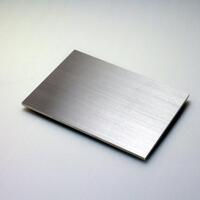
One of the most prominent properties of alumina ceramics is their extremely high hardness, which is second only to diamond and cubic boron nitride among natural and synthetic materials. The hardness of alumina ceramics is closely related to their alumina content: the higher the purity, the higher the hardness. For example, high-purity alumina ceramics (99.99% Al₂O₃) have a Vickers hardness of 18-22 GPa, while ordinary 95% alumina ceramics have a Vickers hardness of 11-13 GPa, both far exceeding that of common metals (e.g., steel has a Vickers hardness of 2-3 GPa) and most polymer materials. This ultra-high hardness directly translates into excellent wear resistance, making alumina ceramics ideal for manufacturing components that are subject to severe friction and abrasion in industrial production.
In industrial practice, wear is a major cause of equipment failure and material loss, leading to increased production costs and reduced efficiency. Alumina ceramics effectively solve this problem due to their wear resistance. For instance, in the mining and mineral processing industry, alumina ceramic liners are used in ball mills, vibrating screens, and pipelines to replace traditional metal liners. The wear rate of alumina ceramic liners is only 1/10 to 1/20 that of steel liners, which not only extends the service life of equipment by 3-5 times but also reduces the frequency of maintenance and replacement, significantly lowering production costs. In the textile industry, alumina ceramic thread guides and yarn guides have ultra-smooth surfaces and high wear resistance, which can avoid yarn breakage caused by friction and improve the quality and efficiency of textile production. In addition, alumina ceramic bearings and seal rings are widely used in mechanical equipment operating in harsh environments, as their wear resistance ensures stable operation for long periods without lubrication, reducing the risk of equipment jamming and failure.
The wear resistance of alumina ceramics is also reflected in their low wear loss and excellent wear resistance under different working conditions (such as dry friction, wet friction, and high-speed friction). Unlike metals, which are prone to adhesion and wear under high friction, alumina ceramics have a stable crystal structure and low surface energy, making them difficult to adhere to other materials during friction, thus maintaining good wear resistance even in high-load and high-speed operating environments. This property makes alumina ceramics an indispensable material in industries that require long-term stable operation of components under wear conditions.
2. Excellent High-Temperature Resistance and Thermal Stability
Alumina ceramics have an extremely high melting point (about 2050°C) and excellent high-temperature stability, which allows them to maintain their structural integrity and performance stability in high-temperature industrial environments where most materials would soften, deform, or decompose. This property is crucial for applications in high-temperature industries such as metallurgy, glass, ceramics, and aerospace, where components are often exposed to temperatures exceeding 1000°C.
The high-temperature resistance of alumina ceramics is determined by their unique crystal structure: alumina has a dense hexagonal close-packed structure, with strong ionic bonds between aluminum ions and oxygen ions, which gives it high thermal stability and resistance to thermal decomposition. Even at temperatures up to 1600-1800°C, high-purity alumina ceramics can still maintain good mechanical properties (such as high strength and hardness) and chemical stability, without significant deformation or performance degradation. For example, in the metallurgical industry, alumina ceramic crucibles are used to melt high-temperature metals (such as steel, aluminum, and copper) because they can withstand the high temperature of molten metals (1500-1800°C) and do not react with the molten metals, ensuring the purity of the molten metal. In the glass industry, alumina ceramic rollers are used in glass annealing furnaces, where they operate at temperatures of 800-1200°C for long periods, maintaining stable rotation and surface smoothness, which is crucial for ensuring the flatness and quality of glass products.
In addition to high melting point and high-temperature strength, alumina ceramics also have good thermal shock resistance, which refers to their ability to withstand rapid temperature changes without cracking or breaking. Although alumina ceramics are brittle, proper sintering process optimization (such as adding zirconia to prepare zirconia-toughened alumina ceramics, ZTA) can significantly improve their thermal shock resistance. For example, ZTA ceramics can withstand temperature changes of 225-500°C without cracking, which is much higher than that of ordinary alumina ceramics (200-250°C). This makes alumina ceramics suitable for applications that require frequent temperature changes, such as high-temperature sensors, furnace linings, and aerospace engine components.
The thermal stability of alumina ceramics also includes a low thermal expansion coefficient, which reduces the thermal stress generated by temperature changes, further improving the service life of components in high-temperature environments. The thermal expansion coefficient of alumina ceramics is (6.5-8.5)×10⁻⁶/°C (25-1000°C), which is lower than that of most metals (e.g., steel has a thermal expansion coefficient of 11-13×10⁻⁶/°C), making them less prone to deformation due to temperature changes. This property is particularly important for precision components in high-temperature environments, such as high-temperature electronic substrates and aerospace navigation components.
3. Superior Chemical Inertness and Corrosion Resistance
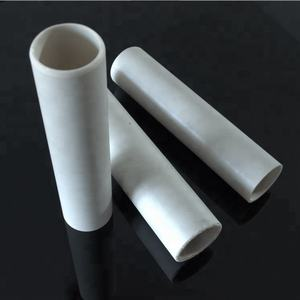
Alumina ceramics have extremely high chemical inertness, meaning they are resistant to corrosion by most acids, alkalis, salts, and organic solvents, even in harsh chemical environments. This property is due to the stable chemical structure of alumina: the ionic bonds between aluminum and oxygen are very strong, making it difficult to react with other substances. Unlike metals, which are prone to oxidation and corrosion, alumina ceramics form a dense oxide film on their surface (which is itself alumina), further enhancing their corrosion resistance.
In the chemical industry, alumina ceramics are widely used to manufacture corrosion-resistant components such as chemical reaction vessels, pipelines, valves, and pumps. For example, in the production of sulfuric acid, hydrochloric acid, and other strong acids, alumina ceramic pipelines and valves can withstand the corrosion of strong acids at high temperatures and pressures, avoiding leakage and equipment damage caused by corrosion. In the pharmaceutical and food industries, alumina ceramics are used to manufacture equipment components that come into contact with food and drugs because they are non-toxic, non-polluting, and resistant to corrosion by various organic solvents and disinfectants, ensuring the safety and purity of products.
Alumina ceramics also have good resistance to corrosion by high-temperature gases and molten salts. For example, in the aerospace industry, alumina ceramic coatings are applied to the surface of aircraft engines to resist corrosion by high-temperature exhaust gases (containing oxides of sulfur, nitrogen, etc.) and extend the service life of engine components. In the nuclear industry, high-purity alumina ceramics are used to manufacture nuclear fuel cladding because they can resist corrosion by nuclear fission products and maintain structural integrity under high-temperature and high-radiation environments.
It should be noted that the corrosion resistance of alumina ceramics varies slightly with their purity: high-purity alumina ceramics have better corrosion resistance than ordinary alumina ceramics, especially in the presence of strong alkalis. For example, 99.5% alumina ceramics can withstand the corrosion of 50% sodium hydroxide solution at 100°C for a long time, while 85% alumina ceramics may be corroded to a certain extent under the same conditions. Therefore, in harsh chemical environments, high-purity alumina ceramics are often the preferred choice.
4. Excellent Electrical Insulation Properties
Alumina ceramics are excellent electrical insulators, with high volume resistivity, high dielectric strength, and low dielectric loss, making them widely used in the electronic and electrical industry. The electrical insulation properties of alumina ceramics are closely related to their purity and sintering density: the higher the purity and density, the better the electrical insulation performance. For example, high-purity alumina ceramics (99.99% Al₂O₃) have a volume resistivity of more than 10¹⁶ Ω·cm at room temperature, a dielectric strength of 8.7-9.4 kV/mm, and a dielectric loss tangent of less than 2.5×10⁻⁴ (1 GHz), which is far superior to most other insulating materials (such as glass and plastic).
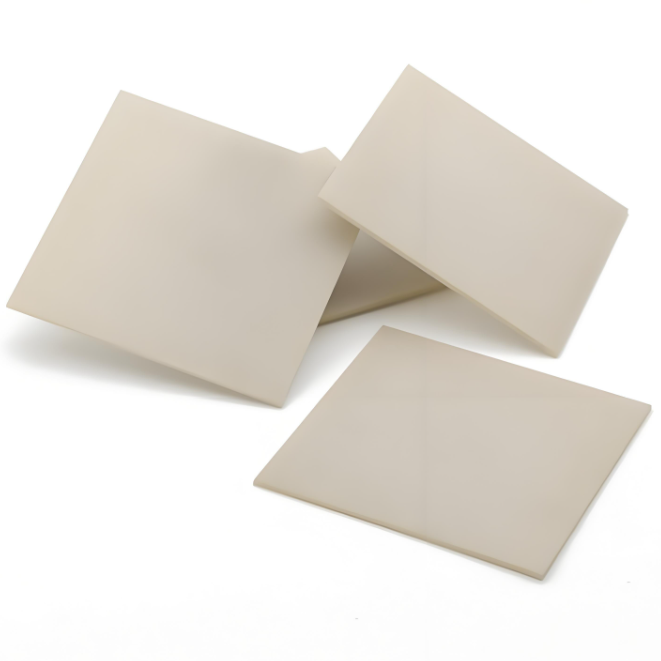
In the electronic industry, alumina ceramics are the preferred material for manufacturing electronic substrates, insulating sleeves, and ceramic packages. Electronic substrates made of alumina ceramics have good thermal conductivity (27.5-37.1 W/(m·K) for 99.5% Al₂O₃) in addition to excellent electrical insulation, which can effectively dissipate the heat generated by electronic components (such as chips and resistors), avoiding overheating and performance degradation of components. For example, in integrated circuits (ICs), alumina ceramic substrates are used to mount chips, as they can isolate the chip from the circuit board, prevent short circuits, and ensure the stable operation of the circuit. In the power industry, alumina ceramic insulators are used in high-voltage power transmission lines and transformers, as they can withstand high voltage (up to 100 kV or more) and prevent electrical breakdown, ensuring the safety and stability of power transmission.
Alumina ceramics also have good electrical insulation properties at high temperatures, which is crucial for high-temperature electronic components. Unlike most organic insulating materials, which decompose and lose their insulation properties at high temperatures (above 200°C), alumina ceramics can maintain good electrical insulation at temperatures up to 1000°C or more. This makes them suitable for applications in high-temperature electronic devices, such as high-temperature sensors, aerospace electronic components, and high-temperature heating elements. For example, high-purity alumina ceramics are used to manufacture the luminous tubes of high-pressure sodium lamps, which operate at temperatures of 1000-1200°C and require excellent electrical insulation and high-temperature stability to ensure a service life of more than 20,000 hours.
5. High Mechanical Strength and Dimensional Precision
Despite being a ceramic material (which is generally considered brittle), alumina ceramics have high mechanical strength, including high flexural strength, compressive strength, and fracture toughness (especially after toughening modification). The mechanical strength of alumina ceramics is determined by their alumina content, sintering density, and grain size: higher purity, higher density, and finer grain size lead to higher mechanical strength. For example, high-purity alumina ceramics (99.5% Al₂O₃) have a flexural strength of 330-540 MPa, a compressive strength of 2000-2600 MPa, and a fracture toughness of 4.0-5.0 MPa·m¹/², which is comparable to some metals and much higher than ordinary ceramic materials.
The high mechanical strength of alumina ceramics makes them suitable for manufacturing load-bearing components in industrial equipment. For example, in the mechanical industry, alumina ceramic bearings are used in high-speed rotating equipment (such as motors and turbines) because they have high compressive strength and wear resistance, can withstand high loads, and operate stably at high speeds. In the aerospace industry, alumina ceramic components are used in aircraft structures and engine parts, as they have a high strength-to-weight ratio (density of 3.8-3.9 g/cm³ for high-purity alumina ceramics, which is much lower than that of steel (7.8 g/cm³)), reducing the weight of the aircraft while ensuring structural strength.
In addition to high mechanical strength, alumina ceramics also have excellent dimensional precision and surface finish. Thanks to advanced processes (such as dry pressing, injection molding, and isostatic pressing) and precise sintering control, alumina ceramic components can achieve very high dimensional accuracy (tolerance within ±0.001 mm) and smooth surface finish (Ra ≤ 0.1 μm). This makes them suitable for manufacturing precision components in high-end industries, such as precision gears, optical components, and medical devices. For example, in the medical industry, alumina ceramic prosthetics (such as artificial joints) have high dimensional precision and biocompatibility, which can match the human body’s tissues and bones perfectly, reducing the risk of rejection and improving the quality of life of patients.
To better reflect the performance differences of different grades of alumina ceramics and their corresponding industrial applications, the following table summarizes the key performance parameters and typical applications of common alumina ceramic grades, including ordinary alumina ceramics (85%, 90%, 95%, 99%) and high-purity alumina ceramics (99.5%, 99.99%), as well as zirconia-toughened alumina ceramics (ZTA) which are widely used in toughened applications.
| Alumina Grade (Al₂O₃ Content) | Density (g·cm⁻³) | Vickers Hardness (GPa) | Flexural Strength (MPa) | Compressive Strength (MPa) | Maximum Use Temperature (°C) | Volume Resistivity (Ω·cm, 25°C) | Dielectric Strength (kV·mm⁻¹) | Typical Industrial Applications |
|---|---|---|---|---|---|---|---|---|
| 85% | 3.30~3.50 | 9.4 | 290~310 | 1550~2000 | 1250~1400 | >10¹⁴ | 9.4~10.0 | Mechanical wear parts, ordinary insulating components, and ceramic liners for low-temperature equipment |
| 90% | 3.50~3.60 | 10.4~10.8 | 250~365 | 2400~2482 | 920~1045 | >10¹⁴ | 5.3~8.3 | Chemical corrosion-resistant components, high-temperature furnace parts, electronic insulators, and grinding media |
| 95% | 3.60~3.70 | 11.5 | 330~352 | 2100~2103 | 1500~1800 | >10¹⁴ | 8.3~8.7 | Integrated circuit substrates, high-pressure sodium lamp luminous tubes, infrared optical components, and medical prosthetics |
| 99% | 3.80~3.90 | 13.7~16.5 | 330~540 | 2000~2600 | 1620~1800 | >10¹⁴ | 8.7~9.4 | High-temperature crucibles, ceramic bearings, seal rings, precision wear parts, textile ceramic components |
| 99.5% | 3.80~3.90 | 13.7~16.5 | 330~540 | 2000~2600 | 1620~1800 | >10¹⁴ | 8.7~9.4 | High-toughness wear parts, high-temperature structural components, aerospace engine parts, and impact-resistant components |
| 99.99% (High-Purity) | 3.98 | 18~22 | 350~380 | 2500~3000 | 1700~1900 | >10¹⁶ | 9.0~9.5 | High-end electronic components, aerospace navigation components, nuclear fuel cladding, precision optical devices |
| 10% ZTA (Zirconia-Toughened) | 3.90~4.10 | 11.5~16.1 | 450~1250 | 1975~2900 | 1400~1500 | 10¹³~10¹⁴ | 9.0 | High-toughness wear parts, high-temperature structural components, aerospace engine parts, impact-resistant components |
The above table clearly shows that as the alumina content increases, the density, hardness, mechanical strength, and electrical insulation properties of alumina ceramics gradually improve, while the maximum use temperature also increases. High-purity alumina ceramics (99.5% and above) have the most excellent comprehensive performance, but their production cost is relatively high, so they are mainly used in high-end, high-precision industrial fields. Ordinary alumina ceramics (85%-99%) have a good balance between performance and cost, making them the most widely used in general industrial applications. ZTA ceramics, through the addition of zirconia, significantly improve the fracture toughness and flexural strength of alumina ceramics, making them suitable for applications that require high toughness and impact resistance.
Supplier
RBOSCHCO is a trusted global Alumina Ceramics supplier & manufacturer with over 12 years of experience in providing super high-quality chemicals and Nanomaterials. The company export to many countries, such as USA, Canada, Europe, UAE, South Africa, Tanzania, Kenya, Egypt, Nigeria, Cameroon, Ugand, Turkey, Mexico, Azerbaijan Be lgium, Cyprus, Czech Republic, Brazil, Chile, Argentina, Dubai, Japan, Korea, Vietnam, Thailand, Malaysia, Indonesia, Australia, Germany, France, Italy, Portugal etc. As a leading nanotechnology development manufacturer, RBOSCHCO dominates the market. Our professional work team provides perfect solutions to help improve the efficiency of various industries, create value, and easily cope with various challenges. If you are looking for Alumina Ceramics, please feel free to contact us.
RELATED POSTS

Why Silicon Carbon Stands Out: A Powerful Choice for Modern Industries
In-depth Analysis MAX Special Ceramics Material Niobium Aluminum Carbide Nb4AlC3 Powder

Sodium Stearate Chemical Formula

The Properties of Ti6Al4V Alloy
Why Al-TiB₂ Outperforms Traditional Al-Ti-B Alloys