Professional and high-quality metal alloys, ceramic products and concrete additives | RBOSCHCO

Ever wonder how some farmers manage to grow decent crops even when the weather turns nasty? The secret might be simpler than you think. Potassium silicate isn’t just another chemical on the shelf—it’s quietly becoming the unsung hero of sustainable farming. With the global population on track to hit 8–10 billion by 2050, agriculture is under serious pressure to produce more food while dealing with drought, salty soil, and pests.
So what makes potassium silicate so special? Think of it as a personal trainer for plants—it doesn’t do the heavy lifting for them, but it makes them stronger, more resilient, and better equipped to handle stress. When applied, potassium silicate helps plants maintain effective stomatal conductance (keeping their “breathing” efficient), enhances CO₂ fixation (better photosynthesis), and thickens cell walls (tougher armor against pests and disease) . Plants just get tougher. And that’s exactly what modern agriculture needs.
What Is Potassium Silicate and Why Should Farmers Care?
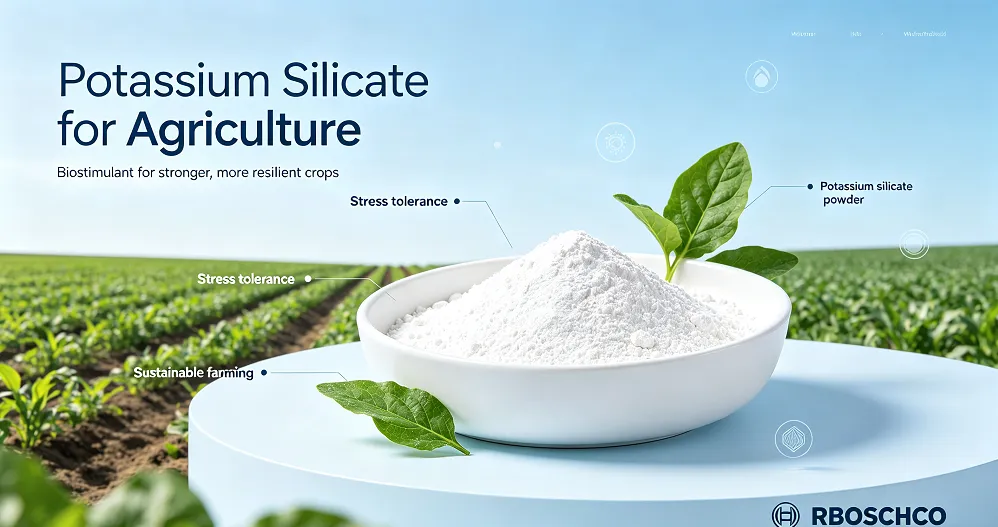
In simple terms, potassium silicate is a white, soluble powder that delivers two essential elements: potassium and available silicon. In agriculture, it’s not a traditional “fertilizer” in the NPK sense—it’s a biostimulant. That means it works with the plant’s own biology to unlock hidden potential.
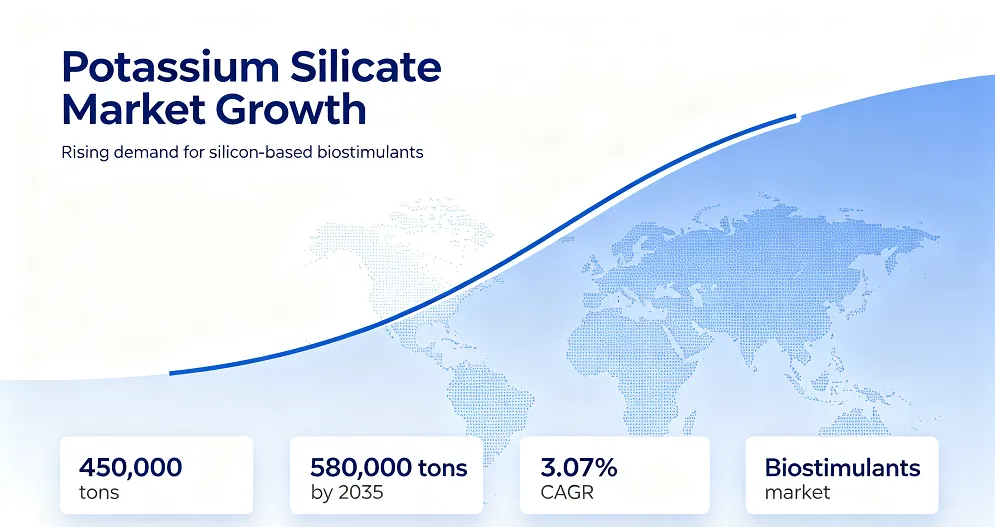
The current global market for potassium silicate is around 450,000 tons, and it’s expected to hit 580,000 tons by 2035, growing at a steady clip of 3.07% annually . Why the growth? Because farmers are waking up to the fact that potassium silicate actually works.
When applied correctly, potassium silicate doesn’t just feed plants—it fortifies them. Silicon accumulates in plant tissues, creating a physical barrier that makes it harder for pests to bite and diseases to penetrate. It’s like giving your crops a suit of armor.
In a broader context, the global biostimulants market—of which potassium silicate is a key part—is forecast to grow at a compound annual rate of 12.5% from 2024 to 2030, reaching an estimated $2.24 billion . This explosive growth reflects a fundamental shift in how farmers think about crop management: they’re moving from reactive chemical treatments to proactive biological solutions.
Potassium Silicate in Cereal and Field Crop Production
This isn’t just marketing hype. Peer-reviewed studies back up the claims, and the list of crops that benefit from potassium silicate is impressively long.
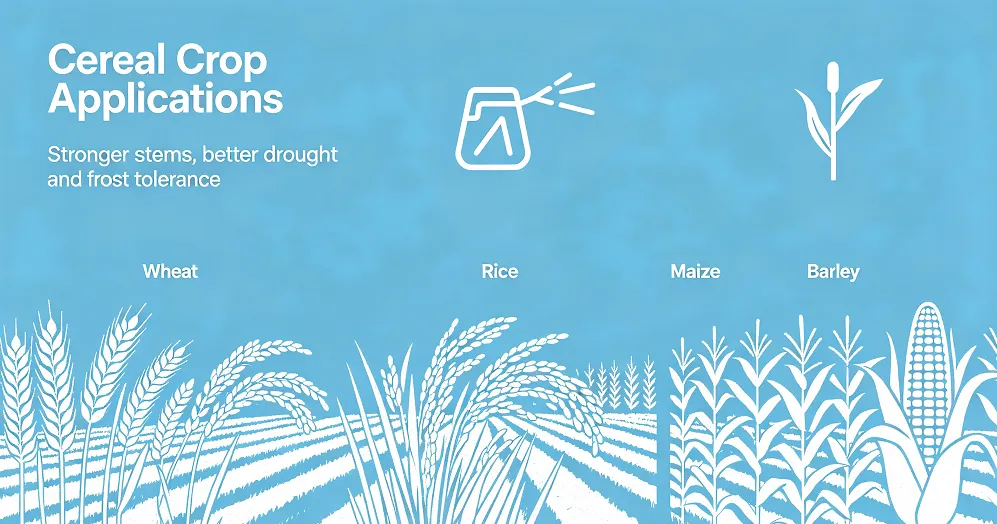
Barley responds exceptionally well to potassium silicate. When applied as a foliar spray, it improved plant survival under freezing stress, enhanced electron transport rates by up to 47 times in some cases, and protected cell membranes from damage . The mechanism is straightforward: potassium silicate boosts antioxidant activity and preserves photosynthetic function even when temperatures drop well below freezing.
Wheat is another major beneficiary. Research has demonstrated that potassium silicate improves wheat growth under drought stress and, when applied at the right concentration during tillering and flowering stages, effectively reduces heat stress damage . At the cellular level, potassium silicate helps wheat maintain healthier sodium levels—a critical factor for survival in saline soils .
Rice benefits from potassium silicate as an effective control agent for powdery mildew, and it helps prevent lodging by strengthening stems, which is particularly valuable in high-yield production systems where heavy grain heads can cause plants to topple over.
Maize also shows improved drought tolerance and overall yield potential when potassium silicate is applied during vegetative growth. The silicon deposited in cell walls helps the plant maintain water balance even when soil moisture is limited.
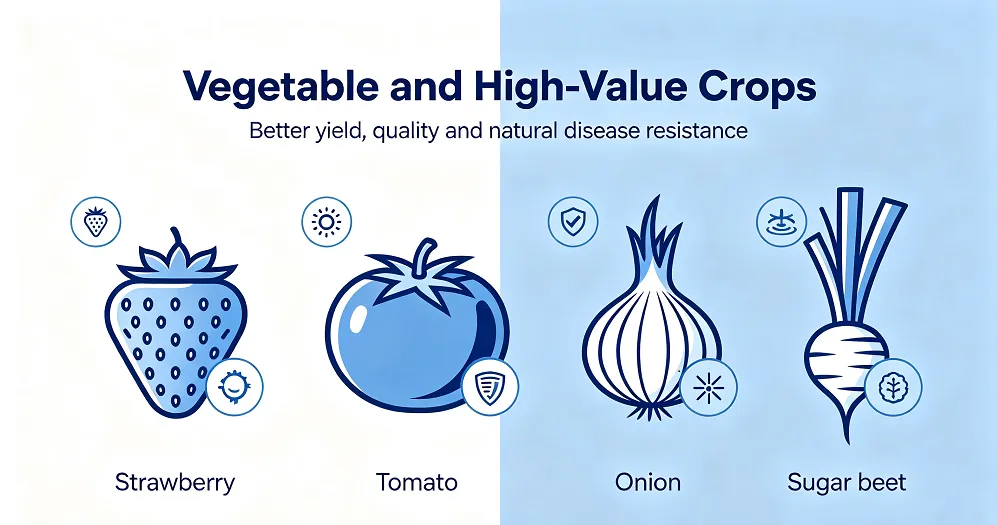
Potassium Silicate in Vegetable and High-Value Crop Production
The benefits of potassium silicate extend well beyond field crops. In vegetable production, the results are equally compelling.
Okra responds particularly well to potassium silicate—it mitigates salt and drought stress, acts as a biocontrol agent against nematodes and fungi, and even benefits non-target organisms like earthworms . The global biostimulants market is expanding rapidly, and potassium silicate’s role in sustainable vegetable production is a key driver.
Strawberry production sees significant benefits from potassium silicate application: it boosts plant width and marketable yield while substantially reducing gray mold. This means more fruit and less waste—a winning combination for commercial growers.
Tomato plants treated with potassium silicate show improved fruit sugar content and aroma under heat stress. In regions where high temperatures are becoming the norm, this could be a game-changer for maintaining fruit quality.
Onion crops display increased resistance to downy mildew, improved bulb weight and diameter, and enhanced nutrient uptake when treated with potassium silicate, especially when combined with other natural additives.
Sugar beet field trials demonstrate that potassium silicate improves water productivity and significantly boosts root and sugar yields under drought and saline conditions . In water-limited environments, this translates directly to more sugar per drop of water.
Canola shows remarkable results with potassium silicate application. Under severe drought stress, seed yield jumped from 1,692 kg/ha to nearly 3,936 kg/ha under non-stress conditions with treatment. Research has shown that potassium silica nanoparticles significantly improve physiological traits, yield, and stress tolerance in canola under drought conditions .
Sorghum benefits from potassium silicate nanostructure application, which improves growth and nutrient uptake even under drought stress conditions . The enhanced nutrient uptake, particularly of nitrogen and potassium, helps sorghum plants maintain productivity when water is scarce.
How Potassium Silicate Works in Plants (The Simple Version)
You don’t need a chemistry degree to understand why potassium silicate works. The mechanisms are straightforward and well-documented.
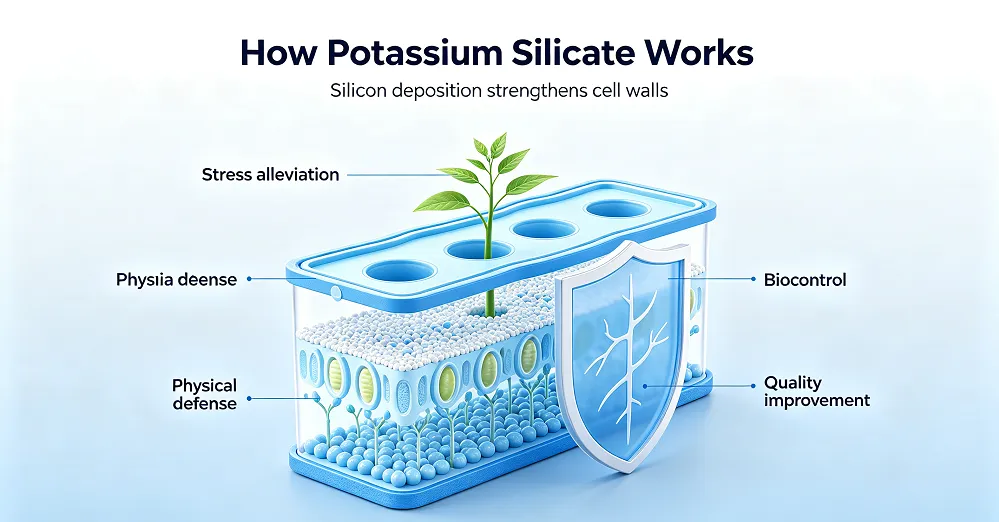
Stress Alleviation — Potassium silicate helps plants cope with drought, salinity, heat, and cold by regulating stomatal function (so plants don’t lose too much water), improving water-use efficiency, and maintaining membrane integrity . The market is currently witnessing an increase in demand because of its multifaceted applications in stress management .
Physical Defense — Silicon deposits in cell walls make plants tougher and harder for insects to chew through. It’s like giving your crops a suit of armor . This physical barrier also makes it more difficult for fungal pathogens to penetrate plant tissues.
Biocontrol — Potassium silicate acts as a natural fungicide and nematicide, helping control diseases like powdery mildew, gray mold, and Fusarium wilt without the heavy chemical load . This makes it an attractive option for integrated pest management programs.
Yield and Quality Boost — It enhances fruit weight, uniformity, appearance, and brix (sugar content), making for better-looking and better-tasting produce . In a marketplace where appearance matters, this can translate to premium prices.
Application Guidelines for Potassium Silicate
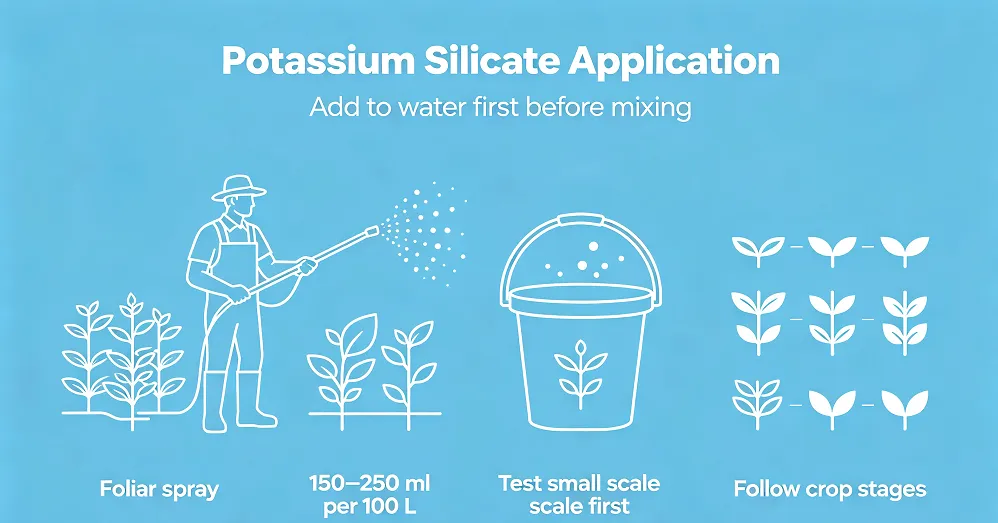
The following figures come from published studies, and results may vary depending on crop and conditions. Always test on a small scale first.
For sugar beet, a potassium silicate foliar spray is recommended under drought or saline conditions, with studies showing effectiveness at 10–20 mmol L⁻¹ concentrations .
For canola, foliar application during vegetative growth and pod set delivers the best results. Research indicates that a 200 ppm concentration can significantly mitigate drought stress effects.
Strawberries benefit from potassium silicate application during fruit development, with studies showing positive results at around 2 mL per gallon.
Onions respond well to potassium silicate combined with other natural additives, with concentrations of 2–4 ml/L showing effectiveness against downy mildew and improving bulb quality.
For cereals, potassium silicate can be applied from emergence to tillering at rates of 150–250 ml per 100 liters of water.
A crucial tip: always add potassium silicate to water first before mixing in other fertilizers. This prevents precipitation and ensures the silicon remains plant-available.
Emerging Trends in Potassium Silicate for Agriculture
The potassium silicate landscape is evolving rapidly. Several key trends are shaping its future in agriculture :
Sustainable Production Practices — Manufacturers are now investing in technologies that decrease waste and lower energy consumption while minimizing environmental impact. This shift aligns with consumer demand for eco-based products and increasingly strict regulations .
Advanced Agricultural Applications — Potassium silicate is increasingly utilized in advanced agricultural applications, driven by its soil amendment effect and plant growth-promoting activity. Innovations in formulation and application techniques are enhancing its effectiveness, leading to greater adoption in sustainable farming practices .
Nanotechnology Integration — Emerging nano-engineering approaches are enabling the development of ultra-stable colloidal dispersions and nanostructured potassium silicate products that deliver improved uniformity and bioavailability. The global market for potassium silicate was valued at USD 1.93 billion in 2024 and is projected to reach USD 2.96 billion by 2032, with a CAGR of 5.43% .
Expansion into Emerging Markets — Regions in Asia and Latin America are fast becoming major markets for potassium silicate products due to rapid industrialization and agricultural growth. Companies are establishing plants and distribution networks to target these developments .
Regulatory Support — Government backing for environmentally friendly procedures is propelling the rise of the potassium silicate industry. Companies abiding by such regulations stand to benefit from incentives, setting the pace for further industry development .
The Future of Potassium Silicate in Agriculture
The numbers speak for themselves. In a world where every drop of water and every hectare of land counts, potassium silicate isn’t just a nice-to-have—it’s becoming a must-have for sustainable agriculture.
The global market for potassium silicate is expected to continue its steady growth, driven by increasing demand for sustainable farming practices, rising environmental regulations, and growing awareness of silicon’s benefits in crop production . As farmers face the dual challenges of feeding a growing population and adapting to climate change, tools like potassium silicate will become increasingly valuable.
With its proven track record across multiple crops and stress conditions, potassium silicate represents a practical, cost-effective solution for modern agriculture. It’s not a silver bullet, but it’s a solid step in the right direction.
Supplier
RBOSCHCO is a globally recognized chemical material supplier and manufacturer with over 12 years of expertise in providing super high-quality chemicals and nanomaterials. If you are looking for high-quality potassium silicate powder for agricultural applications, please feel free to contact us.