Professional and high-quality metal alloys, ceramic products and concrete additives | RBOSCHCO

The question of whether sulfide powder will displace oxide powder in solid-state batteries by 2028 is not just a technical one—it’s a race against time, cost, and material science challenges. As the global push for high-performance energy storage intensifies, driven by electric vehicles (EVs), renewable energy storage, and portable electronics, solid-state batteries (SSBs) have emerged as the “holy grail” to solve the limitations of current lithium-ion batteries (LIBs): low energy density, safety risks, and limited cycle life. At the heart of this revolution lies the choice of a solid electrolyte: sulfide or oxide.
By 2028, the industry will likely see sulfide powder as a dominant player in high-performance applications but not a complete replacement for oxide powder. Instead, a “coexistence” model will take shape, with sulfides leading in high-energy-density, fast-charging scenarios and oxides retaining strength in cost-sensitive, stable, and scalable applications. This blog unpacks the technical, industrial, and market factors shaping this transition, helping you understand why the future isn’t a “winner-takes-all” battle but a strategic division of labor.
1. Core Advantages: Sulfide vs. Oxide—A Tale of Two Materials
To predict the future, we must first understand the fundamental differences between sulfide and oxide solid electrolytes. Let’s start with their core performance metrics and application scenarios.
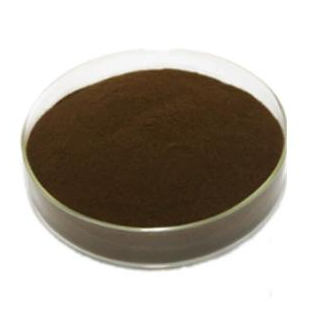
1.1 Sulfide Powder: The “High-Performance Contender.”
Sulfide solid electrolytes (e.g., Li₂S-P₂S₅, Li₁₀GeP₂S₁₂, Li₆PS₅Cl) are the darlings of the SSB industry, primarily for their exceptional ionic conductivity. At room temperature, their ionic conductivity reaches 10⁻² S/cm—on par with commercial liquid electrolytes (10⁻²–10⁻¹ S/cm). This means sulfide-based SSBs can support ultra-fast charging (e.g., 80% capacity in 15 minutes) and high-power output, addressing two of the biggest pain points of current EVs.
Beyond conductivity, sulfides offer:
- Excellent interface compatibility: Their soft, ductile nature allows for tight contact with electrodes, reducing solid-solid interface impedance. This significantly improves battery cycle life and energy efficiency.
- High energy density potential: They are compatible with high-nickel cathodes (e.g., NCM811) and silicon-based anodes, enabling SSB energy densities to exceed 450 Wh/kg (some lab prototypes reach 500 Wh/kg).
- Good processability: Sulfide powder can be processed via dry coating or cold pressing, compatible with existing battery manufacturing equipment (e.g., roll-to-roll production).
However, sulfides have obvious “fatal flaws”:
- Air sensitivity: They react violently with moisture and CO₂ in the air, releasing toxic hydrogen sulfide (H₂S) gas. Production must be carried out in an inert atmosphere (dew point ≤ -60°C), increasing equipment and operational costs by 30%.
- Costly raw materials: The core raw material, lithium sulfide (Li₂S), currently costs 300–5000k/ton (≈$42,000–$70,000/ton)—84 times that of lithium carbonate.
- Chemical stability issues: They react with lithium metal anodes, forming high-impedance layers that degrade battery performance.
1.2 Oxide Powder: The “Stable Workhorses.e”
Oxide solid electrolytes (e.g., LLZO, LATP, LLTO) are traditional “heavyweights” in the electrolyte field, known for their superior stability. LLZO (Lithium-Lanthanum-Zirconium Oxide), the most representative material, has:
- Excellent thermal and chemical stability: It can withstand temperatures above 600°C, is non-flammable, and has a wide electrochemical window (>5V), making it compatible with high-voltage cathodes.
- High mechanical strength: Its shear modulus reaches ~60 GPa, effectively suppressing lithium dendrite growth and enhancing safety.
- Low cost: Raw materials (e.g., ZrO₂, Y₂O₃) are cheap and easy to obtain, with production processes mature and scalable.
But oxides also have critical drawbacks:
- Low ionic conductivity: Room-temperature conductivity is only 10⁻⁴–10⁻³ S/cm, 1–2 orders of magnitude lower than sulfides, limiting fast-charging capabilities.
- Poor interface compatibility: High brittleness leads to poor contact with electrodes, resulting in high interface impedance. High-temperature sintering (≥1200°C) is required, causing lithium loss and low yields.
- Limited energy density: Stricter material matching requirements make it difficult to achieve energy densities above 400 Wh/kg.
1.3 Key Performance Comparison: Sulfide vs. Oxide
To make the comparison clearer, here’s a detailed table of core indicators:
| Indicator | Sulfide Powder | Oxide Powder | Impact on Application |
|---|---|---|---|
| Ionic Conductivity (25°C) | 10⁻² S/cm (highest) | 10⁻⁴–10⁻³ S/cm | Oxides suit high-temperature environments; sulfides need thermal management |
| Thermal Stability | Poor (decomposes at ~300°C) | Excellent (>600°C, non-flammable) | Oxides suit high-temperature environments; sulfides need thermal management.ent |
| Chemical Stability | Sensitive to air/moisture (releases H₂S) | Stable (inert atmosphere not required) | Sulfides need strict production conditions; oxides are easier to handle |
| Mechanical Strength | Ductile (low modulus) | Brittle (high modulus, suppresses dendrites) | Oxides have better safety; sulfides need interface protection |
| Raw Material Cost | Very high (Li₂S: ~$42,000/ton) | Low (ZrO₂: ~$32,000/ton) | Oxides reduce manufacturing costs; sulfides are only suitable for high-end products |
| Production Complexity | High (inert atmosphere, strict controls) | Low (compatible with existing LIB lines) | Oxides scale faster; sulfides need new production lines |
| Energy Density Potential | High (>450 Wh/kg) | Moderate (<400 Wh/kg) | Sulfides power long-range EVs; oxides suit mid-range models |
2. Industrialization Progress: 2025–2028—A Critical Transition Period
The timeline for sulfide and oxide commercialization is a key factor in determining their market share by 2028. Industry insiders and research institutions (e.g., China Association of Automobile Manufacturers, EVTank) have outlined a clear “three-stage” roadmap.
2.1 2025–2026: Oxide Leads—Half-Solid State Dominates
In the short term, oxide-based half-solid state batteries will dominate the market. Their mature technology, low cost, and compatibility with existing production lines make them the first choice for mass-market EVs.
- Oxide progress: Companies like CATL, BYD, and Qing Tao Energy have launched oxide-based half-solid-state batteries. For example, NIO’s ET7 model uses a 150 kWh half-solid battery with oxide composite electrolyte, already in mass production. The 2025–2026 period focuses on optimizing oxide performance—reducing sintering temperature, improving interface compatibility, and increasing energy density to 350–400 Wh/kg.
- Sulfide progress: Sulfide-based all-solid-state batteries (ASSBs) are still in the pilot stage. Leading companies like CATL and BYD have built pilot lines (kilogram to ton scale) and completed prototype testing. Toyota, a global leader in sulfide technology, plans to launch sulfide ASSB pilot production in 2026, with energy density reaching 400 Wh/kg and a range of over 1,000 km.
2.2 2027: The “Critical Inflection Point”—Sulfide Enters Mass Production
2027 is widely regarded as the “year of sulfide commercialization”. By this time, core technical bottlenecks will be broken, and sulfide ASSBs will enter small-scale mass production (GWh scale).
Sulfide breakthroughs:
- Cost reduction: New processes (e.g., solid-state reaction, liquid-phase method) and raw material substitutions (e.g., replacing high-purity sulfur with pyrite) will cut sulfide electrolyte costs by 50% by 2027.
- Interface stability: Technologies like LiNbO₃ coating and in-situ polymerization will reduce interface impedance, extending cycle life to over 2,000 times.
- Production scaling: Companies like ENNEC and Ganfeng Lithium are building 100–1,000 ton scale sulfide electrolyte pilot lines, with roll-to-roll continuous production achieved.
Oxide transition: Oxide half-solid state batteries will continue to dominate mid-range models, while sulfide ASSBs will be deployed in high-end EVs, luxury cars, and emerging applications (e.g., eVTOL, aerospace).
2.3 2028: Coexistence—Sulfide Leads in High-End, Oxide in Mainstream
By 2028, the market will stabilize into a “dual-core” pattern:
- Sulfide powder: Will become the mainstream for high-performance ASSBs. It will be used in high-end EVs (energy density 450–500 Wh/kg), eVTOLs, and portable electronics requiring ultra-fast charging and long life. Global sulfide ASSB production capacity is expected to reach 5–10 GWh, mainly supplied by CATL, Toyota, and Samsung SDI.
- Oxide powder: Will remain dominant in cost-sensitive, large-scale applications. It will be used in mid-range EVs, energy storage systems (ESS), and consumer electronics. Oxide-based half-solid-state batteries will still account for over 60% of the solid-state battery market by 2028.
3. Key Challenges Hindering Sulfide’s Full Replacement of Oxide by 2028
Despite sulfide’s superior performance, several “hard bones” need to be cracked before it can fully replace oxide by 2028.
3.1 Material Cost: The “Mountains” to Climb
Cost is the biggest barrier to sulfide’s mass adoption. Currently:
- Lithium sulfide (Li₂S) accounts for over 70% of sulfide electrolyte costs, with a price of 3000k–5000k/ton—far higher than the $5,000/ton target for commercialization.
- Sulfide ASSB cell costs are 3–5 times that of liquid LIBs, making it impossible to compete in the mainstream market.
To reach 2028 targets, sulfide costs must be reduced to <1000k/ton (≈$14,000/ton), and cell costs to <1.5/Wh (≈$0.21/Wh). This requires:
- Large-scale production (10,000+ ton scale) to achieve economies of scale.
- New material systems (e.g., Li-free sulfides, chloride-sulfide composites) to reduce reliance on Li₂S.
- Process innovation (e.g., dry electrode technology, continuous production equipment) to cut energy consumption and labor costs.
3.2 Production Process: Strict Environmental Requirements
Sulfide’s air sensitivity creates huge production challenges:
- Production must be carried out in a water- and oxygen-free inert atmosphere (dew point ≤ -60°C), requiring specialized equipment and increasing investment by 30%.
- Sulfide electrolyte film preparation (15–25 μm thickness) demands high-precision coating and lamination equipment, which is not yet mature for large-scale production.
By 2028, only a few leading companies (e.g., ENNEC, CATL) will have mastered continuous sulfide production technology, with overall industry capacity remaining limited. Oxide, by contrast, can be produced in ordinary air, with production lines compatible with existing LIB equipment—making it far easier to scale.
3.3 Interface Stability: The “Last Mile.”
The solid-solid interface between sulfide and electrodes is a major technical bottleneck:
- Sulfides react with lithium metal anodes, forming high-impedance layers that reduce cycle life and fast-charging performance.
- Mechanical stress mismatch between sulfide and electrodes causes interface delamination, affecting battery safety and reliability.
While breakthroughs like atomic-level coating and in-situ polymerization have been made in the lab, mass-producing these technologies to ensure consistency and stability remains a challenge. Oxide, despite its own interface issues, has a more mature solution system (e.g., high-temperature sintering, composite modification) and is more reliable for large-scale production.
4. Future Outlook: 2028 and Beyond—A “Coexistence” Model
So, will sulfide powder replace oxide powder by 2028? The answer is n, not entirely. Instead, the industry will evolve into a “coexistence” model with clear positioning for each material.
4.1 Sulfide: The “Future Mainstream”—Leading in High-Performance Scenarios
By 2028, sulfide will have established its leading position in:
- High-end EVs: Luxury models with 1,000+ km range and 10-minute fast charging (e.g., Toyota’s 2028 flagship EV, expected to use sulfide ASSBs).
- Emerging mobility: eVTOLs, autonomous delivery robots, and aerospace applications, where high energy density and fast charging are critical.
- High-end consumer electronics: Premium smartphones, laptops, and wearable devices requiring longer battery life and safer operation.

4.2 Oxide: The “Reliable Mainstay”—Dominating Cost-Sensitive Markets
Oxide will continue to thrive in:
- Mid-range and entry-level EVs: Models targeting cost-conscious consumers, where the balance between performance and price is key.
- Energy storage systems (ESS): Grid-scale and residential energy storage, where stability, scalability, and low cost are prioritized over ultra-fast charging.
- Mainstream consumer electronics: Budget smartphones, tablets, and IoT devices, where cost control is more important than cutting-edge performance.
4.3 Beyond 2028: Sulfide’s Gradual Expansion
Looking beyond 2028, sulfide will gradually expand its market share as cost reduction and production technology mature. By 2030, sulfide-based ASSBs may account for 40–50% of the SSB market, with oxide remaining dominant in large-scale energy storage. However, a complete replacement is unlikely—oxide’s stability and cost advantages will ensure its long-term presence in the industry.
By 2028, sulfide powder will not replace oxide powder in solid-state batteries. Instead, the two materials will coexist, each dominating its respective niche: sulfide as the high-performance leader for premium applications, and oxide as the reliable, cost-effective workhorse for mainstream markets. The “coexistence” model is not a compromise but a rational division of labor, driven by technical limitations, cost constraints, and market demand.
For industry players, the key is not to bet on a single material but to leverage the strengths of both: optimizing oxide for scalability and cost, and advancing sulfide for high-performance scenarios. For consumers, this means more choices—from affordable, reliable EVs with oxide-based batteries to high-end models with sulfide-powered long range and fast charging. The future of solid-state batteries is not a single material’s victory, but a collaboration that accelerates the transition to a cleaner, more efficient energy future.
Supplier
RBOSCHCO is a trusted global sulfide powder supplier & manufacturer with over 12 years of experience in providing super high-quality chemicals and Nanomaterials. The company export to many countries, such as USA, Canada, Europe, UAE, South Africa, Tanzania, Kenya, Egypt, Nigeria, Cameroon, Ugand, Turkey, Mexico, Azerbaijan Be lgium, Cyprus, Czech Republic, Brazil, Chile, Argentina, Dubai, Japan, Korea, Vietnam, Thailand, Malaysia, Indonesia, Australia, Germany, France, Italy, Portugal etc. As a leading nanotechnology development manufacturer, RBOSCHCO dominates the market. Our professional work team provides perfect solutions to help improve the efficiency of various industries, create value, and easily cope with various challenges. If you are looking for sulfide powder, please feel free to contact us.