Professional and high-quality metal alloys, ceramic products and concrete additives | RBOSCHCO



PRODUCT PARAMETERS
Description
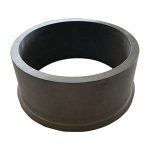
Overview of Silicon Nitride Degassing Rotor Impeller Shafts
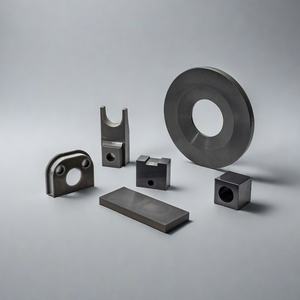
Silicon nitride degassing rotor impeller shafts are a key component used in areas such as aluminum treatment. It is usually made of silicon nitride material, which has the characteristics of high strength, high hardness, high temperature resistance, wear resistance and good chemical stability. Its impeller shaft is reasonably designed to achieve an efficient degassing function under high-speed rotation, effectively removing hydrogen and impurities in the liquid aluminum, improving the quality of liquid aluminum, and extending the service life of the equipment, which plays an important role in the aluminum processing industry.
Features of Silicon Nitride Degassing Rotor Impeller Shafts
Silicon nitride degassing rotor impeller shafts have the following significant features:
Excellent high temperature resistance: Silicon nitride has a high melting point and good thermal stability, which can withstand high temperatures above 1600℃, avoiding deformation and softening due to high temperatures, and ensuring that the degassing rotor impeller shafts can still operate normally under long-time high-temperature working conditions.
High strength and hardness: the strength and hardness of silicon nitride degassing rotor impeller shaft is very high, Rockwell hardness up to HRA80 – 85, bending strength of 800 – 1000MPa or so, which makes the impeller shaft can withstand high-speed rotation of the centrifugal force and the scouring of the aluminum liquid, and it is not easy to wear and tear, fracture and so on, which ensures the stability and reliability of the degassing process, and prolongs the service life of the equipment.
Good corrosion resistance: silicon nitride has excellent corrosion resistance to aluminum liquid and other related chemicals, can resist the erosion of various impurities and additives in the aluminum liquid, preventing the material surface from being corroded, thus ensuring the performance and precision of the degassing rotor impeller shaft and avoiding the effect of degassing due to corrosion.
Low coefficient of expansion: Silicon nitride has a low coefficient of thermal expansion, so when the temperature changes, the size of the impeller shaft changes less, and it can maintain a good fit precision, ensuring that the rotor can be closely matched with the equipment at different temperatures, operating efficiently, and minimizing equipment failures due to thermal expansion and contraction.
Specifications table of Silicon nitride degassing rotor impeller shafts
| Item | Unit | Specification |
| Material | – | Silicon nitride |
| Bulk density | g/cm³ | 3.2 |
| Water absorption | % | 0 |
| Flexural strength | MPa | 750 |
| Young’s modulus of elasticity | GPa | 280 |
| Fracture toughness | MPa·m¹/² | 6.5 |
| Poisson’s ratio | – | 0.28 |
| Vickers hardness | GPa | 13 |
| Coefficient of linear thermal expansion | ×10⁻⁶/℃ | 3.4 |
| Thermal conductivity | W/(m·K) | 30 |
| Specific heat | J/(g·K) | 0.65 |
| Volume resistivity | Ω·cm | >10¹⁴ |
| Heat shock resistance | ℃ | 800 |
| Maximum available temperature | ℃ | 1200 |
Applications of Silicon Nitride Degassing Rotor Impeller Shafts
Silicon nitride degassing rotor impeller shafts are mainly used in the aluminum processing industry, playing a key role in the aluminum refining process.
In the process of aluminum alloy melting, hydrogen and other gases, as well as some impurities, will be mixed in the aluminum liquid. Silicon nitride degassing rotor impeller shaft, through high-speed rotation, inert gases (such as argon, nitrogen) are dispersed into tiny bubbles, so that they are evenly distributed in the aluminum liquid.
In addition, in some high-end casting fields, such as aerospace, automotive parts, and other industries with extremely high quality requirements for aluminum alloys, the application of a silicon nitride degassing rotor impeller shaft is particularly important. At the same time, due to its good resistance to high temperature, abrasion and corrosion, it can operate stably for a long time under the harsh working environment, reduce the maintenance cost and replacement frequency of the equipment, and improve the production efficiency.
Company Profile
RBOSCHCO is a trusted global chemical material supplier & manufacturer with over 12 years of experience in providing super high-quality chemicals and Nanomaterials. The company exports to many countries, such as the USA, Canada, Europe, UAE, South Africa, Tanzania, Kenya, Egypt, Nigeria, Cameroon, Uganda, Turkey, Mexico, Azerbaijan, Belgium, Cyprus, Czech Republic, Brazil, Chile, Argentina, Dubai, Japan, Korea, Vietnam, Thailand, Malaysia, Indonesia, Australia, Germany, France, Italy, Portugal etc. As a leading nanotechnology development manufacturer, RBOSCHCO dominates the market. Our professional work team provides perfect solutions to help improve the efficiency of various industries, create value, and easily cope with various challenges. If you are interested, please send an email to sales1@rboschco.com
Payment Term
T/T, Western Union, Paypal, Credit Card etc.
Shipment Term
By air, by sea, by express, as customers request.
5 FAQs of Silicon Nitride Degassing Rotor Impeller Shafts
Q1: What are the advantages of silicon nitride over traditional graphite rotors?
Longer life: graphite rotor is easy to oxidize and has a life of about 1-2 weeks; silicon nitride rotor can run stably for 3-6 months, reducing the frequency of downtime for replacement. Higher efficiency: Silicon nitride rotor surface is smooth, bubble dispersion is more uniform, and degassing efficiency is increased by 20%-30%. Low maintenance cost: no aluminum sticking, no slag accumulation, longer cleaning cycle, inert gas (argon, nitrogen) consumption reduced by 15%-20%.
Q2: How to maintain the silicon nitride rotor correctly?
Avoiding mechanical shock: Installation and disassembly should be carried out gently to prevent ceramic parts from cracking.
Cleaning methods: Ultrasonic cleaning: Use deionized water to remove aluminum slag from the surface. Chemical cleaning: Use a weak alkaline solution (such as sodium carbonate) to dissolve stubborn stains and avoid acid corrosion.
Periodic inspection: Wear and tear: Impeller edge wear more than 2mm needs to be replaced. Sealing: Check whether the gas channel is leaking, and replace the seals in time.
Q3:What are the common failures and solutions of the silicon nitride degassing rotor impeller shaft?
Rotor offset: Reason: not aligned during installation or loose bearing. Solution: Re-align the mounting position and replace worn bearings.
Gas leakage: Reason: aging of seals or loosening of threaded connections. SOLUTION: Replace sealing o-rings and tighten threaded connections.
Aluminum contamination: Cause: Rotor surface damage or impure material. Solution: Select high-purity silicon nitride (e.g. pneumatic sintering process) and check surface integrity regularly.
Q4: What do I need to pay attention to when installing the silicon nitride degassing rotor impeller shaft?
Alignment accuracy: The concentricity error between the rotor shaft and the motor shaft needs to be controlled within ±0.05mm to avoid vibration during high-speed rotation. Support structure: Adopt a triangular support design (e.g., inclined stabilizer bar + connecting rod) to enhance stability and reduce wear of the motor shaft. Pre-heating treatment: Slowly increase the temperature to 300-500℃ before use to prevent cracking caused by sudden temperature change.
Q5: What are the specifications to be observed during the operation of the silicon nitride degassing rotor impeller shaft?
Speed control: The recommended speed is 300-500 rpm; too high a speed may lead to excessive centrifugal force and damage the rotor. Gas flow: the flow of inert gas (such as argon) should be adjusted according to the amount of aluminum liquid, generally 5-15L/min, to avoid excessive bubbles affecting the degassing effect. Safety protection: The operator should wear high-temperature resistant gloves and goggles to prevent aluminum splashes.
REQUEST A QUOTE
RELATED PRODUCTS

Silicon Carbide Crucibles for Battery Anode Material Use for High Temperature Use and Alkali Resistant
High Quality Customizable Multi-Size Silicon Nitride Gaskets

High Purity BN Insulating Ceramic Plate Boron Nitride Ceramic Sheet
Recrystallized Silicon Carbide RSiC Ceramic Product

Customized Industrial High Purity Boron Nitride Gaskets