Professional and high-quality metal alloys, ceramic products and concrete additives | RBOSCHCO



PRODUCT PARAMETERS
Description
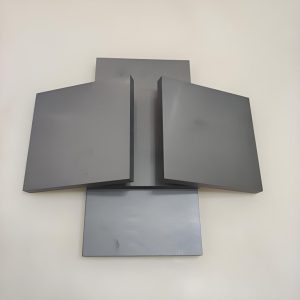
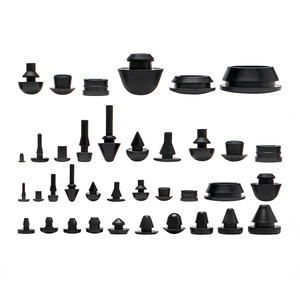
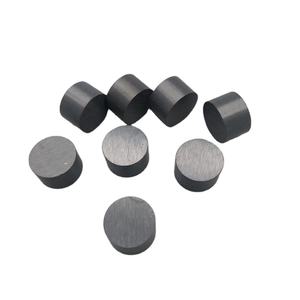
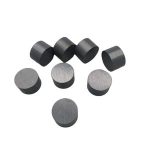
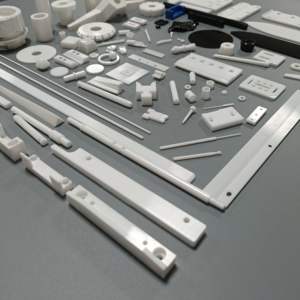
Overview of Silicon Nitride Ceramic Standard Parts
Silicon Nitride Ceramic Standard Parts are made of silicon nitride as the main raw material with specific specifications and performance. They are characterized by high strength, high hardness, high-temperature resistance, abrasion resistance, oxidation resistance, etc., and can maintain stable performance in harsh environments. With high dimensional accuracy and good consistency, it is widely used in machinery manufacturing, aerospace, electronics, chemical industry and other fields, and can be used to manufacture bearings, cutting tools, turbine blades, seals and other key components.
Features of Silicon Nitride Ceramic Standard Parts
Silicon Nitride Ceramic Standard Parts have the following significant features:
High hardness and strength: Silicon Nitride Ceramic Standard Parts are extremely hard, second only to diamond and a few other substances. Its compressive strength can reach 700 – 1000MPa, and Rockwell hardness between HRA80 – 90; with this characteristic, it can withstand huge pressure and impact, is not easy to deform and damage, and can be used to manufacture high load-bearing mechanical parts.
Good wear resistance: Silicon nitride ceramic standard parts have excellent wear resistance and can effectively resist friction and wear. In the high-speed, high-load friction environment, its wear rate is extremely low, which can significantly improve the service life and reliability of the equipment often used in the manufacture of parts with high wear requirements, such as ceramic bearings, ceramic cutting tools and so on.
High-temperature resistance: Silicon nitride ceramic standard parts have excellent high-temperature resistance and can still maintain good mechanical properties and chemical stability in a high-temperature environment. Its melting point is as high as 1900℃, and it can be used for a long time at a high temperature of 1200 – 1300℃, which is suitable for aerospace, metallurgy and other high-temperature fields.
Good chemical stability: silicon nitride ceramic standard parts have excellent chemical stability and strong corrosion resistance to acids, alkalis, salts and other chemicals. It does not easy to be corroded and oxidized in harsh chemical environments and can be used for corrosion-resistant parts in chemical, electronics and other fields.
Low coefficient of expansion: Silicon Nitride ceramic standard parts have a low coefficient of thermal expansion of about 2.5 – 3.0 x 10-⁶/°C, which makes it possible to maintain dimensional stability in environments with large temperature variations, reduces deformation and cracking due to thermal expansion and contraction, and improves the precision and reliability of the parts.
Specifications table of Silicon Nitride Ceramic Standard Parts
| Property | Unit | Value |
| Density | g/cm³ | 3.2 |
| Porosity | – | <5% |
| Hardness (HV) | GPa | 18 |
| Flexural Strength | MPa | 800 – 1200 |
| Modulus of Elasticity (Young’s Modulus) | GPa | 320 |
| Poisson’s Ratio | – | 0.25 |
| Fracture Toughness, KIC | MPa·m¹/² | 6.0 – 8.0 |
| Max. Use Temperature (Air) | ℃ | 1200 |
| Max. Use Temperature (Inert Gas) | ℃ | 1500 |
| Thermal Conductivity | W/(m·K) | 20 |
| Coefficient of Thermal Expansion | 10⁻⁶/K | 3.1 |
| Resistivity | ω·cm | >10¹⁴ |
Applications of Silicon Nitride Ceramic Standard Parts
Silicon Nitride Ceramic Standard Parts are widely used in many fields due to their excellent performance:
In the field of machinery manufacturing, it can be made into high-precision bearing balls and bushings, and its high hardness, wear resistance and low coefficient of friction can make the bearings run stably under high-speed and high-load conditions, prolonging the service life and improving the efficiency of machinery. At the same time, silicon nitride ceramic cutting tools in the cutting process with excellent performance, sharpness and durability can realize high-speed cutting and improve machining accuracy and surface quality.
Aerospace field: It is used to manufacture turbine blades and combustion chamber parts of aviation engines. Silicon nitride ceramic standard parts of high-temperature resistance, high strength and low-density characteristics not only can withstand the high temperature and high-pressure environment inside the engine but also reduce the weight of the engine, improve fuel efficiency, and enhance the performance and range of aircraft.
Electronic industry: as an integrated circuit packaging material, silicon nitride ceramics have good electrical insulation, thermal stability and chemical stability, can effectively protect the chip from external environmental influences, and improve the reliability and stability of electronic equipment. In addition, it can also be used to manufacture high-frequency, high-voltage electronic components insulating parts to ensure the safe operation of electronic equipment.
Energy field: in the fuel cell, silicon nitride ceramic standard parts can be used as electrolyte or electrode support material; its good ionic conductivity and chemical stability help to improve the performance and durability of fuel cells. In high-temperature gas-cooled nuclear reactors, silicon nitride ceramics can be used to manufacture core components that can withstand high temperatures, radiation and other harsh environments.
Company Profile
RBOSCHCO is a trusted global chemical material supplier & manufacturer with over 12 years of experience in providing super high-quality chemicals and Nanomaterials. The company exports to many countries, such as the USA, Canada, Europe, UAE, South Africa, Tanzania, Kenya, Egypt, Nigeria, Cameroon, Uganda, Turkey, Mexico, Azerbaijan, Belgium, Cyprus, Czech Republic, Brazil, Chile, Argentina, Dubai, Japan, Korea, Vietnam, Thailand, Malaysia, Indonesia, Australia, Germany, France, Italy, Portugal etc. As a leading nanotechnology development manufacturer, RBOSCHCO dominates the market. Our professional work team provides perfect solutions to help improve the efficiency of various industries, create value, and easily cope with various challenges. If you are interested, please send an email to sales1@rboschco.com
Payment Term
T/T, Western Union, Paypal, Credit Card etc.
Shipment Term
By air, by sea, by express, as customers request.

5 FAQs of Silicon Nitride Ceramic Standard Parts
Q1:What are the core advantages of silicon nitride ceramic standard parts?
Silicon nitride ceramic standard parts have high strength (flexural strength 600-800MPa), high hardness (Vickers hardness 15-16GPa), high-temperature resistance (long-term use temperature 1200-1300 ℃), wear resistance (coefficient of friction 0.1-0.2) and excellent chemical stability (acid and alkali corrosion resistance). Its density is only 1/3 of that of steel, and at the same time, it has a low expansion coefficient (2.5-3.0×10-⁶/°C) and high thermal conductivity (100-200W/(m・K)), which is especially suitable for high temperature, high speed, and high load extreme working conditions.
Q2: What is the difference between silicon nitride ceramics and alumina ceramics?
Hardness and strength: Silicon nitride is harder (close to corundum), with a compressive strength of 700-1000MPa, while alumina ceramics are slightly lower.
Thermal properties: Silicon nitride has a lower coefficient of thermal expansion (about 3×10-⁶/°C), better thermal shock resistance, and is suitable for environments with drastic temperature changes; alumina has a higher coefficient of thermal expansion and is prone to cracking due to thermal stress.
Corrosion resistance: Silicon nitride is more resistant to molten metals (e.g., magnesium, nickel-chromium alloys) and strong acids and alkalis, while alumina has a slightly weaker resistance to oxidation at high temperatures.
Cost: The silicon nitride preparation process is complex, and the cost is higher than alumina, but in the high-end field (such as aerospace semiconductors) irreplaceable.
Q3: How to solve the brittleness problem of silicon nitride ceramics?
Traditional silicon nitride ceramics are brittle due to the strong covalent bond structure (fracture toughness 6MPa・m¹/²), but the Tsinghua University team has realized 20% compression plastic deformation at room temperature while increasing the compression strength to 11GPa through the design of α/β common-lattice interface, and the technology has avoided crack extension through the mechanism of “covalent bond breakage – rotation – re-bonding”, and significantly increased the compression strength of silicon nitride ceramics. Through the mechanism of “covalent bond breakage – rotation – re-bonding”, the technology avoids crack expansion and significantly improves the reliability of the material.
Q4:What are the main production processes for silicon nitride ceramic standard parts?
Reaction Sintering (RSN): Silicon powder direct nitriding molding, low cost but low density (2.2-2.7g/cm³), suitable for complex shape parts.
Hot Pressure Sintering (HPSN): Densification under high temperature and high pressure, density up to 3.2g/cm³, high strength but difficult processing, high cost.
Gas Pressure Sintering (GPSN): Sintered in high-pressure nitrogen, reducing porosity, excellent overall performance, commonly used in precision bearing balls.
Hot Isostatic Pressing (HIP) further eliminates internal defects, suitable for aerospace and other components with high reliability requirements.
Q5:How to guarantee the quality of silicon nitride ceramic standard parts?
International standards: such as ISO 26602 (silicon nitride materials for rolling bearings), GB/T 31703-2015 (ceramic ball bearings silicon nitride balls), which stipulate the dimensional accuracy, hardness, fracture toughness and other indicators.
Means of testing: microstructure and mechanical properties are tested by a Vickers hardness tester, three-point bending test, scanning electron microscope (SEM), etc., to ensure batch stability.
REQUEST A QUOTE
RELATED PRODUCTS

Customized industrial high purity and high temperature boron nitride rods
BN Ceramic Chemically Stable Boron Nitride Ceramic BN Film
Customized best aluminum nitride high thermal conductivity wear ring
High purity and high temperature boron nitride tube
Real-time monitoring of high sensitivity oxygen sensor heating element