Professional and high-quality metal alloys, ceramic products and concrete additives | RBOSCHCO




PRODUCT PARAMETERS
Description
Overview of Silicon Carbide Roller
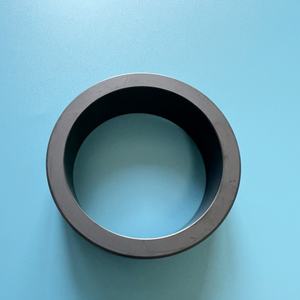
Silicon Carbide Roller is a kind of industrial roller made of silicon carbide as the main raw material. It has high strength, high hardness, high temperature resistance, wear resistance, oxidation resistance and other excellent properties. Widely used in metallurgy, glass, ceramics and other industries, Silicon Carbide Roller can be used in transmission, heating, molding and other processes, can withstand heavy loads at high temperatures, it is a kind of industrial key component with excellent performance.
Features of Silicon Carbide Roller
Silicon Carbide Roller has the following significant features:
High hardness and strength: Silicon carbide itself is extremely hard, second only to diamond. Made of rollers with high strength, it can withstand greater pressure and load, is not easy to deform in industrial production, and can work stably for a long time.
Good high-temperature resistance: Silicon carbide rollers can withstand high-temperature environments, can be used normally at temperatures of 1600 ℃ or even higher, and still maintain good mechanical properties at high temperatures, will not be damaged due to thermal stress, suitable for a variety of high-temperature processing techniques.
Excellent wear resistance: the high hardness and stable crystal structure of silicon carbide rollers make them have excellent wear resistance, even at high speeds, high pressure, and abrasive scrubbing of harsh working conditions, they can effectively resist wear and prolong the service life, and reduce the cost of equipment maintenance.
Good thermal conductivity: Silicon carbide has a high thermal conductivity, which can quickly and evenly transfer heat, so that the processed material is heated evenly, improving product quality, and also helps to improve production efficiency.
Strong chemical stability: Silicon Carbide rollers have excellent chemical stability and are not easily corroded in various chemical environments. Whether in acidic or alkaline environments, they can maintain stable performance and are suitable for a variety of production scenarios with different chemical conditions.
Specifications Table of Silicon Carbide Roller
| Item | Data |
| SiC content | >85% |
| Density | >3.02 g/cm³ |
| Porosity | <0.1% |
| Bending strength at 20℃ | 260 MPa |
| Bending strength at 1200℃ | 280 MPa |
| Compressive strength at 20℃ | ≥900 MPa |
| Hardness | 2400 kg/mm² |
| Thermal conductivity at 1200℃ | 45 W/(m·K) |
| Coefficient of thermal expansion | 4.5×10⁻⁶ /℃ |
| Maximum service temperature | 1380℃ |
Applications of Silicon Carbide Roller
Glass industry: In the glass annealing furnace, Silicon Carbide Roller can withstand high temperature and maintain good rigidity to ensure the smooth transmission of glass in the annealing process, reduce scratches and deformation on the glass surface, and improve the flatness and quality of glass. At the same time, its good thermal conductivity helps to heat the glass uniformly, making the annealing effect better.
Ceramic industry: Silicon carbide rollers are used in the drying and sintering process of ceramic tiles. In the drying process, it can conduct heat quickly, make the ceramic tile blank dry evenly, and reduce cracks and other defects caused by uneven drying. In the sintering process, it can withstand high temperatures to ensure that the ceramic tiles are smoothly sintered and molded at high temperatures, and because it is wear-resistant and corrosion-resistant, it is not easy to pollute the ceramic tiles, which helps to improve the quality of the ceramic tiles and production efficiency.
Metallurgical industry: in the heat treatment of metal strips, silicon carbide rollers can support and transport metal strips in a high-temperature environment, and its high strength and high-temperature performance can withstand the weight of the metal strips and the high temperature of the heat treatment, to ensure that the metal strips in the treatment process to maintain a good shape and performance, to improve the quality and performance of metal materials.
Electronics industry: In the processing of semiconductor wafers, silicon carbide rollers can be used for wafer transfer and positioning. Its high-precision surface quality and stable performance can ensure the positional accuracy of wafers during processing, reduce breakage and defects of wafers, and improve the production yield of semiconductor devices.
Company Profile
RBOSCHCO is a trusted global chemical material supplier & manufacturer with over 12 years of experience in providing super high-quality chemicals and Nanomaterials. The company exports to many countries, such as the USA, Canada, Europe, UAE, South Africa, Tanzania, Kenya, Egypt, Nigeria, Cameroon, Uganda, Turkey, Mexico, Azerbaijan, Belgium, Cyprus, Czech Republic, Brazil, Chile, Argentina, Dubai, Japan, Korea, Vietnam, Thailand, Malaysia, Indonesia, Australia, Germany, France, Italy, Portugal etc. As a leading nanotechnology development manufacturer, RBOSCHCO dominates the market. Our professional work team provides perfect solutions to help improve the efficiency of various industries, create value, and easily cope with various challenges. If you are interested, please send an email to sales1@rboschco.com
Payment Term
T/T, Western Union, Paypal, Credit Card etc.
Shipment Term
By air, by sea, by express, as customers request.

5 FAQs of Silicon Carbide Roller
Q1: What is the difference between silicon carbide rollers and traditional materials (e.g., steel, ceramics)?
Compared with steel, the density of silicon carbide is only 1/3 of that of steel, but the high temperature resistance (above 1600℃) and wear resistance are better, and there is no risk of oxidation. Compared to alumina ceramics, silicon carbide has a thermal conductivity more than 3 times higher, is more resistant to thermal shock, and has a service life up to 10 times longer. For example, in lithium kilns, the high-temperature carrying capacity of silicon carbide rollers is five times higher than that of alumina ceramics, and they are less likely to rupture due to thermal stress.
Q2: What is the high-temperature limit of silicon carbide rollers?
Ordinary reaction sintered silicon carbide roller can withstand long-term use below 1380℃, while high refractoriness and low expansion type products (such as the addition of flux and special sintering process) can be stably operated at 1800~2200℃, and the coefficient of thermal expansion is as low as 4×10-⁶/℃, which has an excellent performance of thermal shock resistance.
Q3: In which industries are silicon carbide rollers typically used?
Glass industry: Used in annealing furnaces to ensure uniform heating of glass and reduce deformation (e.g., after a glass factory adopted silicon carbide rollers, the product yield increased by 15%). Ceramic industry: in the roller kiln to support the billet sintering, high temperature creep resistance, life expectancy of more than 12 months. Metallurgical industry: used in heat treatment of steel strip, withstands high temperature and heavy load, and the surface is not easy to tumor. Lithium industry: Transmission of positive and negative electrode materials, corrosion resistance, can work for a long time in a strong ionic environment.
Q4: How to extend the service life of the silicon carbide roller?
Avoid sudden cooling and heating, such as in a roller kiln, the rate of temperature rise and fall should be controlled at 3~5℃/min to prevent thermal stress cracking. Regular cleaning: Remove the glass liquid or ceramic glaze adhering to the surface to avoid localized corrosion. Surface treatment: Use tungsten carbide-coated mold or super-hard material coating to reduce the wear and tear during extrusion molding. Reasonable load: Control the load-bearing weight according to the diameter and length of the rollers (e.g., Φ50mm rollers can bear 50kg/m at 1400℃).
Q5: How long is the service life of silicon carbide rollers?
In a glass annealing furnace, the service life is usually 2~3 years; in a ceramic kiln, it can be 1~2 years; and in the lithium industry, the service life is about 6~12 months due to the more severe working conditions. By optimizing the formula (such as adding nano carbon black), the life of some high-end products can be extended to more than 3 years.
REQUEST A QUOTE
RELATED PRODUCTS

Customized high purity insulated industrial boron nitride discs

High Purity BN Insulating Ceramic Plate Boron Nitride Ceramic Sheet
Customized best aluminum nitride high thermal conductivity wear ring

High quality fine processing aluminum oxide electronic cigarette porous ceramic core

High purity high temperature resistant alumina ceramic ring
