Professional and high-quality metal alloys, ceramic products and concrete additives | RBOSCHCO




PRODUCT PARAMETERS
Description
Overview of Aluminum oxide component
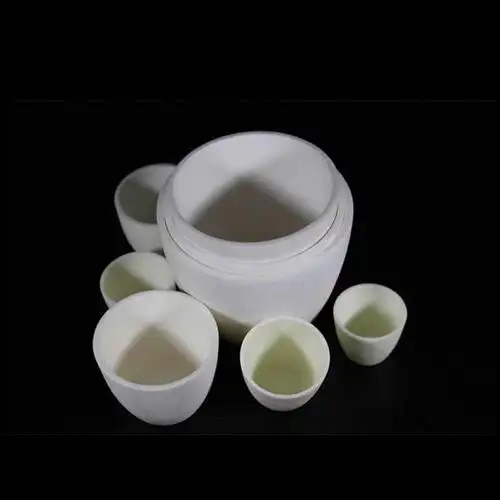
Aluminum oxide components are a kind of industrial parts with alumina as the main material. Alumina components are characterized by high hardness, high wear resistance, good insulation and chemical stability. It is commonly used in electronics, machinery, chemical industry and other fields, such as insulating parts of electronic components, mechanical seals and so on. The preparation process of alumina components includes steps such as molding and sintering, and the molding methods are varied and can be made into different shapes to meet the needs of various application scenarios.
Features of Aluminum oxide component
Aluminum oxide components are favored in many fields for their excellent performance. Aluminum oxide components have a very high hardness, second only to diamond, which makes them extremely wear-resistant, able to work stably for a long time in harsh friction environments, and even in the face of high-intensity abrasion and impact, they can still maintain good shape and function, greatly extending their service life. At the same time, alumina components also have good insulating properties and can withstand high voltages without current leakage, which makes it an ideal insulating material in the field of electrical and electronic, which can effectively protect the safe operation of equipment and prevent short circuits and other problems caused by poor insulation.
Aluminum oxide components also excel in chemical stability. It can remain stable in a variety of acid and alkali environments and not easy to be corrode, which makes the alumina components in the chemical field withstand a variety of chemical media, suitable for the manufacture of corrosion-resistant pipelines, valves, reactor lining and other components, providing a reliable guarantee for chemical production. In addition, alumina components also have a low coefficient of thermal expansion and good thermal stability. In the environment of large temperature changes, it can still maintain a stable shape, and performance will not be deformed or cracked due to thermal expansion and contraction. This characteristic makes it in the high temperature, low temperature alternating complex working conditions can also work stably; for example, in the aerospace, automotive engines and other thermal stability requirements of the field, alumina components can effectively deal with the challenges posed by the change in temperature, to ensure that the equipment operates normally.
The combination of these features makes alumina components widely used in electronics, machinery, chemical industry, aerospace and many other industrial fields, becoming an indispensable and important material.
Specifications table of Aluminum oxide component
| Parameter | Specification |
| Material | Aluminum Oxide (Al₂O₃) |
| Purity | ≥99.5% |
| Hardness | Mohs Scale: 9 |
| Density | 3.95-4.00 g/cm³ |
| Porosity | <1% |
| Flexural Strength | 350-400 MPa |
| Compressive Strength | 3000-3500 MPa |
| Thermal Conductivity | 20-30 W/m·K |
| Thermal Expansion Coefficient | 7.5-8.0 x 10⁻⁶/K |
| Dielectric Constant | 10-11 (at 1 MHz) |
| Dielectric Strength | >15 kV/mm |
| Chemical Resistance | Excellent resistance to acids and alkalis |
| Operating Temperature Range | -50°C to 1700°C |
| Surface Finish | Smooth, with surface roughness <0.5 µm |
| Dimensional Tolerance | ±0.1 mm (standard) |
| Color | White |
| Shape | Customizable (e.g., discs, rods, tubes) |
| Application | Electronics, mechanical seals, wear parts, insulators |
Applications of Aluminum oxide component
Aluminum oxide components are used in a wide range of applications covering numerous high-tech and traditional industrial fields. In the electronics field, alumina components are used as insulating parts, such as substrates for integrated circuits, chip packaging materials, etc. With their good insulation and thermal stability, they can ensure the safe operation of electronic equipment under high voltage and high power conditions. Aluminum oxide components are also commonly used in the manufacture of sensors and capacitors, where their stable chemical properties and high hardness enable them to withstand complex environmental conditions.
In mechanical engineering, alumina components are widely used to manufacture wear-resistant parts such as bearings, seals and grinding balls. These components take advantage of alumina’s high hardness and low coefficient of friction to enable long-term stable operation in mechanical systems with high loads and high rotational speeds, reducing wear and maintenance costs. In addition, alumina components are used in the manufacture of precision molds, where their high precision and high-temperature resistance meet the needs of high-precision parts.
In the chemical industry, alumina components are used in the manufacture of acid and alkali-resistant piping, valves and reactor liners due to their excellent chemical stability and corrosion resistance. These equipment are able to work stably for a long time in harsh chemical environments such as strong acids and alkalis, effectively preventing the corrosion of chemical media on the equipment and prolonging the service life of the equipment.
In the aerospace field, alumina components are used to manufacture high-temperature parts, such as engine heat shields and combustion chamber components. Their low coefficient of thermal expansion and high thermal stability enables them to keep their shape and performance unchanged under extreme temperature conditions, ensuring the safe operation of aircraft. In addition, alumina components are used in the manufacture of insulating parts for avionics equipment to ensure the reliability of avionics systems.
In the medical field, alumina components are used to manufacture medical devices such as artificial joints and dental implants. Their biocompatibility and wear resistance make them compatible with human tissues, reducing wear and inflammation and improving the service life of medical devices and patient comfort.
In conclusion, with its unique physical, chemical and mechanical properties, alumina components play an irreplaceable role in many fields and provide important material support for the development of modern industry.
Company Profile
RBOSCHCO is a trusted global chemical material supplier & manufacturer with over 12 years of experience in providing super high-quality chemicals and Nanomaterials. The company exports to many countries, such as the USA, Canada, Europe, UAE, South Africa, Tanzania, Kenya, Egypt, Nigeria, Cameroon, Uganda, Turkey, Mexico, Azerbaijan, Belgium, Cyprus, Czech Republic, Brazil, Chile, Argentina, Dubai, Japan, Korea, Vietnam, Thailand, Malaysia, Indonesia, Australia, Germany, France, Italy, Portugal etc. As a leading nanotechnology development manufacturer, RBOSCHCO dominates the market. Our professional work team provides perfect solutions to help improve the efficiency of various industries, create value, and easily cope with various challenges. If you are interested, please send an email to sales1@rboschco.com
Payment Term
T/T, Western Union, Paypal, Credit Card etc.
Shipment Term
By air, by sea, by express, as customers request.
5 FAQs of Aluminum oxide component
Q1:Why do aluminum oxide components have good wear resistance?
Aluminum oxide components are made of aluminum oxide (Al₂O₃) as the main component, which is second only to diamond in terms of hardness, reaching a Mohs hardness level of 9, and has extremely high wear resistance. In various industrial application scenarios, such as mechanical seals, grinding balls and other components, it can withstand prolonged friction and abrasion, ensuring stable equipment operation and reducing maintenance and replacement costs due to component wear.
Q2:What is the chemical stability of alumina components?
Aluminum oxide components have excellent chemical stability and can resist the erosion of most acids and alkalis. It remains stable in harsh chemical environments such as strong acids and bases and is not susceptible to chemical reactions. This makes alumina components widely used in the chemical industry, such as the manufacture of corrosion-resistant pipelines, valves and reactor lining equipment, to ensure the long-term stable operation of equipment in complex chemical media.
Q3:Do alumina components have good insulating properties?
Alumina components have excellent insulating properties and can withstand high voltages without current leakage. Its electrical insulation properties make it widely used in the electrical and electronic fields, such as the substrate of integrated circuits, chip packaging materials, insulating parts of electronic components, etc., which can effectively protect the safe operation of electronic equipment and prevent short circuits and other problems caused by poor insulation.
Q4:What is the thermal stability of alumina components?
Alumina components have a low coefficient of thermal expansion and high thermal stability and are able to maintain their shape and performance over a wide range of temperatures. Its coefficient of thermal expansion is only 6-8 x 10-⁶/K, which means that the dimensions of the alumina component change very little when the temperature changes and there is no deformation or cracking due to thermal expansion or contraction.
Q5:What are the biocompatible applications of alumina components?
Alumina components are biocompatible. Their non-toxicity, non-reactivity, and high abrasion resistance make them widely used in the medical field for the manufacture of artificial joints, dental implants, and other medical devices. These materials are used extensively in the medical industry as they are able to provide good compatibility with human tissues, reduce wear and inflammatory reactions, and improve the service life of medical devices and patient comfort.
REQUEST A QUOTE
RELATED PRODUCTS
BN Ceramic Chemically Stable Boron Nitride Ceramic BN Film
Wear-resistant and High-temperature Resistant Silicon Nitride Ceramic Ring
High-purity and High-temperature Pyrolysis Boron Nitride BN Heater

Customized high heat-resistant industrial ceramic alumina ceramic structural parts

High Quality Refractory Wear-resistant Silicon Nitride Ceramic Discs