Professional and high-quality metal alloys, ceramic products and concrete additives | RBOSCHCO

Aerogel Insulation

Aerogel Thermal Insulation Coating Applied for Building External Walls
Nano Ultra Thin Aerogel Thermal Insulation Film for Electronic Components
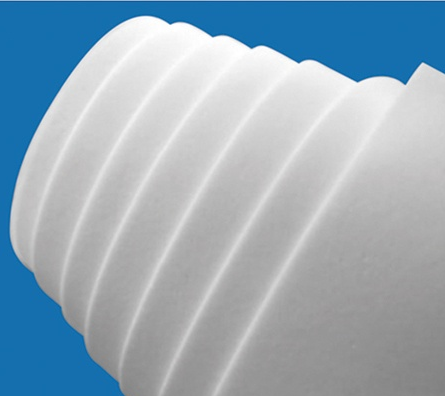
Nano Aerogel Insulation Sponge Industrial Design 10mm Thick Silica Insulation
Overview of Aerogel Insulation Material
Aerogel is an ultra-light solid material with a nanoporous structure. It is called "solid air" or "frozen smoke" for its excellent thermal insulation performance. It is made by removing the liquid from the gel through special drying technology (such as supercritical drying), retaining the original three-dimensional network structure, with a porosity of up to 80%~99.8%, and a density as low as 3 times that of air.


Thermal Insulation Principle and Features of Aerogel Insulation Material
Nanoporous structure: The pore size of aerogel is extremely small (1~100 nanometers), and it is difficult for air molecules to flow freely in the pores, which effectively inhibits convective heat conduction.
Low solid-state heat conduction: The solid skeleton is composed of nanoparticles or fibers, the heat conduction path is long and tortuous, and the thermal conductivity is extremely low (as low as 0.013~0.025 W/(m·K) at room temperature).
Infrared radiation blocking: Some aerogels (such as silica aerogel) can be doped with sunscreens or reflective materials to reduce infrared heat radiation transmission.
Applications of Aerogel Insulation Material
Building energy saving: used for glass interlayer (such as transparent aerogel windows), wall insulation.
Industrial pipelines and equipment: high-temperature pipeline insulation in the petroleum and chemical industries.
Aerospace: spacecraft insulation layer.
Clothing and outdoor products: ultra-thin warm clothing, hiking boots, etc.
New energy: lithium battery diaphragms, hydrogen storage materials.

Company Profile
Rboschco is one of the brands under Luoyang Tongrun Nano Technology Co. Ltd. (TRUNNANO) is a trusted global chemical material supplier & manufacturer with over 12-year-experience in providing super high-quality chemicals and nanomaterials, including boride powder, nitride powder, graphite powder, sulfide powder, 3D printing powder, etc.
The company has a professional technical department and Quality Supervision Department, a well-equipped laboratory, and equipped with advanced testing equipment and after-sales customer service center.
If you are looking for high-quality Aerogel Material, please feel free to contact us or click on the needed products to send an inquiry.
Payment
T/T, Western Union, Paypal, Credit Card etc.
Shipment
By air, by sea, by express, as customers request.
FAQs of Aerogel Insulation Materials
Q: Why is the thermal insulation performance of aerogel so good?
A: Its nanoporous structure (porosity >90%) can effectively inhibit heat conduction, convection and radiation, and the thermal conductivity is as low as 0.013 W/(m·K).
Q: Is aerogel resistant to high temperatures?
A: Inorganic aerogels (such as silica) are temperature resistant to 650℃+, metal oxide aerogels can reach above 1000℃, and organic aerogels have low temperature resistance (about 200℃).
Q: Is aerogel easy to break?
A: Pure aerogels are relatively brittle, but they can greatly increase the strength through composite fibers (such as glass fibers) or flexible polymers to make practical forms such as flexible felts and plates.
Q: Is aerogel waterproof?
A: Unmodified aerogels may absorb hygroscopicly, but after hydrophobic treatment (such as silane modification) are superhydrophobic (contact angle >150°), suitable for humid environments.
Q: Why are aerogels expensive?
A: The main reason is that the production process is complex (such as supercritical drying), but large-scale production and technological improvements (such as atmospheric pressure drying) are gradually reducing costs.