Professional and high-quality metal alloys, ceramic products and concrete additives | RBOSCHCO

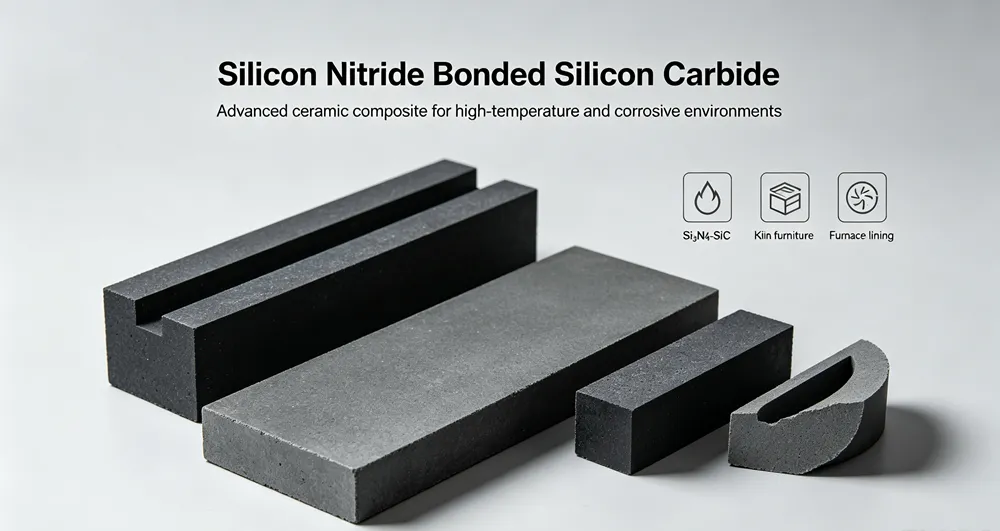
In the world of advanced ceramics, few materials can match the combination of properties offered by silicon nitride bonded silicon carbide (Si₃N₄-SiC) . This is not a simple mixture of two materials but an engineered ceramic composite that harnesses the best characteristics of both components. By bonding silicon carbide (SiC) particles—known for their extreme hardness and wear resistance—with a silicon nitride (Si₃N₄) matrix—valued for its exceptional fracture toughness and thermal shock resistance—Si₃N₄-SiC achieves performance levels that neither material could deliver alone. The result is a ceramic composite that maintains high strength at elevated temperatures, resists chemical attack from molten metals and corrosive slags, withstands severe thermal cycling without cracking, and provides outstanding abrasion resistance. Across industries ranging from metallurgy and ceramics to environmental protection and energy production, silicon nitride bonded silicon carbide has become the preferred material for applications that demand reliability under the most challenging conditions. This article explores the material’s unique microstructure, key performance advantages, and the diverse industrial applications that make Si₃N₄-SiC an indispensable material in high-temperature engineering.
Understanding the Microstructure of Si₃N₄-SiC
Silicon nitride bonded silicon carbide is an advanced ceramic composite with a carefully engineered microstructure that directly determines its exceptional performance. The material is composed of silicon carbide (SiC) particles serving as the aggregate or filler, firmly bonded together by a silicon nitride (Si₃N₄) matrix. This is not a loose combination but a tightly integrated structure where the bonding phase actively contributes to the material’s overall properties.
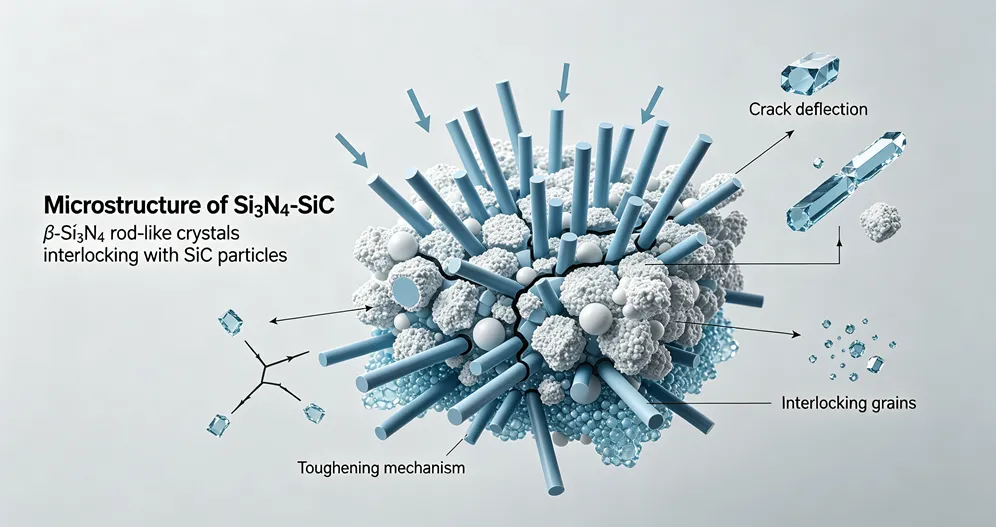
The microstructure of Si₃N₄-SiC is characterized by rod-like or columnar β-Si₃N₄ crystals that interlock and intertwine between the SiC particles. This unique morphology provides exceptional toughening and strengthening effects that far exceed those of single-component materials. The β-Si₃N₄ crystals act as reinforcing elements, bridging cracks and deflecting their propagation paths. When a crack begins to form, the interlocking structure forces it to travel around the rod-like crystals, consuming more energy and effectively stopping the crack from propagating through the material. This mechanism is the origin of the material’s outstanding fracture toughness.
The composite structure of Si₃N₄-SiC ingeniously combines the high hardness and strength of silicon carbide with the excellent fracture toughness and thermal shock resistance of silicon nitride. Each component contributes its best properties to the composite: SiC provides extreme hardness and wear resistance, while Si₃N₄ contributes toughness and thermal stability. The synergy between these two materials creates a composite that is tougher, stronger, and more durable than either component alone.
Key Performance Advantages of Si₃N₄-SiC
Silicon nitride bonded silicon carbide offers a combination of performance advantages that make it the material of choice for demanding high-temperature and corrosive environments.
Superior Hardness and Wear Resistance
With a Mohs hardness of up to 9—second only to diamond—Si₃N₄-SiC exhibits exceptional abrasion resistance. This hardness makes it an ideal material for wear-resistant components such as nozzles, slurry pump liners, and hydrocyclones. In abrasive environments where metal components would quickly wear out, Si₃N₄-SiC components continue to perform reliably over extended periods, significantly reducing downtime and maintenance costs.
Excellent High-Temperature Performance and Thermal Shock Resistance
One of the most prominent advantages of Si₃N₄-SiC is its ability to maintain high strength and hardness at elevated temperatures. The material’s low thermal expansion coefficient, combined with high thermal conductivity, allows it to withstand severe and rapid temperature fluctuations without cracking. This thermal shock resistance is critical in applications such as kiln furniture, furnace linings, and thermocouple protection tubes, where materials are repeatedly heated and cooled.
Outstanding Resistance to Chemical Attack
Si₃N₄-SiC demonstrates excellent corrosion resistance against a variety of aggressive media. It resists attack from molten non-ferrous metals including aluminum, zinc, copper, and magnesium, as well as alkaline solutions and acidic slags. This chemical inertness makes Si₃N₄-SiC the preferred material for components exposed to corrosive environments, such as aluminum reduction cell linings, zinc distillation retorts, and waste incinerator linings.
High Mechanical Strength at Room and Elevated Temperatures
Si₃N₄-SiC possesses high cold crushing strength and, importantly, retains a significant portion of its strength at high temperatures. This ensures strong load-bearing capacity under thermal stress, making Si₃N₄-SiC components reliable even in the most demanding thermal environments.
Lightweight and Thermally Efficient
Compared to traditional refractory materials, Si₃N₄-SiC components are lighter, which helps reduce the weight of furnace structures and kiln furniture. The improved heat transfer efficiency contributes to energy savings and increased production rates, making Si₃N₄-SiC an economically attractive choice for high-temperature operations.
Si₃N₄-SiC vs. Other Ceramic Materials
| Comparison Dimension | Silicon Nitride Bonded Silicon Carbide (Si₃N₄-SiC) | Reaction-Bonded Silicon Carbide (RBSC) | Recrystallized Silicon Carbide (RSiC) |
|---|---|---|---|
| Content | ~75% SiC | ~90% SiC | ~99% SiC |
| Density | 2.75 kg/dm³ | 3.02 kg/dm³ | 2.7 kg/dm³ |
| Hardness | 2500 kg/mm² (highest) | 2400 kg/mm² | 1800–2000 kg/mm² |
| Fracture Toughness | 4 MPa/m¹/² (best) | 3.3 MPa/m¹/² | 1.8–2.0 MPa/m¹/² |
| Thermal Shock Resistance | Excellent | Good | Moderate |
| Operating Temperature (Air) | 1500°C | 1380°C | 1650°C |
| Thermal Conductivity (20°C) | 38 W/(m·K) | 120 W/(m·K) | 100 W/(m·K) |
| Thermal Expansion Coefficient | 4.7 ×10⁻⁶/K | 4.5 ×10⁻⁶/K | 4.6 ×10⁻⁶/K |
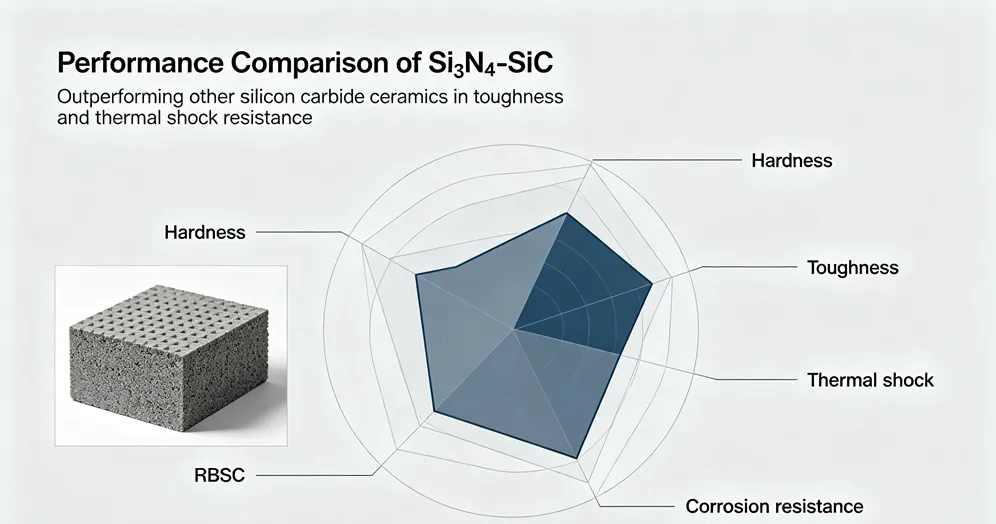
The comparison table clearly shows that silicon nitride bonded silicon carbide offers superior fracture toughness compared to both RBSC and RSiC, making it the preferred choice for applications where thermal shock resistance and mechanical reliability are critical. While other ceramics may offer higher thermal conductivity or slightly higher operating temperatures, Si₃N₄-SiC provides the best balance of toughness, hardness, thermal shock resistance, and chemical resistance for demanding industrial applications. The β-Si₃N₄ bonding phase in Si₃N₄-SiC creates a microstructure that is more resistant to crack propagation than other silicon carbide-based ceramics, which is why Si₃N₄-SiC is the material of choice for applications involving severe thermal cycling and mechanical stress.
Applications of Si₃N₄-SiC Across Industries
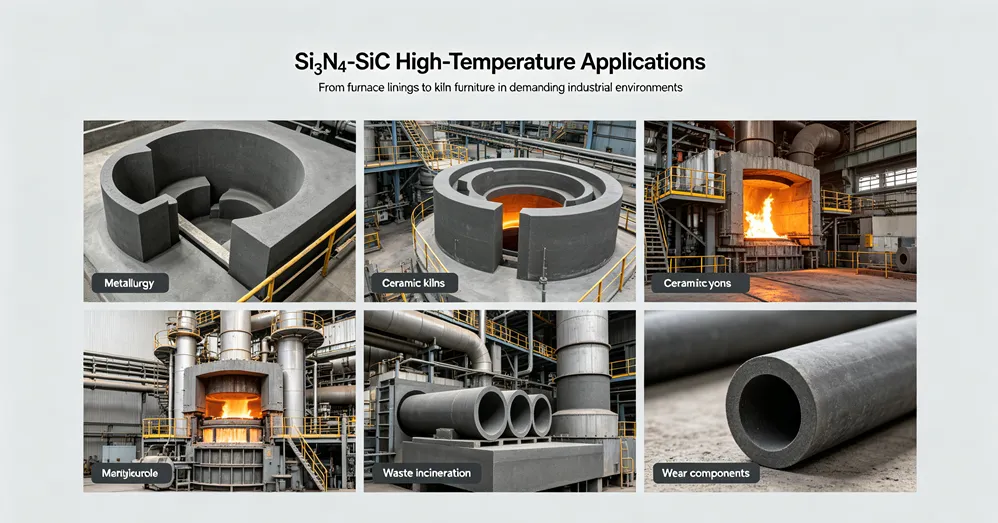
Silicon nitride bonded silicon carbide is used across a diverse range of industries where high temperature, corrosion, and abrasion resistance are essential.
Metallurgical Industry
The metallurgical industry is a traditional and critical application area for Si₃N₄-SiC. The material is widely used for blast furnace linings, aluminum reduction cell linings, zinc distillation retorts, and various furnace parts including hearths, arches, and covers. The exceptional resistance of Si₃N₄-SiC to molten metal and slag corrosion significantly extends furnace life, reduces downtime, and improves operational efficiency. In aluminum production, Si₃N₄-SiC linings resist attack from the molten electrolyte, providing long service life in one of the most chemically aggressive industrial environments.
Ceramics and Refractory Industry
Si₃N₄-SiC is commonly employed as kiln furniture, including setters, beams, pusher plates, saggers, and support posts. The material’s high-temperature stability and resistance to thermal shock make it ideal for supporting ceramic products during firing. Compared to traditional kiln furniture materials such as cordierite or mullite, Si₃N₄-SiC offers higher strength at temperature, better thermal shock resistance, and longer service life. The reduced weight of Si₃N₄-SiC kiln furniture improves heat transfer efficiency and contributes to energy savings and increased production rates.
Environmental Protection and Energy Sector
Si₃N₄-SiC is suitable for use as inner linings in waste incinerators and components for coal gasification systems, where high temperature and corrosion resistance are required. The material’s chemical inertness ensures that it can withstand the corrosive environment created by combustion gases and molten ash, providing reliable protection for critical equipment in some of the most challenging environmental applications.
Wear-Resistant Components
Si₃N₄-SiC is ideal for manufacturing parts subjected to abrasion and impact, such as slurry pump impellers and liners, hydrocyclones, flotation machine parts, and wear-resistant nozzles. The exceptional hardness of Si₃N₄-SiC provides outstanding resistance to abrasive wear, extending component life and reducing maintenance costs in mineral processing, sand handling, and other abrasive applications.
Other Applications
Additional applications of Si₃N₄-SiC include ceramic radiant tubes for industrial heating systems, thermocouple protection tubes for temperature measurement in molten aluminum and copper, and various other specialized industrial components where high-temperature performance and corrosion resistance are essential.
Why Si₃N₄-SiC Is Preferred Over Metals and Traditional Refractories
When compared to metals and traditional refractory materials, silicon nitride bonded silicon carbide offers clear advantages that make it the preferred choice for demanding applications.
Superior Wear Resistance
The extreme hardness of Si₃N₄-SiC (Mohs 9) gives it far superior abrasion resistance compared to most metals and alloys. In abrasive environments, metal components may need replacement within weeks or months, while Si₃N₄-SiC components continue to perform reliably for years. This extended service life reduces downtime, maintenance costs, and the need for spare parts inventory.
Resistance to Corrosion and Chemical Attack
Unlike metals that can be attacked by molten metals, slags, and corrosive chemicals, Si₃N₄-SiC resists these aggressive media. In aluminum smelting, for example, Si₃N₄-SiC linings resist attack from the molten cryolite bath and aluminum metal, providing long service life that metal or conventional refractory materials cannot match.
Thermal Shock Resistance
The low thermal expansion coefficient and high thermal conductivity of Si₃N₄-SiC allow it to withstand rapid temperature changes that would crack or spall traditional refractories and metal components. This thermal shock resistance is essential in applications such as kiln furniture, thermocouple protection tubes, and furnace components that are repeatedly heated and cooled.
Lightweight Design
Compared to traditional refractories, Si₃N₄-SiC components are lighter, which simplifies handling and installation, reduces the structural load on furnaces and support structures, and improves thermal efficiency by reducing the mass that must be heated and cooled.
Supplier
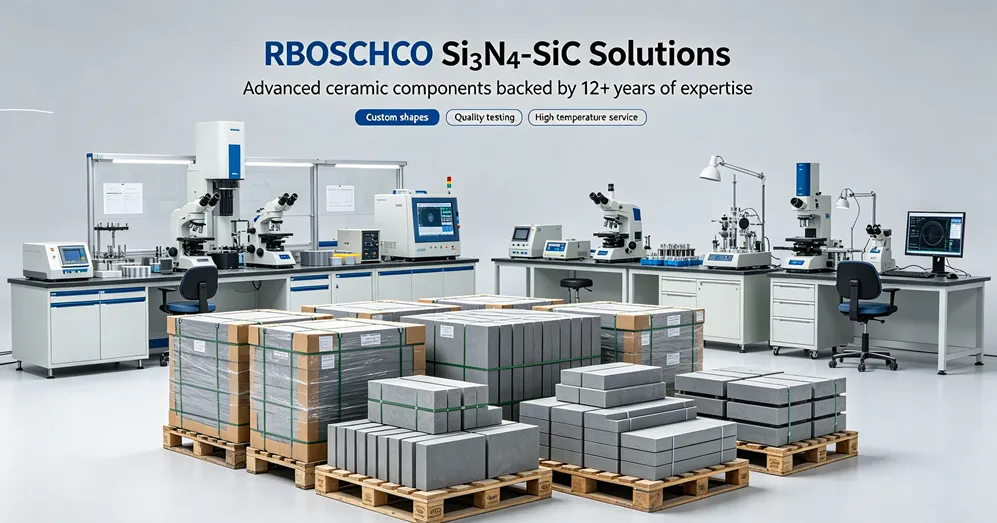
RBOSCHCO is a globally recognized silicon nitride bonded silicon carbide (Si₃N₄-SiC) manufacturer and supplier with more than 12 years of expertise in advanced ceramics, high-quality nanomaterials, and high-purity chemicals. The company has a professional technical department and quality supervision department, a well-equipped laboratory with advanced testing equipment, and a dedicated after-sales customer service center. RBOSCHCO’s Si₃N₄-SiC is available in custom shapes and sizes to suit specific application requirements, suitable for metallurgical furnaces, ceramic kiln furniture, waste incinerators, wear-resistant components, and other demanding high-temperature applications. The company serves clients across more than 50 countries and offers comprehensive technical support, from material selection to application guidance. If you are looking for high-quality silicon nitride bonded silicon carbide, please feel free to contact us.
Tags: silicon nitride bonded silicon carbide, Si3N4-SiC, advanced ceramics, high-temperature ceramics