Professional and high-quality metal alloys, ceramic products and concrete additives | RBOSCHCO


PRODUCT PARAMETERS
Description
Introduction of Silicon Nitride Bonded Silicon Carbide (Si3N4-SiC)
Silicon Nitride Bonded Silicon Carbide (Si3N4-SiC) is not a simple mixture but an advanced ceramic composite material. It is typically composed of silicon carbide (SiC) particles as the aggregate, firmly bonded together by a silicon nitride (Si3N4) matrix. The microstructure of this composite often features rod-like or columnar β-Si3N4 crystals interlocking and intertwining between the SiC particles. This unique structure effectively provides exceptional toughening and strengthening effects, far superior to those of a single-component material. It ingeniously combines the high hardness and strength of SiC with the excellent fracture toughness and thermal shock resistance of Si3N4, resulting in outstanding performance in a wide range of demanding industrial environments.
The unique microstructure of Si₃N₄-SiC ceramics is the key factor behind their superior performance. Unlike conventional monolithic ceramics, this composite often contains interlocking rod-like or columnar β-Si₃N₄ crystals that grow between SiC particles, forming a three-dimensional reinforcement network. This interwoven structure effectively transfers external stress, prevents crack propagation, and enhances fracture resistance. The SiC phase contributes excellent hardness, wear resistance, and high-temperature strength, while the Si₃N₄ phase provides outstanding toughness, thermal shock resistance, and structural stability, creating a balanced combination of mechanical and thermal properties.
The synergistic effect between SiC and Si₃N₄ enables this composite ceramic to maintain reliable performance under extreme operating conditions. Compared with traditional oxide ceramics, Si₃N₄-SiC offers higher fracture toughness, lower thermal expansion, and better resistance to rapid temperature changes. Its thermal conductivity can reach approximately 20–60 W/m·K, depending on composition and manufacturing process, allowing efficient heat transfer in high-temperature applications. Meanwhile, its low thermal expansion coefficient (approximately 3.5–4.5 ×10⁻⁶/°C) helps minimize thermal stress during repeated heating and cooling cycles.
In addition to excellent thermal and mechanical properties, Silicon Nitride Bonded Silicon Carbide demonstrates outstanding chemical corrosion resistance and oxidation stability. It can withstand harsh environments involving molten metals, slag, corrosive gases, and high-temperature chemical reactions. The dense Si₃N₄ bonding phase reduces the penetration of oxygen and corrosive substances, while the SiC skeleton maintains dimensional stability and wear resistance over long service periods.
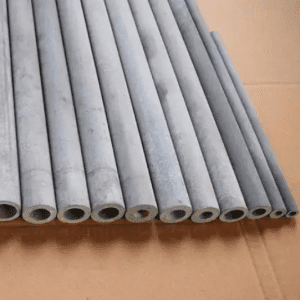
Due to these combined advantages, Si₃N₄-SiC ceramics are widely used in demanding industrial applications, including kiln furniture, furnace structural components, heat exchanger tubes, burner components, thermocouple protection tubes, molten metal handling equipment, and high-temperature wear-resistant parts. Its ability to withstand temperatures above 1400–1600°C, resist thermal shock, and maintain mechanical strength under severe conditions makes it an ideal material for industries requiring long service life, high reliability, and energy-efficient operation.
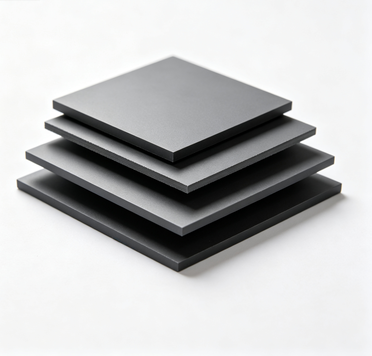
Features of Silicon Nitride Bonded Silicon Carbide (Si3N4-SiC)
1. Superior Hardness and Outstanding Wear Resistance
Silicon Nitride Bonded Silicon Carbide (Si₃N₄-SiC) combines the extremely high hardness of silicon carbide with the tough bonding characteristics of silicon nitride, providing excellent resistance against abrasion, erosion, and mechanical wear. With a Mohs hardness of approximately 9, Si₃N₄-SiC is one of the hardest advanced ceramic materials, second only to diamond and cubic boron nitride. Its dense microstructure and strong Si₃N₄ bonding phase effectively prevent grain detachment and surface damage during long-term operation. This makes it particularly suitable for severe wear environments, including sandblasting nozzles, slurry pump liners, cyclone components, grinding equipment, and high-speed material conveying systems, where conventional metals or oxide ceramics often suffer from rapid degradation.
2. Excellent High-Temperature Performance and Superior Thermal Shock Resistance
Si₃N₄-SiC exhibits outstanding stability under extreme temperature conditions, maintaining high mechanical strength, hardness, and structural integrity even at temperatures above 1400–1600°C. The combination of a low thermal expansion coefficient (approximately 3.5–4.5 ×10⁻⁶/°C) and high thermal conductivity (20–60 W/m·K) enables the material to rapidly distribute thermal stress and reduce temperature gradients inside the component. As a result, Si₃N₄-SiC can withstand repeated heating and cooling cycles, sudden temperature changes, and harsh thermal shock environments without cracking or deformation. This makes it an ideal material for kiln furniture, furnace components, burner parts, heat exchanger tubes, and other high-temperature structural applications requiring long-term reliability.
3. Outstanding Resistance to Chemical Corrosion and Aggressive Media
The unique composite structure of Si₃N₄-SiC provides excellent resistance against chemical attack, oxidation, and molten material corrosion. The SiC phase offers strong chemical stability, while the Si₃N₄ bonding matrix forms a protective barrier that reduces penetration of corrosive substances. The material demonstrates excellent resistance when exposed to molten non-ferrous metals such as aluminum, zinc, copper, and magnesium, as well as alkaline solutions, acidic slags, and high-temperature furnace atmospheres. Compared with traditional refractory materials, Si₃N₄-SiC shows lower corrosion rates and better dimensional stability, making it widely used in molten metal handling systems, furnace linings, thermocouple protection tubes, and corrosion-resistant industrial components.
4. High Mechanical Strength and Load-Bearing Capability at Elevated Temperatures
Si₃N₄-SiC possesses excellent mechanical strength due to its interlocking β-Si₃N₄ crystal structure and strong bonding between SiC particles. It provides high cold crushing strength and maintains a significant percentage of its mechanical performance even under high-temperature operating conditions. Unlike many conventional ceramics that experience rapid strength reduction when heated, Si₃N₄-SiC retains excellent load-bearing capability, creep resistance, and dimensional stability during continuous thermal exposure. These characteristics allow it to withstand heavy mechanical loads, thermal stress, and vibration in demanding industrial environments, making it suitable for furnace support structures, kiln plates, beams, rollers, and high-temperature load-bearing components.
5. Lightweight Structure and Excellent Thermal Efficiency
Compared with traditional refractory materials such as high-density oxides and fireclay ceramics, Si₃N₄-SiC offers a lower density while maintaining superior mechanical performance. Its relatively lightweight structure helps reduce the overall weight of furnace systems, decrease mechanical loading on supporting structures, and improve equipment efficiency. In addition, its high thermal conductivity enables faster and more uniform heat transfer, reducing thermal gradients and improving energy utilization during heating processes. These advantages contribute to shorter heating cycles, lower energy consumption, and improved operational efficiency in applications such as industrial kilns, semiconductor furnaces, ceramic firing systems, and high-temperature processing equipment.
Specifications of Silicon Nitride Bonded Silicon Carbide (Si3N4-SiC)
| Category | Unit | Reaction-sintered silicon carbide | Recrystallized silicon carbide | Silicon nitride and silicon carbide composites |
| Content | % | 90 | 99 | 75 |
| Density | kg/dm3 | 3.02 | 2.7 | 2.75 |
| Porosity | Vol% | ≤0.1 | 15 | 11 |
| Hardness | Kg/mm2 | 2400 | 1800 – 2000 | 2500 |
| Flexural Strength (point) – 20°C | Mpa | 250 | 80 – 100 | 165 |
| Flexural Strength (point) – 1200°C | Mpa | 280 | 90 – 110 | 175 |
| Elastic Modulus | GPa | 330 | 280 | 250 |
| Fracture Toughness | MPa/m1/2 | 3.3 | 1.8 – 2.0 | 4 |
| Thermal Conductivity – 20°C | W/(m∗K) | 120 | 100 | 38 |
| Thermal Conductivity – 1200°C | W/(m∗K) | 45 | 35 | 20 |
| Operating Temperature (Air) | ∘C | 1380 | 1650 | 1500 |
| Coefficient of Thermal Expansion (20 – 1200°C) | K−1∗10−6 | 4.5 | 4.6 | 4.7 |
Applications of Silicon Nitride Bonded Silicon Carbide (Si3N4-SiC)
1. Metallurgical Industry
The metallurgical industry is one of the most important application fields for Silicon Nitride Bonded Silicon Carbide (Si₃N₄-SiC) ceramics. Due to its excellent resistance to molten metal corrosion, slag erosion, thermal shock, and high-temperature oxidation, Si₃N₄-SiC is widely used in critical components exposed to extreme metallurgical environments. The material can maintain structural stability when in direct contact with molten non-ferrous metals such as aluminum, zinc, copper, and magnesium, where conventional refractory materials often suffer from rapid corrosion and penetration.
In blast furnace and non-ferrous metal processing systems, Si₃N₄-SiC is commonly applied in furnace linings, hearth blocks, sidewalls, arches, covers, zinc distillation retorts, aluminum reduction cell components, and molten metal channels. Its dense microstructure reduces the infiltration of molten materials, while the strong Si₃N₄ bonding phase improves mechanical strength and resistance to thermal cycling. By extending component service life, Si₃N₄-SiC helps reduce maintenance frequency, minimize production downtime, and improve the overall efficiency of high-temperature metallurgical operations.
2. Ceramics and Refractory Industry
In ceramic manufacturing and high-temperature firing processes, Si₃N₄-SiC is widely used as advanced kiln furniture due to its combination of high-temperature strength, low thermal expansion, lightweight structure, and excellent thermal shock resistance. Compared with traditional refractory materials, Si₃N₄-SiC components can withstand repeated heating and cooling cycles while maintaining dimensional accuracy and mechanical stability.
Typical applications include kiln setters, support beams, pusher plates, saggers, kiln rollers, and support posts used in ceramic firing systems, powder metallurgy, and advanced material processing. The lower density of Si₃N₄-SiC reduces the overall weight of kiln furniture, allowing faster heating and cooling rates and improving energy efficiency. At the same time, its high thermal conductivity (approximately 20–60 W/m·K) enables more uniform heat distribution inside the furnace, reducing temperature gradients and improving product consistency. These advantages contribute to shorter firing cycles, lower fuel consumption, and increased production capacity.
3. Environmental Protection and Energy Industry
Si₃N₄-SiC ceramics are increasingly used in environmental protection and energy-related industries where components must withstand high temperatures, corrosive gases, and severe chemical conditions. Its excellent oxidation resistance, thermal stability, and corrosion resistance make it suitable for equipment operating under harsh combustion and gasification environments.
In waste incineration systems, Si₃N₄-SiC can be used as inner linings, furnace protection components, combustion chamber parts, and high-temperature structural elements. The material provides strong resistance against acidic gases, alkaline compounds, and molten ash generated during waste treatment processes, helping improve equipment durability and reduce replacement costs.
In coal gasification and energy conversion systems, Si₃N₄-SiC components are applied in areas exposed to high-temperature gas flow, slag erosion, and thermal cycling. Its ability to maintain strength at temperatures above 1400°C makes it suitable for gasifier linings, burner components, heat-resistant tubes, and protective structures, supporting more reliable and efficient energy production processes.
4. Wear-Resistant Components
Due to its high hardness, excellent fracture toughness, and outstanding abrasion resistance, Si₃N₄-SiC is an ideal material for manufacturing wear-resistant components used in industries involving slurry, particles, and high-speed fluid flow. Compared with metals and conventional ceramics, Si₃N₄-SiC provides longer service life under abrasive conditions because its interlocking microstructure effectively prevents crack propagation and surface material loss.
Typical wear-resistant applications include slurry pump impellers, pump liners, hydrocyclone components, flotation machine parts, sandblasting nozzles, and wear-resistant pipes. The material can withstand continuous erosion from solid particles and corrosive slurries while maintaining dimensional stability. In mining, chemical processing, and mineral separation industries, Si₃N₄-SiC components help reduce equipment wear, improve operational reliability, and lower maintenance requirements.
Its combination of hardness (Mohs hardness approximately 9), thermal stability, and moderate fracture toughness makes it particularly suitable for applications where both wear resistance and impact resistance are required.
5. Other Specialized Industrial Applications
Beyond metallurgical, refractory, and wear-resistant applications, Si₃N₄-SiC ceramics are also used in various specialized industrial components that require excellent thermal performance, corrosion resistance, and mechanical reliability. Its unique combination of silicon carbide hardness and silicon nitride toughness allows it to operate effectively in demanding environments where conventional ceramics may fail.
Typical applications include ceramic radiant tubes, thermocouple protection tubes, heating furnace components, burner tubes, heat exchanger components, and precision high-temperature structural parts. In aluminum and copper processing industries, Si₃N₄-SiC thermocouple protection tubes provide excellent resistance against molten metal corrosion, ensuring accurate temperature measurement and longer service life compared with traditional materials.
In semiconductor, electronics, and advanced manufacturing industries, Si₃N₄-SiC is also considered for high-temperature fixtures and support components due to its low thermal expansion, excellent dimensional stability, and resistance to thermal shock. These properties make it a reliable solution for next-generation industrial equipment requiring long-term operation under extreme thermal and chemical conditions.

Company Profile
Luoyang Tongrun Nano Technology Co. Ltd. (TRUNNANO) is a trusted global chemical material supplier & manufacturer with over 12-year-experience in providing super high-quality chemicals and nanomaterials, including boride powder, nitride powder, graphite powder, ceramic products, 3D printing powder, etc.
The company has a professional technical department and Quality Supervision Department, a well-equipped laboratory, and equipped with advanced testing equipment and after-sales customer service center.
If you are looking for high-quality Ceramic Products please feel free to contact us or click on the needed products to send an inquiry.
Payment Methods
L/C, T/T, Western Union, Paypal, Credit Card etc.
Shipment
By sea, by air, by express as soon as possible once payment receipt.

FAQs of Silicon Nitride Bonded Silicon Carbide (Si3N4-SiC)
Q1: What is the difference between reaction-bonded silicon carbide and silicon nitride bonded silicon carbide?
Answer:
Reaction-bonded silicon carbide (RBSC) and Silicon Nitride Bonded Silicon Carbide (Si₃N₄-SiC) are both advanced silicon carbide-based ceramic materials, but they differ significantly in their bonding phases, manufacturing processes, and final performance characteristics.
Reaction-bonded silicon carbide is produced by infiltrating molten silicon into a porous SiC and carbon preform. During the reaction process, silicon reacts with carbon to form additional silicon carbide, while the remaining free silicon fills the pores and acts as the bonding phase. This process provides excellent dimensional accuracy, high thermal conductivity, and good wear resistance. However, the presence of residual free silicon limits its maximum operating temperature and corrosion resistance in certain environments.
In contrast, Silicon Nitride Bonded Silicon Carbide uses silicon nitride (Si₃N₄) as the bonding phase, which is formed through the nitridation reaction between silicon powder and nitrogen gas during high-temperature processing:
3Si + 2N₂ → Si₃N₄
The resulting Si₃N₄ matrix forms strong chemical bonds between SiC grains and creates an interlocking microstructure containing elongated β-Si₃N₄ crystals. Compared with RBSC, Si₃N₄-SiC provides higher fracture toughness, better thermal shock resistance, and improved resistance to molten metal corrosion. This makes it more suitable for severe thermal cycling environments, high-temperature structural components, and applications requiring long service life under mechanical and chemical stress.
Q2: What is the maximum operating temperature for Si₃N₄-SiC materials?
Answer:
Silicon Nitride Bonded Silicon Carbide demonstrates excellent high-temperature stability due to the combination of thermally stable SiC particles and a strong Si₃N₄ bonding network. The maximum operating temperature depends on the atmosphere, component design, and specific material composition.
In oxidizing environments such as air, Si₃N₄-SiC components typically maintain reliable performance up to approximately 1300–1400°C. At these temperatures, a protective silica-based oxidation layer forms on the surface, slowing further oxidation and helping preserve the internal structure.
In inert or reducing atmospheres, the material can withstand significantly higher temperatures, often approaching 1600°C or above, because the Si₃N₄ and SiC phases remain stable without continuous oxygen exposure. The excellent thermal shock resistance allows Si₃N₄-SiC components to tolerate rapid temperature changes, making them suitable for furnace structures, kiln furniture, burner components, and heat treatment equipment where repeated thermal cycling occurs.
Compared with many traditional oxide ceramics, Si₃N₄-SiC maintains better mechanical strength at elevated temperatures, with lower thermal expansion (approximately 3.5–4.5 ×10⁻⁶/°C) and high thermal conductivity (20–60 W/m·K), reducing the risk of cracking caused by thermal stress.
Q3: How does Si₃N₄-SiC perform against chemical corrosion?
Answer:
Silicon Nitride Bonded Silicon Carbide provides excellent resistance against chemical attack due to the inherent stability of both SiC and Si₃N₄ phases. The SiC particles offer strong resistance to oxidation, erosion, and chemical degradation, while the Si₃N₄ bonding phase improves structural integrity and reduces penetration of corrosive substances.
Si₃N₄-SiC performs particularly well in environments involving molten non-ferrous metals such as aluminum, zinc, copper, and magnesium. Unlike many oxide refractories, it shows low wettability with molten metals, reducing infiltration and corrosion during long-term contact. This makes it widely used for aluminum melting equipment, thermocouple protection tubes, furnace linings, and molten metal handling components.
The material also demonstrates good resistance to alkaline solutions, industrial slags, and high-temperature furnace atmospheres. However, performance can vary depending on the exact chemical composition, temperature, and exposure conditions. Highly oxidizing acidic slags or environments containing aggressive oxidizing compounds may gradually attack the surface, especially at extremely high temperatures.
Therefore, material selection should consider factors such as slag composition, operating temperature, atmosphere type, and expected service duration. Properly designed Si₃N₄-SiC components can provide significantly longer service life compared with conventional refractory materials in demanding industrial environments.
Q4: Why is Si₃N₄-SiC preferred for wear-resistant applications over metals?
Answer:
Silicon Nitride Bonded Silicon Carbide is widely preferred for wear-resistant applications because it provides a combination of extreme hardness, excellent abrasion resistance, and superior chemical stability that many metals cannot achieve under severe operating conditions.
With a Mohs hardness of approximately 9, Si₃N₄-SiC is significantly harder than most industrial metals and alloys. This high hardness allows it to resist surface scratching, particle erosion, and abrasive wear caused by continuous contact with sand, minerals, slurry, and other hard materials. In addition, its unique microstructure, where SiC particles are strongly bonded by an interlocking Si₃N₄ matrix, prevents rapid grain loss and improves resistance against mechanical damage.
Compared with metal components, Si₃N₄-SiC also maintains its hardness and dimensional stability at high temperatures, where metals often experience softening, deformation, or accelerated corrosion. Its low wear rate helps extend component lifetime, reduce replacement frequency, and minimize production downtime.
For applications such as slurry pump liners, hydrocyclones, sandblasting nozzles, mining equipment, and wear-resistant pipes, Si₃N₄-SiC can provide several times longer service life than conventional metal materials, especially in environments involving high-speed particle impact and abrasive fluids.
Q5: What are the main advantages of the reaction bonding process used to manufacture Si₃N₄-SiC?
Answer:
The reaction bonding process used for producing Silicon Nitride Bonded Silicon Carbide offers significant advantages in dimensional control, structural reliability, and manufacturing efficiency. Unlike many traditional ceramic sintering methods that involve large volume shrinkage during densification, the nitridation reaction process occurs with minimal dimensional change.
During manufacturing, silicon powder reacts with nitrogen gas according to the reaction:
3Si + 2N₂ → Si₃N₄
Because the silicon-to-silicon nitride conversion occurs while maintaining the original shape of the preform, Si₃N₄-SiC components can be produced with excellent dimensional accuracy and near-net-shape capability. Typical dimensional shrinkage is extremely low compared with conventional pressureless sintering processes, allowing manufacturers to produce large, complex, and precision ceramic components with reduced machining requirements.
Additional advantages include the ability to manufacture large-sized parts, complex geometries, and components with integrated structures. The resulting material contains a strong Si₃N₄ bonding network that improves fracture toughness, thermal shock resistance, and high-temperature mechanical strength.
This manufacturing approach is especially valuable for industrial components such as large kiln furniture, furnace linings, heat exchanger parts, burner components, and precision high-temperature structures, where dimensional stability and long-term reliability are critical.
REQUEST A QUOTE
RELATED PRODUCTS

High quality refractory alumina fiber tubes
Refractory Ceramic Substrates Silicon Nitride Plates Si3N4
Customized Aluminum Nitride Ceramic Rods with High Precision, Good Performance, Low Price
Wear-resistant and high temperature resistant alumina ceramic discs customized Ultra-thin round ceramic discs
Fire-resistant Insulating Fast Heat Dissipating Silicon Nitride Nozzles