Professional and high-quality metal alloys, ceramic products and concrete additives | RBOSCHCO

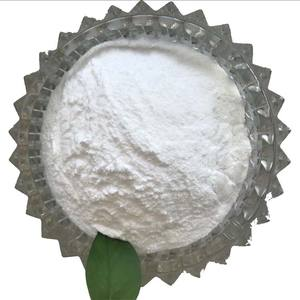
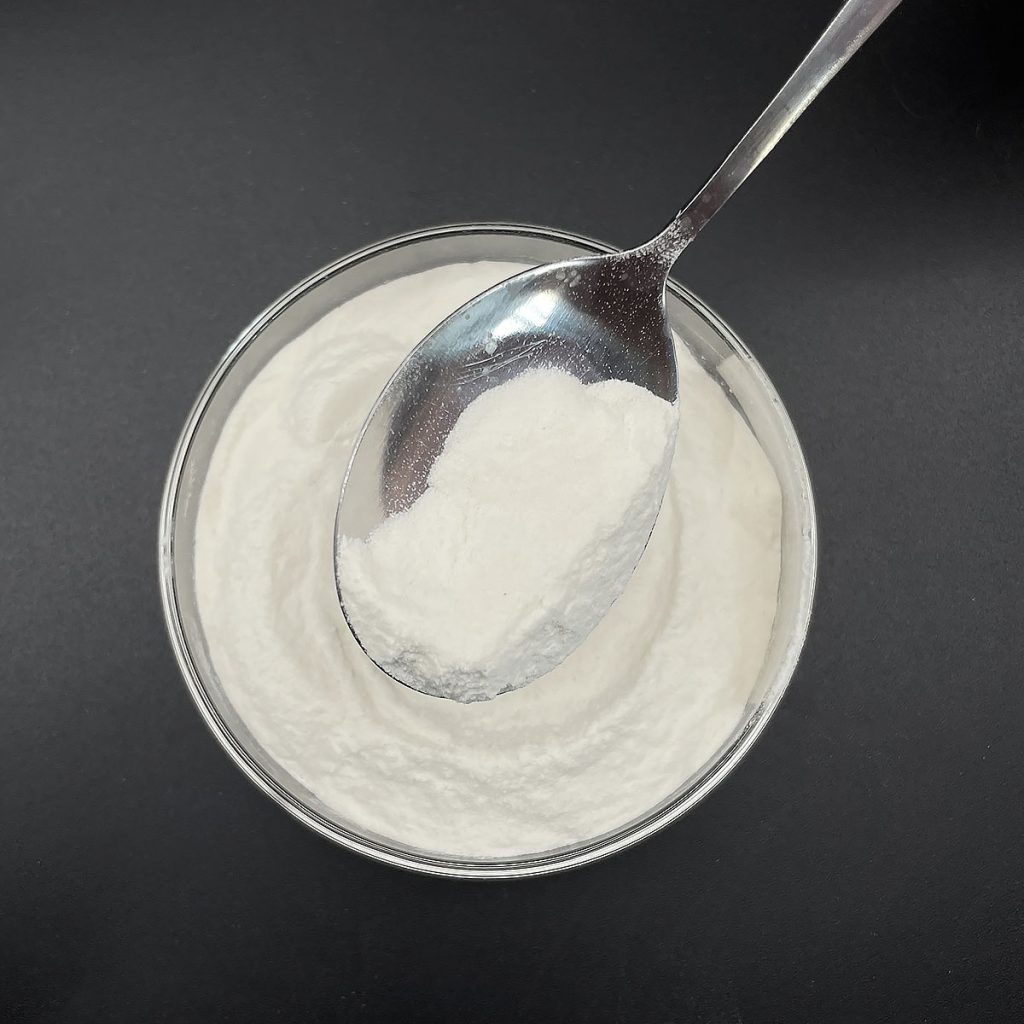

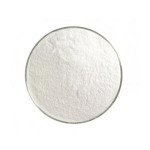
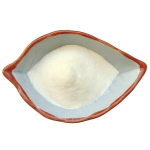
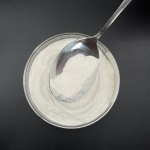
PRODUCT PARAMETERS
Description
Overview of Nano-Hexagonal Boron Nitride
Nano-hexagonal boron nitride (h-BN) is a multifunctional advanced material featuring a two-dimensional layered structure analogous to graphite, combined with exceptional thermal conductivity and electrical insulation properties. This unique combination makes it an ideal candidate for thermal management and electrochemical optimization in battery systems. With high thermal stability, chemical inertness, and excellent lubricity, nano-h-BN serves as a versatile additive across multiple battery components—including thermal interface materials, separator coatings, electrode formulations, and electrolytes—significantly enhancing safety, performance, and cycle life of next-generation energy storage devices.
In lithium-ion and emerging solid-state battery technologies, nano-h-BN plays a critical role in addressing key challenges associated with heat accumulation, interfacial instability, and accelerated material degradation. Its high in-plane thermal conductivity enables efficient heat dissipation within battery structures, reducing localized temperature gradients that can trigger capacity fading, electrode deterioration, and thermal runaway risks. Meanwhile, its electrically insulating nature helps maintain ion transport pathways while preventing unwanted electronic leakage, making it particularly valuable for separator modification and protective coating applications. The nanoscale morphology of h-BN also provides a large surface area, improving interfacial contact and enhancing the mechanical stability of composite battery materials.
Beyond thermal regulation, nano-h-BN contributes to the long-term reliability and efficiency of advanced energy storage systems through its excellent chemical resistance and structural stability. Unlike many conventional additives that may degrade under harsh electrochemical environments, h-BN maintains its performance under high temperatures, oxidative conditions, and repeated charge-discharge cycles. When incorporated into electrode binders, solid electrolytes, or functional coatings, nano-h-BN can improve mechanical strength, suppress undesirable side reactions, and promote more uniform ion distribution. These advantages make nano-h-BN an increasingly important material for the development of safer, higher-performance batteries used in electric vehicles, portable electronics, renewable energy storage, and other advanced power applications.
Features of Nano-Hexagonal Boron Nitride
1. High Thermal Conductivity & Strong Electrical Insulation
Nano-h-BN combines excellent thermal management capability with outstanding electrical insulation properties. Its in-plane thermal conductivity can reach 200–600 W/m·K depending on purity, particle size, and orientation, enabling rapid heat transfer and reducing localized overheating inside battery systems. At the same time, its electrical resistivity remains above 10¹²–10¹⁴ Ω·cm, allowing efficient thermal dissipation without creating conductive pathways or increasing the risk of internal short circuits. This unique combination makes nano-h-BN highly suitable for thermal interface materials, separator coatings, and insulating composite layers in high-energy-density batteries.
2. Superior Thermal & Chemical Stability
Nano-h-BN exhibits exceptional stability under extreme operating conditions, maintaining structural integrity at temperatures above 900°C in air atmosphere and up to approximately 2800°C under inert environments. Its excellent oxidation resistance, corrosion resistance, and chemical inertness allow it to withstand aggressive electrolyte systems and repeated thermal cycling. Compared with conventional carbon-based additives, nano-h-BN demonstrates lower chemical activity, minimizing unwanted reactions with electrolytes and electrode materials while improving the long-term reliability of battery components.
3. Two-Dimensional Layered Structure & Excellent Lubricity
With a graphite-like hexagonal layered structure, nano-h-BN consists of strongly bonded boron nitride layers connected by weak van der Waals forces. This unique morphology provides a low friction coefficient of approximately 0.10–0.20, excellent mechanical flexibility, and enhanced interfacial compatibility. The nanoscale layered structure can form uniform protective networks within battery materials, improving stress relaxation, reducing interface cracking during charge-discharge cycles, and creating favorable pathways for lithium-ion migration in composite systems.
4. High Purity with Strict Impurity Control
Battery-grade nano-h-BN requires strict control of impurity levels to prevent electrochemical side reactions. High-purity grades typically achieve ≥99.0%–99.9% BN content, with controlled B₂O₃ content below 0.5% and minimized carbon impurities. Reduced impurity concentration helps avoid electrolyte decomposition, gas generation, capacity loss, and micro-short circuit risks. This high-purity characteristic is especially important for applications in lithium-ion batteries, solid-state batteries, and advanced energy storage systems requiring long cycle stability.
5. Excellent Dispersion Performance & Interface Compatibility
Nano-h-BN particles are engineered with controlled particle sizes typically ranging from 50 nm to 500 nm, enabling uniform distribution in polymer matrices, ceramic composites, electrode slurries, and electrolyte systems. Improved dispersion prevents particle aggregation, ensures consistent thermal conductivity, and enhances mechanical reinforcement throughout the composite structure. Surface modification technologies can further improve compatibility with organic binders and polymer electrolytes, providing better processing performance and stable functional properties.
6. Enhanced Battery Safety & Cycle Performance
The incorporation of nano-h-BN can significantly improve battery safety by optimizing thermal distribution and suppressing temperature accumulation. Its high thermal diffusivity, typically around 1.0–2.0 cm²/s, helps reduce thermal gradients inside battery modules. In separator coatings, nano-h-BN can enhance mechanical strength and thermal shrinkage resistance, maintaining separator integrity at elevated temperatures and reducing the possibility of thermal runaway caused by separator failure.
Technical Parameters of Nano-Hexagonal Boron Nitride
Typical Physicochemical Specifications
| Parameter | Specification / Value | Test Method / Remarks |
|---|---|---|
| Main Content (h-BN) | ≥ 99.0% – 99.5% | XRD / Chemical Analysis |
| Particle Size Distribution (D50) | 1 μm – 10 μm (nano-sheet customizable) | Laser Diffraction / BET |
| Boric Oxide (B₂O₃) | ≤ 0.3% – 0.6% | ICP-OES / Titration |
| Carbon Content (C) | ≤ 0.05% – 0.1% | Infrared Absorption |
| Moisture (H₂O) | ≤ 0.5% | Drying at 105 °C, Weight Loss |
| Bulk Density | 0.2 – 0.4 g/cm³ | Funnel Method |
| Specific Surface Area (BET) | 10 – 80 m²/g (depending on particle size) | BET Nitrogen Adsorption |
| Thermal Conductivity (film/composite) | 30 – 60 W/(m·K) | Laser Flash Method |
| Breakdown Voltage (insulating sheet) | > 4 KV | Withstand Voltage Tester |
Key Quality Control Points
1. Purity & Impurity Control
Battery-grade nano-h-BN requires strict control of chemical composition to ensure electrochemical stability and long-term reliability. The typical BN content should reach ≥99.0%–99.9%, while impurity levels such as B₂O₃ should be controlled below 0.5% and carbon content maintained at ≤0.1%–0.3% depending on application requirements. Excessive oxide impurities may accelerate electrolyte decomposition and increase interfacial resistance, while residual carbon particles can introduce unwanted electrical conductivity, potentially causing self-discharge, leakage current, or micro-short circuit risks in high-performance battery systems.
2. Crystallinity & Morphology Control
The thermal and mechanical performance of nano-h-BN is highly dependent on crystal structure and particle morphology. High-quality h-BN typically features well-developed hexagonal layered crystals with a crystallinity level above 90%, providing improved thermal transport pathways and structural stability. For advanced applications such as separator coatings and interface modification, nano-scale BN nanosheets (BNNSs) with thicknesses of approximately 5–100 nm and lateral sizes ranging from 100 nm to several micrometers offer enhanced surface interaction, better mechanical reinforcement, and more uniform functional coatings.
3. Particle Size Distribution & Dispersion Performance
Uniform particle size distribution is critical for achieving consistent performance in battery composite materials. Nano-h-BN powders are commonly controlled within a particle size range of 50 nm–500 nm, with optimized grades reaching narrow distributions to reduce particle agglomeration. Since h-BN has a layered structure and relatively low surface energy, untreated powders may absorb moisture or form aggregates during storage and processing. Therefore, moisture content is typically controlled at ≤0.5%, and surface modification or dispersion treatment is applied to improve compatibility with polymer matrices, electrode slurries, and electrolyte systems, ensuring homogeneous distribution and stable thermal performance.
4. Thermal Performance Consistency
For battery thermal management applications, nano-h-BN must maintain stable thermal properties after processing. High-quality products generally provide thermal conductivity values of 100–600 W/m·K depending on crystal orientation, particle size, and composite formulation. Consistent thermal performance ensures efficient heat transfer, reduces localized temperature accumulation, and improves the safety and cycle stability of advanced battery systems.
5. Surface Chemistry & Processing Compatibility
The surface characteristics of nano-h-BN directly influence its interaction with binders, polymers, and electrolyte components. Controlled surface modification can improve wettability, reduce agglomeration, and enhance dispersion stability. Key parameters such as specific surface area (5–50 m²/g), surface functional groups, and moisture resistance should be optimized according to different battery manufacturing processes to achieve reliable interface bonding and uniform material performance.
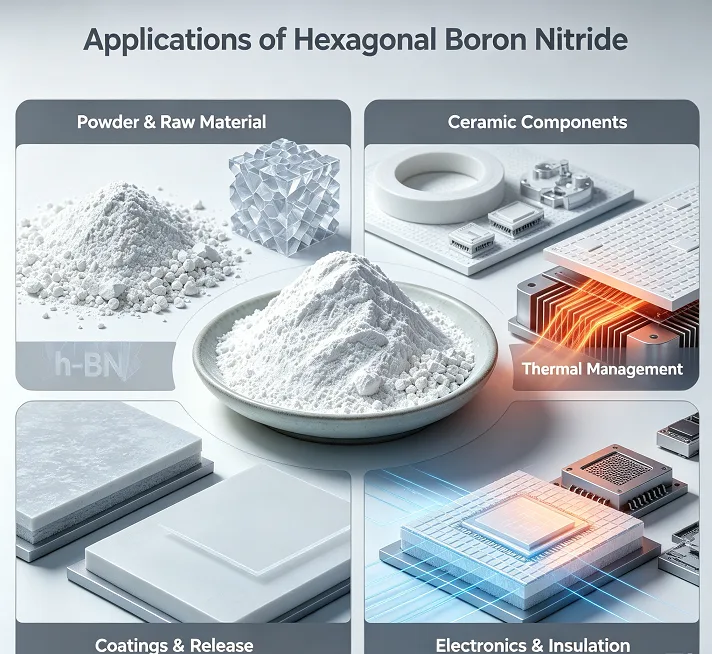
Applications of Nano-Hexagonal Boron Nitride (h-BN)
Nano-hexagonal boron nitride (h-BN) has attracted significant attention in advanced battery technologies due to its unique combination of high thermal conductivity, electrical insulation, chemical inertness, and two-dimensional layered structure. Unlike conventional conductive carbon additives, nano-h-BN can regulate heat transfer and improve structural stability without introducing additional electronic conductivity, making it suitable for applications requiring both thermal management and electrochemical safety. Its nanoscale morphology, high surface area, and excellent compatibility with polymer, ceramic, and electrolyte systems enable broad applications in thermal management materials, separators, electrodes, electrolytes, and next-generation energy storage devices.
1. Battery Thermal Management Materials
Nano-h-BN is widely used as a functional filler in battery thermal management systems because of its excellent thermal conductivity and dielectric insulation properties. With thermal conductivity typically ranging from 100–600 W/m·K and electrical resistivity above 10¹² Ω·cm, nano-h-BN can rapidly transfer heat generated during high-rate charging and discharging while preventing electrical leakage between battery components.
In thermal interface materials, nano-h-BN particles are incorporated into polymer matrices such as silicone, epoxy, and polyurethane to improve heat dissipation efficiency. Depending on filler loading and orientation, the addition of 10 wt%–60 wt% nano-h-BN can increase composite thermal conductivity by 2–10 times compared with pure polymers. These composites are commonly used in battery cooling pads, insulating films, module packaging materials, and heat dissipation layers for electric vehicle battery systems.
For battery encapsulation and protective coatings, nano-h-BN provides a lightweight thermal barrier with excellent chemical stability. Coating thickness can be controlled within 5–100 μm, maintaining thermal performance while minimizing additional weight. During high-power operation, h-BN coatings help reduce temperature differences between cells, suppress localized overheating, and improve battery safety under demanding conditions such as 5C–10C fast charging environments.
2. Separator Coatings for Enhanced Battery Safety
Nano-h-BN is an advanced ceramic coating material for lithium-ion battery separators due to its high-temperature resistance, mechanical strength, and electrolyte compatibility. By coating nano-h-BN nanosheets onto polyolefin separators, glass fiber membranes, or ceramic separators, a protective inorganic layer is formed to improve separator stability under extreme operating conditions.
The h-BN coating layer typically has a thickness of approximately 1–20 μm, providing effective thermal protection without significantly increasing separator resistance. Due to its high melting point of approximately 3000°C and excellent oxidation resistance, nano-h-BN can improve separator thermal stability and reduce shrinkage at elevated temperatures. Modified separators can maintain structural integrity above 150–200°C, significantly reducing the possibility of internal short circuits caused by separator deformation.
The layered structure of nano-h-BN also improves mechanical strength and resistance against lithium dendrite penetration. With optimized coating formulations, separator puncture resistance can increase by approximately 20%–100%, providing additional protection for lithium-metal batteries and other high-energy-density battery systems. Meanwhile, the hydrophilic modification of h-BN surfaces can improve electrolyte wettability, increasing electrolyte absorption by 20%–60% and promoting more uniform ion transport.
3. Electrode Material Additives
Nano-h-BN functions as a multifunctional additive in both cathode and anode materials, improving structural stability, thermal regulation, and long-term cycling performance.
In cathode systems such as LiFePO₄ (LFP), NCM, and lithium-rich materials, nano-h-BN fills microscopic gaps between active particles and forms a stable inorganic reinforcement network. Its high thermal conductivity helps distribute heat generated during electrochemical reactions, while its chemical stability reduces unwanted side reactions between electrode materials and electrolytes. Typically added at 0.5 wt%–10 wt%, nano-h-BN can improve electrode integrity, reduce particle cracking, and enhance capacity retention during repeated charge-discharge cycles.
For silicon-based anodes, nano-h-BN provides a flexible protective framework to address the severe volume expansion of silicon materials, which can reach 300%–400% during lithiation and delithiation processes. The layered structure of h-BN helps absorb mechanical stress, stabilize the solid electrolyte interphase (SEI), and reduce repeated SEI destruction. With optimized addition levels of approximately 1 wt%–8 wt%, nano-h-BN can improve cycle stability, maintain electrode structure, and facilitate lithium-ion diffusion.
4. Electrolyte Functional Additives
Nano-h-BN can also be introduced into liquid electrolytes, polymer electrolytes, and solid-state electrolyte systems as a functional additive. Due to its chemically stable surface and nanoscale interface effect, h-BN can regulate ion distribution, improve electrolyte stability, and enhance electrode-electrolyte interactions.
When added at concentrations of approximately 0.1 wt%–5 wt%, nano-h-BN particles can promote the formation of more stable interfacial layers on electrode surfaces, reducing electrolyte decomposition and improving cycling efficiency. Its ceramic characteristics provide additional thermal stability, helping electrolytes maintain performance under elevated temperatures.
In solid-state battery systems, nano-h-BN can act as a reinforcing phase to improve mechanical strength and suppress interface degradation. Its high dielectric strength, typically above 10 kV/mm, combined with excellent thermal stability, makes it suitable for advanced solid electrolyte composites requiring both safety and durability.
5. Applications in Next-Generation Battery Systems
Beyond conventional lithium-ion batteries, nano-h-BN is being explored in emerging energy storage technologies, including aluminum-ion batteries, sodium-ion batteries, lithium-metal batteries, and hybrid solid-state systems.
In aluminum-ion batteries, nano-h-BN can be used as a separator modification layer to regulate the movement of AlCl₄⁻ ions, promote uniform aluminum deposition, and suppress dendrite formation. The chemically inert structure of h-BN provides excellent compatibility with ionic liquid electrolytes and improves long-term cycling stability.
In sodium-ion and lithium-metal batteries, nano-h-BN coatings help stabilize electrode interfaces and improve mechanical durability. Its nanosheet structure provides a physical barrier against uncontrolled metal growth while maintaining efficient ion transport channels.
Nano-h-BN is also applied as a catalyst support material in energy conversion systems such as metal-air batteries and hydrogen production technologies. With a specific surface area of approximately 5–50 m²/g, h-BN provides a stable platform for dispersing catalytic nanoparticles, improving catalyst utilization and resistance to corrosion during long-term operation.
6. Advanced Composite Materials for Battery Components
Nano-h-BN can be integrated into polymer composites, ceramic composites, and hybrid materials to develop high-performance battery components with customized thermal and mechanical properties. Through surface modification and particle size optimization, nano-h-BN can achieve improved dispersion in composite systems while maintaining excellent thermal conductivity and electrical insulation.
Typical nano-h-BN particle sizes range from 50 nm to 500 nm, with customized grades available according to application requirements. By controlling particle morphology, purity level (≥99.0%–99.9% BN content), and surface characteristics, manufacturers can optimize nano-h-BN materials for thermal films, separator coatings, electrode binders, electrolyte composites, and other advanced battery applications.
With its multifunctional properties, nano-h-BN provides an effective solution for improving battery safety, thermal management capability, and long-term operational reliability, making it an important material for the development of next-generation high-performance energy storage systems.
Company Profile
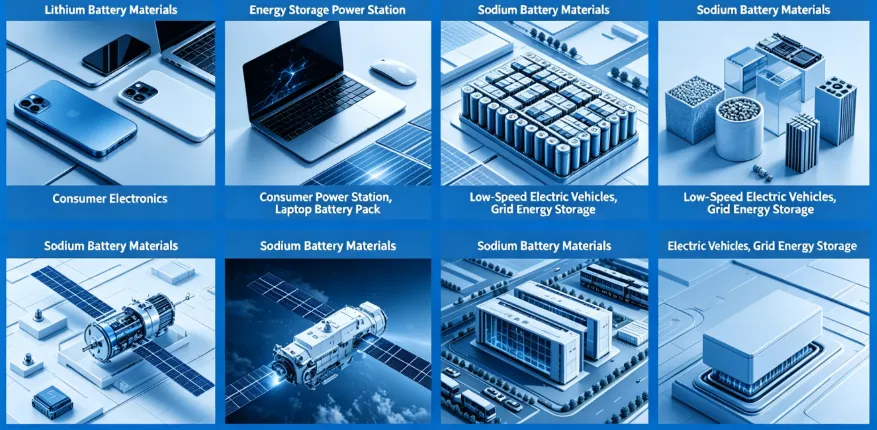
Luoyang Tongrun Nano Technology Co., Ltd. (TRUNNANO) is a global supplier and manufacturer of high-performance battery materials. We specialize in lithium-ion, sodium-ion, and other advanced battery materials, serving 3C electronics, power batteries, and energy storage systems.Our products include nano cobalt oxide, nano manganese oxide, silicon-carbon anode materials, hard carbon, NFPP, alumina, boron nitride, and more. All are produced under strict quality control, supported by our in-house lab and professional technical team. If you are looking for reliable battery materials, feel free to contact us or send an inquiry.
Payment Methods
L/C, T/T, Western Union, Paypal, Credit Card, etc.
Shipment
By sea, by air, or by express upon payment receipt.
Package of Nano-Hexagonal Boron Nitride
Packaging Specifications
- Available in aluminum foil bags, woven bags, or paper-plastic composite bags with double-layer plastic inner liners for moisture protection.
- Standard packaging: 1 kg/bag or 25 kg/bag.
- Customized packaging options available upon request, including vacuum packaging or inert gas protective packaging.
Storage Conditions
- Store in a cool, dry, well-ventilated area with relative humidity below 60%.
- Avoid high-temperature and high-humidity environments.
- Due to h-BN’s hygroscopic nature, reseal immediately after use to prevent moisture absorption and particle agglomeration.
- For long-term storage, desiccants or dry cabinets are recommended.
Shelf Life
24 months from date of manufacture under recommended storage conditions. After the shelf life expires, key indicators including particle size distribution (D10/D50/D90), BET surface area, moisture (loss on drying), and soluble boron content must be re-evaluated before use.

5 FAQs of Nano-Hexagonal Boron Nitride
Q1: What makes nano-h-BN suitable for battery thermal management applications?
Nano-h-BN is considered an ideal thermal management material for advanced battery systems because it combines high thermal conductivity, excellent electrical insulation, and outstanding thermal stability in a single material. Depending on crystal structure, particle size, and orientation, nano-h-BN can provide thermal conductivity values of approximately 100–600 W/m·K, allowing efficient heat transfer away from battery cells and reducing localized temperature accumulation during high-rate charging and discharging. Unlike conventional conductive thermal fillers such as graphite or carbon-based materials, nano-h-BN maintains an electrical resistivity typically above 10¹²–10¹⁴ Ω·cm, preventing unwanted current leakage and internal short-circuit risks. Its high dielectric strength (>10 kV/mm) makes it particularly suitable for thermal interface materials, insulating films, battery module cooling layers, and encapsulation composites where both heat dissipation and electrical safety are required.
In addition, nano-h-BN maintains structural stability under extreme conditions, with oxidation resistance above 900°C in air atmosphere and thermal stability up to approximately 2800°C under inert environments. This excellent durability enables stable operation in electric vehicle batteries, high-power energy storage systems, and next-generation solid-state battery applications.
Q2: How does nano-h-BN improve battery separator performance?
When applied as a separator coating material, nano-h-BN forms a uniform inorganic protective layer on traditional polyolefin separators, ceramic separators, or glass fiber membranes. This coating improves separator performance by enhancing thermal stability, mechanical strength, electrolyte compatibility, and resistance against dendrite penetration. The thermal stability of conventional polymer separators is limited at elevated temperatures, where shrinkage may lead to direct contact between electrodes and cause internal short circuits. Nano-h-BN coatings can significantly improve thermal resistance, maintaining separator structural integrity at temperatures above 150–200°C and reducing thermal shrinkage by approximately 30%–80% depending on coating formulation and thickness.
The layered nanosheet structure of h-BN also reinforces the separator framework. With a Young’s modulus of approximately 700–900 GPa, nano-h-BN improves mechanical strength and can increase puncture resistance by 20%–100%, providing additional protection against lithium dendrite growth. Furthermore, surface-modified h-BN improves electrolyte wettability, increasing electrolyte absorption by 20%–60% and promoting more uniform lithium-ion transport, which contributes to improved battery safety and cycle stability.
Q3: What are the critical quality parameters for battery-grade nano-h-BN?
The performance of nano-h-BN in battery applications depends strongly on its chemical purity, crystal structure, particle morphology, and dispersion characteristics. High-quality battery-grade nano-h-BN typically requires a BN purity level of ≥99.0%–99.9% to minimize unwanted reactions with electrolytes and electrode materials. Impurity control is one of the most important quality factors. B₂O₃ content is generally controlled below 0.5%, because excessive oxide impurities may increase interfacial reactions and reduce chemical stability. Carbon impurities should also be minimized, typically controlled within ≤0.1%–0.3%, to prevent increased electronic conductivity, self-discharge, and potential micro-short-circuit risks.
In addition to chemical composition, crystallinity and morphology directly influence thermal and mechanical properties. High-quality nano-h-BN usually exhibits well-developed hexagonal layered structures, with particle sizes commonly ranging from 50 nm to 500 nm and specific surface areas between 5–50 m²/g. Uniform dispersion performance is also essential, as particle aggregation can reduce thermal conductivity, affect coating uniformity, and decrease the reliability of final battery components.
Q4: Can nano-h-BN be used in silicon-based anode materials?
Yes. Nano-h-BN is increasingly studied as a functional additive or protective component for silicon-based anode systems due to its excellent mechanical stability, chemical inertness, and layered structure. Silicon anodes can theoretically provide extremely high capacity, but their practical application is limited by severe volume expansion of approximately 300%–400% during lithium insertion and extraction. Nano-h-BN helps solve this challenge by forming a flexible inorganic reinforcement network around silicon particles. Its layered structure can absorb mechanical stress, reduce particle pulverization, and maintain electrode integrity during repeated cycling. At the same time, h-BN helps stabilize the solid electrolyte interphase (SEI) layer, reducing continuous SEI breakdown and regeneration that consumes active lithium and accelerates capacity fading.
When introduced at optimized concentrations of approximately 1 wt%–8 wt%, nano-h-BN can improve silicon electrode stability, enhance lithium-ion diffusion pathways, and maintain better initial Coulombic efficiency. Its excellent thermal conductivity also helps distribute heat more evenly inside the electrode, improving safety performance during high-current operation.
Q5: What customization options are available for nano-h-BN products?
Nano-h-BN can be customized according to different battery manufacturing requirements, including particle size distribution, purity level, surface treatment, thermal performance, and packaging conditions. Since different applications require different material characteristics, customized solutions allow manufacturers to optimize h-BN performance for thermal management materials, separator coatings, electrode additives, and electrolyte composites. Typical customization parameters include BN purity from 99.0% to 99.9%, particle sizes ranging from 50 nm to 5 μm, specific surface areas of 5–50 m²/g, and controlled morphology such as nanosheets, flakes, or spherical particles. Surface modification technologies can also be applied to improve compatibility with polymer binders, electrolyte systems, and electrode slurries, reducing agglomeration and improving dispersion stability.
For sensitive applications such as solid-state batteries and high-performance energy storage systems, customized packaging options are available, including vacuum-sealed aluminum foil bags, nitrogen-protected packaging, and moisture-resistant containers. Additional technical support can include particle size analysis, purity testing, thermal conductivity evaluation, and application-specific formulation recommendations to ensure consistent performance in advanced battery systems.
REQUEST A QUOTE
RELATED PRODUCTS
High Quality Zinc Sulfide CAS 1314-98-3 Zinc Sulfide Powder CAS1314983
Nano Manganese Oxide (MnO): High-Capacity Anode Material for Advanced Energy Storage
Choosing the Best Termal Insulation Material: Fumed Silica vs. Aerogel vs. Hollow Glass Microspheres
Fumed Titanium Dioxide Unlocks Safer Longer Lasting Batteries
Nano Manganese Tetroxide (Mn₃O₄): High-Capacity Anode Material for Advanced Lithium-Ion Batteries
