Professional and high-quality metal alloys, ceramic products and concrete additives | RBOSCHCO




PRODUCT PARAMETERS
Description
Overview of Nano Manganese Oxide
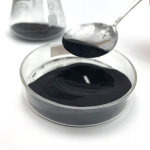
Nano Manganese Oxide (MnO) is a transition metal oxide nanomaterial that has emerged as a highly promising electrode material for next-generation electrochemical energy storage systems. Leveraging its high theoretical capacity, excellent electrochemical performance, and unique nanoscale effects, nano MnO demonstrates broad application prospects in lithium-ion batteries, supercapacitors, and beyond.
With a theoretical capacity of approximately 680 mAh/g—nearly double that of conventional graphite anodes (372 mAh/g)—nano MnO offers a compelling pathway toward higher energy density batteries. Its abundance, low cost, and environmental friendliness further enhance its appeal as a sustainable electrode material.
When engineered at the nanoscale, MnO exhibits significantly increased surface area, abundant active sites, and shortened ion/electron diffusion paths, effectively overcoming the kinetic limitations of bulk materials and unlocking superior electrochemical performance.
Features of Nano Manganese Oxide
- Nanoscale Effects – Ultra-fine particle size delivers a high specific surface area (50–200 m²/g), providing abundant active sites and significantly improved reaction kinetics.
- Excellent Electrochemical Performance – Rapid lithium-ion diffusion enables outstanding rate capability, high reversible capacity, and stable cycling performance.
- High Theoretical Capacity – Offers approximately 680 mAh/g, nearly double the capacity of conventional graphite anodes (372 mAh/g).
- Chemical Properties – Readily soluble in acids; susceptible to oxidation in air (forming Mn₃O₄ or MnO₂), requiring storage under inert atmosphere protection.
- Magnetic Properties – Exhibits weak ferromagnetism or superparamagnetism at room temperature, enabling potential applications in magnetic separation and related fields.
- Composite Compatibility – Easily combined with carbon materials (e.g., porous carbon, graphene, carbon nanotubes) to address volume expansion and high contact resistance during charge/discharge cycles.
- Cost-Effective & Sustainable – Manganese is abundant and non-toxic, offering significant cost advantages over cobalt or nickel-based alternatives.
Technical Parameters of Nano Manganese Oxide
| Parameter | Typical Value |
|---|---|
| Average Particle Size | ~50 nm (customizable 10–100 nm) |
| Purity | ≥ 99.9% (up to 99.99%) |
| Specific Surface Area (BET) | 50 – 200 m²/g |
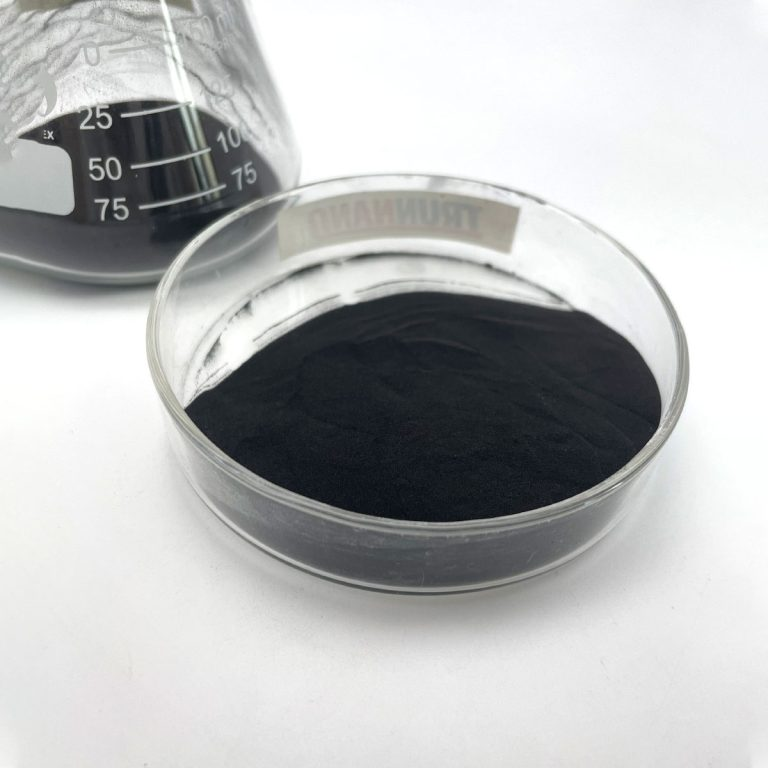
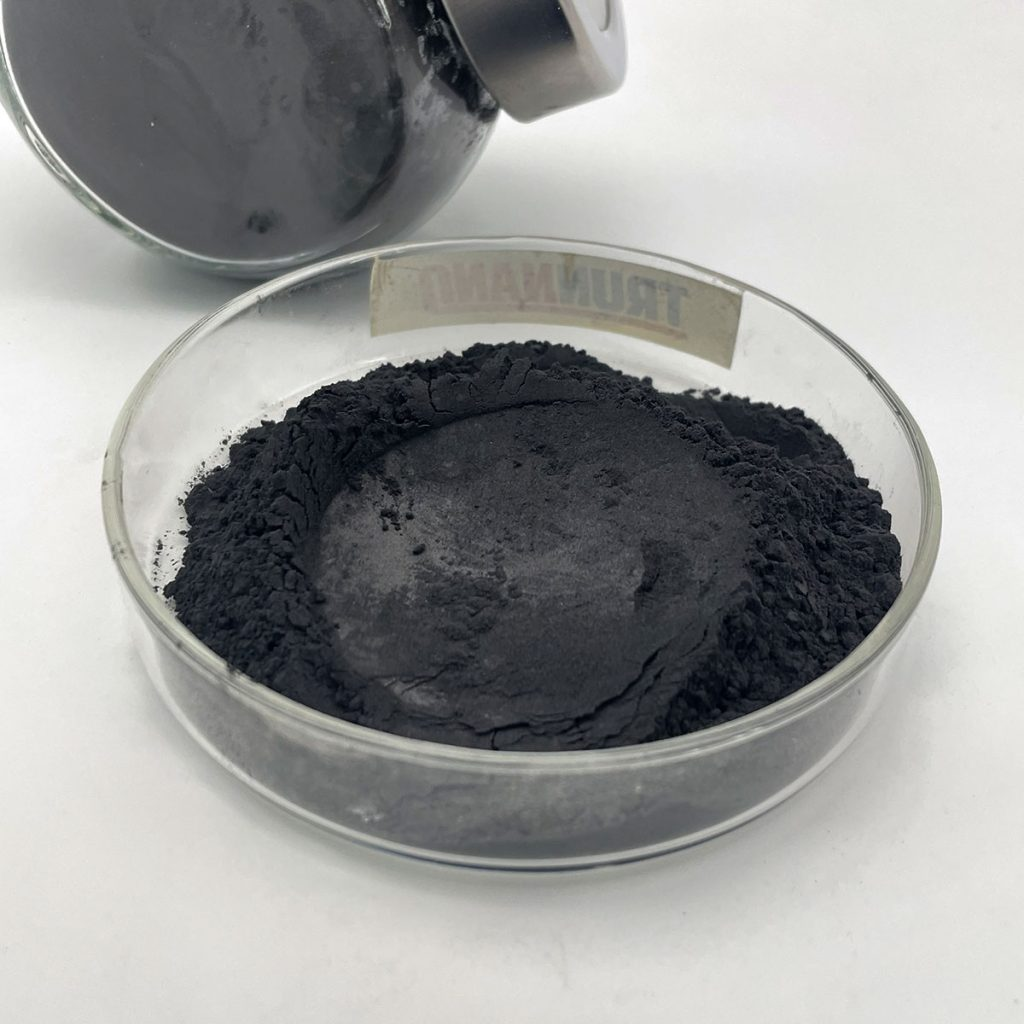
| Appearance / Color | Deep gray / black powder |
| Crystal Structure | Cubic (rock salt) |
| True Density | ~5.46 g/cm³ |
| Theoretical Capacity | ~680 mAh/g |
| Solubility | Insoluble in water; soluble in acids |
Applications of Nano Manganese Oxide
- Lithium-Ion Battery Anode Materials
Nano MnO offers a high theoretical capacity of approximately 680 mAh/g, making it a highly promising anode material for next-generation lithium-ion batteries. In practical applications, MnO is often composited with carbon materials (such as porous carbon or graphene) to address the challenges of significant volume expansion and high contact resistance during charge/discharge cycling. These composites deliver higher specific capacity and superior cycling stability, unlocking the full potential of this high-capacity anode material. - Supercapacitor Electrode Materials
The high specific surface area of nano MnO provides abundant active sites for charge storage, resulting in high specific capacitance and excellent rate performance. These characteristics make it well-suited for high-performance supercapacitor applications requiring rapid charge/discharge capabilities. - Other Battery Applications
- Lithium Manganese Oxide (LiMn₂O₄) Synthesis: Nano MnO serves as a precursor for synthesizing spinel lithium manganese oxide cathode materials.
- Aqueous Zinc-Ion Batteries: Manganese-based oxides, including MnO, demonstrate promising potential as cathode materials for safe, cost-effective large-scale energy storage systems.
- Lithium-Sulfur Batteries: Nano MnO can be used for composite modification of sulfur cathodes, helping to suppress the polysulfide shuttle effect and improve overall cell performance.
- Catalysis
The high specific surface area of nano MnO enhances both catalytic activity and selectivity, making it an effective catalyst for organic oxidation/reduction reactions, CO oxidation, denitrification (DeNOₓ), and other catalytic processes.
Company Profile
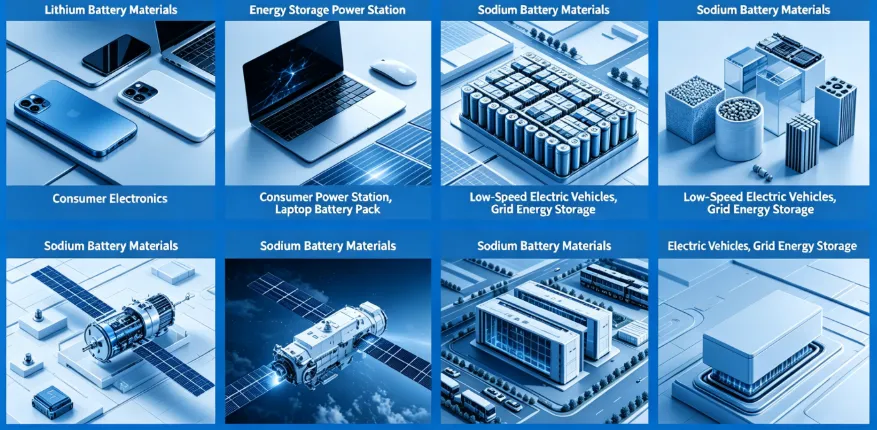
Luoyang Tongrun Nano Technology Co., Ltd. (TRUNNANO) is a global supplier and manufacturer of high-performance battery materials. We specialize in lithium-ion, sodium-ion, and other advanced battery materials, serving 3C electronics, power batteries, and energy storage systems.
Our products include nano cobalt oxide, nano manganese oxide, silicon-carbon anode materials, hard carbon, NFPP, alumina, boron nitride, and more. All are produced under strict quality control, supported by our in-house lab and professional technical team.
If you are looking for reliable battery materials, feel free to contact us or send an inquiry.
Package of Nano Manganese Oxide
Standard Packaging:
- Available in various sizes (100g, 500g, 1kg, 5kg) in sealed containers
- Plastic bottles or aluminum-plastic bags under inert atmosphere
Custom Packaging: Available upon request to meet specific handling and storage requirements.
Storage Recommendations:
- Store in a cool, dry environment
- Keep sealed and preferably under inert atmosphere (e.g., argon or nitrogen) to prevent oxidation to higher manganese oxides
- Keep away from acids and moisture
- Shelf life: 24 months under recommended storage conditions
5 FAQs about Nano Manganese Oxide
1. What is the theoretical capacity of nano MnO as a lithium-ion battery anode?
Nano MnO offers a theoretical capacity of approximately 680 mAh/g for lithium storage—nearly double that of conventional graphite anodes (372 mAh/g). When engineered into advanced nanostructured composites, reversible capacities can be further enhanced.
2. What are the main challenges of using MnO in batteries, and how are they addressed?
The primary challenges are poor electrical conductivity and significant volume expansion during charge/discharge cycles, which can lead to capacity fade and structural degradation. These issues are effectively addressed through:
- Nanostructuring to shorten ion/electron diffusion paths
- Carbon compositing (graphene, porous carbon, CNT) to enhance conductivity and buffer volume changes
- Protective coatings to maintain structural integrity
3. How does nano MnO compare to graphite for LIB anodes?
Nano MnO provides a significantly higher theoretical capacity (~680 mAh/g vs. 372 mAh/g for graphite), enabling batteries with much higher energy density. However, MnO requires nanostructuring and carbon compositing to overcome its intrinsic poor conductivity and volume changes, whereas graphite offers superior cycling stability at the cost of lower capacity.
4. Why is nano MnO considered a sustainable electrode material?
Manganese is the 12th most abundant element in the Earth’s crust and is relatively inexpensive and non-toxic. This makes MnO a more environmentally friendly and cost-effective alternative compared to other transition metal oxides like cobalt or nickel-based materials, supporting the transition toward more sustainable energy storage technologies.
5. What purity grades and particle sizes are available?
Nano MnO is available in purity grades ranging from ≥99.9% to 99.99%, with average particle sizes typically around 50 nm (customizable from 10–100 nm). Specific surface area (BET) ranges from 50–200 m²/g, depending on the particle size and preparation method. Custom specifications are available upon request.
REQUEST A QUOTE
RELATED PRODUCTS
Nano Manganese Tetroxide (Mn₃O₄): High-Capacity Anode Material for Advanced Lithium-Ion Batteries
High Quality Potassium Silicate Cas 1312-76-1
Hard Carbon Anode Material TRNF-1 Hard Carbon Anode Material for Sodium-Ion Batteries
99% CAS 1317-33-5 Molybdenum Disulfide/MoS2/Molybdenum Sulfide Powder
V-Mn-018 Na0.8V0.2Mn0.8O2 Cathode Material for Sodium-Ion Batteries