Professional and high-quality metal alloys, ceramic products and concrete additives | RBOSCHCO


PRODUCT PARAMETERS
Description
Overview of Fumed Titanium Dioxide
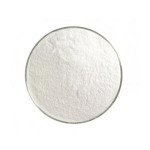
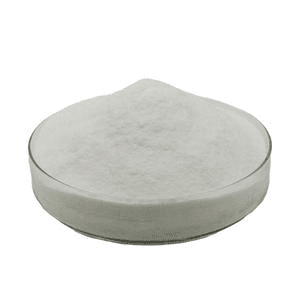
Fumed Titanium Dioxide (nano-TiO₂) is a high-purity white nanopowder produced by the flame hydrolysis process. As a critical raw material for lithium-ion batteries, it offers unique advantages as a cathode additive, including large lithium intercalation capacity, low energy consumption, high specific capacity, excellent cycling stability, and environmental friendliness.
In lithium-ion battery applications, nano-TiO₂ enhances rate capability and cycling stability, enables fast charge-discharge performance, and exhibits excellent Li⁺ deintercalation reversibility. It reduces capacity fade, improves electrochemical performance, and increases the initial discharge specific capacity of battery materials. Additionally, its photostability makes it a key material for photovoltaic solar energy conversion cells.
Features of Fumed Titanium Dioxide
- High Purity (≥99.9%) – Ultra-high purity ensures minimal impurity interference in battery systems, preventing unwanted side reactions.
- Multiple Crystal Phases Available – Available in both Rutile and Anatase phases, each optimized for specific battery applications:
- Rutile (TR-T30D): Enhances electrochemical stability and cycling performance.
- Anatase (TR-TA30D): Ideal for lithium titanate synthesis, improving capacity and cycling stability.
- Reduces Capacity Fade – Effectively slows down capacity degradation during charge-discharge cycles, extending battery lifespan.
- Improves Discharge Performance – Reduces polarization in LiCoO₂ during cycling, delivering stable discharge voltage and smoother discharge curves.
- Relieves Internal Stress – The loose, porous structure of nano-TiO₂ reduces interparticle stress and accommodates micro-strain caused by volume changes during cycling, enhancing structural stability.
- High Rate Capability – Enables fast charging and discharging without compromising capacity retention.
- Excellent Photostability – High photoelectric conversion efficiency makes it suitable for dye-sensitized solar cells and photovoltaic applications.
- Wide Temperature Range – Demonstrates good conductivity across a broad operating temperature window, suitable for nickel-cadmium batteries.
Technical Parameters of Fumed Titanium Dioxide
| Model | Appearance | Purity (TiO₂) | Average Particle Size | Specific Surface Area (BET) | Crystal Form / Surface Properties | Application |
|---|---|---|---|---|---|---|
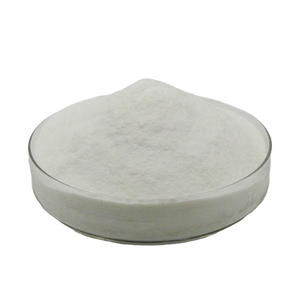
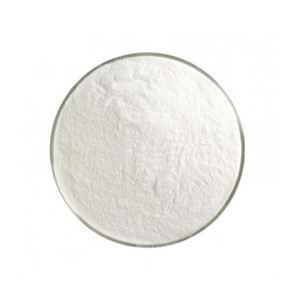
| TR-T30D | White powder | ≥99.9% | 20–60 nm | 20–50 m²/g | Rutile | Battery-grade additive for cathode doping; improves electrochemical stability and cycling performance |
| TR-TA30D | White powder | ≥99.9% | 20–60 nm | 60–90 m²/g | Anatase | Battery-grade additive for cathode doping; used in lithium titanate synthesis; enhances capacity, cycling stability, and electrochemical performance |
Additional Properties:
- Color: White
- Crystal System: Tetragonal (Rutile / Anatase)
- Photocatalytic Activity: UV-responsive
- Dispersion: Readily dispersible in both aqueous and organic solvents
Applications of Fumed Titanium Dioxide
- Lithium-Ion Battery Cathode Additive
As a cathode dopant, nano-TiO₂ significantly improves electrochemical performance. It enhances initial discharge specific capacity, reduces polarization during charge-discharge, and delivers more stable discharge voltages. The loose porous structure accommodates volume changes during cycling, extending battery life. - Lithium Titanate (Li₄Ti₅O₁₂) Synthesis
Anatase-phase nano-TiO₂ serves as the primary raw material for synthesizing lithium titanate anodes, which are known for their zero-strain characteristics and exceptional cycling stability. - Dye-Sensitized Solar Cells (DSSC)
Nano-TiO₂’s high photoelectric conversion efficiency and photostability make it an ideal photoelectrode material for solar energy conversion devices. - Nickel-Cadmium Batteries
Provides good electrical conductivity and stable performance across a wide temperature range. - Silicon Anode Modification
Can be used as a buffer layer to accommodate volume expansion in silicon-based anodes.
Company Profile
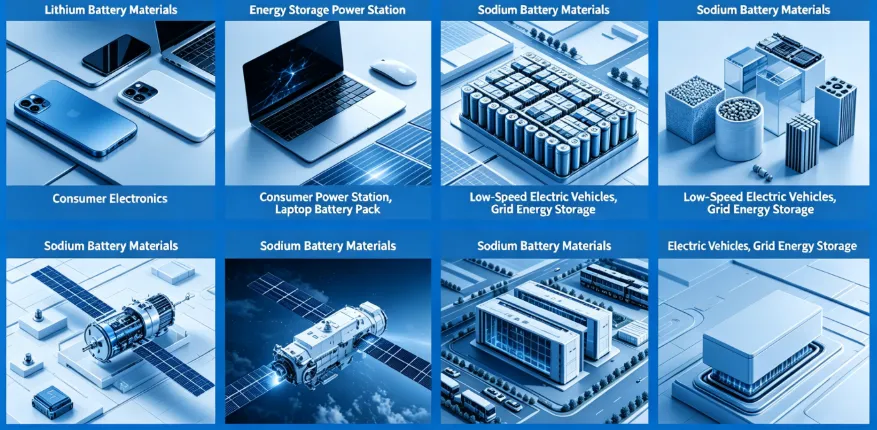
Luoyang Tongrun Nano Technology Co., Ltd. (TRUNNANO) is a global supplier and manufacturer of high-performance battery materials. We specialize in lithium-ion, sodium-ion, and other advanced battery materials, serving 3C electronics, power batteries, and energy storage systems.
Our products include nano cobalt oxide, nano manganese oxide, silicon-carbon anode materials, hard carbon, NFPP, alumina, boron nitride, and more. All are produced under strict quality control, supported by our in-house lab and professional technical team.
If you are looking for reliable battery materials, feel free to contact us or send an inquiry.
Payment Methods
L/C, T/T, Western Union, Paypal, Credit Card, etc.
Shipment
By sea, by air, or by express upon payment receipt.
Package of Fumed Titanium Dioxide
Standard Packaging:
- 20 kg per paper drum lined with plastic film bags
Custom packaging available upon request.
Storage Recommendations:
- Store in a cool, dry, well-ventilated area
- Keep away from moisture and volatile organic compounds
- Shelf life: 24 months under recommended storage conditions
5 FAQs about Fumed Titanium Dioxide
1. What is the difference between Rutile and Anatase nano-TiO₂ for battery applications?
Rutile (TR-T30D) is primarily used to enhance electrochemical stability and cycling performance of cathodes. Anatase (TR-TA30D) is preferred for lithium titanate synthesis and offers higher specific surface area (60–90 m²/g), which can improve capacity and reaction kinetics.
2. How much nano-TiO₂ should be added to cathode materials?
Typical addition levels range from 0.5% to 5% by weight, depending on the cathode chemistry and desired performance improvements. We recommend optimizing dosage through small-scale testing.
3. How does nano-TiO₂ improve battery safety?
Nano-TiO₂ reduces lithium dendrite formation by providing a more stable electrode interface and reducing polarization. Its structural stability also minimizes internal short-circuit risks.
4. Can this product be used in sodium-ion batteries?
Yes. Anatase-phase nano-TiO₂ has shown promise in sodium-ion battery applications due to its open channel structure that accommodates larger Na⁺ ions.
5. What is the shelf life of fumed TiO₂?
When stored in a dry, sealed container away from moisture, the product maintains its properties for up to 24 months.
REQUEST A QUOTE
RELATED PRODUCTS

Co-001 O3-Type Cobalt-Based Layered Oxide Cathode – High-Voltage Sodium-Ion Battery Positive Electrode
Ti-Mn-016 Na0.8Ti0.2Mn0.8O2 Cathode Material for Sodium-Ion Batteries

Silicon Carbon TRGT-800 Battery Anode Material
High-Performance Fumed Silica for Lithium-Zinc-Lead Acid Batteries
Silicon Carbon TRGT-200 Battery Anode Material