Professional and high-quality metal alloys, ceramic products and concrete additives | RBOSCHCO


PRODUCT PARAMETERS
Description
Overview of Cobalt Ferrite (CoFe₂O₄)
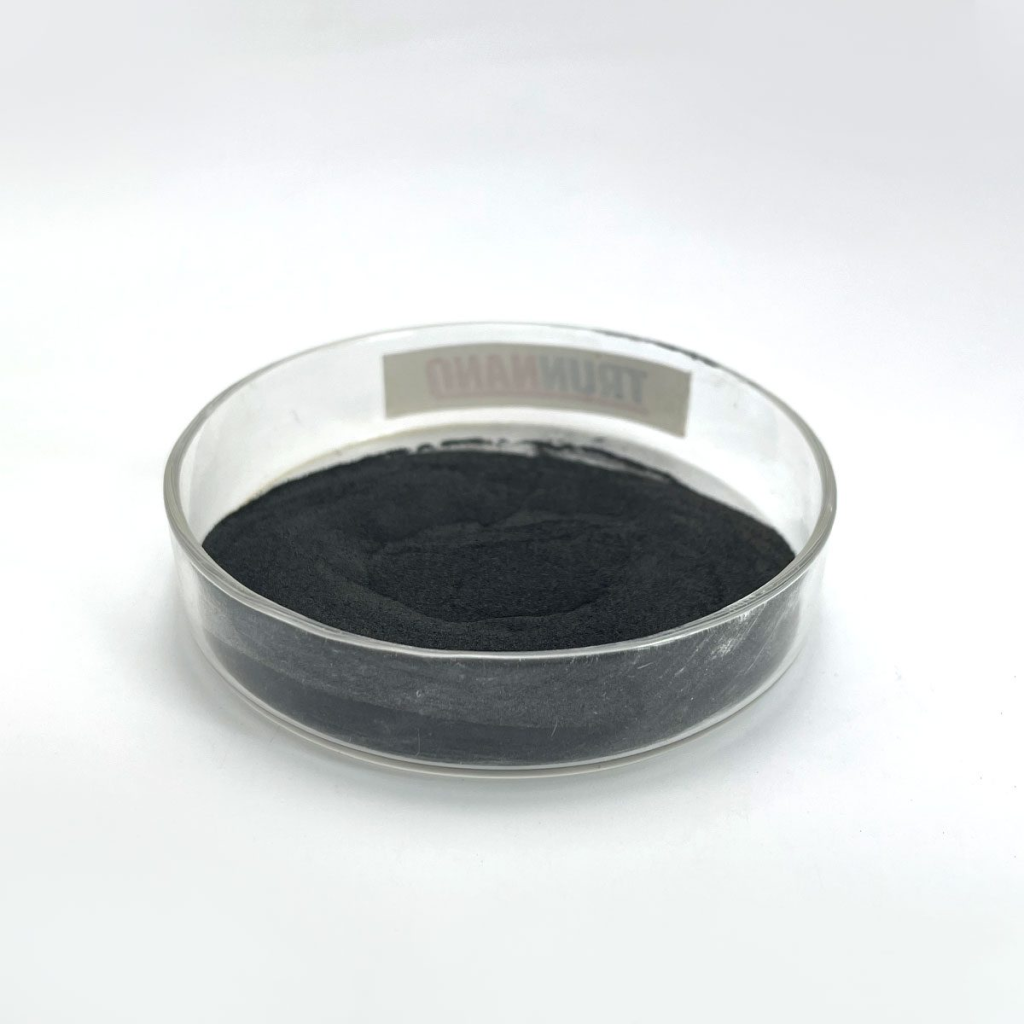
Cobalt Ferrite (CoFe₂O₄) is a spinel-type ferrite magnetic material with a partially inverse spinel structure. In this crystal configuration, Co²⁺ ions predominantly occupy octahedral sites, while Fe³⁺ ions are distributed across both tetrahedral and octahedral positions. This unique structural arrangement endows the material with distinctive magnetic and electrical properties. When engineered at the nanoscale, Cobalt Ferrite exhibits a high specific surface area, abundant active sites, and short ion diffusion pathways, making it a versatile material for energy storage, magnetic applications, and biomedical fields.
Features of Cobalt Ferrite
- Stable Spinel Structure – High chemical stability with a robust crystalline framework.
- High Coercivity (High Hc) – Distinguished from soft ferrites (e.g., NiFe₂O₄), offering hard magnetic characteristics for demanding applications.
- High Magnetocrystalline Anisotropy – Large anisotropy constant, beneficial for magnetic recording and high-frequency applications.
- High Saturation Magnetization – Ms values reaching 36.5–53.4 emu/g, providing strong magnetic responsiveness.
- Excellent Magnetostrictive Performance – Large positive magnetostriction coefficient (λ≈-110×10⁻⁶), one of the highest known values, ideal for sensors and actuators.
- High Electrochemical Capacity – Theoretical capacity of ~1000 mAh/g as a Li-ion anode material, nearly 3 times that of graphite (372 mAh/g).
- Good Biocompatibility – Suitable for magnetic hyperthermia, drug delivery, and MRI contrast enhancement.
- Excellent Catalytic Activity – Applicable in heterogeneous catalysis and electrocatalysis, with magnetic separation enabling easy recovery and reuse.
- Outstanding Chemical Stability – Resistant to water, weak acids, and weak alkalis.
- Good Microwave Absorption – Synergistic magnetic and dielectric losses, suitable for EMI shielding and stealth materials.
- Easy Composite Processing – Compatible with carbon materials, polymers, ceramics, and other matrices.
Technical Parameters of Cobalt Ferrite
Physical Properties
| Parameter | Typical Value | Test Method |
|---|---|---|
| Primary Particle Size | 10–100 nm (model-dependent, typical 20–50 nm) | TEM / SEM / XRD |
| Morphology | Near-spherical, spherical | TEM / SEM |
| Specific Surface Area (BET) | 9–150 m²/g (varies with particle size and preparation method) | BET |
| Tap Density | 0.41–0.51 g/cm³ | Tap density tester |
| True Density | ~4.52–5.3 g/cm³ | Pycnometer |
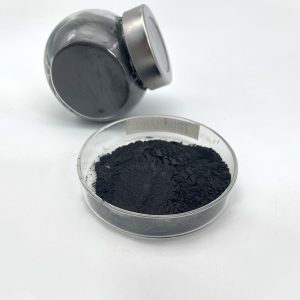
| Color | Black, grayish-black, or brownish-black | Visual inspection |
| Curie Temperature | ~520 °C (~793 K) | VSM / DSC |
| Magnetostriction Coefficient | λ≈-110×10⁻⁶ | Strain gauge / VSM |
Electrochemical Performance (as Anode Material)
| Parameter | Value | Condition / Note |
|---|---|---|
| Theoretical Capacity | ~1000 mAh/g | Typical for transition metal oxides |
| Initial Discharge Capacity | 919.6 mAh/g | CoFe₂O₄/NC30 @ 0.1 A/g |
| Capacity after 200 Cycles | 662.9 mAh/g | CoFe₂O₄/NC30 @ 0.1 A/g |
| Rate Capability (2 A/g) | 357.9 mAh/g | CoFe₂O₄/NC30 |
| Cycling Stability | >300 mAh/g after 500 cycles | CoFe₂O₄ nanoporous spheres @ 1000 mA/g |
| High-Rate Cycling | ~255 mAh/g after 1000 cycles | CoFe₂O₄ nanoporous spheres @ 3000 mA/g |
| Coulombic Efficiency | >95% (after 500 cycles) | Typical for energy storage applications |
Applications of Cobalt Ferrite
- Lithium-Ion Battery Anode Materials
With a theoretical capacity of ~1000 mAh/g, CoFe₂O₄ is a key research focus for high-energy-density lithium-ion battery anodes, significantly outperforming conventional graphite. - Supercapacitors
The high specific surface area and good electrical conductivity of CoFe₂O₄ nanoparticles make them suitable for supercapacitor electrode materials, enhancing rate performance and cycling life. - Magnetic Materials (High-Coercivity Ferrite Applications)
Unlike soft magnetic materials such as NiFe₂O₄, CoFe₂O₄ is renowned for its high coercivity. Applications include:- High-density magnetic recording media
- Permanent magnets and magnetic recording instruments
- Magnetic sensors
- Magnetic fluid technology
- Magnetic separation
- Biomedical Applications (One of the Hottest Research Directions)
CoFe₂O₄ exhibits excellent biocompatibility and strong magnetic responsiveness, making it promising for:- Magnetic Hyperthermia: Generates heat (42–45 °C) under alternating magnetic fields for precise tumor cell ablation.
- Targeted Drug Delivery: Magnetic guidance enables drug enrichment and controlled release.
- MRI Contrast Agents: T₂-weighted negative contrast enhancement for improved imaging.
- Photo/ Chemodynamic Therapy: Near-infrared photothermal conversion combined with Fenton reaction to produce ·OH for synergistic antitumor effects.
- Magnetic-Guided Drug Transport: External magnetic fields guide precise drug delivery.
- Environmental Remediation
CoFe₂O₄ nanoparticles are effective in wastewater treatment and pollutant degradation:- Heavy Metal Adsorption: Efficient removal of Pb²⁺, Cd²⁺, Hg²⁺ with removal rates >95%; magnetic separation facilitates recovery and regeneration.
- Hexavalent Chromium Removal: CoFe₂O₄ calcined at 450 °C shows strong Cr(VI) removal capability.
- Organic Pollutant Degradation: Fenton-like catalysis or photocatalysis for degrading dyes, pesticides, and antibiotics; magnetic separation enables easy recovery.
- Microwave Absorption & EMI Shielding
CoFe₂O₄ exhibits excellent electromagnetic wave absorption and interference shielding capabilities. It is used in:- Military stealth materials (millimeter-wave, visible-infrared, and structural stealth materials)
- Civilian electromagnetic compatibility (mobile phone radiation shielding materials)
- Catalysis
CoFe₂O₄ serves as a heterogeneous catalyst for oxidation reactions, reduction reactions, Fischer-Tropsch synthesis, and electrocatalytic oxygen reduction (ORR). Its magnetic properties enable efficient catalyst separation and recycling. - High-Frequency Devices & Sensors
Leveraging its tunable magnetic and electrical properties, CoFe₂O₄ is applicable in high-frequency devices and NTC thermistors. - Composites & Sputtering Targets
- Acts as an additive to enhance the magnetic functionality of polymers, ceramics, and conductive composites.
- Provides high-quality sputtering targets (ceramic and metal targets) for magnetron sputtering and vacuum coating processes, serving aerospace, automotive, and integrated circuit industries.
Company Profile
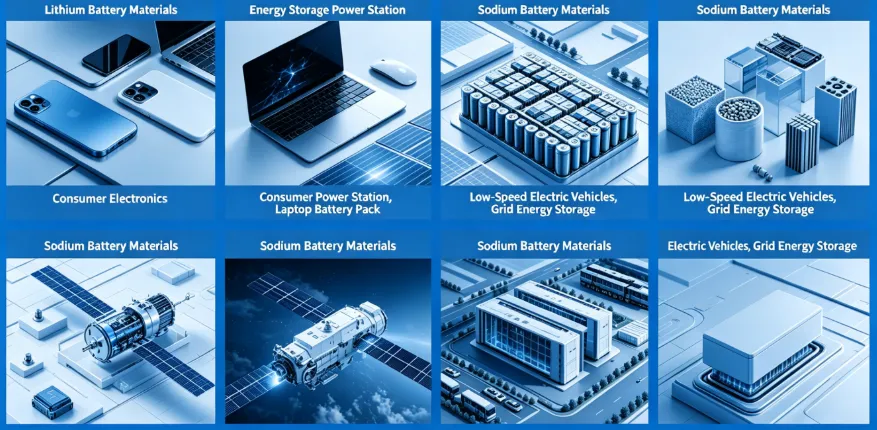
Luoyang Tongrun Nano Technology Co., Ltd. (TRUNNANO) is a global supplier and manufacturer of high-performance battery materials. We specialize in lithium-ion, sodium-ion, and other advanced battery materials, serving 3C electronics, power batteries, and energy storage systems.
Our products include nano cobalt oxide, nano manganese oxide, silicon-carbon anode materials, hard carbon, NFPP, alumina, boron nitride, and more. All are produced under strict quality control, supported by our in-house lab and professional technical team.
If you are looking for reliable battery materials, feel free to contact us or send an inquiry.
Package of Cobalt Ferrite
Packaging is available upon customer request to meet specific handling, storage, and transportation requirements.
5 FAQs about Cobalt Ferrite
1. How does Cobalt Ferrite compare to Nickel Ferrite for battery anodes?
Cobalt Ferrite offers a higher theoretical capacity (~1000 mAh/g vs. ~915 mAh/g for Nickel Ferrite). However, Cobalt Ferrite has higher coercivity (hard magnetic behavior), while Nickel Ferrite is soft magnetic. The choice depends on whether you prioritize capacity or magnetic characteristics for your specific application.
2. Is Cobalt Ferrite stable during battery cycling?
Yes. CoFe₂O₄ demonstrates good cycling stability. For example, nanoporous CoFe₂O₄ spheres maintain >300 mAh/g after 500 cycles at 1000 mA/g and ~255 mAh/g after 1000 cycles at 3000 mA/g, with coulombic efficiency exceeding 95%.
3. Can Cobalt Ferrite be combined with other materials?
Absolutely. CoFe₂O₄ composites well with carbon materials (such as NC, graphene, CNTs), polymers, and ceramics. These composites often show enhanced electrochemical performance, rate capability, and structural stability.
4. What makes CoFe₂O₄ suitable for biomedical applications?
Its excellent biocompatibility, strong magnetic responsiveness, and ability to generate heat under alternating magnetic fields make it ideal for magnetic hyperthermia, targeted drug delivery, and MRI contrast enhancement. The nanoparticles can be guided and concentrated at specific sites using external magnets.
5. What purity grades are available for Cobalt Ferrite?
Purity typically ranges from 99.5% to 99.99%, depending on the application requirements. Custom purity levels and particle sizes can be accommodated upon request.
REQUEST A QUOTE
RELATED PRODUCTS
P3-028 – P3-Type NaCoO₂ Cathode Material
V-Mn-018 Na0.8V0.2Mn0.8O2 Cathode Material for Sodium-Ion Batteries
Li-Rich-025 O3-NaLi₀.₂Mn₀.₈O₂ High-Capacity Lithium-Rich Cathode for Sodium-Ion Batteries
VE-O3-006 Valence-Engineered Layered Oxide Cathode – High-Capacity Sodium-Ion Battery Positive Electrode
Biphasic layered oxideCathodeMaterialsfor Sodium IonBatteries