Professional and high-quality metal alloys, ceramic products and concrete additives | RBOSCHCO




PRODUCT PARAMETERS
Description
Overview of Nickel Ferrite (NiFe₂O₄)
Nickel Ferrite (NiFe₂O₄) is a soft magnetic ferrite material with an inverse spinel crystal structure, composed of nanoscale particles. In this structure, nickel ions occupy octahedral sites while iron ions are distributed across both tetrahedral and octahedral positions. When engineered at the nanoscale, Nickel Ferrite exhibits a significantly larger specific surface area, a higher density of active sites, and shorter ion diffusion pathways. These unique characteristics endow it with excellent soft magnetic properties—low coercivity and high saturation magnetization—as well as outstanding electrochemical performance, making it a highly promising candidate for lithium-ion battery anodes and electrocatalytic applications.
Features of Nickel Ferrite
Stable Inverse Spinel Structure – Ni²⁺ ions occupy octahedral sites, Fe³⁺ ions occupy both tetrahedral and octahedral sites, ensuring high structural stability.
- Superior Magnetic Performance
High saturation magnetization (35–65 emu/g), low coercivity, high permeability, and a high Curie temperature (~854 K). - Ultra-High Specific Surface Area
Nanoscale particles provide a BET surface area of 40–65 m²/g, offering abundant active sites. - High Electrochemical Capacity
Theoretical capacity of ~915 mAh/g as a lithium-ion anode material, far exceeding graphite (372 mAh/g). - Excellent Chemical Stability
Resistant to oxidation and acidic environments, ensuring reliable operation. - Good Thermal Stability
Maintains structural and performance integrity at elevated temperatures. - Versatility
Combines magnetic, electrochemical, and catalytic properties, suitable for interdisciplinary applications. - Doping Modifiable
Can be doped with elements such as Co, Bi, Gd, or Nd to optimize magnetic and electrochemical performance. - Composite Compatible
Easily compounded with MWCNTs, graphene, polymers, and other materials to enhance functionality.
Technical Parameters of Nickel Ferrite
Physical Properties
| Parameter | Typical Value | Test Method |
|---|---|---|
| Primary Particle Size | 20–50 nm (customizable 5–100 nm) | TEM / SEM / XRD |
| Morphology | Near-spherical, spherical | TEM / SEM |
| Specific Surface Area (BET) | 40–65 m²/g (model-dependent) | BET |
| Tap Density | 0.60–0.90 g/cm³ | Tap density tester |
| True Density | 5.368 g/cm³ | Pycnometer |
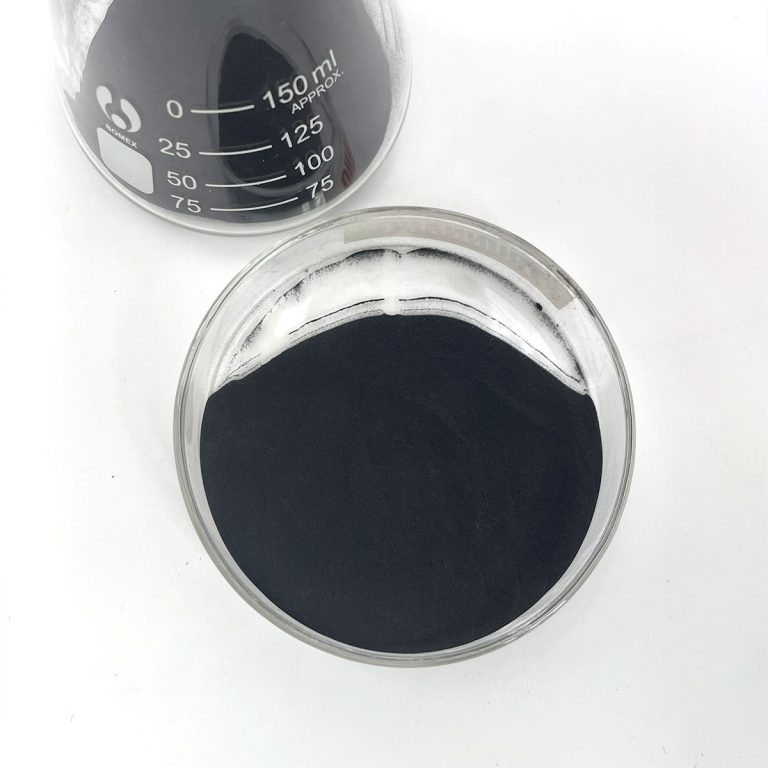
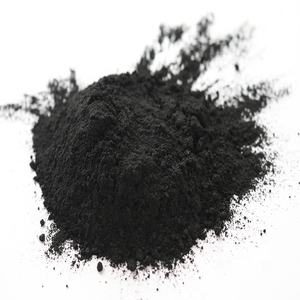
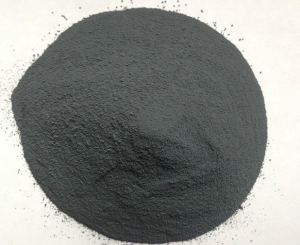
| Color | Dark red, brown, or black-brown | Visual inspection |
| Curie Temperature (Tc) | ~854 K (~581 °C) | VSM / DSC |
Chemical Composition
| Component | Content Standard | Typical Value |
|---|---|---|
| Fe₂NiO₄ | 99.5–99.99% | According to purity grade |
| Total Impurities | ≤0.5–0.01% | Depends on purity level |
Applications of Nickel Ferrite
- Lithium-Ion Battery Anode Materials
With a theoretical capacity of ~915 mAh/g (approximately 2.5 times that of commercial graphite), it is suitable for high-performance anodes, thin-film batteries, and microbatteries. - Magnetic Materials
As a soft magnetic ferrite, it is used in magnetic recording media, magnetostrictive materials, high-density recording, magnetic fluids (seals, brakes, sensors), inductive components, magnetic refrigeration, and microelectronic devices. - Microwave Absorption & EMI Shielding
Exhibits excellent electromagnetic loss properties. When combined with carbon materials, it serves as lightweight absorbers for radar stealth, electromagnetic interference (EMI) shielding, and anechoic chambers. - Catalysis
Demonstrates good catalytic activity and selectivity, applied in CO₂ decomposition (notably used on the Shenzhou-6 spacecraft for cabin air purification), gas conversion reactions, electrochemical catalysis, and environmental remediation. - Supercapacitor Electrodes
Pure and doped NiFe₂O₄ nanoparticles (e.g., Co-doped Ni₀.₅Co₀.₅Fe₂O₄) in KOH electrolyte show pseudocapacitive capacities up to 398 C/g at 10 A/g, with 95% capacity retention after 5,000 cycles. - Biomedical Applications
With good biocompatibility, it is being explored for MRI contrast enhancement, targeted drug delivery carriers, and magnetic hyperthermia. - Nanocomposites
Can be compounded with polymers and carbon materials to endow composites with multifunctional properties including magnetism, electrical conductivity, and mechanical strength.
Company Profile
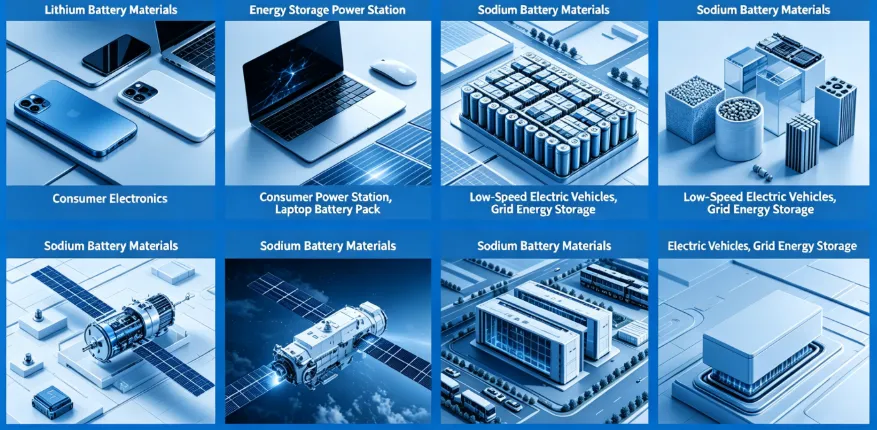
Luoyang Tongrun Nano Technology Co., Ltd. (TRUNNANO) is a global supplier and manufacturer of high-performance battery materials. We specialize in lithium-ion, sodium-ion, and other advanced battery materials, serving 3C electronics, power batteries, and energy storage systems.
Our products include nano cobalt oxide, nano manganese oxide, silicon-carbon anode materials, hard carbon, NFPP, alumina, boron nitride, and more. All are produced under strict quality control, supported by our in-house lab and professional technical team.
If you are looking for reliable battery materials, feel free to contact us or send an inquiry.
Payment Methods
L/C, T/T, Western Union, Paypal, Credit Card, etc.
Shipment
By sea, by air, or by express upon payment receipt.
Package of Nickel Ferrite
Packaging is available upon customer request to meet specific handling, storage, and transportation requirements.
5 FAQs about Nickel Ferrite
1. What makes Nickel Ferrite a better anode material than graphite?
Nickel Ferrite offers a theoretical capacity of ~915 mAh/g, which is about 2.5 times higher than graphite (372 mAh/g). Its spinel structure allows reversible Li⁺ intercalation/deintercalation, enabling higher energy density in lithium-ion batteries.
2. How does particle size affect performance?
Smaller particle sizes (20–50 nm) increase the specific surface area and shorten ion diffusion paths, leading to improved rate capability and higher utilization of active material. Custom sizes from 5 to 100 nm are available.
3. Can Nickel Ferrite be combined with other materials?
Yes. It composites very well with carbon materials such as MWCNTs, graphene, and activated carbon, which further enhance its electrochemical performance, cycling stability, and conductivity.
4. Is this material stable under high temperatures?
Yes. Nickel Ferrite maintains structural and magnetic stability up to its Curie temperature (~854 K / ~581 °C), making it suitable for high-temperature processing and operating conditions.
5. What purity grades are available?
Purity ranges from 99.5% to 99.99%, depending on the application requirements. Custom impurity levels can be accommodated upon request.
REQUEST A QUOTE
RELATED PRODUCTS
V-017 NaVO2 Cathode Material for High-Energy Density Sodium-Ion Batteries
Biphasic layered oxideCathodeMaterialsfor Sodium IonBatteries

Liquid Lithium Silicate for Concrete Hardener and Dustproof Sealer
High Quality NaxTMO2 Anode Material for Sodium Ion Batteries
High-Performance Pre-Lithiated SiO Anode Material 1500 mAh/g, 89.5% Efficiency