Professional and high-quality metal alloys, ceramic products and concrete additives | RBOSCHCO

In today’s rapidly developing industrial landscape, advanced inorganic materials have become the core driving force behind technological innovation. As industries such as aerospace, electronics, new energy, and mechanical engineering continue to pursue higher efficiency, longer service life, and greater stability under extreme conditions, traditional materials can hardly meet all these requirements at the same time. Among the growing family of high-performance materials, Chromium(III) Sulfide (Cr₂S₃) powder stands out for its balanced physical, chemical, and electrical properties. It has evolved from a laboratory material into a widely applied industrial raw material, supporting the progress of many high-end manufacturing fields.
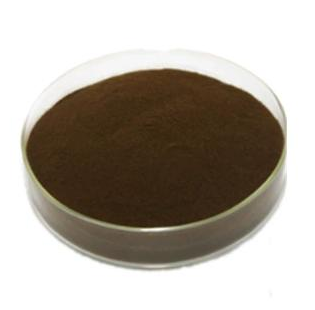
Chromium Sulfide (Cr₂S₃) is a black or brown-black crystalline inorganic compound with a hexagonal crystal structure. It combines outstanding thermal stability, strong mechanical hardness, excellent chemical inertness, and controllable semiconductor characteristics. These unique properties make Cr₂S₃ highly adaptable in harsh working environments, including high-temperature conditions, heavy mechanical friction, and corrosive atmospheres. Whether used as a solid lubricant to reduce wear, an electrode material to enhance battery performance, a coating precursor to improve surface protection, or a functional filler to strengthen composite materials, Cr₂S₃ delivers consistent and reliable performance.
With the rapid expansion of solid-state batteries, high-temperature lubrication systems, precision electronic devices, and high-performance friction materials, the global demand for high-purity Cr₂S₃ powder continues to rise. More manufacturers, research institutions, and engineering teams are recognizing its value and seeking stable, high-quality suppliers. This article provides a comprehensive and practical overview of Chromium Sulfide powder, covering its fundamental properties, manufacturing processes, major industrial applications, performance advantages, quality control standards, and future development trends. It is designed to help international buyers, engineers, R&D specialists, and procurement managers fully understand Cr₂S₃ and make informed decisions in material selection and production optimization.
| Chromium Sulfide Properties | |
| Other Names | chromium(III) sulfide, chromium(3+) trisulfide, dichromium trisulphide, Cr2S3 powder |
| CAS No. | 12018-22-3 |
| Compound Formula | Cr2S3 |
| Molecular Weight | 200.19 |
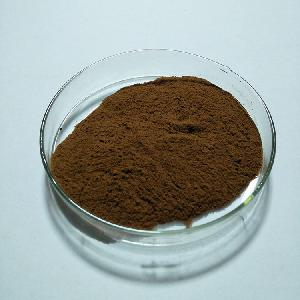
| Appearance | Brown to Black Powder |
| Melting Point | 1350℃ |
| Boiling Point | N/A |
| Density | 3.77 g/cm3 |
| Solubility in H2O | N/A |
| Exact Mass | 199.797236 |
Fundamental Properties of Chromium Sulfide (Cr₂S₃) Powder
The performance of Cr₂S₃ powder is determined by its intrinsic physical and chemical properties. These characteristics define its usability, processing compatibility, and service life in real industrial environments.
Thermal Stability
One of the most significant advantages of Cr₂S₃ is its exceptional thermal stability. Unlike many sulfide materials that decompose or oxidize at elevated temperatures, Cr₂S₃ maintains its chemical structure and crystal integrity at temperatures well above 1000 °C. It does not easily melt, decompose, or react with surrounding materials under high-temperature conditions, making it ideal for applications such as high-temperature lubricants, thermal barrier coatings, refractory materials, and engine components. This stability ensures consistent performance even in long-term, high-heat working conditions.
Mechanical Hardness and Wear Resistance
Cr₂S₃ possesses high mechanical hardness and excellent wear resistance, making it extremely valuable for mechanical applications. When used as a coating material or additive, it effectively reduces the friction coefficient and wear rate of surfaces. Components treated with Cr₂S₃ show significantly extended service life under heavy load, high-speed movement, and continuous friction. This directly reduces maintenance costs, improves production efficiency, and prolongs replacement cycles for tools, bearings, gears, molds, and automotive parts.
Chemical Stability
Chemical inertness is another key feature of Cr₂S₃. It is insoluble in water, dilute acids, and most organic solvents, and shows good oxidation resistance under moderate to high temperatures. It has low reactivity with metals, ceramics, and polymers, ensuring high compatibility when used in composite systems. This stability allows Cr₂S₃ to perform reliably in corrosive industrial environments, preventing performance degradation caused by chemical reactions or environmental erosion.
Semiconductor and Electrochemical Properties
Beyond structural applications, Cr₂S₃ also functions as a semiconductor with adjustable electrical conductivity. This expands its use into the field of functional electronic materials. It is used in thin-film devices, photoelectric sensors, infrared components, and semiconductor thin films. Furthermore, Cr₂S₃ exhibits excellent electrochemical activity and structural stability, making it a promising electrode material for solid-state batteries and next-generation energy storage systems. It helps improve battery capacity, cycling stability, and safety, supporting the global transition to clean energy.
Particle Size and Purity
The practical performance of Cr₂S₃ powder is closely related to its particle morphology, size distribution, and purity. Industrial-grade Cr₂S₃ is available in micron and submicron/nano grades to meet different processing requirements. Uniform particle size ensures good flowability, dispersibility, and sintering performance during production.
Purity is a critical factor for high-end applications. High-purity Cr₂S₃ (99.9% and above) is mainly used in electronics, thin films, and energy storage, where impurities can severely affect conductivity and performance. Standard industrial-grade Cr₂S₃ (98%–99.5%) is suitable for lubrication, friction materials, and general composites. Professional manufacturers can customize particle size and purity to meet specific industry needs.
Manufacturing Processes of High-Quality Cr₂S₃ Powder
The production method directly determines the quality, consistency, and cost of Cr₂S₃ powder. Different processes lead to differences in purity, particle shape, and batch stability. The following are the most common industrial preparation methods.
High-Temperature Solid-State Reaction
High-temperature solid-phase reaction is the most mature and widely used industrial method for producing Cr₂S₃. High-purity chromium powder and sulfur powder are mixed according to the stoichiometric ratio of 2Cr + 3S → Cr₂S₃. The mixture is heated to 800–1000 °C in a vacuum or inert atmosphere to complete the reaction. After cooling, crushing, grinding, and classifying, the final Cr₂S₃ powder is obtained.
This method features high yield, stable quality, low cost, and suitability for large-scale production. It is the mainstream process for manufacturing conventional industrial-grade Cr₂S₃ powder.
Gas-Phase Reaction
Gas-phase synthesis is a high-end technology used to produce ultra-fine, high-purity Cr₂S₃. It involves reacting chromium-containing precursors with sulfur-containing gases under precisely controlled conditions. The resulting powder has a small particle size, uniform distribution, regular morphology, and purity up to 99.99% or higher.
This process is mainly used for electronic thin films, semiconductors, and solid-state battery materials. Although the cost is higher, the product performance is superior for high-value applications.
Wet Chemical Synthesis
Wet chemical synthesis is mainly used in laboratory research and small-batch high-purity production. It involves precipitation from chromium salt solutions, followed by calcination and sulfidation treatment. This method produces high-purity powder but is less efficient for mass production.
After the primary synthesis, most manufacturers conduct post-treatment processes such as jet milling, air classification, and surface modification to further optimize particle size, dispersion, and application performance.
Key Industrial Applications of Chromium Sulfide (Cr₂S₃) Powder
Cr₂S₃ powder is widely used across many high-value industries due to its versatile properties.
Wear-Resistant Coatings and Solid Lubrication
Cr₂S₃ is widely used as a solid lubricant and wear-resistant coating material. It reduces friction and wear in mechanical parts such as bearings, gears, cutting tools, molds, and engine components. It significantly extends service life and improves operational stability, especially under high-temperature and heavy-load conditions.
Thin-Film Deposition Materials
High-purity Cr₂S₃ is used as a sputtering target or evaporation material in PVD and CVD processes. It is applied in semiconductor devices, optical coatings, display films, and solar cell layers. Its uniform film-forming ability and stable performance make it essential in the electronics and optoelectronics industries.
Solid-State Batteries and Energy Storage
As an advanced electrode material, Cr₂S₃ shows great potential in solid-state batteries and lithium-sulfur batteries. It offers high theoretical capacity, strong cycling stability, low impedance, and long cycle life. It helps improve the safety and energy density of next-generation energy storage systems, supporting the development of electric vehicles and grid energy storage.
Friction Materials for Automotive and Industry
Cr₂S₃ is widely added to brake pads and clutch facings to improve high-temperature stability, friction consistency, and noise reduction. It enhances braking performance and extends the service life of friction components, meeting the high standards of the automotive and heavy machinery industries.
Catalysis and Chemical Synthesis
Cr₂S₃ is used as a catalyst or catalyst support in hydrogenation, hydrodesulfurization, organic synthesis, and photocatalytic reactions. Its stable structure and excellent electron transport properties enable efficient catalytic performance in various chemical processes.
High-Temperature Ceramics and Composites
By adding Cr₂S₃ to ceramic or metal matrix composites, manufacturers improve thermal resistance, mechanical strength, fracture toughness, and oxidation resistance. These composites are used in aerospace, metallurgical furnaces, and high-temperature industrial equipment.
Optoelectronic and Electronic Components
Cr₂S₃ is used in photoelectric sensors, infrared devices, semiconductor thin films, and optical components. Its balanced optical and electrical properties support the development of high-performance electronic and optoelectronic products.

Advantages of Cr₂S₃ Over Traditional Materials
Compared with other commonly used materials, Cr₂S₃ provides a unique combination of performance advantages.
Against metal oxides such as Cr₂O₃, Cr₂S₃ has better lubricity, friction reduction, and performance in reducing environments. Compared with other sulfides such as MoS₂ and WS₂, Cr₂S₃ offers higher thermal stability, better oxidation resistance, and greater mechanical hardness. When compared with carbides such as WC and TiC, Cr₂S₃ has a lower density, better semiconductor characteristics, and better compatibility with sulfur-based energy systems.
In short, Cr₂S₃ fills the gap between structural materials and functional materials, providing an ideal balance of lubrication, stability, electronics, and mechanical performance.
Quality Control and Application Guidelines
For industrial users, stable and consistent quality is essential. Reliable Cr₂S₃ suppliers provide comprehensive quality control, including purity testing, particle size analysis, XRD phase detection, SEM morphology observation, and thermal stability testing. Complete certification and technical data support ensure that each batch meets production requirements.
Proper packaging and storage are also important. Cr₂S₃ powder should be stored in dry, cool conditions, sealed away from moisture and oxidizing agents. Common packaging includes 1kg, 5kg, 25kg, and 50kg options, supporting flexible orders from laboratory research to mass industrial production.
Future Market Trends of Cr₂S₃ Powder
The market outlook for Chromium Sulfide (Cr₂S₃) powder is highly positive.
First, the rapid popularization of solid-state batteries will strongly drive demand for high-purity Cr₂S₃. Second, the growth of advanced coating technologies such as PVD and CVD will increase consumption in the electronics and semiconductor industries. Third, the development of high-performance automobiles will continue to boost demand in friction materials and thermal management systems. Fourth, the expansion of green energy and catalytic applications will open new markets. Finally, material innovation and composite technology development will further expand the application scope of Cr₂S₃.
Chromium(III) Sulfide (Cr₂S₃) powder is a multi-functional, high-performance inorganic material that integrates excellent thermal stability, wear resistance, chemical inertness, and semiconductor properties. It plays an irreplaceable role in solid lubrication, energy storage, surface coatings, electronic components, automotive systems, and high-temperature composites.
Supplier
RBOSCHCO is a trusted global Cr₂S₃ supplier & manufacturer with over 12 years of experience in providing super high-quality chemicals and Nanomaterials. The company export to many countries, such as USA, Canada, Europe, UAE, South Africa, Tanzania, Kenya, Egypt, Nigeria, Cameroon, Ugand, Turkey, Mexico, Azerbaijan Be lgium, Cyprus, Czech Republic, Brazil, Chile, Argentina, Dubai, Japan, Korea, Vietnam, Thailand, Malaysia, Indonesia, Australia, Germany, France, Italy, Portugal etc. As a leading nanotechnology development manufacturer, RBOSCHCO dominates the market. Our professional work team provides perfect solutions to help improve the efficiency of various industries, create value, and easily cope with various challenges. If you are looking for Cr₂S₃ powder, please feel free to contact us.
RELATED POSTS
Hard Carbon Anode Product: A High-Performance Remedy Powering the Future Generation of Energy Storage Space
Boron Powder and Boron Carbide: Performance and Application Comparison

Niobium nitride powder: a breakthrough material for future technology

Comparison Of Comprehensive Performance Of Mainstream Aerogel Powders: SiO₂ Vs. Carbon-Based Vs. Others

Why Is The Thermal Stability Of Ultrafine Zinc Stearate Emulsion Excellent When Used In PVC Products?
