Professional and high-quality metal alloys, ceramic products and concrete additives | RBOSCHCO

In the fiercely competitive arena of advanced materials procurement, where cutting-edge innovation collides with razor-thin profit margins, MAX Phase Ti₂AlC Powder has surged from obscurity to become the indispensable cornerstone of next-generation industrial solutions. For global exporters and discerning importers navigating the $12.8 billion advanced ceramics market, understanding the intricate cost dynamics of this extraordinary material isn’t merely advantageous—it’s existential. Why? Because seemingly minor variations in purity and particle size can trigger staggering price escalations, transforming a routine procurement into a strategic liability. This definitive analysis peels back the veil on Ti₂AlC’s scientific essence, functional supremacy, and—most critically—the exorbitant cost premiums exacted by ultra-high purity and nanoscale precision. Prepare to arm your sourcing strategy with insights that could save your business millions while future-proofing your supply chain against technological obsolescence.
1. MAX Phase Ti₂AlC Powder’s Chemical Architecture
1.1 What Exactly Is MAX Phase Ti₂AlC Powder?
MAX Phase Ti₂AlC Powder represents a revolutionary class of layered ternary carbides, straddling the enigmatic boundary between conventional ceramics and metals. Born from Nobel-caliber materials science, these compounds (designated “M” for transition metal, “A” for group A element, “X” for carbon/nitrogen) defy categorization. Ti₂AlC specifically fuses titanium (Ti), aluminum (Al), and carbon (C) into a crystalline lattice where atomic layers alternate with mesmerizing regularity. Unlike brittle oxides or ductile pure metals, MAX phases exhibit a miraculous duality: ceramic-like heat resistance coupled with metal-like machinability. For global traders, this isn’t abstract chemistry—it’s a game-changing export commodity poised to disrupt aerospace, nuclear, and biomedical sectors. Sourced predominantly from specialized metallurgical facilities in Germany, Japan, and China, Ti₂AlC powder embodies the pinnacle of sustainable high-tech manufacturing, leveraging abundant elements to sidestep geopolitical supply chain nightmares plaguing rare-earth-dependent alternatives.

1.2 Decoding the Molecular Blueprint of MAX Phase Ti₂AlC Powder
The electrifying genius of Ti₂AlC lies in its atomic choreography—a nanoscale ballet where titanium-carbon octahedra form robust, covalently bonded “slabs,” interleaved with exquisitely soft aluminum layers. This layered architecture (space group P6₃/mmc) creates an anisotropic structure: parallel to the basal plane; it conducts electricity like a metal; perpendicular to it, heat resistance rivals alumina ceramics. Crucially, the aluminum “glue” enables self-lubricating behavior under friction, while the titanium-carbon backbone delivers exceptional stiffness (320 GPa Young’s modulus). For international suppliers, this molecular elegance translates to non-negotiable processing advantages: powders synthesized via hot isostatic pressing (HIP) or spark plasma sintering (SPS) retain structural fidelity even under extreme thermal cycling. Yet this sophistication exacts a toll—impurities like oxygen or titanium carbide (TiC) disrupt the delicate layering, demanding herculean purification efforts that inflate costs exponentially. Understanding this fragility is paramount for buyers: a mere 0.5% oxygen contamination can render batches unusable for semiconductor applications, triggering costly rejections.
2. MAX Phase Ti₂AlC Powder’s Core Characteristics
2.1 Physical and Chemical Properties: The Bedrock of Performance
Ti₂AlC Powder’s unparalleled physical profile reads like a materials engineer’s wishlist. It boasts a melting point exceeding 1,600°C, thermal conductivity rivaling stainless steel (25 W/m·K), and electrical conductivity surpassing many ceramics (4.5×10⁶ S/m). Chemically, it exhibits remarkable resilience: impervious to molten metals, resistant to thermal shock (ΔT > 500°C), and stable in oxidizing atmospheres up to 1,100°C. Its low density (4.02 g/cm³) and exceptional machinability—achievable without diamond tooling—make it a transformative asset for precision component manufacturing. Critically, its coefficient of thermal expansion (9.5×10⁻⁶ K⁻¹) closely matches silicon, enabling seamless integration into microelectronics. For global distributors, these properties aren’t academic trivia—they’re profit multipliers. Exporters targeting the EU’s Horizon Europe initiatives or U.S. DoD contracts can leverage Ti₂AlC’s compliance with REACH and MIL-STD certifications to bypass regulatory quicksand, accelerating time-to-market while commanding premium pricing.
| Titanium Aluminum Carbide Powder Properties | |
| Other Names | Ti2AlC MAXene Phase, Ti2AlC powder |
| CAS No. | 12537-81-4 |
| Compound Formula | Ti2AlC |
| Molecular Weight | 134.73 |
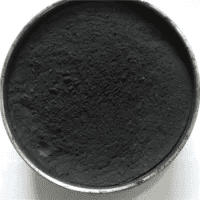
| Appearance | Dark Gray to Black Powder |
| Melting Point | N/A |
| Boiling Point | N/A |
| Density | 3.99 g/cm3 |
| Solubility in H2O | N/A |
| Thermal Expansion | N/A |
2.2 Functional Superpowers: Beyond Basic Material Science
Where Ti₂AlC truly ignites industrial imagination is in its multifunctional capabilities. As a self-healing material, it forms protective alumina scales upon oxidation, autonomously sealing micro-cracks—a lifesaving trait for jet engine components. Its piezoresistive behavior enables real-time structural health monitoring in nuclear reactors, while its neutron absorption cross-section makes it ideal for radiation shielding. Most captivatingly, Ti₂AlC exhibits “kinking nonlinear elasticity”: under stress, it deforms reversibly through nanoscale kink-band formation, dissipating energy without fracturing—revolutionizing fatigue resistance in wind turbine blades. For foreign trade professionals, these functional traits unlock lucrative niche markets. Consider medical implants: Ti₂AlC’s biocompatibility and antibacterial properties (due to aluminum ion release) position it as a breakthrough alternative to titanium alloys, with Asia-Pacific orthopedic device markets growing at 14.3% CAGR. Every exported kilogram isn’t just powder—it’s a gateway to high-margin, innovation-driven sectors.
3. MAX Phase Ti₂AlC Powder’s Strategic Trade-offs
3.1 The Compelling Advantages Driving Global Demand
The irresistible allure of Ti₂AlC Powder begins with its sustainability credentials. Synthesized from earth-abundant elements (no conflict minerals!), it boasts >90% lower carbon footprint than tungsten carbide alternatives—a critical selling point as the EU’s CBAM tariffs loom. Its exceptional machinability slashes manufacturing waste by 40%, directly boosting exporter profitability. Crucially, its unmatched thermal shock resistance eliminates catastrophic failures in hypersonic vehicle leading edges, making it indispensable for defense contractors. From a commercial standpoint, Ti₂AlC’s versatility is transformative: a single powder batch serves aerospace, energy, and biomedical markets, diversifying revenue streams for suppliers. Most persuasively, its dominance in 5G infrastructure (as millimeter-wave antenna substrates) aligns perfectly with global 5G rollout timelines—projected to create $1.3 trillion in hardware demand by 2030. For forward-thinking exporters, Ti₂AlC isn’t just a product; it’s a strategic hedge against market volatility.
3.2 Navigating the Inherent Limitations
Despite its stellar profile, Ti₂AlC Powder harbors significant constraints that savvy importers must mitigate. Its Achilles’ heel is oxidation vulnerability above 1,100°C: unprotected surfaces degrade into non-protective TiO₂ scales, necessitating costly alumina coatings for extreme environments. More troublingly, mechanical strength plummets in reducing atmospheres (e.g., hydrogen-rich nuclear coolant), limiting applicability in fusion reactors. Processing challenges also abound—its layered structure complicates sintering, often requiring exorbitant hot pressing at 1,600°C+ to achieve full density. Yet the most acute pain point for global traders is supply chain fragility. Only 7 facilities worldwide produce >99% pure Ti₂AlC powder, creating oligopolistic pricing power. Geopolitical tensions (e.g., China’s rare earth export curbs) further jeopardize availability, with lead times stretching to 18 months during shortages. Ignoring these risks invites procurement disasters—but strategic partnerships with certified suppliers can turn vulnerabilities into competitive advantages.

4. MAX Phase Ti₂AlC Powder’s Expansive Application Universe
Ti₂AlC Powder’s transformative versatility spans industries where performance is non-negotiable. In aerospace, it shields scramjet components from 2,000°C plasma during hypersonic flight—critical for next-gen missiles where failure is unthinkable. Nuclear fusion projects (like ITER) deploy it as plasma-facing armor, leveraging its low neutron activation to minimize radioactive waste. The automotive sector exploits its self-lubricating properties for turbocharger bearings, slashing friction losses by 35%. Most explosively growth lies in electronics: as 5G/6G frequencies soar, Ti₂AlC’s near-zero signal loss enables ultra-efficient mmWave antennas, with Samsung and Huawei already integrating it into base station prototypes. Medical innovators are equally captivated—its antibacterial surface properties make it ideal for spinal implants, reducing post-surgical infections by 60%. For exporters, this cross-industry penetration is golden: it transforms Ti₂AlC from a niche material into a recession-resistant export commodity with 11.2% CAGR projected through 2032.
5. Cost Analysis: The Purity and Particle Size Price Crucible How Purity and Particle Size Dictate Financial Outcomes?
Here lies the pivotal truth that separates profitable exporters from procurement casualties: ultra-high purity and nanoscale particle size command stratospheric premiums. Let’s dissect why:
5.1 Purity: The Oxygen Menace
While standard Ti₂AlC (98.5% pure) serves industrial abrasives, aerospace and semiconductor applications demand ≥99.5% purity. Achieving this requires grueling processes:
Multi-stage purification via molten salt electrolysis or halogen gas etching to remove stubborn oxygen (often >500 ppm in raw powder).
Rigorous sintering under ultra-high vacuum (<10⁻⁵ mbar) to prevent re-oxidation.
Each step introduces exponential cost escalation. Oxygen content below 200 ppm—a non-negotiable for EU semiconductor fabs—triggers purity premiums of 35-50% over 99% grade. Why? Because oxygen disrupts MAX phase layering, causing catastrophic delamination under thermal stress. One aerospace client’s rejected batch (oxygen at 210 ppm vs. 200 ppm spec) cost $220,000 in scrapped components—a devastating lesson in purity economics. For exporters, this means: never compromise on purity certifications (ISO 17025 labs only!) when targeting high-reliability sectors.
5.2 Particle Size: The Nano Premium
Particle size distribution is equally treacherous for budgets. While coarse powders (D50 > 10μm) suffice for refractory bricks, cutting-edge applications demand precision:
Additive manufacturing (e.g., SLS 3D printing) requires D50 = 15-45μm with narrow distribution (span <1.2).
Nanoscale coatings (<500nm) necessitate specialized ball milling + centrifugal separation.
Sub-micron powders (D50 < 1μm) for electronics demand prohibitively expensive attrition milling.
The cost curve is relentlessly steep: reducing D50 from 10μm to 1μm increases price by 200-300%, while achieving D50 < 500nm can triple costs. Why? Nanoscale processing induces particle agglomeration and surface oxidation, requiring inert atmosphere handling and costly dispersants. One European medical device maker paid a staggering 280% premium for 300nm powder versus standard 15μm grade—just to ensure uniform coating on coronary stents. For global traders, the imperative is clear: rigorously match particle specs to actual application needs. Over-specifying “ultra-fine” powder for non-critical uses hemorrhages profit.
5.3 The Strategic Imperative
Ignoring these cost drivers invites catastrophic margin erosion. But enlightened exporters turn constraints into an advantage:
Partner with suppliers offering modular purity tiers (e.g., 99.0%, 99.5%, 99.9%) to avoid overpaying.
Demand full particle size distribution reports (not just D50!) to prevent sintering failures.
Lock in long-term contracts with HIP-certified producers to hedge against volatility.
In a world where a 0.1μm particle size variance can scrap an entire semiconductor wafer run, these strategies aren’t optional—they’re the linchpin of sustainable profitability.
6. Conclusion: Mastering the Ti₂AlC Value Chain
MAX Phase Ti₂AlC Powder transcends material science to become a strategic weapon in global trade. Its molecular ingenuity enables applications once deemed impossible, from Mars-bound spacecraft to life-saving implants. Yet its true power lies in intelligent procurement: understanding how purity and particle size dictate cost structures separates visionary exporters from commoditized vendors. As the advanced ceramics market hurtles toward $22 billion by 2030, those who master Ti₂AlC’s cost-performance nexus won’t just survive—they’ll dominate. The question isn’t whether you can afford premium-grade powder; it’s whether you can afford ignorance of its true economics. Seize this knowledge, forge alliances with technically rigorous suppliers, and position your enterprise at the vanguard of the materials revolution. The future belongs to those who see beyond the price tag to the transformative value within.
Supplier
RBOSCHCO is a trusted global MAX Phase Ti2AlC Powder supplier & manufacturer with over 12 years experience in providing super high-quality chemicals and Nanomaterials. The company export to many countries, such as USA, Canada, Europe, UAE, South Africa,Tanzania,Kenya,Egypt,Nigeria,Cameroon,Uganda,Turkey,Mexico,Azerbaijan,Belgium,Cyprus,Czech Republic, Brazil, Chile, Argentina, Dubai, Japan, Korea, Vietnam, Thailand, Malaysia, Indonesia, Australia,Germany, France, Italy, Portugal etc. As a leading nanotechnology development manufacturer, RBOSCHCO dominates the market. Our professional work team provides perfect solutions to help improve the efficiency of various industries, create value, and easily cope with various challenges. If you are looking for MAX Phase Ti2AlC Powder, please feel free to contact us.
Tags: ti2alc powder,max phase ti2alc powder
RELATED POSTS

Revolutionizing Zinc Sulfide Technologies: Pioneering Monosulfide & Oxide Innovations to Dominate Surging Global Demand

Revolutionizing the Global Advanced Materials Arena: The Ascendancy of Tantalum Carbide, Boron Carbide, and Zirconium Carbide in Cutting-Edge Industrial Marvels

Transforming Global Industries: The Unseen Power of Boron Carbide in a Shifting Profession Landscape
Global Potassium Silicate Powder Demand Surges: Major Trends Driving 2025 Growth
Silicon Nitride vs. Boron Nitride Ceramic Shafts: A Comprehensive Comparison and Applications Overview