Professional and high-quality metal alloys, ceramic products and concrete additives | RBOSCHCO

Concrete cracking is a widespread and costly issue. It begins with surface cracks, and it may compromise the structural integrity and service life. An effective and proven solution is to incorporate concrete fibers into the concrete mix. This is not only a Repair method, but also a proactive preventive strategy; it improves concrete durability. This article explains how concrete fibers work and how to successfully apply them in your projects.
1. Understanding the root causes of concrete cracking
To effectively prevent cracking, it’s essential to first understand how it occurs. Concrete cracking typically stems from stress in two key stages.
1.1 During the plastic stage, newly poured concrete loses moisture and shrinks. At this point, its strength is extremely low, and even minute shrinkage stresses are sufficient to cause fine plastic cracks to form on the surface.
1.2 During the hardening stage, the concrete has solidified. At this point, temperature changes, foundation settlement, drying shrinkage, or external loads can all generate tensile stresses within the concrete. Because concrete has low tensile strength, these stresses can easily lead to cracks.
2. How Concrete Fibers Serve as Internal “Micro-Strengthening Ribs”
Concrete fibers function by establishing a strong and uniform three-dimensional support network within the concrete matrix. This network acts like countless tiny, randomly distributed “bridges.”
1.1 During the plastic stage, these fibers provide microscopic restraint against shrinkage stress, thus significantly reducing the formation of early plastic cracks.
1.2 During the hardening stage, this becomes even more crucial. When concrete attempts to crack under stress, the fibers traversing the potential crack path are activated. They bridge the cracks, bearing tensile stress and thus inhibiting crack opening and propagation. This essentially disperses potentially large cracks into numerous harmless, invisible microcracks.
3. How to choose the Right Concrete Fiber Type
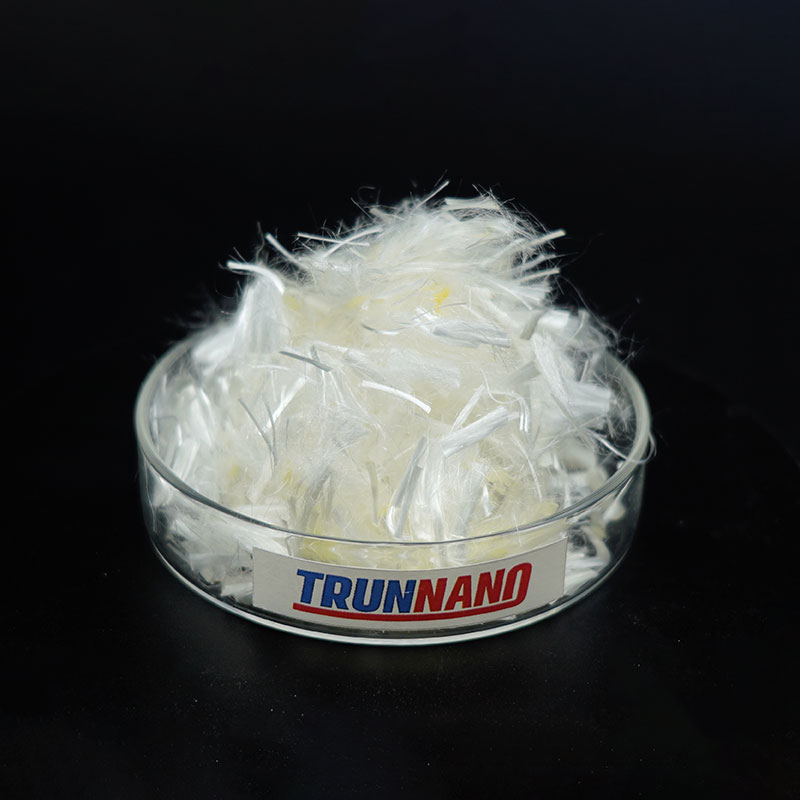
Successful applications begin with the right choice. Different types of concrete fibers are available on the market, primarily divided into synthetic fibers (such as polypropylene) and steel fibers. The choice depends on your specific objectives.
3.1 If your main goal is to stop early shrinkage cracks and make concrete tougher against impacts, synthetic fiber is a great choice. They work well for industrial floors, pavements, and slabs. Plus, they help block water seepage and are very cost-effective.
3.2 For projects that need very tough concrete, choose steel fibers or strong synthetic fibers. This includes heavy-duty factory floors, busy warehouse lanes, military bases, and buildings in earthquake zones. These fibers not only offer much better reinforcement, but also make the concrete far more resistant to cracking and wear.
4. Practical Steps for Applying Concrete Fibers in Projects
Proper application is key to ensuring performance. Follow these steps for optimal results.
Step 1: Mix Design and Planning.
The use of concrete fibers should be decided before the project begins. Discuss with your concrete supplier or materials expert to determine the type of fiber and recommended dosage (usually calculated per cubic meter of concrete volume or weight) based on performance objectives.
Step 2: Mixing and Adding.
Ensuring uniform fiber dispersion is crucial. The standard practice is to add the concrete fibers and aggregates (sand and stone) to the mixer simultaneously. Ensure sufficient mixing time, typically 30-60 seconds longer than for regular concrete, until no visible fiber clumps are visually inspected.
Step 3: Pouring, Vibrating, and Finishing.
The pouring and vibration process for fiber-reinforced concrete is similar to that of regular concrete. Due to the presence of fibers, the mixture may be slightly viscous, but this usually does not affect workability. During the finishing stage, synthetic fibers may occasionally be visible, which is normal. Good curing practices (such as timely covering and water curing) are essential for achieving the final performance of both the concrete and the fibers and must be strictly followed.
Frequently Asked Questions about Concrete Fibers
Q: Will adding fibers affect the compressive strength of concrete?
A: Generally, it will not negatively affect compressive strength. Its main function is to significantly improve the tensile strength, flexural strength, and toughness of concrete.
Q: Will the fibers corrode?
A: Synthetic fibers will not corrode. The steel fibers used in concrete are usually made of stainless steel or specially treated, possessing good corrosion resistance. In extremely corrosive environments, products with high corrosion resistance levels can be specifically specified.
Q: Will the construction difficulty increase?
A: No. As long as the mixing process is followed correctly, the pumping, pouring, and finishing processes are basically the same as for ordinary concrete, requiring no special equipment.
About RBOSCHCO:
Selecting the right concrete fibers and ensuring their maximum performance requires specialized knowledge and experience. As a professional provider of concrete reinforcement solutions, RBOSCHCO not only offers high-quality synthetic and steel-reinforced concrete fiber products but also is committed to providing comprehensive technical support to our clients.
Our technical team can help you select the most suitable concrete fiber products and mix proportions. It is based on your project’s specific conditions, performance requirements, and cost budget. From material selection to application guidance, RBOSCHCO is always a partner you can trust. If you are looking for a more durable, crack-free concrete solution for your next project, please feel free to contact RBOSCHCO.
RELATED POSTS
Choosing the Best Termal Insulation Material: Fumed Silica vs. Aerogel vs. Hollow Glass Microspheres

Revolutionizing Insulation: The Unequaled Benefits of Aerogel Thermal Insulation Layer for Global Markets

Zirconia Ceramic Tubes vs Boron Nitride Tubes: Properties, Specs & Applications
Ceramic And Alumina Crucible Comparison: Which Should You Choose?

How a Water Reducer Saves Water and Cement in Concrete