Professional and high-quality metal alloys, ceramic products and concrete additives | RBOSCHCO

Hydroxypropyl guar gum (HPG) is a modified natural polysaccharide derived from guar beans, which has been widely used in food, oilfield, cosmetics, textile, and other industries due to its excellent thickening, stabilizing, suspending, and water-retention properties. As a professional foreign trade company focusing on the R&D, production, and export of functional additives, we are committed to providing high-quality hydroxypropyl guar gum products with stable performance, competitive prices, and perfect after-sales service to global customers. In this blog, we will comprehensively introduce hydroxypropyl guar gum, including its production principle, core characteristics, application fields, advantages compared with similar products, and our product advantages, helping you fully understand this high-value functional additive and find the most suitable cooperation solution. With years of export experience, our products have been sold to more than 50 countries and regions around the world, winning wide recognition from customers with reliable quality and professional service.
What is Hydroxypropyl Guar Gum?
1.1 Basic Definition of Hydroxypropyl Guar Gum
Hydroxypropyl guar gum, also known as HPG, is a non-ionic water-soluble polymer obtained by chemical modification of natural guar gum. Guar gum is a natural polysaccharide extracted from the endosperm of guar beans (mainly produced in India and Pakistan), which is composed of galactose and mannose units connected by glycosidic bonds. However, natural guar gum has certain limitations in practical application, such as poor solubility in cold water, easy degradation under high temperature and acid-base conditions, and insufficient viscosity stability. Through hydroxypropylation modification, the molecular structure of guar gum is optimized, which makes up for the defects of natural guar gum and enhances its application performance and scope.
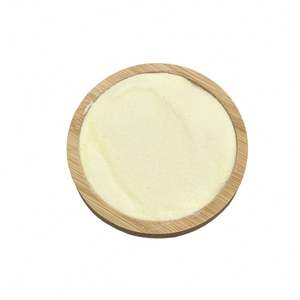
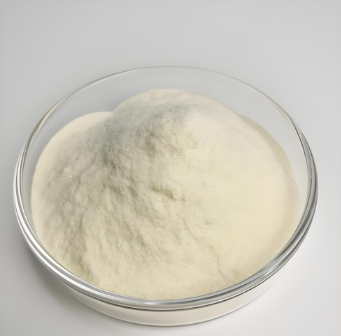
Different from natural guar gum, hydroxypropyl guar gum has a hydroxypropyl group introduced into its molecular chain, which reduces the hydrogen bond interaction between molecules, improves its solubility and stability, and makes it have better compatibility with other additives. It is presented as a white to light yellowish brown free-flowing powder, almost odorless, and can quickly disperse in hot or cold water to form a viscous solution, which is widely used in various industrial fields as a functional additive. Compared with other modified guar gum products, HPG has a more excellent comprehensive performance, making it a preferred choice for many enterprises in global industrial production.
1.2 Production Principle & Process of Hydroxypropyl Guar Gum
The production of hydroxypropyl guar gum mainly takes high-quality guar beans as raw materials, and undergoes a series of processes such as cleaning, peeling, degerming, crushing, sieving, hydroxypropylation modification, neutralization, washing, drying, and crushing. The core step is the hydroxypropylation modification reaction, which is usually carried out under alkaline conditions with propylene oxide as the etherifying agent.
Specifically, the processed guar gum powder is first dissolved in an appropriate amount of water to form a viscous solution, and then an alkaline catalyst (such as sodium hydroxide) is added to activate the hydroxyl groups on the guar gum molecular chain. Then, propylene oxide is slowly added under controlled temperature and pressure conditions, and the hydroxyl groups on the guar gum molecular chain react with propylene oxide to introduce hydroxypropyl groups into the molecular structure. After the reaction is completed, the product is neutralized to neutrality with an acid (such as hydrochloric acid), washed to remove impurities and unreacted raw materials, dried to a certain moisture content, and finally crushed and sieved to obtain the finished hydroxypropyl guar gum product.
Core Characteristics of Hydroxypropyl Guar Gum
Hydroxypropyl guar gum has a variety of excellent characteristics, which are derived from its modified molecular structure. Compared with natural guar gum and other similar thickeners, it has obvious advantages in solubility, stability, compatibility, and other aspects, which make it stand out in the global functional additive market. The following are the core characteristics of our hydroxypropyl guar gum products:
| Chemical properties | nonionic |
| Appearance | milky |
| Moisture | ≤ 8 % |
| Fineness US 6 0 meshthrough US 12 0 mesh | ≥ 99.9 %≥ 99 % |
| Viscosity (mPa.s)(25℃, 2% concentration, Brookfield, #4 rotor, 20 rpm) | ≥ 20000 |
| pH value | 5.0 ~ 7.0 |
2.1 Excellent Solubility & Fast Dissolution Speed
One of the biggest advantages of hydroxypropyl guar gum is its excellent solubility. Natural guar gum is difficult to dissolve in cold water, often needs to be heated to dissolve, and is prone to forming agglomerates, which affects the use effect. However, after hydroxypropylation modification, the hydrophilicity of hydroxypropyl guar gum is significantly improved, and it can quickly disperse and dissolve in both cold water and hot water without heating, and no agglomerates will be formed, which greatly improves the use efficiency and convenience.
Generally, hydroxypropyl guar gum can form a uniform viscous solution within 10-20 minutes when added to cold water, and the dissolution speed can be further accelerated in hot water. Its 1% aqueous solution has a viscosity of about 3000mPa·S, and the viscosity can be adjusted according to the addition amount, which is suitable for different application scenarios. This characteristic makes HPG save a lot of time and cost in the production process, and is deeply loved by enterprises in various industries.
2.2 Stable Viscosity & Strong Resistance to External Factors
Hydroxypropyl guar gum has excellent viscosity stability, and its viscosity is not easy to change under the influence of temperature, pH value, electrolyte, and other external factors, which is much better than natural guar gum. Specifically, its viscosity remains stable in the pH range of 3.5-10, and only decreases significantly when the pH value is higher than 10 or lower than 3.5; in the temperature range of 0-150℃, it can still maintain good viscosity performance, and is not easy to degrade and lose viscosity at high temperatures, which is suitable for high-temperature processing technology.
In addition, hydroxypropyl guar gum has strong electrolyte resistance. Even in the presence of metal ions (such as sodium ions, calcium ions), its viscosity will not change significantly, which makes it can be used in various systems containing electrolytes, such as food, cosmetics, oilfield drilling fluid,d and other fields, expanding its application scope. Compared with xanthan gum, another common thickener, HPG has better viscosity stability under high temperature and strong alkali conditions, which has more advantages in some special industrial fields.
2.3 Good Thickening, Suspending & Water-Retention Properties
As a functional thickener, hydroxypropyl guar gum has excellent thickening performance. A small amount of addition can significantly increase the viscosity of the system, improve the consistency and texture of the product, and make the product have a smooth taste. Its thickening capacity is 5-8 times that of starch paste, and it can play a good thickening role even at low addition amounts (0.05%-0.5%).
At the same time, it has strong suspending performance, which can effectively suspend the solid particles in the system, prevent the particles from settling, and maintain the uniformity and stability of the product. In addition, hydroxypropyl guar gum has good water-retention performance, which can lock the water in the system, prevent water loss, and maintain the moisture and freshness of the product, which is widely used in food, building materials, and other fields. For example, in the food industry, it can prevent bread and cakes from drying and hardening; in the building materials industry, it can prevent concrete from cracking due to water loss.
2.4 High Safety & Good Compatibility
Hydroxypropyl guar gum is a modified natural polymer, which is non-toxic, tasteless, non-irritating, and has high safety. It has passed the certification of international food safety standards (such as FDA, EU FSSC 22000) and can be safely used in food, cosmetics, medicine,e and other fields that are closely related to human health. Similar to natural guar gum, its oral toxicity is very low, and the LD50 of mice by oral administration is more than 8g/kg, which is a safe and reliable additive.
In addition, it has good compatibility with other additives, such as cellulose ether, xanthan gum, carrageenan, starch, emulsifier, preservative, etc., and can be used in combination to produce a synergistic effect, further improving the performance of the product. For example, when used in combination with carrageenan, it can improve the gel strength and stability of the product; when used in combination with starch, it can improve the water retention and taste of the product. This good compatibility allows HPG to be flexibly used in various product formulas, reducing the R&D cost of enterprises.
| Product Type | Solubility (Cold Water) | Viscosity Stability (High Temperature/Acid-Alkali) | Electrolyte Resistance | Compatibility | Cost-Effectiveness |
|---|---|---|---|---|---|
| Our Hydroxypropyl Guar Gum (HPG) | Excellent, fast dissolution, no agglomeration | Excellent, stable in 0-150℃ and pH 3.5-10 | Strong, no obvious viscosity change | Good, compatible with most additives | High, low addition amount, good effect |
| Natural Guar Gum | Poor, easy to agglomerate, need heating | Poor, easy to degrade | Strong, stable in a high salt environment | General, limited compatibility | Low, but poor performance |
| Xanthan Gum | Good, but easy to agglomerate without stirring | Good, but poor in strong alkali | Strong, stable in high salt environment | Good, but high cost | General, high price |
| Carboxymethyl Cellulose (CMC) | Good, but slow dissolution | General, viscosity decreases at high temperature | Poor, easy to flocculate | General, incompatible with some electrolytes | General, high addition amount |
Application Fields of Hydroxypropyl Guar Gum
3.1 Food Industry: Improve Taste & Extend Shelf Life
The food industry is one of the main application fields of hydroxypropyl guar gum. It is used as a thickener, stabilizer, suspending agent, and water-retaining agent in various foods, which can improve the taste, texture,e and stability of food, and extend the shelf life of food. The specific applications are as follows:
- Cold drinks: In icecream popsiclesl, es, and other cold drinks, hydroxypropyl guar gum can prevent the formation of ice crystals, make the product structure smooth and uniform, improve the taste, and prevent rapid melting during storage and transportation. The addition amount is generally 0.2%-0.5%.
- Flour products: In noodles, vermicelli, instant noodles, and other flour products, it can play the role of water retention, bonding and strengthening, making the noodles smooth, not easy to break, resistant to cooking, and preventing adhesion during processing and storage. The addition amount in noodles is 0.2%-0.6%, and in instant noodles is 0.3%-0.5%.
- Beverages: In peanut milk, almond milk, fruit juice, fruit tea, and other beverages, it can increase the viscosity of the beverage, prevent the precipitation of ingredients, maintain the uniformity of the beverage, and improve the taste. The addition amount is 0.05%-0.5%.
- Dairy products: In yogurt, milk powder, milk jegely and other dairy products, it can play a stabilizing role, prevent the stratification of dairy products, improve the viscosity and taste, and extend the shelf life.
- Meat products: In ham sausages, lunch meat meatballsa, meatballs, and other meat products, it can bond meat and auxiliary materials, improve the elasticity and taste of meat products, prevent fat and water separation, and increase the yield.
3.2 Oilfield Industry: Core Additive for Drilling & Fracturing
In the oilfield industry, hydroxypropyl guar gum is a core functional additive, mainly used in drilling fluid and fracturing fluid, which can improve the performance of drilling and fracturing operations, reduce costs, and improve efficiency. Hydroxypropyl guar gum fracturing fluid is a new type of low-damage fracturing fluid, which is suitable for fracturing transformation of oil layers with formation temperature of 30-150℃, and has the advantages of low damage to oil layers and good sand-carrying performance.
In drilling fluid, hydroxypropyl guar gum can increase the viscosity of the drilling fluid, suspend the drilling cuttings, prevent the drilling cuttings from settling, protect the well wall, reduce the wear of drilling tools, and improve the drilling efficiency. In fracturing fluid, it can form a high-viscosity gel, carry the proppant into the fracture, support the fracture, improve the permeability of the oil layer, and increase the oil and gas production. Our company provides oilfield-grade hydroxypropyl guar gum, which has high viscosity, good stability, utility, and strong sand-carrying performance, and has been widely used in oilfields in the Middle East, Africa, North America, and other regions.
3.3 Cosmetics & Personal Care Industry: Improve Product Texture
In the cosmetics and personal care industry, hydroxypropyl guar gum is used as a thickener, stabilizer,bilizer and emulsifier, which can improve the texture and stability of cosmetics, make the product have a smooth and delicate texture, and enhance the user experience. It is widely used in lotions, creams, shampoos, conditioners, masks, and other products.
For example, in lotions and creams, it can adjust the viscosity of the product, make the product easy to apply, and prevent stratification; in shampoos and conditioners, it can increase the viscosity of the product, improve the lubricity of the hair, and make the hair soft and smooth after washing; in masks, it can lock the nutrients and moisture in the mask, promote the absorption of nutrients by the skin, and improve the effect of the mask. Due to its high safety, it is also suitable for sensitive skin products.
3.4 Other Industrial Fields
In addition to the above industries, hydroxypropyl guar gum is also widely used in textile, printing and dyeing, papermaking, building materials, and other fields. In the textile industry, it can be used as a sizing agent and thickener, which can improve the strength and wear resistance of yarn, and make the fabric color bright and uniform; in the papermaking industry, it can be used as a surface sizing agent and retention aid, which can improve the smoothness and strength of paper, and reduce the loss of pulp;
In the building materials industry, it can be used as a thickener and water-retaining agent in cementmortart, and other products, which can improve the workability of the product, prevent cracking and water loss, and enhance the strength of the building. With the continuous development of the industry, the application field of hydroxypropyl guar gum is still expanding, and its market prospect is very broad.

Supplier
RBOSCHCO is a trusted global XXX supplier & manufacturer with over 12 years of experience in providing super high-quality chemicals and Nanomaterials. The company export to many countries, such as USA, Canada, Europe, UAE, South Africa, Tanzania, Kenya, Egypt, Nigeria, Cameroon, Ugand, Turkey, Mexico, Azerbaijan Be lgium, Cyprus, Czech Republic, Brazil, Chile, Argentina, Dubai, Japan, Korea, Vietnam, Thailand, Malaysia, Indonesia, Australia, Germany, France, Italy, Portugal etc. As a leading nanotechnology development manufacturer, RBOSCHCO dominates the market. Our professional work team provides perfect solutions to help improve the efficiency of various industries, create value, and easily cope with various challenges. If you are looking for Hydroxypropyl guar gum, please feel free to contact us.
RELATED POSTS

Polycarboxylate Superplasticizer Powder vs. Traditional Water Reducer: A Performance Revolution in Building Admixtures
Changing Industries: The Rising Demand for SIC Grit in a Shifting Global Market

Why Is High-Purity Antimony-Doped Tin Oxide (ATO) So Popular?

Why Is The Thermal Stability Of Ultrafine Zinc Stearate Emulsion Excellent When Used In PVC Products?

How Superplasticizer Makes Concrete Stronger and More Durable
