Professional and high-quality metal alloys, ceramic products and concrete additives | RBOSCHCO

Boron nitride (BN) ceramic—an engineering material revered as “white graphite”—is comprehensively permeating strategic emerging industries that determine national competitiveness, moving beyond laboratories and specialized fields. This is due to its unique combination of high thermal conductivity, high electrical insulation, high-temperature resistance, chemical inertness, and excellent machinability. This paper aims to provide an in-depth analysis of the core forces driving the boron nitride industrial ceramics market towards 2030 and offer a systematic forecast of its long-term development trends.
I. Market Evolution: Ascending from a Critical Material to a Strategic Cornerstone
Over the past decade, the boron nitride ceramics market has completed the leap from “scientific exploration” to “small-batch specialized applications,” and further to “large-scale industrial support.” According to reports from institutions like Global Market Insights, the global market had grown steadily to a scale of several hundred million US dollars by 2023, primarily driven by early-stage electronics and metallurgy applications. Looking ahead to 2030, the underlying logic of market growth will undergo a fundamental shift: Boron nitride will no longer be merely an option to solve a specific “technical challenge” but will become an indispensable strategic cornerstone material for constructing next-generation energy systems, electronic information systems, and advanced manufacturing systems. It is projected that the global market will expand at a Compound Annual Growth Rate (CAGR) of 9-12% between 2024 and 2030, driven by more diverse, deeper, and potentially disruptive forces.
II. Core Growth Drivers Towards 2030
1. Deep Empowerment from the Third-Generation Semiconductor and Ultra-Heterogeneous Integration Revolution
This represents the most central and sustained driving engine leading up to 2030. As silicon-based semiconductors approach their physical limits, third-generation semiconductors represented by silicon carbide (SiC) and gallium nitride (GaN) are becoming standard in electric vehicles, renewable energy generation, and 5G/6G communications, with requirements for operating temperature and power density increasing by orders of magnitude.
Substrate and Packaging Material Upgrades: Traditional alumina and aluminum nitride substrates face challenges in extreme heat dissipation and insulation reliability. Boron nitride, particularly its high thermal conductivity and high resistivity polymorphs, is an ideal choice for manufacturing high-performance composite heat dissipation substrates (e.g., BN-ceramic metal composite substrates) and insulating thermal interface materials. By 2030, with the explosive growth of semiconductor content in vehicles and the evolution of communication bands towards millimeter-wave and terahertz, demand for boron nitride’s stability and low dielectric loss under high-frequency, high-voltage, and high-temperature conditions will grow exponentially.
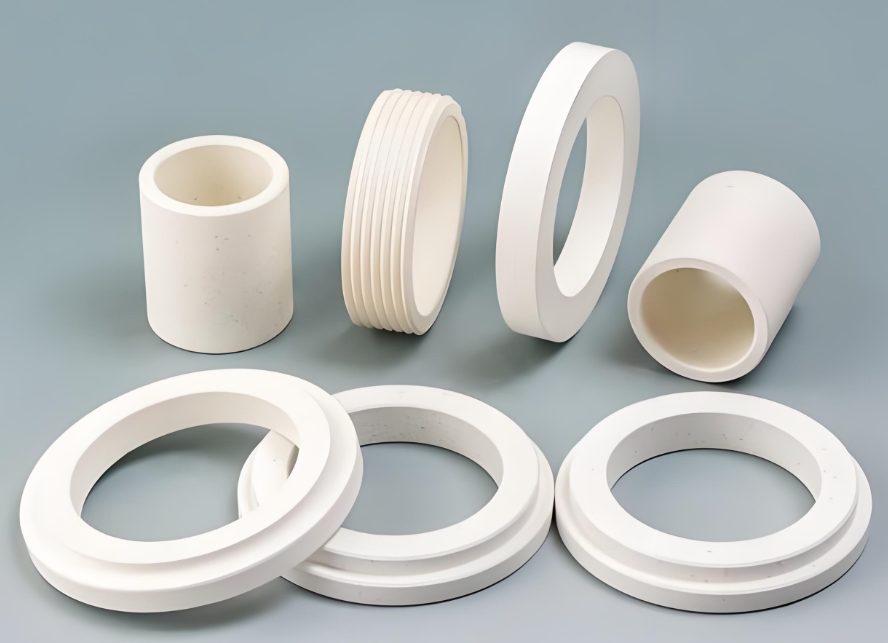
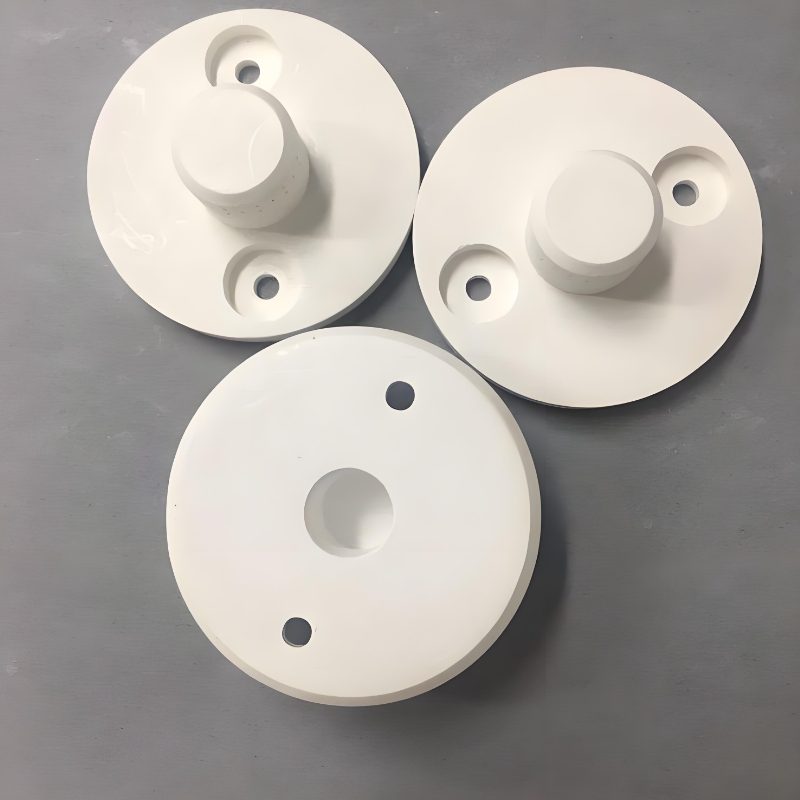
Manufacturing Process Consumables: In chip manufacturing, the technical requirements for boron nitride electrostatic chucks (ESCs) and chamber components used in plasma etching will continue to rise alongside further chip miniaturization and the complexity of 3D stacking architectures. This will drive continuous iteration and significant demand growth for high-purity, ultra-uniform hot-pressed boron nitride products.
2. Comprehensive Pull from Energy Structure Transformation and the Hydrogen Economy
Carbon neutrality goals are reshaping the global energy system, opening up several potential multi-billion-dollar markets for boron nitride.
Key Links in the Hydrogen Industry Chain: In proton exchange membrane (PEM) water electrolyzers for hydrogen production, boron nitride can serve as a coating or sealing material for bipolar plates, offering corrosion resistance and controllable conductivity. In storage and transportation, it can be used for linings in high-pressure hydrogen storage tanks or valve components. Its penetration across the entire “production-storage-transportation-utilization” hydrogen chain will be one of the most significant new growth poles before 2030.
Next-Generation Nuclear and Fusion Energy: In the design of Generation IV nuclear reactors and future fusion reactors, boron nitride is considered for control elements, shielding materials, or insulating components due to its excellent neutron absorption cross-section, high-temperature stability, and radiation resistance. Although the technological validation cycle is long, its strategic value is extremely high, representing a key reserve for the long-term market.
Enhancing Power Battery Safety and Efficiency: In lithium-ion and future solid-state batteries, boron nitride nanosheets or coatings are used to improve the thermal stability of separators, the ionic conductivity of electrolytes, and the thermal management efficiency of battery packs, directly impacting safety and driving range.
3. Demand from Generational Leaps in Aerospace and Defense Equipment
The development of hypersonic vehicles, reusable spacecraft, and next-generation aero-engines imposes extreme performance requirements on materials under harsh environments (ultra-high temperature, thermal shock, particle erosion). The value of boron nitride as an integrated radome/stealth material, high-temperature lubricating coating, and sealing material for hot-section components is irreplaceable. Sustained high-intensity investment against the backdrop of global great-power competition ensures stable and high-end-led demand in this sector.
4. Cost Reduction and Efficiency Gains from Disruptive Preparation Technologies and Intelligent Production
Technological revolutions on the supply side will significantly lower application barriers and stimulate long-tail demand.
Materials Genome and Computational Design: Utilizing artificial intelligence and simulation computing to accelerate the research and development of novel boron nitride composite materials (e.g., composites with graphene, carbon nanotubes), enabling customized design of thermal, electrical, and mechanical properties for “performance on demand.”
Advanced Additive Manufacturing (3D Printing): 3D printing of BN ceramics based on technologies like reaction sintering or direct ink writing is maturing. This will completely break the manufacturing bottleneck for complex heterogeneous structures (e.g., internal microchannel heat sinks, biomimetic porous structures), enabling functional-structural integration and opening new applications in fields like customized thermal management and catalytic carriers.
Green and Low-Carbon Manufacturing Processes: Developing lower-energy sintering technologies (e.g., flash sintering) and recyclable raw material systems to respond to global supply chain carbon footprint requirements will themselves become new technological barriers and competitive advantages.
III. Core Development Trend Forecasts for 2030
Based on the above drivers, the future market will exhibit the following structural trends:
1. Industrial Ecology Shifts from “Chain-Type” to “Networked” Integration
The boron nitride industry will deeply integrate into the front-end R&D of downstream customers, forming a “material-component-system” collaborative innovation network ecology. Material companies will no longer just provide standard products but will establish joint laboratories with semiconductor manufacturers, battery factories, and vehicle manufacturers to co-define material specifications and develop integrated solutions from powder to functional components. Industrial competition will evolve from competition based solely on individual product performance to competition based on solution-enabling capability and ecological synergy.
2. Product Forms Evolve from “Single Ceramic Bodies” to “Compositing and Structuring.”
Demand for single boron nitride sintered bodies will continue to grow, but greater value increments will come from composite and structured materials:
Composite Materials: BN-polymer thermal pads, BN-metal composite heat dissipation substrates, and BN fiber-reinforced ceramic matrix composites (CMCs) will become mainstream.
Structural-Functional Integrated Materials: Porous BN with precise 3D pore structures (for catalysis, filtration) and atomic layer deposition (ALD) BN nanocoatings (for 2D material protection, battery electrode coating) will be widely used as critical “material components.”
3. Regional Landscape Shifts from “Centralized Supply” to “Multipolar Autonomy and Supply Chain Resilience.”
Driven by technological security and supply chain stability concerns, North America, Europe, and the Asia-Pacific region will each cultivate relatively complete boron nitride ceramic supply chains, particularly in the areas of high-purity raw materials, key production equipment, and high-end products. Technological autonomy will become a policy priority for various nations. China, leveraging its vast end-market, sustained policy support, and complete manufacturing ecosystem, is expected to achieve a transition from catching up to running in parallel in some mid-to-high-end segments and develop global competitiveness in cost control for large-scale applications.
4. Value Focus Shifts from “Manufacturing Capability” to “Data and Service Platforms.”
Leading enterprises will collect performance data throughout the entire lifecycle of materials—from production to use—via sensors and IoT technology, building a “Boron Nitride Material Digital Twin” database. Based on this, they will provide value-added services such as predictive maintenance, performance degradation analysis, and recycling/regeneration guidance. The business model will shift from one-time product sales to a continuous value-creation model of “Product + Data + Service.”
IV. Challenges and Strategic Implications
The path to 2030 is not without obstacles. The industry faces severe tests, including strategic supply chain risks for high-purity boron sources, challenges in quality control consistency under extreme performance requirements, high-cost, long-cycle customer certification barriers, and technological competition from disruptive alternative materials (e.g., novel carbon materials).
Conclusion
In summary, by 2030, the boron nitride industrial ceramics market will usher in its golden age of development within the dual paradigm shifts of digital civilization and the energy revolution. Its growth core is solid: it is firmly anchored in the demands of three trunk industries shaping the future—semiconductors, new energy, and aerospace. For participants, the key to success lies in transcending the role of traditional material suppliers, actively embracing the new paradigms of convergent innovation (fusion of materials and processes), ecological co-creation (deep collaboration with downstream sectors), and value extension (providing data services). Boron nitride ceramic, once a “material gem” hidden deep within advanced laboratories, is destined to become a beacon illuminating the blueprint for the future of industry.
RBOSCHCO is a trusted global Boron Nitride Ceramic Products supplier & manufacturer with over 12 years experience in providing super high-quality chemicals and Nanomaterials. The company export to many countries, such as USA, Canada, Europe, UAE, South Africa,Tanzania,Kenya,Egypt,Nigeria,Cameroon,Uganda,Turkey,Mexico,Azerbaijan,Belgium,Cyprus,Czech Republic, Brazil, Chile, Argentina, Dubai, Japan, Korea, Vietnam, Thailand, Malaysia, Indonesia, Australia,Germany, France, Italy, Portugal etc. As a leading nanotechnology development manufacturer, RBOSCHCO dominates the market. Our professional work team provides perfect solutions to help improve the efficiency of various industries, create value, and easily cope with various challenges. If you are looking for Boron Nitride Ceramic Products, please feel free to contact us.
RELATED POSTS

Silicon Nitride (Si₃N₄) vs Aluminium Nitride (AlN) Ceramic Blocks: Performance, Specification and Application Analysis

How Does Boron Carbide Powder Achieve Superhardness, Wear Resistance And Lightweight?
Ceramic And Alumina Crucible Comparison: Which Should You Choose?

Transforming Global Industries: The Unseen Power of Boron Carbide in a Shifting Profession Landscape
Aluminum-Copper Alloy Forging: The Ultimate Choice for High-Performance Industrial Components
