Professional and high-quality metal alloys, ceramic products and concrete additives | RBOSCHCO

In the ever-evolving landscape of industrial materials, nanoultrafine molybdenum disulfide (MoS2) has become an innovative option for lubrication and antiwear applications. This cutting-edge material, originating from the layered structure of molybdenum disulfide, combines nanoscale accuracy with phenomenal chemical security to supply unmatched performance in severe problems. From heavy machinery to aerospace design, its combination into modern systems is changing exactly how markets approach friction decrease and surface defense.
1. What is Nanoultrafine Molybdenum disulfide MoS ₂?
Nanoultrafine molybdenum disulfide, or MoS2, is a synthetic substance composed of molybdenum and sulfur atoms arranged in a hexagonal latticework. What sets nanoultrafine MoS ₂ apart is its nanoscale bit dimension (commonly 1– 100 nm) and ultrafine surface morphology, which amplify its inherent residential properties. Unlike traditional MoS2 powders, which count on larger fragment dimensions, nanoultrafine variants leverage quantum results and high surface area to volume ratios to attain exceptional performance.

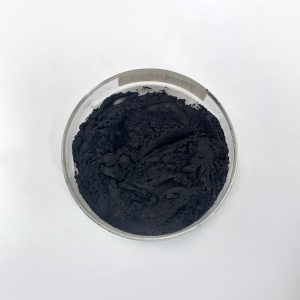
This product is manufactured via sophisticated chemical vapor deposition (CVD) or mechanical exfoliation methods, guaranteeing uniform particle distribution and very little contamination. Its special framework permits it to work as a strong lubricant, antiwear additive, and catalyst in varied commercial procedures. With a deep black-gray color and a thickness of 4.8 g/cm FIVE, nanoultrafine MoS ₂ is not simply a material, but a technical advancement.
2. Core qualities of Nanoultrafine Molybdenum Disulfide MoS2
2.1 What are the physical and chemical residential properties of Nanoultrafine Molybdenum Disulfide MoS ₂?
The physical and chemical properties of nanoultrafine MoS ₂ are nothing but phenomenal. Literally, it exhibits a friction coefficient of 0.03– 0.05, making it one of the most reliable strong lubes readily available. Its high thermal security (melting point at 1185 ° C and sublimation at 450 ° C) ensures performance under severe temperature levels, while its low firmness (Mohs scale 1– 1.5) reduces wear on call surfaces.
Chemically, nanoultrafine MoS2 is incredibly inert, resisting deterioration in acidic, alkaline, and oxidative settings. This stability originates from its layered framework, where sulfur atoms form solid covalent bonds with molybdenum, while weak van der Waals forces in between layers enable very easy shearing under pressure. In addition, its hydrophobicity protects against moisture-induced degradation, a critical consideration in aquatic and exterior applications.
2.2 What are the useful attributes of Nanoultrafine Molybdenum Disulfide MoS ₂?
Functionally, nanoultrafine MoS2 is a multitasking marvel. Its key function as a strong lubricating substance is matched by secondary functions such as antiwear protection, deterioration restraint, and catalytic task. When spread in oils or greases, it creates a protective layer on steel surfaces, minimizing direct get in touch with and decreasing power loss.
Additionally, its nanoscale dimensions allow it to permeate microscale splits and surface area abnormalities, providing self-healing abilities in worn elements. In catalytic applications, nanoultrafine MoS works as a high-efficiency hydrogenation catalyst, specifically in coal liquefaction and fuel refining. These residential properties make it essential in industries requiring both durability and innovation.
| Molybdenum Disulfide Properties | |
| Other Names | molybdenum sulfide, molybdenum disulphide, MoS2 powder, moly disulfide |
| CAS No. | 1317-33-5 |
| Compound Formula | MoS2 |
| Molecular Weight | 160.07 |
| Appearance | Black Powder |
| Melting Point | 1185 °C |
| Boiling Point | N/A |
| Density | 5.06 g/cm3 |
| Solubility in H2O | Insoluble |
| Storage Temperature | Ambient temperatures |
| Exact Mass | 161.849549 |
| Monoisotopic Mass | 161.849549 |
| Molybdenum Disulfide Health & Safety Information | |
| Signal Word | Warning |
| Hazard Statements | H315-H319-H335 |
| Hazard Codes | Xi |
| Risk Codes | N/A |
| Safety Statements | N/A |
| RTECS Number | QA4697000 |
| Transport Information | NONH for all modes of transport |
| WGK Germany | 3 |
3. Benefits and drawbacks of Nanoultrafine Molybdenum Disulfide MoS2
3.1 What are the advantages of Nanoultrafine Molybdenum disulfide MoS2?
The benefits of nanoultrafine MoS ₂ are transformative for contemporary engineering. Initially, its outstanding lubrication efficiency minimizes power consumption by approximately 40% in mechanical systems, thereby reducing operational expenses. Second, its antiwear properties expand the lifespan of machinery, cutting maintenance expenditures and downtime.
Third, the material’s ecological compatibility is a game-changer. Unlike standard lubricating substances consisting of toxic additives, nanoultrafine MoS ₂ is nontoxic and naturally degradable, lining up with international sustainability goals. 4th, its adaptability allows combination into diverse matrices, consisting of polymers, coatings, and composites, making it possible for customized options for specific applications.
Finally, its cost-effectiveness over the long term can not be overemphasized. While initial execution might need financial investment, the decrease in wear, energy usage, and replacement prices creates a compelling roi (ROI.
3.2 What are the downsides of Nanoultrafine Molybdenum Disulfide MoS2?
In spite of its strengths, nanoultrafine MoS2 is not without difficulties. Initially, manufacturing scalability remains a difficulty. The synthesis of ultrafine particles at industrial scales demands precise control over temperature, pressure, and chemical proportions, which can drive up producing costs.
Second, surface functionalization is usually needed to prevent heap formation in fluid dispersions. This additional action boosts complexity and may affect cost-efficiency in small-scale applications. Third, its performance in aqueous atmospheres is limited due to hydrophobicity, necessitating specialized formulas for water-based systems.
Finally, the absence of standard screening methods for nanoscale products can produce unpredictability in quality assurance. However, continuous research studies and market collaboration are rapidly addressing these restrictions.
4. Nanoultrafine Molybdenum Disulfide MoS ₂ for Enhanced Lubrication and Antiwear Applications
The applications of nanoultrafine MoS span two markets where friction and wear are critical issues. In vehicle engineering, it is utilized in engine oils, transmission fluids, and brake systems to lower energy loss and improve part longevity. For aerospace, its ability to function under high vacuum and extreme temperatures makes it excellent for satellite parts and jet engine bearings.
In marine environments, nanoultrafine MoS2 shields ship props and hulls from deterioration and biofouling, while in renewable energy, it maximizes wind generator gearboxes and photovoltaic panel actuators. Even in customer electronics, it is incorporated right into micromechanical systems (MEMS) to ensure certain smooth operation of small relocating components.
Among one of the most revolutionary applications remains in clinical devices, where its biocompatibility and low-friction properties make it possible for the advancement of durable, high-performance implants and surgical tools. These real-world examples highlight the product’s global relevance and collaborating influence throughout industries.
5. What are the technological advantages of Nanoultrafine Molybdenum Disulfide MoS ₂?
The technological advantages of nanoultrafine MoS ₂ are rooted in its nanoscale engineering and ingenious layout. Initially, its ultralow friction coefficient (0.03– 0.05) outmatches traditional solid lubricating substances like graphite and PTFE, which typically have coefficients of 0.1– 0.2. This equates to power cost savings and minimized warmth generation in mechanical systems.
Second, its antiwear system is basically different. While standard additives merely fill surface voids, nanoultrafine MoS2 develops a self-repairing tribofilm that adapts to vibrant loads and temperatures. This vibrant protection is unequaled by static coatings or bulk products.
Third, the material’s chemical inertness ensures compatibility with a large range of substrates, from steel and lightweight aluminum to porcelain and polymers. This convenience removes the requirement for expensive material substitutions in existing systems.
4th, its environmental qualifications are a standout attribute. Unlike oil-based lubricating substances, which contribute to contamination and need regular disposal, nanoultrafine MoS ₂ is non-hazardous and can be securely integrated into closed-loop systems. This lines up flawlessly with the expanding focus on round economic situation practices.
Ultimately, the customizability of nanoultrafine MoS ₂ is a key driver of technology. By adjusting particle dimension, surface area cost, or practical teams, suppliers can customize the product to meet the exacting needs of specific niche applications, from nanorobotics to deep-sea boring devices.
6.Verdict: A FutureReady Material
In a world significantly driven by effectiveness, sustainability, and durability, nanoultrafine molybdenum disulfide MoS ₂ stands as a beacon of progression. Its capability to transcend conventional constraints of lubrication and wear prevention sets it as a keystone of next-generation industrial services. Whether you are optimizing a wind generator in the Arctic or creating a spacecraft for Mars, this product provides a blueprint for quality.
For industries seeking cutting-edge efficiency and eco-conscious development, the fostering of nanoultrafine MoS ₂ is not simply a choice– it is an important. Embrace the future, where rubbing is decreased, wear is reduced, and sustainability is optimized. The path to commercial improvement starts below.
Supplier
RBOSCHCO is a trusted global Nano-ultrafine molybdenum disulfide MoS₂ supplier & manufacturer with over 12 years experience in providing super high-quality chemicals and Nanomaterials. The company export to many countries, such as USA, Canada, Europe, UAE, South Africa,Tanzania,Kenya,Egypt,Nigeria,Cameroon,Uganda,Turkey,Mexico,Azerbaijan,Belgium,Cyprus,Czech Republic, Brazil, Chile, Argentina, Dubai, Japan, Korea, Vietnam, Thailand, Malaysia, Indonesia, Australia,Germany, France, Italy, Portugal etc. As a leading nanotechnology development manufacturer, RBOSCHCO dominates the market. Our professional work team provides perfect solutions to help improve the efficiency of various industries, create value, and easily cope with various challenges. If you are looking for Nano-ultrafine molybdenum disulfide MoS₂, please send an email to: sales1@rboschco.com
Tags: molybdenum disulfide,mos2 powder,molybdenum disulfide lubricant
RELATED POSTS

Why Is High-Purity Antimony-Doped Tin Oxide (ATO) So Popular?

Polycarboxylate Superplasticizer Powder vs. Traditional Water Reducer: A Performance Revolution in Building Admixtures

How to Improve Conductivity & Corrosion Resistance? Try Titanium Copper Clad Plate

Changing Industries: Zirconia Porcelain’s Unrivaled Mastery in Modern Production

Zirconia vs Alumina Ceramic Plungers: Key Differences