Professional and high-quality metal alloys, ceramic products and concrete additives | RBOSCHCO

3D Printing Metal Powder is the core raw material of metal 3D printing technology, among which 3D printing titanium powder for 3D printing and 3D printing copper powder have become the two most widely used metal powders in high-end manufacturing fields due to their unique performance advantages. The two are respectively compatible with equipment such as titanium powder 3D printers, metal powder printers, and powder bed fusion printers, playing an irreplaceable role in aerospace, medical, electronics, and other fields.
Comparison of Core Performance between 3D Printed Titanium Powder and Copper Powder
Both 3D printed titanium powder and copper powder belong to high-performance metal powders, but there are significant differences in their raw material characteristics, mechanical properties, and processing performance, which determine their adaptation scenarios and application directions. The specific comparison is as follows, taking into account the performance of the powder itself and the adaptability of 3D printing processing.
1. Comparison of Basic Physical and Chemical Properties
Titanium powder for 3D printing is prepared from pure titanium or a titanium alloy by the atomization method. It has a silver gray irregular powder appearance, with a particle size usually controlled between 15-53 μ m, a purity of over 99.5%, and a density of 4.51g/cm ³. Its chemical properties are stable, with excellent corrosion resistance, and it is not easy to react with acids, bases, or oxygen. It can still maintain stable performance in high temperature environments, complementing the high temperature resistance characteristics of high temperature resistant red ceramic and can be synergistically applied in high temperature industrial scenarios.
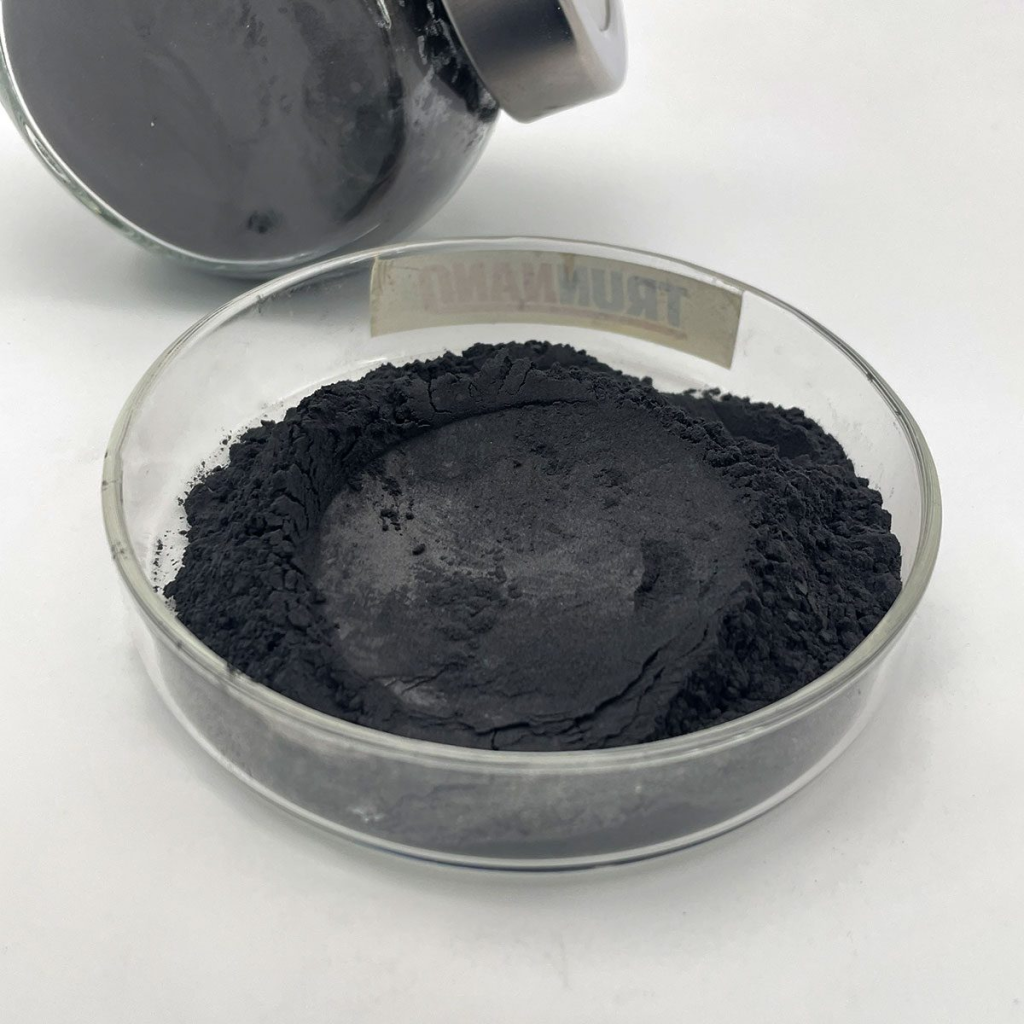
3D printing copper powder is made from high-purity copper and is often prepared by atomization or electrolysis methods. It appears as a purple-red spherical powder with a particle size range of 10-45 μ m, a purity of over 99.9%, and a density of 8.96g/cm ³. It has excellent conductivity and thermal conductivity, and is chemically active and prone to oxidation. It needs to be 3D printed under inert gas protection to avoid oxidation affecting product performance. It is not suitable for high-temperature oxidation environments and has distinct differences in terms of temperature and corrosion resistance of titanium powder.
2. Comparison of mechanical properties
The parts formed by 3D printing titanium powder have a tensile strength of 860-1100MPa, a yield strength of 780-1000MPa, and a fracture elongation of 8% -15%. They have both high strength and high toughness, and are lightweight, with a specific strength far exceeding that of ordinary metal materials. They are suitable for preparing lightweight and high-strength structural parts. It has moderate hardness (HV 300-350), good wear resistance, can withstand certain impact loads, and is suitable for complex stress scenarios.
The parts formed by 3D printing copper powder have a tensile strength of 220-300MPa, a yield strength of 100-150MPa, a fracture elongation of 20% -30%, excellent toughness but low strength, low hardness (HV 80-100), and average wear resistance. Its core advantage lies not in mechanical strength, but in its ultimate conductivity and thermal conductivity, with a thermal conductivity coefficient of over 380W/(m · K) and conductivity close to pure copper, making it an ideal raw material for electronic heat dissipation and conductive components.
3. Comparison of 3D Printing Processing Performance
3D printing of titanium powder has strong adaptability and can be used in various metal powder printers, such as titanium powder 3D printers and powder bed fusion printers. During the printing process, it has good fluidity and high forming accuracy, and can prepare complex structured parts. After printing, the density of the parts can reach 99.5% or more, and it can meet industrial needs without complex post-processing. Its sintering temperature is moderate (1200-1400 ℃), and it can be assembled together with high-temperature resistant red ceramic components to adapt to high-temperature working conditions.
Due to its low melting point (1085 ℃), 3D printed copper powder is prone to problems such as spheroidization and deformation during the printing process, requiring high printing equipment and parameters, making it more suitable for use with specialized metal powder printers. Its fluidity is slightly inferior to that of titanium powder, and surface modification treatment is needed to improve its dispersibility. After printing, the density of the parts can reach over 99%. Some high-end scenarios require subsequent annealing treatment to improve their mechanical and electrical properties and avoid oxidation affecting their use.

Analysis of Application Scenarios for 3D Printing Titanium Powder and Copper Powder
Based on the performance differences between the two, the application scenarios of 3D printing titanium powder and copper powder have their own focuses, adapting to the high-end manufacturing needs of different industries and requiring corresponding metal 3D printing equipment. The specific applications are as follows:
1. Application scenarios of titanium powder for 3D printing
3D printed titanium powder, with its advantages of high strength, lightweight, and strong corrosion resistance, is mainly used in aerospace, medical, high-end equipment and other fields. It is suitable for titanium powder 3D printers and powder bed melting printers, and is the core raw material for high-end structural components.
In the aerospace field, it is used to prepare aircraft engine blades, fuselage structural components, aerospace vehicle parts, etc. Its lightweight characteristics can effectively reduce the weight of the aircraft, improve fuel efficiency, and its high strength and corrosion resistance can adapt to extreme environments such as high altitude, high temperature, and high pressure. Some components can be used in conjunction with high-temperature-resistant red ceramic to further enhance high-temperature resistance. In the medical field, it is used to prepare artificial joints, orthopedic implants, etc. It has excellent biocompatibility, no rejection reaction with human tissues, high strength, wear resistance, and can be implanted into the human body for long-term use. In addition, in the field of high-end equipment manufacturing, it is used to prepare precision molds, robot components, etc., to adapt to the manufacturing needs of complex structures, and improve the performance and service life of equipment.
2. Application scenarios of 3D printing copper powder
3D printed copper powder is mainly used in fields such as electronics, new energy, and molds due to its excellent conductivity and thermal conductivity. It is suitable for specialized metal powder printers and is an ideal raw material for conductive and heat dissipation components. It is not suitable for high-temperature oxidation scenarios.
In the field of electronics, it is used to prepare electronic chip heat sinks, circuit boards, conductive terminals, etc. Its efficient thermal conductivity can quickly dissipate the heat generated by electronic devices, avoid equipment overheating and damage, and improve the stability and service life of electronic devices; In the field of new energy, it is used to prepare lithium battery electrodes, conductive components for photovoltaic modules, etc., to improve energy transmission efficiency; In the field of mold manufacturing, cooling channels are used to prepare precision injection molds, utilizing their thermal conductivity to evenly dissipate heat and improve mold forming accuracy and production efficiency. In addition, in the field of high-frequency communication, it can be used to prepare microwave devices, antennas, etc., to meet the manufacturing needs of high-end communication equipment.

Adaptation equipment and usage precautions
3D printing of titanium powder is preferred for use with titanium powder 3D printers and powder bed fusion printers. These devices can accurately control the printing temperature and atmosphere, avoid titanium powder oxidation, and ensure molding quality; 3D printing of copper powder requires adaptation to a specialized metal powder printer. It is recommended to choose equipment with an inert gas protection function to reduce the oxidation of copper powder during the printing process and improve the performance of the product. Whether it is titanium powder or copper powder, it is necessary to choose a printer model that matches the particle size and flowability of the powder to ensure printing accuracy and efficiency.
When stored, both should be sealed and stored in a dry, ventilated inert gas environment to avoid moisture, oxidation, and violent collisions, prevent powder agglomeration and deterioration, and affect printing performance. When 3D printing titanium powder, it is necessary to control the printing temperature and speed to avoid defects such as cracks and deformations. After printing, annealing treatment can be carried out according to the needs to improve the toughness of the parts. When 3D printing copper powder, it is necessary to strictly control the concentration of inert gas to avoid oxidation. After printing, polishing and annealing can be carried out to improve the conductivity and surface quality of the parts. In addition, when using in bulk, the purity and particle size of the powder need to be tested to ensure compliance with printing requirements.
Supplier
RBOSCHCO is a trusted global 3D printing metal powder supplier & manufacturer with over 12 years of experience in providing super high-quality chemicals and Nanomaterials. The company export to many countries, such as USA, Canada, Europe, UAE, South Africa, Tanzania, Kenya, Egypt, Nigeria, Cameroon, Ugand, Turkey, Mexico, Azerbaijan Be lgium, Cyprus, Czech Republic, Brazil, Chile, Argentina, Dubai, Japan, Korea, Vietnam, Thailand, Malaysia, Indonesia, Australia, Germany, France, Italy, Portugal etc. As a leading nanotechnology development manufacturer, RBOSCHCO dominates the market. Our professional work team provides perfect solutions to help improve the efficiency of various industries, create value, and easily cope with various challenges. If you are looking for 3D printing metal powder, please feel free to contact us.
RELATED POSTS
Silicon Nitride vs. Boron Nitride Ceramic Shafts: A Comprehensive Comparison and Applications Overview
Potassium Silicate Powder: The Proven for Superior Industrial Applications

Supply Chain Upheaval Meets Tech Revolution: Chromium Carbide Powder Market Rockets to Unprecedented Heights Amid Global Frenzy!
9 Ceramic Crucibles: An Engineer’s Guide to Processability, Failure Modes & Service Life
5 Keys to Consider When Choosing a Water Reducer for Your Project
