Professional and high-quality metal alloys, ceramic products and concrete additives | RBOSCHCO

Recrystallised Silicon Carbide (RSIC), also known as Reaction Bonded Silicon Carbide in some industrial contexts, is a high-performance advanced ceramic material that has revolutionised the operation of high-temperature, high-corrosion, and high-wear industrial equipment worldwide. As a professional foreign trade promotion team of a leading industrial material supplier, we have witnessed the growing demand for Recrystallised Silicon Carbide across industries such as metallurgy, ceramics, chemical engineering, new energy, and semiconductor manufacturing. Unlike traditional materials that struggle to balance durability, efficiency, and cost-effectiveness, Recrystallised Silicon Carbide stands out with its unique crystalline structure and superior physical and chemical properties, becoming the first choice for enterprises pursuing high-quality production and long-term operational stability. In this blog, we will deeply explore the technical advantages of Recrystallised Silicon Carbide, compare it with other common industrial materials, analyse its practical application scenarios, and help you understand why this advanced ceramic material can become a core driving force for industrial upgrading.

What is Recrystallised Silicon Carbide (RSIC)?
1.1 Basic Definition of Recrystallised Silicon Carbide
Recrystallised Silicon Carbide is a high-purity ceramic material synthesised through a high-temperature recrystallisation process without adding any sintering aids. Its production process mainly includes three core steps: first, selecting high-purity silicon carbide (SiC) powder as the raw material, which ensures the basic performance of the final product; second, shaping the powder into blanks through processes such as isostatic pressing or extrusion molding, ensuring the uniform density and structural stability of the blanks; finally, sintering the blanks in a high-temperature furnace at 2000-2400℃, where the silicon carbide particles undergo evaporation, condensation, and recrystallization reactions, forming a dense and interconnected crystalline structure. This unique production process ensures that Recrystallised Silicon Carbide has extremely high purity (SiC content ≥ 99.5%) and a dense structure, laying a solid foundation for its superior technical performance.
1.2 Core Characteristics Distinguishing from Other Silicon Carbide Materials
It is worth noting that Recrystallised Silicon Carbide is different from other silicon carbide-based materials such as Sintered Silicon Carbide (SSIC) and Reaction Bonded Silicon Carbide (RBSC). Although they all belong to the silicon carbide ceramic family, there are obvious differences in production process, structure, and performance:
- Compared with Sintered Silicon Carbide (SSIC), SSIC needs to add a small amount of sintering aids during production to reduce the sintering temperature, which may introduce impurities and affect the high-temperature stability and corrosion resistance of the material. Recrystallised Silicon Carbide, without any sintering aids, has higher purity and better high-temperature performance.
- Compared with Reaction Bonded Silicon Carbide (RBSC): RBSC is formed by the reaction of silicon (Si) and carbon (C) at high temperature, and there will be residual silicon in the final product, which will reduce the material’s corrosion resistance and high-temperature strength. Recrystallised Silicon Carbide has no residual impurities, and its crystalline structure is more stable.
This unique production process and structural characteristics make Recrystallised Silicon Carbide have irreplaceable technical advantages in extreme industrial environments.
| Property | Unit | Value |
| Silicon Carbide Content | % | 98.5 – 99% |
| Max. Continuous Use Temp (Air) | °C | 1650 |
| Density | g/cm³ | ≥ 2.7 |
| Porosity | % | ~15 |
| Flexural Strength | MPa | 80 – 100 (20°C) |
| MPa | 90 – 110 (1200°C) | |
| Elastic Modulus | GPa | 280 (20°C) |
| Thermal Conductivity | W/m·K | 100 (20°C) |
| W/m·K | 35 (1200°C) | |
| Coefficient of Thermal Expansion | K⁻¹ x10⁻⁶ | 4.6 |
Core Technical Advantages of Recrystallised Silicon Carbide
The reason why Recrystallised Silicon Carbide can be widely used in various harsh industrial scenarios is closely related to its excellent comprehensive performance. Below, we will elaborate on its core technical advantages from multiple dimensions, combining professional data and practical application effects to let you intuitively feel its strength.
2.1 Exceptional High-Temperature Stability and Heat Resistance
High-temperature resistance is the most prominent advantage of Recrystallised Silicon Carbide. In industrial production, many pieces of equipment (such as high-temperature furnaces, kiln linings, and thermal radiation tubes) need to work in high-temperature environments above 1000℃ for a long time, which puts extremely high requirements on the heat resistance of materials. Recrystallised Silicon Carbide can maintain stable physical and chemical properties in an oxidising atmosphere at 1350-1600℃ for a long time, and its short-term use temperature can even reach 1800℃, which is far higher than that of traditional materials such as metal alloys and ordinary ceramics.
Specifically, when the temperature exceeds 1000℃, ordinary metal materials (such as nickel-based alloys) will undergo oxidation, softening, and deformation, resulting in reduced structural strength and shortened service life; ordinary ceramics (such as alumina ceramics) will become brittle and easy to crack under long-term high-temperature conditions. However, Recrystallised Silicon Carbide has a high melting point (about 2700℃) and a stable crystalline structure. Even under long-term high-temperature baking, it will not undergo obvious oxidation, deformation, or brittle fracture, ensuring the long-term stable operation of the equipment. In addition, Recrystallised Silicon Carbide has excellent thermal shock resistance, which can withstand rapid temperature changes of 800-1000℃ (from high temperature to room temperature) without cracking. This advantage is particularly important for equipment that needs to be started and stopped frequently, such as batch-type high-temperature furnaces, effectively reducing equipment maintenance costs and downtime.
2.2 Superior Corrosion Resistance and Chemical Inertness
In chemical engineering, metallurgy, and other industries, equipment often comes into contact with strong acids, strong alkalis, molten metals, and corrosive gases, which easily cause corrosion and damage to materials, affecting production efficiency and product quality. Recrystallised Silicon Carbide has extremely strong chemical inertness and corrosion resistance, and can resist the erosion of most corrosive media except hydrofluoric acid (HF).
On the one hand, Recrystallized Silicon Carbide has a dense crystalline structure, which can prevent corrosive media from penetrating the interior of the material, avoiding internal corrosion and damage; on the other hand, the chemical bond between silicon (Si) and carbon (C) in Recrystallized Silicon Carbide is extremely stable, and it is not easy to react with acids, alkalis, molten metals, and other substances. For example, in the chemical industry, Recrystallized Silicon Carbide is used to make reaction kettle linings and pipeline components, which can withstand the corrosion of sulfuric acid, nitric acid, and other strong acids for a long time without being corroded; in the metallurgical industry, it is used to make molten metal crucibles and casting nozzles, which will not react with molten steel, aluminum, and other metals, ensuring the purity of molten metals and the stability of casting quality.
2.3 Excellent Wear Resistance and High Hardness
Wear is a common problem in industrial production, especially in equipment such as material conveying pipelines, grinding equipment, and kiln rollers, which are subject to long-term friction and impact, resulting in rapid wear of components and frequent replacement. Recrystallised Silicon Carbide has extremely high hardness (Mohs hardness of 9.5, second only to diamond) and excellent wear resistance, whose wear resistance is 5-10 times that of ordinary metal materials and 3-5 times that of ordinary ceramics.
The excellent wear resistance of Recrystallised Silicon Carbide is due to its dense crystalline structure and high hardness. When it is in contact with other friction materials, it is not easy to produce wear and tear, and it can maintain the integrity of the surface and structure for a long time. For example, in the building materials industry, Recrystallised Silicon Carbide is used to make kiln rollers for ceramic tile production. Compared with traditional metal kiln rollers, its service life can be extended by 3-5 times, and the surface wear is small, which can ensure the flatness of ceramic tiles and reduce the rejection rate; in the mining industry, it is used to make wear-resistant linings for conveying pipelines, which can effectively reduce the wear caused by the transportation of ore and other materials, reducing the frequency of pipeline replacement and maintenance costs.
2.4 Good Thermal Conductivity and Energy-Saving Effect
In high-temperature industrial production, thermal conductivity is an important index of materials, which is directly related to the heat transfer efficiency of equipment and energy consumption. Recrystallised Silicon Carbide has good thermal conductivity, with a thermal conductivity of 3-5 times that of ordinary ceramics and 1-2 times that of nickel-based alloys. This means that Recrystallised Silicon Carbide can quickly transfer heat, improve the heat utilisation efficiency of equipment, and achieve the effect of energy saving and emission reduction.
For example, in the production of high-temperature furnaces, using Recrystallized Silicon Carbide as the lining and thermal radiation tube can speed up the heat transfer speed, make the temperature inside the furnace more uniform, reduce the heating time of the furnace, and thus save energy consumption; in the semiconductor manufacturing industry, Recrystallized Silicon Carbide is used to make heat dissipation components, which can quickly transfer the heat generated by semiconductor chips, ensure the stable operation of chips, and improve the production efficiency and product quality of semiconductors. According to practical application data, using Recrystallised Silicon Carbide instead of traditional materials can reduce equipment energy consumption by 15-30%, which has significant economic and environmental benefits.
2.5 Light Weight and High Structural Strength
Compared with traditional metal materials, Recrystallised Silicon Carbide has the advantage of light weight. Its density is about 3.2 g/cm³, which is only 1/3 of that of steel and 2/3 of that of nickel-based alloys. Under the premise of ensuring structural strength, using Recrystallised Silicon Carbide to make equipment components can effectively reduce the overall weight of the equipment, reduce the load of the equipment, and improve the operation stability and service life of the equipment.
At the same time, Recrystallised Silicon Carbide has high structural strength, whose bending strength can reach 300-500 MPa, which is higher than that of ordinary ceramics and equivalent to that of some metal materials. This lightweight and hhigh-strengthcharacteristic make Recrystallized Silicon Carbide particularly suitable for equipment that has strict requirements on weight, such as new energy equipment, aerospace supporting equipment (non-military), and portable high-temperature testing equipment, which can not only meet the performance requirements but also reduce the design and manufacturing costs of equipment.
| Performance Indicator | General (easily oxidised at high temperature) | Nickel-Based Alloy | Alumina Ceramic (Al₂O₃) | Graphite |
|---|---|---|---|---|
| Long-Term Use Temperature (℃) | 1350-1600 | 800-1000 | 1000-1200 | 1200-1400 (inert atmosphere) |
| Mohs Hardness | 9.5 | 5.5-6.5 | 9.0 | 2.0-2.5 |
| Density (g/cm³) | 3.2 | 7.8-8.2 | 3.9-4.0 | 1.8-2.2 |
| Thermal Conductivity (W/(m·K)) | 80-120 | 40-60 | 20-30 | 100-150 |
| Corrosion Resistance | Excellent (resists most acids and alkalis except HF) | Poor (easily corroded by oxidising gases) | Good (resists acids and alkalis but poor in molten metal) | Poor (easily corroded by oxidizing gases) |
| Wear Resistance | Excellent | General | Good | Poor |
| Thermal Shock Resistance | Excellent (ΔT=800-1000℃) | Good (ΔT=300-500℃) | Poor (ΔT=200-300℃) | Excellent (ΔT=1000℃+) |
| Service Life (in harsh environments) | 3-5 years | 0.5-1 year | 1-2 years | 1-1.5 years |
Practical Application Scenarios of Recrystallised Silicon Carbide
With its superior technical advantages, Recrystallised Silicon Carbide has been widely used in various industrial fields, solving many technical pain points faced by traditional materials. Below, we will introduce its main application scenarios in combination with specific industries, so that you can better understand its practical value.
3.1 Metallurgical Industry
The metallurgical industry is one of the main application fields of Recrystallised Silicon Carbide. In steel, aluminium, copper, and other metal smelting processes, high-temperature, corrosion, and wear problems are very prominent. Recrystallised Silicon Carbide is mainly used to make the following components:
- Molten metal crucibles: Used to hold molten steel, aluminium, copper, and other metals, with high temperature resistance, corrosion resistance, and no reaction with molten metals, ensuring the purity of molten metals.
- Casting nozzles and tundishes: Used in the continuous casting process of metals, with good wear resistance and thermal shock resistance, ensuring the stability of the casting flow and reducing the rejection rate of castings.
- Kiln linings and thermal radiation tubes: Used in high-temperature metallurgical furnaces, with high temperature resistance and thermal conductivity, improving the heat utilisation efficiency of the furnace and reducing energy consumption.
Practice has proved that using Recrystallised Silicon Carbide components in the metallurgical industry can extend the service life of equipment by 3-5 times, reduce maintenance costs by 40-60%, and improve production efficiency and product quality.
3.2 Ceramic and Building Materials Industry
In the ceramic and building materials industry, high-temperature kilns are the core equipment, and the performance of kiln components directly affects the quality of products such as ceramics and tiles. Recrystallised Silicon Carbide is widely used in the production of ceramic tiles, sanitary ceramics, and refractory materials, mainly for making:
- Kiln rollers: Used to convey ceramic blanks in high-temperature kilns, with excellent wear resistance and thermal shock resistance, ensuring the flatness of ceramic blanks and reducing the deformation rate of products.
- Kiln linings and saggers: Used to line the inner wall of the kiln and hold ceramic blanks, with high temperature resistance and corrosion resistance, extending the service life of the kiln and reducing the pollution of ceramic blanks.
For example, a large ceramic tile manufacturer in China replaced traditional metal kiln rollers with Recrystallised Silicon Carbide kiln rollers, which not only extended the service life of the kiln rollers from 6 months to 3 years but also reduced the rejection rate of ceramic tiles by 8-10%, achieving significant economic benefits.
3.3 Chemical Engineering Industry
The chemical engineering industry often involves the reaction of strong acids, strong alkalis, and corrosive gases, which puts high requirements on the corrosion resistance of equipment. Recrystallised Silicon Carbide is mainly used in the chemical engineering industry to make:
- Reaction kettle linings and pipeline components: Used to resist the corrosion of strong acids, strong alkalis, and other corrosive media, ensuring the safe and stable operation of the reaction kettle and pipelines.
- Chemical pumps and valve cores: With excellent wear resistance and corrosion resistance, reducing the wear and corrosion of pumps and valves, extending their service life.
- Catalyst carriers: With a large specific surface area and stable chemical properties, they can be used as a carrier for catalysts in chemical reactions, improving the reaction efficiency.
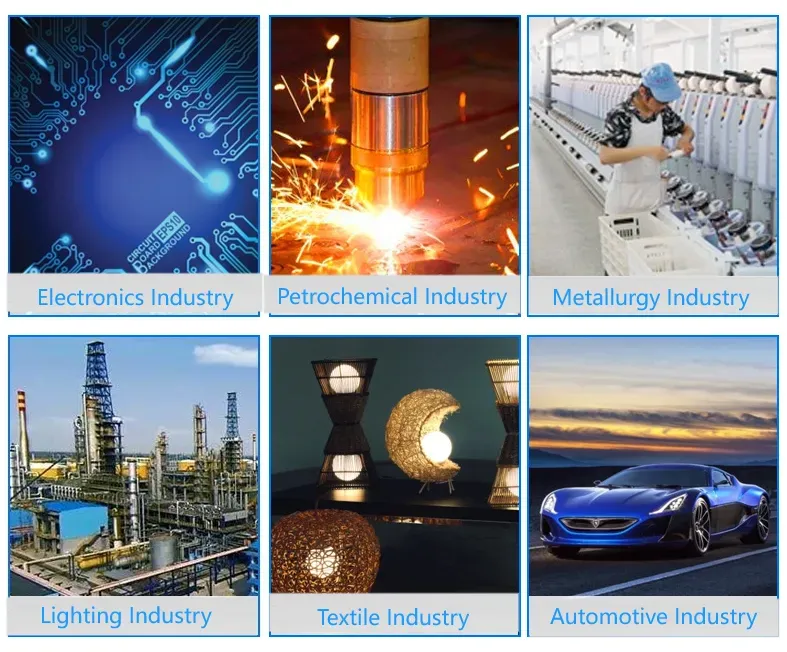
3.4 New Energy Industry
With the rapid development of the new energy industry (such as solar energy, wind energy, and energy storage), the demand for high-performance materials is increasing. Recrystallised Silicon Carbide is widely used in the new energy industry, mainly for making:
- Solar cell silicon wafer sintering fixtures: With high temperature resistance and thermal conductivity, ensuring the uniform sintering of silicon wafers and improve the conversion efficiency of solar cells.
- Energy storage battery electrode sintering components: With good corrosion resistance and thermal stability, adapting to the high-temperature sintering process of battery electrodes and improve the performance of energy storage batteries.
- Wind power equipment wear-resistant components: With excellent wear resistance, reducing the wear of wind power generator bearings and other components, extending the service life of wind power equipment.
3.5 Semiconductor Manufacturing Industry
The semiconductor manufacturing industry has extremely high requirements on the purity, flatness, and stability of materials. Recrystallised Silicon Carbide, with its high purity, good thermal conductivity, and chemical inertness, is widely used in semiconductor manufacturing, mainly for making:
- Semiconductor chip heat dissipation components: Quickly transfer the heat generated by the chip, ensuring the stable operation of the chip.
- Wafer processing fixtures: With high flatness and wear resistance, avoiding scratches on the wafer surface and ensure the quality of the wafer.
With the continuous development of industries such as metallurgy, chemical engineering, new energy, and semiconductors, the demand for Recrystallised Silicon Carbide will continue to grow. As a professional supplier of Recrystallised Silicon Carbide, we are committed to providing customers with high-quality products and professional services, helping customers achieve better development.
Supplier
RBOSCHCO is a trusted global Recrystallised Silicon Carbide supplier & manufacturer with over 12 years of experience in providing super high-quality chemicals and Nanomaterials. The company export to many countries, such as USA, Canada, Europe, UAE, South Africa, Tanzania, Kenya, Egypt, Nigeria, Cameroon, Ugand, Turkey, Mexico, Azerbaijan Be lgium, Cyprus, Czech Republic, Brazil, Chile, Argentina, Dubai, Japan, Korea, Vietnam, Thailand, Malaysia, Indonesia, Australia, Germany, France, Italy, Portugal etc. As a leading nanotechnology development manufacturer, RBOSCHCO dominates the market. Our professional work team provides perfect solutions to help improve the efficiency of various industries, create value, and easily cope with various challenges. If you are looking for Recrystallised Silicon Carbide, please feel free to contact us.
RELATED POSTS
Nanoultrafine Molybdenum Disulfide MoS2 for Enhanced Lubrication and Antiwear Applications

New water material Ti₃AlC₂: the shining star in the MAX phase

Why Is The Thermal Stability Of Ultrafine Zinc Stearate Emulsion Excellent When Used In PVC Products?

Zirconia vs Silicon Nitride Ceramic Rings: Key Differences, Properties, and Applications
Silicon Carbide Crucibles Manufacturing Refine: From Raw Materials To High-Performance Melting Solutions