Professional and high-quality metal alloys, ceramic products and concrete additives | RBOSCHCO

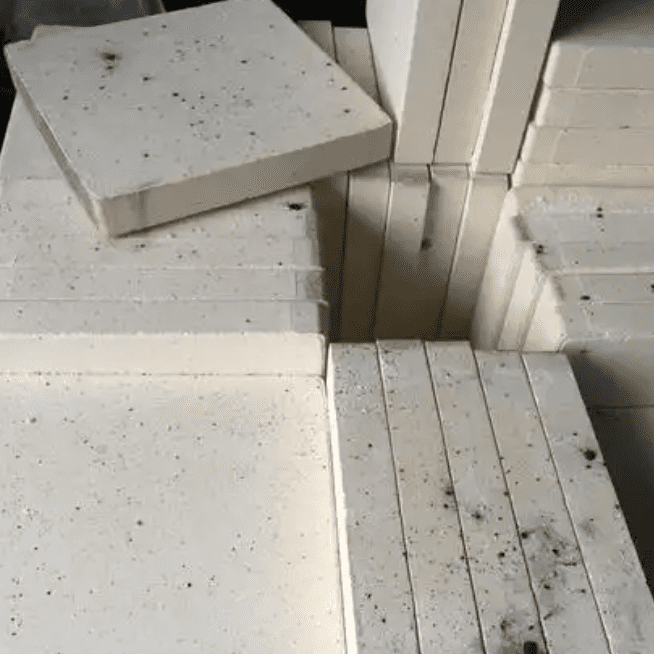
In today’s fiercely competitive arena of global high-end manufacturing, breakthroughs in materials science often become the “trump card” that decides victory or defeat. As traditional metals and alloys gradually show fatigue when facing extreme temperatures, wear, and corrosion, an advanced material hailed as the “king of ceramics” is moving from laboratory sanctums to the heart of industry at an unprecedented pace, reshaping every technical detail from aerospace to daily mobility. This material is silicon nitride ceramics. It is not merely a substitute, but a disruptor of performance and liberator of design, ushering in a new industrial era centered on high-performance ceramics. This article provides a panoramic and in-depth analysis of the global market landscape of silicon nitride ceramics, delving into its technological core, driving forces, competitive landscape, and looking ahead at strategic opportunities and challenges over the next decade.

1. The King of Materials: Decoding the Outstanding Genes of Silicon Nitride Ceramics
Understanding the explosive growth of the silicon nitride ceramics market begins with a deep appreciation of its intrinsic, near-perfect combination of physicochemical properties. This engineering ceramic is formed by strong covalent bonds between silicon (Si) and nitrogen (N) elements, and the designability of its microstructure endows it with unparalleled comprehensive performance, making it a true “hexagonal warrior” in the world of materials.
Superb Mechanical Properties
It combines diamond-like extreme hardness with fracture toughness significantly better than most ceramics. This “rigid yet resilient” trait makes silicon nitride components highly resistant to catastrophic fracture under heavy loads and impacts, ensuring exceptional reliability.
Extreme Thermal Management Capability
With a melting point of 1900 °C and the ability to retain much of its room-temperature strength at 1200–1400 °C, it also features a low coefficient of thermal expansion and excellent thermal conductivity (among the best for ceramics), giving it outstanding resistance to thermal shock and enabling it to withstand drastic temperature changes without cracking.
Natural Chemical Fortress
It resists nearly all inorganic acids (except hydrofluoric acid) and alkaline solutions, and does not wet or react with most molten metals such as aluminum, copper, and zinc, making it an “immortal” material in corrosive environments.
Excellent Electrical and Tribological Characteristics
It is an excellent high-temperature insulator with low dielectric loss. Its self-lubricating property and low friction coefficient allow low-wear operation without additional lubrication, which is critical for vacuum, high-temperature, or clean environments.
Biocompatibility
As an inert ceramic, it is compatible with human tissue, non-toxic and non-allergenic, opening doors for biomedical applications.
This unique performance matrix enables silicon nitride ceramics to solve technical bottlenecks beyond the reach of traditional materials, directly meeting modern industry’s core demands for equipment that is “more efficient, more durable, lighter, and more reliable.”
2. Resonance and Outbreak: The Golden Age of Multi-dimensional Industrial Waves Superimposed
Currently, the silicon nitride ceramics market is not driven by a single industry, but is at a historic node where multiple super tracks, such as new energy vehicles, semiconductors, clean energy, and high-end manufacturing, explode at the same time and produce strong “resonance”.
2.1 New Energy Vehicles and Electrification Wave: Performance Leap in Core Components
This is the strongest and most certain engine for market growth. In the electric drive system of electric vehicles, hybrid ceramic bearings made of silicon nitride ceramics can significantly reduce the friction loss of high-speed motors, increase the speed limit, extend the service life, solve the problem of electrical corrosion, and directly improve the energy efficiency and battery life of the vehicle. In the field of power batteries, as an insulating and heat-conducting gasket between battery modules, it is a key material to manage thermal runaway and ensure safety. With the popularization of 800V high-voltage platforms and ultra-fast charging technology, the requirements for withstand voltage, heat dissipation, and insulation of battery systems have increased exponentially, and the demand for silicon nitride ceramics will surge simultaneously.
2. Semiconductor industry: “guardian” of Moore’s Law
Semiconductor manufacturing is the ultimate arena for precision. When the process technology moves towards 3 nanometers and 2 nanometers, almost stringent requirements are put forward for parts of key process equipment, such as etching and deposition. Silicon nitride ceramics are widely used in etcher focus rings, insulating columns, wafer carrier rings, heaters and other core “consumable” components due to their extremely high purity, superior corrosion resistance in plasma environment, low particulate pollutant release and stable dielectric properties. In addition, in power semiconductor modules, silicon nitride ceramic substrates have become an ideal “mount” for third-generation semiconductor (SiC, GaN) devices due to their high thermal conductivity, high insulation, and thermal expansion coefficient that matches the chip. The market is expanding rapidly with new energy and 5G construction.
2.3 Clean Energy Systems: Cornerstone of Hydrogen and Solar-Thermal Power
In the context of global carbon neutrality, hydrogen energy is regarded as one of the ultimate energy sources. In proton exchange membrane fuel cells, silicon nitride ceramics are potential materials for manufacturing bipolar plates, which can simultaneously meet the requirements of electrical conductivity, hydrogen corrosion resistance, corrosion resistance and long-term stability. In the field of solar thermal power generation, it can be used to manufacture high-temperature heat sinks and heat storage tank components to withstand the extremely high temperatures generated by concentration. In the field of nuclear energy, its radiation resistance characteristics have also attracted attention. The construction of these emerging energy infrastructures has provided silicon nitride ceramics with a long-term, large-scale incremental market.
2.4 Aerospace and Defense: Ultimate Answer for Extreme Environments
In aviation engines, every kilogram saved and every degree of turbine inlet temperature gained means huge economic and performance benefits. Turbine rotor blades and combustor liners made from silicon nitride ceramics can endure higher temperatures than superalloys, reducing or even eliminating cooling air passages, thereby greatly increasing thrust-to-weight ratio and fuel efficiency. For missile and hypersonic vehicle nose cones and leading edges, their high-temperature ablation and thermal shock resistance are vital. Strategic autonomy in national defense further drives R&D and procurement of these high-end applications.
2.5 Traditional Industry Upgrading and Healthcare: Steady Penetration Growth
In the industrial field, silicon nitride ceramic tools are used for high-speed machining of difficult-to-machine materials (such as nickel-based alloys); their seal rings, nozzles, and wear-resistant liners are widely used in harsh working conditions such as the chemical industry, pump valves, and metallurgy. In the medical field, its biocompatibility and wear resistance make it the preferred material for a new generation of artificial hip joints and knee joint ball heads, and its service life far exceeds that of traditional polyethylene and metals. The penetration of these markets is a continuous and stable process that continues to consolidate the market foundation of silicon nitride ceramics.
3. Market Depth: Global Competitive Landscape and Supply Chain Dynamics
Geographically, the global silicon nitride ceramics market shows a pattern of “Asia-Pacific as the body, Europe and the U.S. as the wings.”
Asia-Pacific (Leading Consumption and Production)
With China, Japan, and South Korea as the core, relying on the world’s largest electronics manufacturing base, new energy vehicle industry chain and strong industrial upgrading demand, it occupies the world’s largest market share. Japan has long been a leader in technology, with global giants such as Kyocera, Toshiba Materials, and Japan Special Ceramics (NGK/NTK), and has built deep barriers in the fields of high-end powders and precision components.
Europe and the U.S. (Technology Leadership and High-End Applications)
They have deep roots and brand advantages in aerospace, high-end medical, and some industrial niche applications. Representative firms include Germany’s CeramTec, the U.S.’s CoorsTek, and the UK’s Morgan Advanced Materials, focusing on ultra-high-value, highly customized products.
China (Fast-Rising Challenger)
Chinese companies are rapidly advancing from mid-range sintered parts to upstream powder technology and downstream precision processing. Driven by booming domestic demand in photovoltaics, lithium batteries, and semiconductor equipment, a number of competitive enterprises are emerging, reshaping the global supply chain map.
Competition has shifted from scale production to integrated capability across the entire industrial chain: from synthesis of high-purity, ultrafine, uniform silicon nitride powders (e.g., silicon powder nitridation, carbothermal reduction, vapor phase methods), to complex shape precision forming (injection molding, gel casting, tape casting, 3D printing), to low-cost, high-efficiency sintering (gas pressure sintering, hot isostatic pressing), and subsequent ultra-precision machining (grinding, polishing, laser processing). Innovation at any stage can create a unique competitive advantage.
4. Next Ten Years: Trends, Challenges, and Strategic Opportunities
Looking ahead from this moment, the global silicon nitride ceramics market will enter a phase of “rapid growth” alongside “deep integration” over the next decade.
Core Growth Trends
- Application Innovation Driving Demand Fission: From “replacing existing materials” to “creating entirely new designs,” e.g., using its wave-transparent and heat-resistant properties for next-gen high-speed communication radomes, or exploring bioactive coatings for implants that promote bone growth.
- Composite Materials and Functional Integration: Developing silicon nitride matrix composites with fibers, whiskers, or second-phase particles (e.g., SiC, Al₂O₃) for higher toughness and strength, and moving toward structure-function integration, such as smart ceramic parts with self-sensing capabilities.
- Digitalization and Intelligence in Manufacturing: Mature ceramic additive manufacturing (3D printing) will break traditional shaping limits, enabling personalized, lightweight, integrated complex structures and greatly expanding design freedom.
- Cost Reduction and Market Expansion: With scaled powder production, process optimization, and domestic substitution, overall costs are expected to decline continuously, unlocking more civilian and industrial bulk applications such as high-performance automotive engine parts and large industrial pump seals.
Challenges That Cannot Be Ignored
- Eternal Tug-of-War Between Cost and Price: Despite falling, the prices of high-end silicon nitride ceramics remain the primary barrier to mass adoption.
- Lack of Reliability Data and Standards: Compared to metals, databases on long-term service performance, failure analysis models, and industry design standards are still incomplete, raising design risk and hesitation among engineers.
- Technical Talent and Knowledge Barriers: Involving multidisciplinary crossover from materials R&D to application development, talent scarcity forms a knowledge moat for the industry.
- Supply Chain Security and Geopolitics: Supply of key upstream resources and technologies, such as high-purity silicon powder and special equipment, may be affected by international trade conditions.
Strategic Opportunity Window
For industry players, future opportunities lie in: deepening vertical sectors and offering integrated “material-component-solution” services; investing in frontier technologies, especially low-cost powder and additive manufacturing processes; strengthening industry-academia-research collaboration to build rapid translation channels from basic research to application validation; and actively participating in international and domestic standard setting to gain industry discourse power.
5. Conclusion: Embracing the Silicon-Based New Era
In summary, the global market prospects for silicon nitride ceramics are not a short cyclical boom, but a profound industrial revolution driven by fundamental materials innovation. It redefines the boundaries of “reliability” and “efficiency” in terms of performance, tightly coupling with the grand narratives of global digitalization, electrification, and decarbonization. Challenges exist, but the trend is irreversible. Enterprises capable of sustained technological innovation, deep understanding of downstream needs, and strong engineering capabilities will undoubtedly dominate this “silicon-based revolution,” sharing the immense dividends of this billion-dollar and ever-expanding advanced materials market. The future is here; represented by silicon nitride ceramics, advanced ceramics, with their resilience, stability, and excellence, are silently yet powerfully laying the foundation for humanity’s next technological era.ce, driving upgrades across multiple future industries. The global demand for them is shifting from “performance-driven” to “essential.” Driven by technological progress, industrial upgrading, and the global sustainable development agenda, the industrial landscape of silicon nitride ceramics is unfolding. An era of “Silicon Nitride Ceramics” that is more precise, efficient, and reliable is already upon us. For investors, manufacturers, and end-users, deeply understanding and positioning in the silicon nitride ceramics track means grasping a key to the door of future high-end manufacturing and technology industries. This material revolution led by silicon nitride ceramics will inevitably reshape the competitive landscape and future face of global high-end manufacturing.
6. Supplier
RBOSCHCO is a trusted global chemical material supplier & manufacturer with over 12 years experience in providing super high-quality chemicals and Nanomaterials. The company export to many countries, such as USA, Canada, Europe, UAE, South Africa,Tanzania,Kenya,Egypt,Nigeria,Cameroon,Uganda,Turkey,Mexico,Azerbaijan,Belgium,Cyprus,Czech Republic, Brazil, Chile, Argentina, Dubai, Japan, Korea, Vietnam, Thailand, Malaysia, Indonesia, Australia,Germany, France, Italy, Portugal etc. As a leading nanotechnology development manufacturer, RBOSCHCO dominates the market. Our professional work team provides perfect solutions to help improve the efficiency of various industries, create value, and easily cope with various challenges. If you are looking for silicon nitride ceramics, please feel free to contact us!
RELATED POSTS

Transforming Global Industries: The Unseen Power of Boron Carbide in a Shifting Profession Landscape
Stainless steel cladding: revolutionizing architectural design and structural integrity

Supply Chain Upheaval Meets Tech Revolution: Chromium Carbide Powder Market Rockets to Unprecedented Heights Amid Global Frenzy!
Choosing the Best Termal Insulation Material: Fumed Silica vs. Aerogel vs. Hollow Glass Microspheres

A Comprehensive Comparison Of Silica Powders: Vapor Phase Method Vs. Precipitation Method
