Professional and high-quality metal alloys, ceramic products and concrete additives | RBOSCHCO

In the modern advanced materials field, silicon nitride ceramics (Si₃N₄) have become indispensable key materials for high-end industries such as aerospace, new energy vehicles, semiconductor manufacturing, and biomedical engineering due to their excellent high-temperature strength, superior thermal shock resistance, outstanding wear and corrosion resistance, and good biocompatibility. However, transforming this high-performance material from laboratory formulations into stably reliable industrial products involves an extremely precise and complex production process. This article will provide an in-depth analysis of the core process of silicon nitride ceramics across the world, from raw material powder preparation to final product processing, demonstrating this modern “manufacturing art” that integrates materials science, chemical engineering and precision manufacturing technology.

1. Foundation: High-Quality Silicon Nitride Powder Synthesis Processes
All excellent silicon nitride ceramics products start with high-quality powder. The purity, particle size, particle size distribution, morphology, and α-phase content of the powder directly determine the success or failure of subsequent forming and sintering, and ultimately affect the performance of the product. Currently, the mainstream industrial production methods for high-quality silicon nitride powder are as follows:
Direct Nitridation Method
This is the most classic and widely used process. High-purity silicon metal powder is nitrided at high temperatures (usually 1200–1400°C) in a nitrogen or ammonia atmosphere via the reaction: 3Si + 2N₂ → Si₃N₄. This method features a simple process, low cost, and mainly produces α-phase silicon nitride with high activity, which is beneficial for sintering. The core of the technology lies in precisely controlling the particle size and purity of silicon powder, the nitridation temperature curve, and the atmosphere to avoid incomplete reactions or the formation of excess free silicon. The resulting powder can be obtained as a suitable forming material after subsequent crushing and grinding.
Carbothermal Reduction Nitridation Method
Using silica (SiO₂) and carbon (C) as raw materials, silicon nitride is generated via a high-temperature reaction in a nitrogen atmosphere: 3SiO₂ + 6C + 2N₂ → Si₃N₄ + 6CO. The advantage of this method is the wide availability and low cost of silica raw materials, and it is easier to obtain high-purity powder. By precisely controlling the carbon-silicon ratio, reaction temperature, and atmosphere, ultrafine powder with specific morphology and phase composition can be synthesized. However, this process requires extremely strict control, making it an important route for producing high-performance silicon nitride ceramics powder.
Vapor-Phase Reaction Method
This mainly includes chemical vapor deposition (CVD) or chemical vapor reaction (CVR) reactions between silane (SiH₄) or silicon tetrachloride (SiCl₄) and ammonia (NH₃) at high temperatures. For example: 3SiCl₄ + 4NH₃ → Si₃N₄ + 12HCl. This method can prepare silicon nitride powder with extremely high purity, ultrafine (nanoscale), uniform particle size distribution, and good sphericity, making it particularly suitable for high-end applications requiring high reliability (such as semiconductor components). However, its disadvantages include complex equipment, high energy consumption, low yield, and expensive powder, resulting in a high cost.
Liquid Phase Method (Pyrolysis of Precursors):
Organic or inorganic precursors containing silicon and nitrogen (for example, polysulfonosilane) were prepared by sol-gel, coprecipitation and other methods, then pyrolyzed at high temperature in a protective atmosphere to directly become silicon nitride powder or fiber. This method mixes raw materials at the molecular level, can obtain nano powders with highly uniform composition and excellent sintering activity, and is an important research direction for preparing high-performance and complex shape silicon nitride ceramics. Some industrial applications have been carried out.
Regardless of which method is adopted, the synthetic powder generally needs to undergo precision washing, sorting, surface modification and other post-treatment procedures to remove impurities, control the particle size distribution, improve the dispersibility and molding performance of the powder, and lay the foundation for the next molding step.
2. Confirmation: diversified molding technology
The loose silicon nitride powder is then turned into a target with a specific shape and a certain strength, a process called molding. Molding technology directly affects the density uniformity of the blank, defect control, and dimensional accuracy and complexity of the final product.
Dry Pressing
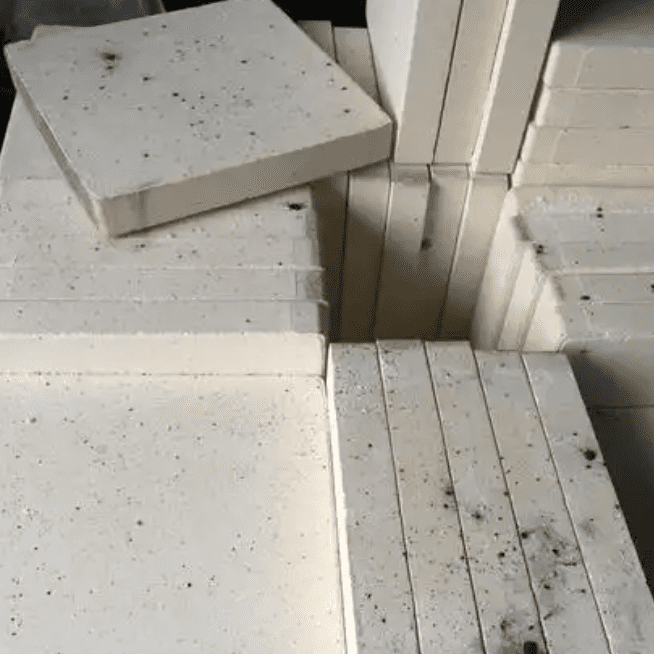
This is the simplest and most economical forming method. Silicon nitride powder mixed with an appropriate amount of organic binder is loaded into a metal mold and pressed unidirectionally or bidirectionally via mechanical pressure to form a green body. This method is highly efficient and suitable for the mass production of simple-shaped, thick-walled parts such as crucibles and plates. However, its limitation lies in the large density gradient of the green body, which is prone to delamination and cracks, and it isn’t easy to form complex structures.
Cold Isostatic Pressing (CIP)
To address the uniformity issue of dry pressing, cold isostatic pressing technology is widely used. The powder is encapsulated in a flexible rubber or plastic mold, placed in a high-pressure container, and subjected to ultra-high pressure (usually 100–300 MPa) transmitted by a liquid or gas medium. This enables the silicon nitride powder to be uniformly compressed in all directions, resulting in a green body with high density uniformity, almost no internal stress, and high density. It is particularly suitable for manufacturing large-sized, high-performance silicon nitride ceramics components such as bearing balls and roller rods.
Injection Molding
To manufacture extremely complex-shaped, high-precision silicon nitride ceramics parts (such as turbine rotors and micro-structural parts), injection molding is the preferred method. It mixes ultrafine silicon nitride powder with a large volume (usually 30%–50% of the total) of thermoplastic resin, plasticizer, lubricant, etc., granulates to form a “feedstock,” and injects the feedstock into a precision mold cavity via an injection molding machine after heating and plasticization. The green body is obtained after cooling and demolding. This technology offers high replication accuracy and automation but requires a complex dewaxing (binder removal) process afterward, resulting in a long cycle and high cost.
Tape Casting
This is the main method for preparing thin silicon nitride ceramic sheets and substrates. A uniform, stable slurry containing powder, binder, plasticizer, dispersant, and solvent is spread into a thin wet film on a continuous moving base belt via a doctor blade of a tape casting machine, and dried to form a flexible “green tape.” This method can produce thin sheets with thicknesses ranging from a few microns to several millimeters, a large area, and uniform thickness, and is a key process for manufacturing silicon nitride ceramics circuit substrates and heat sinks.
Additive Manufacturing (3D Printing)
As a cutting-edge forming technology, ceramic additive manufacturing has brought revolutionary design freedom to silicon nitride ceramics. It mainly includes stereolithography (SLA), digital light processing (DLP), selective laser sintering (SLS), and direct ink writing (DIW). This technology constructs three-dimensional structures layer by layer directly from a digital model without the need for molds, enabling the manufacturing of complex porous structures, internal channels, or integrated components that are impossible with traditional methods. Although the current printing accuracy, density, and mechanical properties still have gaps with traditional methods, and post-processing is complex, its potential in customization, lightweighting, and functional integration is enormous, making it an important development direction for future silicon nitride ceramics manufacturing.
3. Densification and Strengthening: The Magic of Sintering Processes
The green body formed after shaping has low strength and numerous internal pores. Sintering is a critical step to heat the green body at high temperatures, enabling material transport (diffusion, evaporation-condensation, etc.) between particles via solid bonds, eliminating pores, and obtaining high-density, high-strength silicon nitride ceramics. Since silicon nitride is a strong covalent compound with an extremely low self-diffusion coefficient, pure silicon nitride will decompose rather than densify at high temperatures; thus, sintering aids must be added.
Sintering Aids and Liquid-Phase Sintering Mechanism
Commonly used sintering aids include rare earth metal oxides (such as Y₂O₃, La₂O₃) and oxides of magnesium and aluminum (such as MgO, Al₂O₃). At high temperatures, these aids react with the SiO₂ layer on the surface of silicon nitride particles to form a low-melting-point silicate glass phase. This glass phase forms a liquid phase at the sintering temperature, which promotes particle rearrangement and material transport via a dissolution-precipitation mechanism, thereby achieving densification. This process is called liquid-phase sintering and is the key to achieving high densification of silicon nitride ceramics.
Main Sintering Technologies
Pressureless Sintering
This is carried out in a normal atmosphere or a nitrogen-protected atmosphere in a conventional furnace. It has a low cost but requires extremely strict control of powder activity, sintering aid formulation, and heating curve, making it difficult to obtain fully dense (>99%) products. It is usually used for parts with low performance requirements.
Hot Pressing Sintering
The green body is placed in a graphite mold, and high temperature and uniaxial high pressure (usually 20–40 MPa) are applied simultaneously in a vacuum or protective atmosphere. The pressure promotes particle rearrangement and plastic flow, significantly reducing the sintering temperature and enabling near-theoretical density, fine-grained, high-performance silicon nitride ceramics. However, the equipment is expensive, the product shape is limited (mostly simple axisymmetric parts), and the production efficiency is low.
Hot Isostatic Pressing (HIP)
This is the mainstream industrial technology for producing high-performance silicon nitride ceramics. In the later stage of densification, high-pressure nitrogen (up to several to ten MPa) is introduced into the furnace. The high-pressure nitrogen effectively inhibits the high-temperature decomposition of silicon nitride, allowing sintering at higher temperatures for a longer time, thereby promoting grain growth and microstructure optimization, and obtaining extremely high densification and excellent mechanical properties of complex-shaped parts. This is the most important process for manufacturing high-performance bearing balls, engine components, etc.
Hot Isostatic Pressing (HIP)
This involves encapsulating the green body or pre-sintered body in a glass or metal sheath, placing it in a HIP machine, and subjecting it to isostatic high temperature (1700–2000°C) and high pressure (100–200 MPa). This is the ultimate means to eliminate internal residual pores and achieve complete densification, producing silicon nitride ceramics products with unparalleled performance and reliability. However, it is extremely costly and is mostly used in cutting-edge fields such as aerospace.
Sintering is not only a densification process but also a process of “sculpting” the material’s microstructure. By precisely controlling sintering temperature, pressure, atmosphere, and time, the morphology of silicon nitride grains (such as the proportion and size of long-columnar β-phase grains), the composition and distribution of the intergranular glass phase can be regulated, thereby “customizing” materials with specific toughness, strength, or thermal conductivity.
4. Precision Machining: Post-Sintering Finishing
The sintered silicon nitride ceramic blank has poor dimensional accuracy and surface finish, which cannot meet the final use requirements, so it must undergo precision machining. Due to its high hardness and brittleness, machining is far more difficult than machining metal.
Grinding
Grinding with diamond wheels is the primary method for obtaining precise dimensions and geometries. It requires the optimization of wheel particle size, binder, coolant and grinding parameters to achieve efficient, low-damaging machining.
Grinding and Polishing
The use of finer diamond abrasive paste or loose abrasive further improves dimensional accuracy, reduces surface roughness, and achieves a mirror effect. This is critical for parts requiring low friction, high sealing or optical properties.
Laser Machining and Ultrasonic Machining
Laser machining (drilling, cutting, etching) and ultrasound-assisted machining are effective means for cutting complex holes, thin slots or ultra-hard materials. These are contactless or micro-force machining methods that can reduce the formation of fractures and micro-cracks.
Non-Destructive Testing
After processing, it is necessary to conduct non-destructive testing (e.g., X-ray, ultrasound, fluorescence penetration) to ensure that there are no cracks or air pores inside and ensure the safety of the parts in adverse working conditions.
5. Conclusion: Process Integration Shapes the Future
From a single micro-powder particle to a precision component, the entire process of silicon nitride ceramics manufacturing is a chain of interlocking, precise, and continuous processes. Globally, the competition among leading advanced ceramic enterprises is essentially a competition in the deep understanding, precise control, and continuous innovation of the entire process chain. In the future, with the further maturity of computational materials science, artificial intelligence process monitoring, new sintering aid development, and additive manufacturing technology, the production process of silicon nitride ceramics will evolve toward being more precise, efficient, intelligent, and environmentally friendly, continuously unlocking the huge potential of this high-performance material and providing stronger core material support for global high-end manufacturing industries.
6. Supplier
RBOSCHCO is a trusted global chemical material supplier & manufacturer with over 12 years experience in providing super high-quality chemicals and Nanomaterials. The company export to many countries, such as USA, Canada, Europe, UAE, South Africa,Tanzania,Kenya,Egypt,Nigeria,Cameroon,Uganda,Turkey,Mexico,Azerbaijan,Belgium,Cyprus,Czech Republic, Brazil, Chile, Argentina, Dubai, Japan, Korea, Vietnam, Thailand, Malaysia, Indonesia, Australia,Germany, France, Italy, Portugal etc. As a leading nanotechnology development manufacturer, RBOSCHCO dominates the market. Our professional work team provides perfect solutions to help improve the efficiency of various industries, create value, and easily cope with various challenges. If you are looking for silicon nitride ceramics, please feel free to contact us!
Tags: silicon nitride ceramics, si3n4 ceramics, silicon nitride
RELATED POSTS

Redefining Industrial Durability: The Dynamic Contrast Between Titanium Carbide and Tungsten Carbide in a High-Stakes Market

Sodium-Ion Battery Fe-Mn-Based Layered Oxide Cathode Materials: Preparation, Performance, and Challenges

The sodium silicate powder market continues to grow, and the prospects for the expansion of emerging application areas are promising

Silicon Nitride Ceramics: A Deep Analysis of the Cutting-Edge Material Revolution and Future Prospects Under the Global Market Wave
Titanium Nitride Powder Shatters Boundaries: A Revolutionary Force in Global Industrial Supply Chains