Professional and high-quality metal alloys, ceramic products and concrete additives | RBOSCHCO

Abstract
In this paper, the electrochemical properties, physical characteristics and preparation methods of O3-Na(Cu-Fe-Mn)O2 cathode materials for sodium ion batteries are reviewed, and compared with other layered oxide cathode materials. Studies have shown that O3-Na(Cu-Fe-Mn)O2 has a high specific capacity (about 150-180 mAh/g) and energy density (about 450-550 Wh/kg), and its working voltage platform is stable in the range of 3.0-3.5 V, and the capacity retention rate can reach more than 80% after 100 cycles. The physical properties of the material are dark blue, the breaking density is 1.8 ~ 2.2 g/cm3, and the sealing density is 3.5 ~ 4.0 g/cm3. Preparation methods include the solid phase method and the salt gel method. The salt gel method can improve the homogeneity and electrochemical properties of materials. (Cu-Fe – Mn) O2 is superior to P2 – Na (Mn-Ni) O2 in terms of energy density and cycle stability, but is lower than the specific capacity of O3 – Na (Ni-Co – Mn) O2.

2. Performance of O3-Na(Cu-Fe-Mn)O₂ Cathode Material
2.1 Electrochemical Performance
Charge/Discharge Specific Capacity: The initial discharge specific capacity of O3-Na(Cu-Fe-Mn)O₂ at a 0.1C rate is approximately 150-180 mAh/g, which is higher than that of P2-Na(Mn-Ni)O₂ (approximately 120 mAh/g) but lower than O3-Na(Ni-Co-Mn)O₂ (approximately 190 mAh/g). Its high capacity originates from the synergistic effect of the Cu²⁺/Cu³⁺ and Fe³⁺/Fe⁴⁺ redox couples, as well as contributions from anion redox.
Energy Density: The material’s energy density is approximately 450-550 Wh/kg, benefiting from its high specific capacity and stable voltage plateau. In comparison, P2-Na(Mn-Ni)O₂ has an energy density of 400-500 Wh/kg, while O3-Na(Ni-Co-Mn)O₂ can reach 600 Wh/kg.
Voltage platform: The operating voltage is stable in the range of 3.0-3.5 V, which balances energy density and cycle stability compared to P2-Na(Mn-Ni)O2 (2.8-3.3 V) and O3-Na(Ni-Co-Mn)O2 (3.5-4.0 V).
Cycle life: After 100 cycles, the capacity retention rate exceeds 80%, which is better than P2-Na(Mn-Ni)O2 (about 70%), but slightly lower than O3-Na(Ni-Co-Mn)O2 (about 85%). Its stability stems from the synergistic inhibition of phase transformation and structural collapse of Cu-Fe-Mn.
2.2 Physical Properties
Tap Density: 1.8-2.2 g/cm³, higher than P2-Na(Mn-Ni)O₂ (1.5-1.8 g/cm³) but lower than O3-Na(Ni-Co-Mn)O₂ (2.0-2.5 g/cm³).
Compacted Density: 3.5-4.0 g/cm³, comparable to O3-Na(Ni-Co-Mn)O₂ and higher than P2-Na(Mn-Ni)O₂ (3.0-3.5 g/cm³).
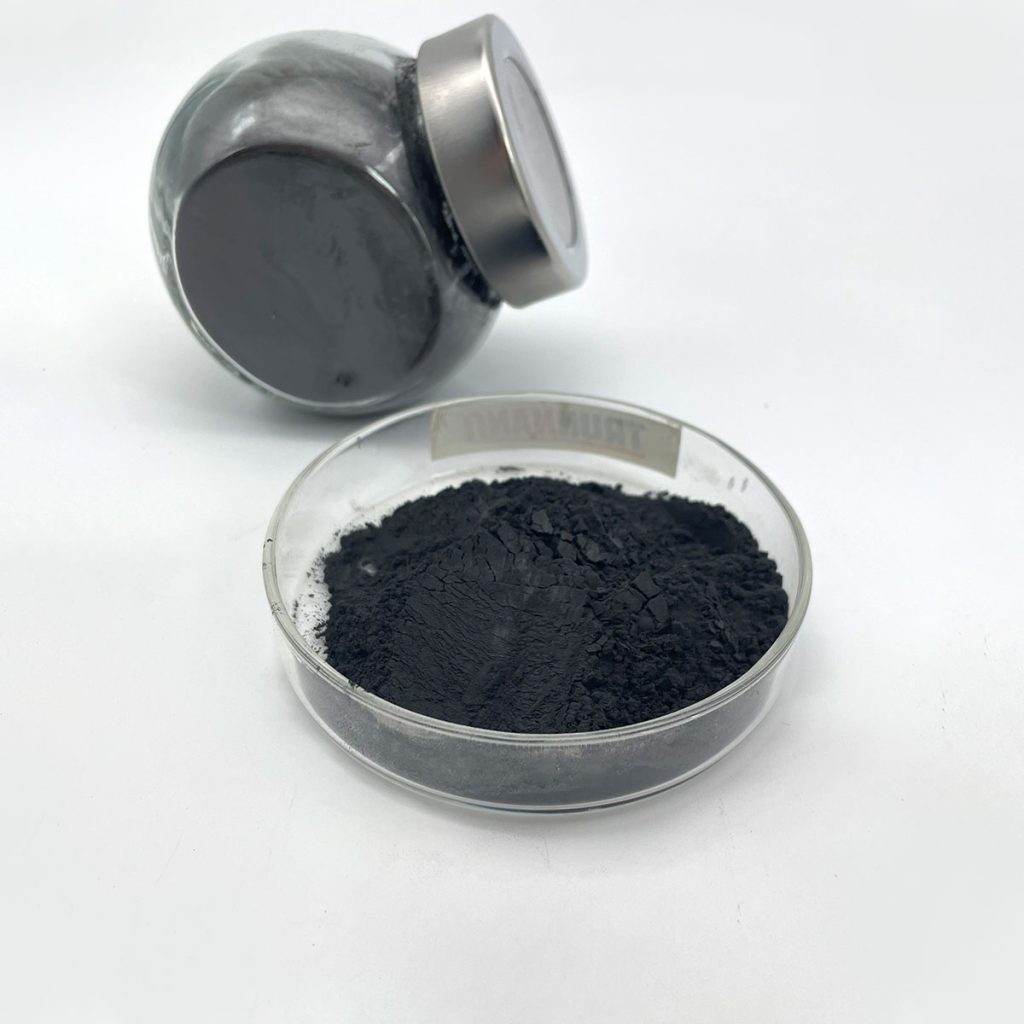
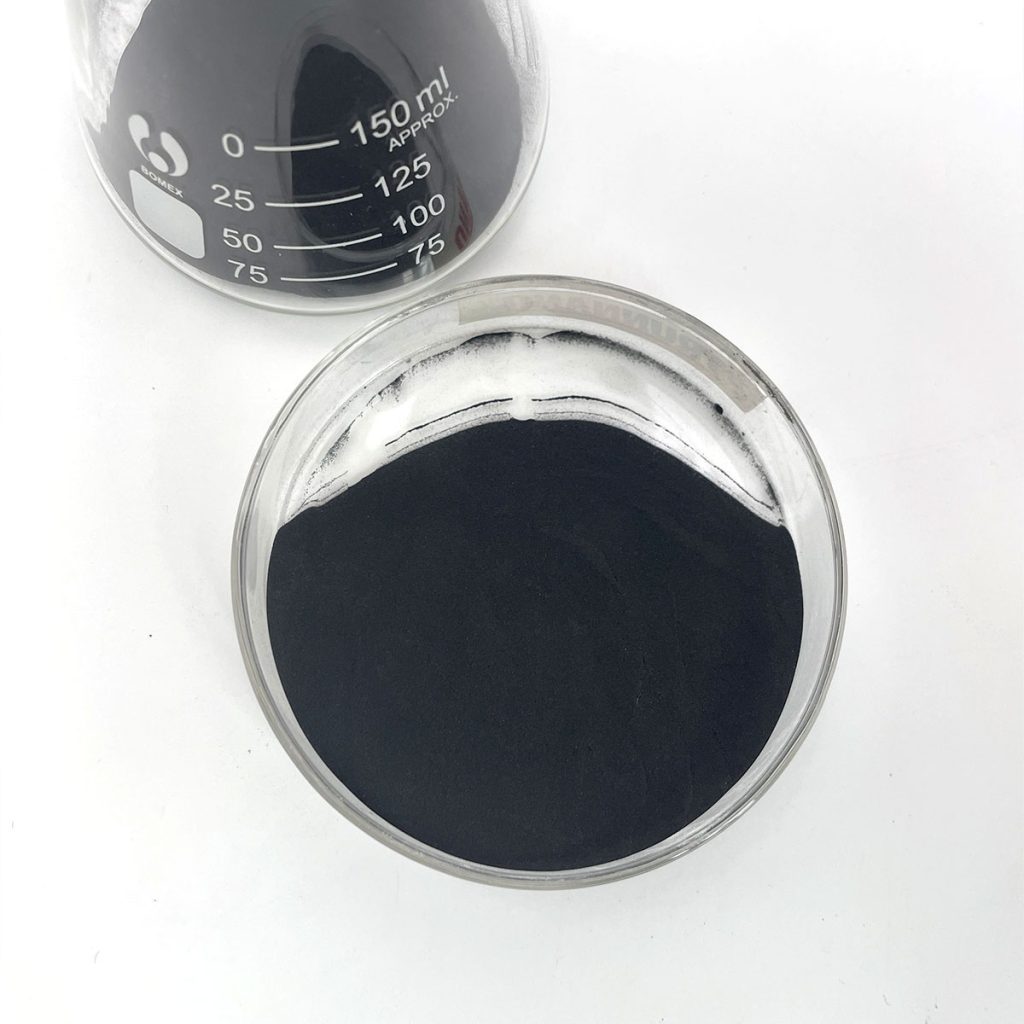
Material Color: Dark blue, resulting from d-d transitions of Cu²⁺, contrasting sharply with P2-Na(Mn-Ni)O₂ (light gray) and O3-Na(Ni-Co-Mn)O₂ (black).
3. Preparation Methods
The preparation methods of O3-Na(Cu-Fe-Mn)O2 mainly include the solid phase method and the sol-gel method:
Solid-State Method: Na₂CO₃, CuO, Fe₂O₃, and MnO₂ are mixed according to the stoichiometric ratio and calcined at 900-1000°C for 12-24 hours. This method is low-cost and simple but results in poorer material homogeneity, potentially leading to local over-sintering or component segregation.
Sol-Gel Method: Involves complexing metal salt solutions with citric acid or EDTA, forming a sol which is then dried and calcined. This method can improve material homogeneity and electrochemical performance, but is more costly. For example, O3-Na(Cu-Fe-Mn)O2 prepared by the sol-gel method has a specific capacity of 180 mAh/g at a rate of 0.1C, and a capacity retention rate of 85% after 100 cycles.
4. Performance Comparison with Other Cathode Materials
4.1 Comparison Table
| Performance Index | O3-Na(Cu-Fe-Mn)O₂ | P2-Na(Mn-Ni)O₂ | O3-Na(Ni-Co-Mn)O₂ |
|---|---|---|---|
| Specific Capacity (mAh/g) | 150-180 | 120 | 190 |
| Energy Density (Wh/kg) | 450-550 | 400-500 | 600 |
| Operating Voltage (V) | 3.0-3.5 | 2.8-3.3 | 3.5-4.0 |
| Tap Density (g/cm³) | 1.8-2.2 | 1.5-1.8 | 2.0-2.5 |
| Compacted Density (g/cm³) | 3.5-4.0 | 3.0-3.5 | 3.5-4.0 |
| Material Color | Dark Blue | Light Gray | Black |
4.2 Comparative analysis
Energy density and cycle stability: O3-Na(Cu-Fe-Mn)O2 is superior to P2-Na(Mn-Ni)O2 in terms of energy density and cycle stability, but lower than O3-Na(Ni-Co-Mn)O2. Its advantage is that Cu-Fe-Mn synergistically suppresses phase transition and improves structural stability.
Cost and preparation difficulty: The cost of O3-Na(Cu-Fe-Mn)O2 is lower than that of O3-Na(Ni-Co-Mn)O2 (due to avoiding the use of Co), but higher than that of P2-Na(Mn-Ni)O2. Although the sol-gel method improves performance, it increases preparation complexity.
Application scenarios: O3-Na(Cu-Fe-Mn)O2 is suitable for medium to high energy density demand scenarios (such as power tools), while P2-Na(Mn-Ni)O2 is more suitable for low-cost energy storage systems.
Summary
O3-Na(Cu-Fe-Mn)O2 cathode material becomes an ideal choice for sodium-ion batteries due to its high specific capacity, stable voltage platform and excellent cycle performance. Its electrochemical properties can be further improved by optimizing the preparation method (such as the sol-gel method). Future research should focus on inhibiting phase transition, improving the reversibility of anion redox, and exploring multiple collaborative doping strategies to promote the commercial application of sodium-ion batteries.
Tags: Sodium-ion battery,O3-Na(Cu-Fe-Mn)O₂,Cathode material,Electrochemical performance,Preparation method,Layered oxide
RELATED POSTS

Silicon Carbide Crucibles Manufacturing Refine: From Raw Materials To High-Performance Melting Solutions

Alumina vs Zirconia Ceramic Rods: Composition, Properties, Applications & Cost Analysis

Zirconia Ceramic Tubes vs Boron Nitride Tubes: Properties, Specs & Applications

Lithium Nitride Powder Ignites Global Energy Revolution: Why Li₃N Is Redefining Industrial Priorities
Titanium Nitride Powder Shatters Boundaries: A Revolutionary Force in Global Industrial Supply Chains
