Professional and high-quality metal alloys, ceramic products and concrete additives | RBOSCHCO

In the demanding world of advanced industrial materials, few substances command as much respect as boron carbide (B₄C). Renowned for its exceptional hardness and lightweight properties, it is a cornerstone for applications where performance is paramount. However, a critical factor often overlooked in international procurement is the profound impact of particle size. Selecting the incorrect grade can lead to catastrophic product failure or exorbitant costs. This definitive guide will illuminate the intrinsic properties of boron carbide powder and provide a crystal-clear framework for choosing the optimal particle size, ensuring your sourcing decisions yield unrivaled performance and value.
1. The Fundamental Nature of Boron Carbide Powder
Boron carbide is not merely a material; it is a marvel of materials science. Understanding its essence is the first step to mastering its application.
1.1 What is Boron Carbide Powder?
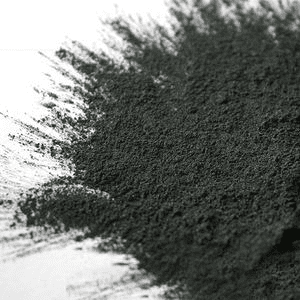
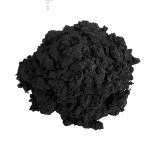
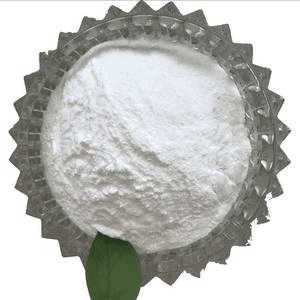
Boron carbide powder is a synthetic ceramic material comprising boron and carbon atoms in a robust crystalline lattice. With a chemical formula most commonly expressed as B₄C, it stands as one of the hardest known materials on Earth, ranking third behind cubic boron nitride and diamond. This ultra-hard ceramic is typically manufactured through high-temperature reactions, such as the carbothermal reduction of boron oxide, resulting in a black, gritty powder. This powder is the crucial precursor for creating a vast array of high-performance components, from lightweight body armor to abrasive blasting nozzles. Its formidable combination of properties makes it an indispensable material in the most severe operating environments.
1.2 What is the Crystalline Structure of Boron Carbide Powder?
The extraordinary properties of boron carbide stem from its intricate and resilient crystalline architecture. Its structure is characterized by a unique arrangement of 12-atom icosahedra (a polyhedron with twenty faces) and 3-atom linear chains. Each icosahedron is composed of twelve boron atoms, and these complex units are linked together by direct boron-boron bonds and through the carbon atoms in the connecting chains. This creates an immensely strong and stable covalent network. The robust nature of this structure is what grants boron carbide its legendary hardness and high melting point (approximately 2,450°C). However, this same complexity can influence fracture toughness, which is a key consideration in its sintering and application.
2. The Quintessential Properties of Boron Carbide Powder
The global demand for boron carbide is driven by a suite of properties that are, quite simply, remarkable.
2.1 What Are the Physical Characteristics of Boron Carbide Powder?
Extreme Hardness: With a Vickers hardness exceeding 30 GPa, it is exceptionally effective at resisting wear and abrasion.
Low Density: At about 2.52 g/cm³, it is significantly lighter than steel and other armor materials, offering an outstanding strength-to-weight ratio.
High Melting Point: Its stability at temperatures up to 2,450°C makes it suitable for high-temperature environments.
Significant Neutron Absorption Capacity: Its high cross-section for thermal neutrons (due to the Boron-10 isotope) makes it ideal for nuclear applications.
2.2 What Are the Chemical Characteristics of Boron Carbide Powder?
Boron carbide exhibits outstanding chemical inertness. It is resistant to attack by most acids and alkalis at room temperature. It also demonstrates high stability in various chemical environments. However, it can be oxidized in air at elevated temperatures (above 600°C), forming a protective layer of boric oxide (B₂O₃). It is also stable in contact with many molten metals.
2.3 What Are the Functional Characteristics of Boron Carbide Powder?
Functionally, boron carbide’s primary roles are abrasion resistance, ballistic protection, and neutron absorption. Its hardness allows it to be used as an abrasive media for lapping, polishing, and water-jet cutting. As a monolithic ceramic, it can stop high-velocity projectiles with incredible efficiency. In nuclear power plants, it is compacted into pellets and used in control rods and shielding to regulate reactor activity safely.
3. The Advantages and Disadvantages of Boron Carbide Powder
3.1 What Are the Advantages of Boron Carbide Powder?
Unmatched Hardness-to-Weight Ratio:The single most compelling advantage for ballistic and lightweight armor applications.
Superior Wear Resistance:Drastically extends the service life of components like nozzles, seals, and cutting tools.
Excellent Neutron Absorption:A critical safety material in the nuclear industry.
High-Temperature Stability:Maintains integrity in thermally demanding situations.
3.2 What Are the Disadvantages of Boron Carbide Powder?
Inherent Brittleness:Like most advanced ceramics, it has relatively low fracture toughness compared to metals, making it susceptible to chipping or catastrophic failure under impact or tensile stress.
Processing Challenges:Sintering it to full density requires very high temperatures and often the use of sintering aids, which can increase cost and complexity.
High Cost:The raw material and energy-intensive manufacturing process make it more expensive than many alternative materials like alumina or silicon carbide.
4. The Expansive Application Domains of Boron Carbide Powder
The versatility of boron carbide powder is demonstrated by its use across a spectrum of high-tech industries:
Ballistic Armor:The primary material for lightweight body armor plates and vehicle armor.
Abrasive and Wear Parts: Nozzles for abrasive water-jet cutting, grit blasting, slurry pumps, and bearing seals.
Nuclear Industry: Control rods, neutron shielding, and neutron detectors.
Refractories:Used as an additive to enhance the strength and erosion resistance of high-temperature linings.
5. The Critical Guide: How To Choose The Particle Size Of Boron Carbide Powder According To The Application?
This is the pivotal decision that determines the success of your final product. The particle size distribution (PSD) of the starting powder directly influences the sintering behavior, microstructure, and ultimate mechanical properties of the sintered ceramic component.Here is a detailed selection guide:
| Application Goal | Recommended Particle Size | Profound Rationale |
| High-Density Sintering for Armor & Structural Components | Fine Powder (Sub-micron, e.g., D50: 0.5 – 1.5 µm) | Ultimate density and mechanical strength are achieved with fine powders. Smaller particles have higher surface energy, which is the driving force for sintering. This allows for densification at lower temperatures and results in a finer-grained final microstructure, which enhances hardness, strength, and ballistic performance by minimizing flaw sizes. |
| Abrasive Applications (Lapping, Polishing) | Controlled Micron-sized Grades (e.g., F230, F400, F800 corresponding to ~60 µm, 20 µm, 10 µm) | The particle size must be tightly controlled to achieve a specific surface finish. Coarser grits (e.g., F230) are for rapid material removal, while finer grits (e.g., F800) are for achieving a mirror-like polish. The sharp, hard particles are the active cutting agents. |
| Thermal Spray Coatings | Spheroidized Powder (15 – 45 µm) | A spherical morphology with a specific size range ensures smooth and consistent flow through the thermal spray gun. This is imperative for creating uniform, dense, and well-adhered coatings that provide wear resistance to underlying substrates. |
| Solid-State Sintering (Without additives) | Very Fine, High-Purity Powder (D50 < 1 µm) | Solid-state sintering of B₄C is exceptionally challenging due to its strong covalent bonds. Using an extremely fine, high-purity powder maximizes the driving force for densification, making it possible to achieve high density without the use of sintering aids that can compromise hardness. |
| Liquid-Phase Sintering (Using additives like Carbon, SiC) | Coarser Powder (D50: 1 – 5 µm) | When sintering aids are used, the densification mechanism changes. A slightly coarser starting powder can be used because the liquid phase enhances mass transport. This can be a more cost-effective route while still achieving good densification. |
Key Takeaway: The pursuit of maximum performance in critical applications like armor unquestionably points to finer particle sizes. However, this must be balanced against the increased cost of producing and handling such fine powders and the more stringent sintering conditions required. For less demanding wear applications or when using sintering aids, a coarser, more economical grade may be perfectly adequate.
Supplier
RBOSCHCO is a trusted global Boron Carbide Podwer supplier & manufacturer with over 12 years experience in providing super high-quality chemicals and Nanomaterials. The company export to many countries, such as USA, Canada, Europe, UAE, South Africa,Tanzania,Kenya,Egypt,Nigeria,Cameroon,Uganda,Turkey,Mexico,Azerbaijan,Belgium,Cyprus,Czech Republic, Brazil, Chile, Argentina, Dubai, Japan, Korea, Vietnam, Thailand, Malaysia, Indonesia, Australia,Germany, France, Italy, Portugal etc. As a leading nanotechnology development manufacturer, RBOSCHCO dominates the market. Our professional work team provides perfect solutions to help improve the efficiency of various industries, create value, and easily cope with various challenges. If you are looking for Boron Carbide Podwer , please feel free to contact us.
Tags: boron carbide powder,boron carbide,b4c powder
RELATED POSTS

Sodium-ion Battery Cathode Material (Layered Oxide): Synthesis, Performance, and Challenges of O3-Na(FeMn₁₋ᵧ)O₂

Revolutionizing Zinc Sulfide Technologies: Pioneering Monosulfide & Oxide Innovations to Dominate Surging Global Demand
Stainless steel cladding: revolutionizing architectural design and structural integrity

P2-Naₓ(FeᵧMn₁⁻ʸ)O₂: A Promising Cathode Material for Sodium-Ion Batteries
Potassium Silicate Powder: The Proven for Superior Industrial Applications
