Professional and high-quality metal alloys, ceramic products and concrete additives | RBOSCHCO

In the world of lubrication, oil and grease get all the attention. They’re the go-to solutions for reducing friction in everything from car engines to industrial machinery. But there’s a class of materials that works where oil can’t—in vacuum, at extreme temperatures, and under heavy loads that would squeeze conventional lubricants out of contact. These are solid lubricants, and the most versatile of them is molybdenum disulfide (MoS₂).
MoS₂ is not a new material. It’s been used in aerospace, automotive, and industrial applications for decades. But its combination of properties—low friction, high temperature resistance, chemical stability, and the ability to work in vacuum—makes it as relevant today as ever. As machinery operates under more demanding conditions, molybdenum disulfide is finding new applications in everything from electric vehicles to space mechanisms.
Unlike oil-based lubricants that can evaporate, degrade, or simply get squeezed out of contact zones, molybdenum disulfide stays where it’s needed. It bonds to metal surfaces and forms a durable, low-friction film that protects components even under extreme conditions. That’s why engineers turn to MoS₂ when conventional lubricants fail.
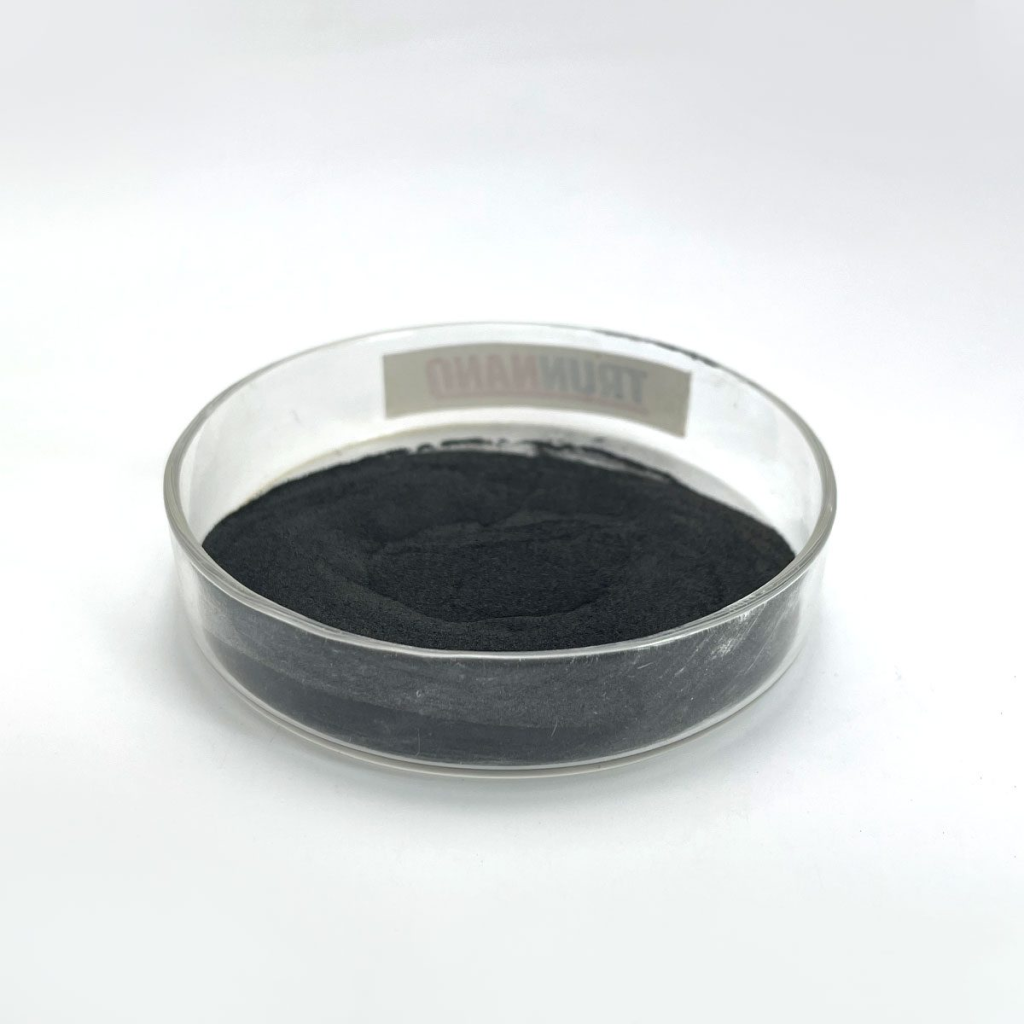
What Makes Molybdenum Disulfide a Solid Lubricant?
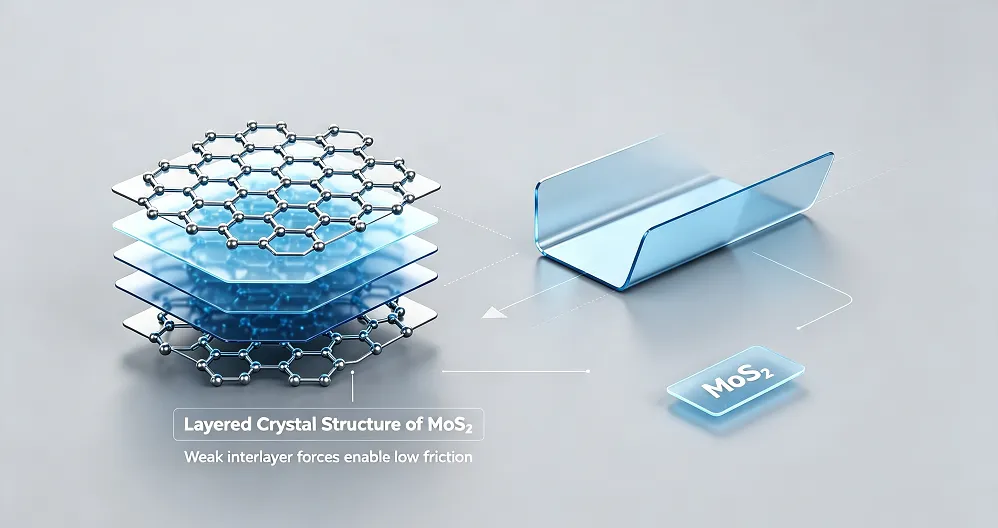
The secret to molybdenum disulfide‘s lubricating properties lies in its crystal structure. MoS₂ has a layered architecture where sulfur-molybdenum-sulfur sheets are stacked together and held by weak van der Waals forces. These weak interlayer bonds allow the sheets to slide past each other with minimal resistance, producing an exceptionally low friction coefficient.
Think of it like a deck of cards—each card can slide easily over the one beneath it. The same principle applies to molybdenum disulfide. When pressure is applied, the layers shear and slide, reducing friction without the need for a liquid film.
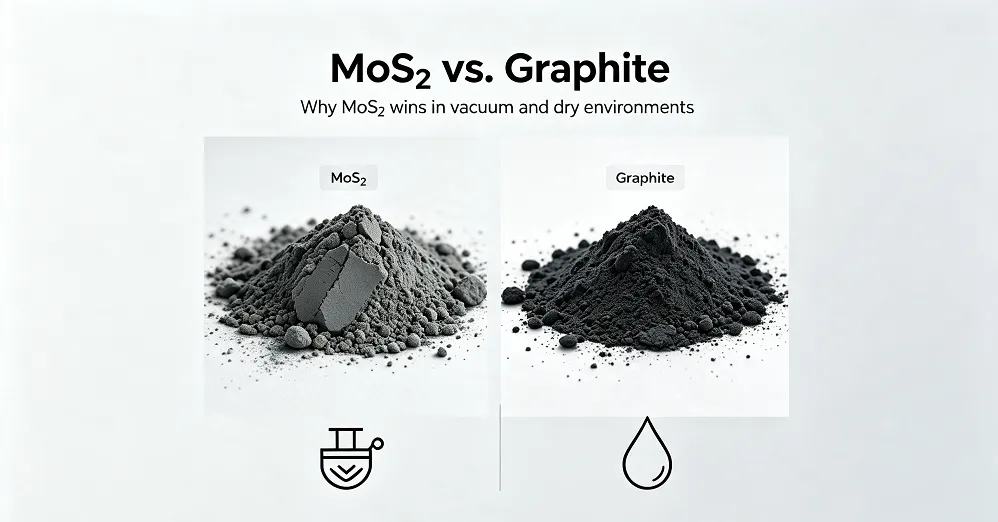
Unlike graphite, which requires adsorbed moisture to lubricate effectively, molybdenum disulfide performs well in dry environments. This makes MoS₂ superior to graphite in vacuum and space applications, where liquid lubricants evaporate or degrade and moisture-dependent solid lubricants fail. In fact, in vacuum conditions, graphite becomes abrasive and can accelerate wear, while molybdenum disulfide remains lubricious.
The crystal structure of molybdenum disulfide also gives it excellent adhesion to metal surfaces. When applied as a dry film coating, MoS₂ bonds to the substrate and provides lasting protection even after thousands of cycles.
Key Properties of Molybdenum Disulfide
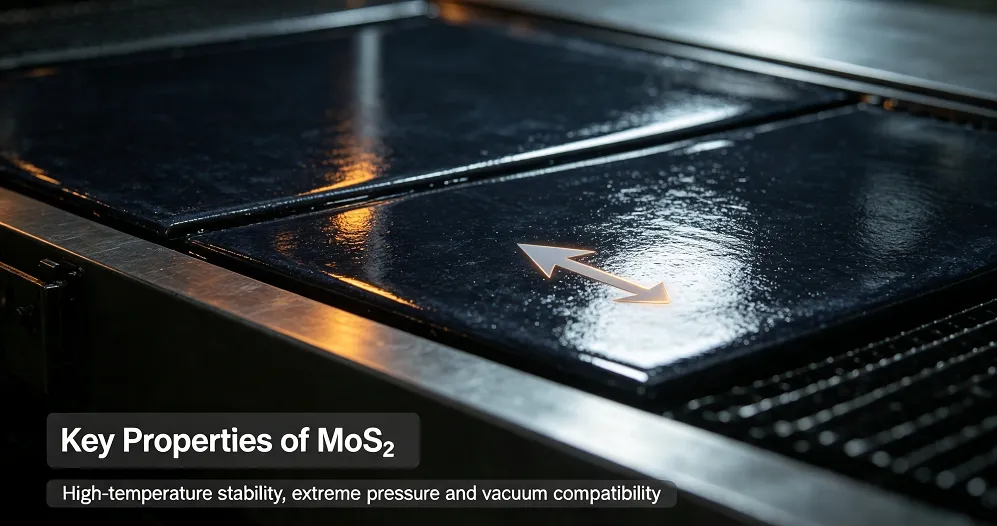
High-temperature stability. Molybdenum disulfide maintains lubrication at high temperatures in air, and at even higher temperatures in vacuum or inert atmospheres. This thermal stability makes MoS₂ indispensable in high-temperature machinery and aerospace components where conventional lubricants would break down or vaporize.
Extreme pressure resistance. The layered structure of molybdenum disulfide allows it to withstand loads that would squeeze liquid lubricants out of contact, preventing metal-to-metal contact under heavy loads. This property is particularly valuable in heavy machinery, gears, and bearings that operate under high stress.
Chemical stability. MoS₂ is resistant to acids, bases, and oxidation in most environments. It remains stable in harsh conditions, extending the service life of components. This chemical inertness means molybdenum disulfide can be used in aggressive chemical environments where other lubricants would degrade.
Vacuum compatibility. One of molybdenum disulfide‘s most valuable properties is its ability to function in vacuum. Unlike graphite, which becomes abrasive in vacuum, MoS₂ remains lubricious. It also does not outgas, making molybdenum disulfide ideal for space mechanisms and semiconductor applications where contamination must be avoided.
Adhesion to surfaces. Molybdenum disulfide forms a durable, bonded film on metal surfaces that remains effective even after the initial application has worn away. This self-renewing property extends the service life of components and reduces maintenance intervals.
Molybdenum Disulfide vs. Graphite
The comparison between molybdenum disulfide and graphite is one of the most instructive in materials science. Both are layered solids with weak interlayer forces. Both are effective lubricants. But they are not interchangeable.
| Property | Molybdenum Disulfide (MoS₂) | Graphite |
|---|---|---|
| Lubrication Mechanism | Weak interlayer forces | Weak interlayer forces |
| Requires Moisture? | No | Yes |
| Vacuum Performance | Excellent | Poor |
| Temperature Limit (Air) | High | High |
| Appearance | Gray-black | Black |
| Electrical Conductivity | Semiconductor | Conductor |
| Chemical Stability | Good | Moderate |
The key difference between molybdenum disulfide and graphite lies in their environmental sensitivity. MoS₂‘s ability to lubricate without adsorbed moisture makes it the preferred choice for vacuum applications. Graphite’s vacuum failure is well-documented—it becomes abrasive and wears rapidly—while molybdenum disulfide maintains low friction even at cryogenic temperatures.
In practical terms, this means that engineers designing space mechanisms almost always choose molybdenum disulfide over graphite. The same applies to any application where moisture is not reliably present, such as in sealed systems or extreme environments.
Applications Where Molybdenum Disulfide Excels
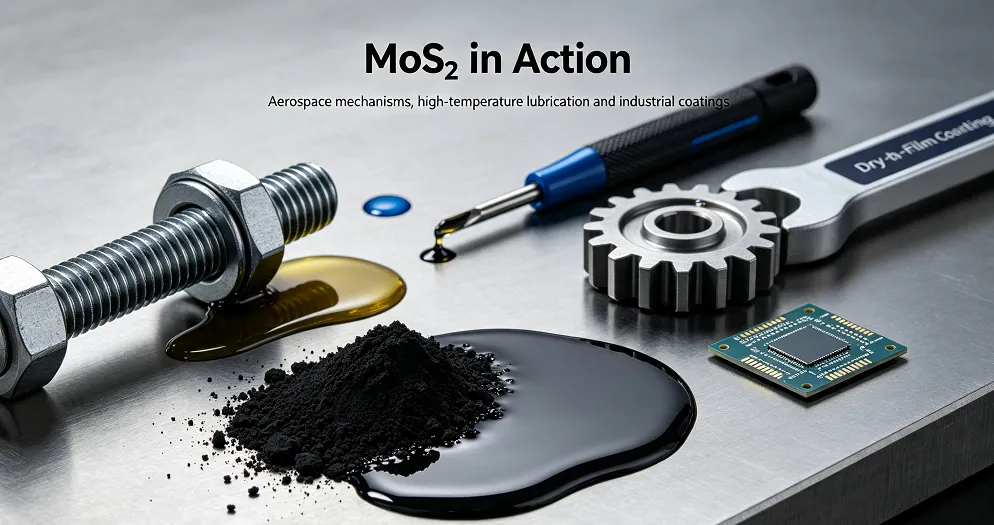
High-temperature fasteners. Anti-seize compounds for bolts and threaded connections in engines and exhaust systems use molybdenum disulfide to prevent galling and seizure at elevated temperatures. A single application can prevent expensive component damage and simplify maintenance.
Automotive additives. MoS₂ powder is added to engine oils and greases to reduce friction and wear. It forms a protective film on metal surfaces even when the liquid lubricant is squeezed out, providing boundary lubrication. This application is becoming increasingly important as engine manufacturers pursue improved fuel economy through reduced friction.
Industrial dry-film coatings. Molybdenum disulfide is applied to metal surfaces as a dry lubricant for forming, stamping, and machining operations. It reduces friction and extends tool life in high-load applications, improving productivity and reducing tooling costs.
Self-lubricating composites. MoS₂ is used as an additive in plastics, sintered metals, and brake linings to provide inherent lubricity and wear resistance. This approach eliminates the need for external lubrication in many applications, reducing maintenance and improving reliability.
Semiconductor and electronic applications. Beyond lubrication, the semiconducting properties of molybdenum disulfide are being exploited in electronic devices. MoS₂ is being investigated as a channel material for transistors, as a catalyst for hydrogen production, and as an electrode material for energy storage devices.
Research and Development in Molybdenum Disulfide
Recent research has focused on overcoming molybdenum disulfide‘s limitations in humid and high-temperature environments. Doping and composite formulations have been developed to improve oxidation resistance and mechanical properties, expanding the application range of MoS₂-based solid lubricants into new industrial and aerospace sectors.
Nanostructured molybdenum disulfide materials are also being explored for applications beyond lubrication, including catalysis, energy storage, and electronics. The semiconducting properties of MoS₂ make it a candidate for next-generation transistors and optoelectronic devices, adding new dimensions to its already diverse application portfolio.
Research into MoS₂-based nanocomposites has shown that combining molybdenum disulfide with other materials can produce coatings with enhanced load-bearing capacity and extended service life. These advances are driving the adoption of molybdenum disulfide in increasingly demanding applications.

Supplier
RBOSCHCO is a globally recognized chemical material supplier and manufacturer with over 12 years of expertise in providing super high-quality chemicals and nanomaterials. The company has a professional technical department and quality supervision department, a well-equipped laboratory with advanced testing equipment, and a dedicated after-sales customer service center. RBOSCHCO supplies high-quality molybdenum disulfide (MoS₂) powder for lubrication, coatings, and industrial applications. The company serves clients across more than 50 countries and offers comprehensive technical support, from material selection to application guidance. If you are looking for high-quality MoS₂ powder, please feel free to contact us.