Professional and high-quality metal alloys, ceramic products and concrete additives | RBOSCHCO

For global vendors and engineers browsing the complex landscape of metallurgical additives, boron powder stands as a cornerstone of modern-day alloy growth. While its duty as a deoxidizer is well-documented, this merely scratches the surface of its extensive capabilities. In the realm of high-temperature alloys, boron powder is a crucial trace element that unlocks unmatched efficiency, changing excellent alloys into outstanding ones. This post looks into the fundamental building blocks of boron powder, moving beyond elementary ideas to highlight its vital, yet typically ignored, functions in creating alloys that address severe problems. Comprehending these subtleties is extremely important for any type of professional looking for an edge in the global products market.
1. The Essential Nature of Boron Powder
1.1 What is Boron Powder?
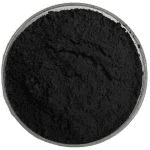
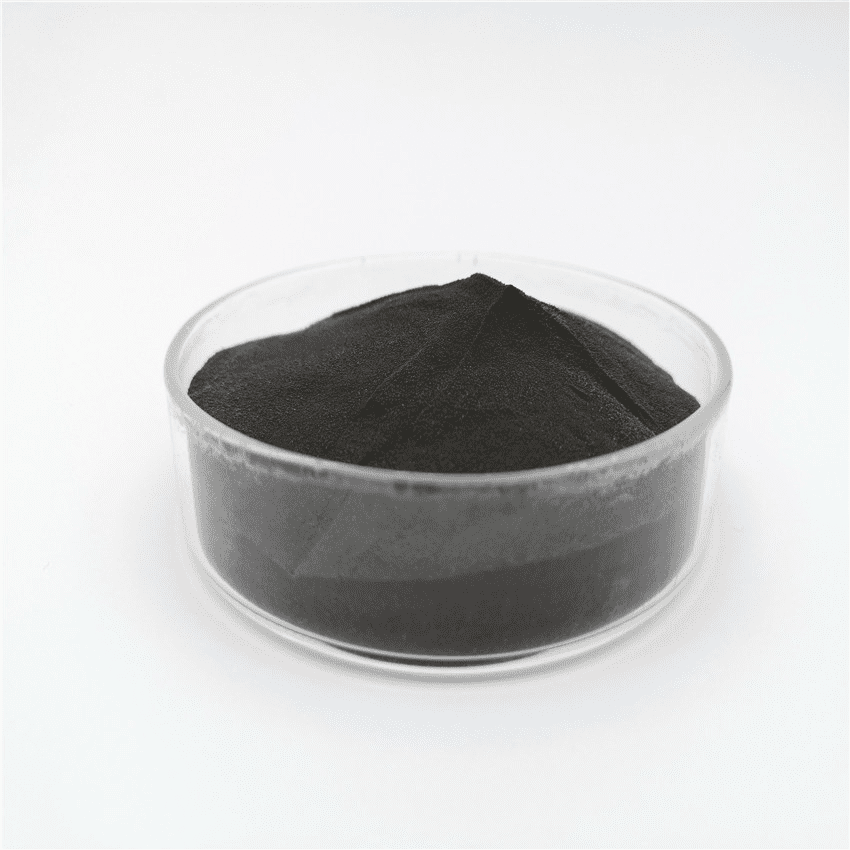
Boron powder is a functional non-metallic aspect, represented by the chemical symbol ‘B’ and atomic number 5. It is typically created in amorphous (non-crystalline) or crystalline forms through sophisticated procedures like the reduction of boron halides with hydrogen or the thermal decay of diborane. In its powdered form, it appears as a dark brownish to black, fine-grained compound. This elemental powder is not found freely in nature as a result of its high sensitivity and rather originates from borate minerals. Its distinct placement in the table of elements– bordering metals and non-metals– gives it a set of chemical and physical residential or commercial properties that are distinctively suited for sophisticated metallurgical applications, much surpassing its simplified classification as a simple refining agent.
1.2 What is the Crystalline Structure of Boron Powder?
The complicated and remarkable nature of boron powder is rooted in its detailed crystalline structure. Elemental boron is infamous for its allotropism, suggesting it can exist in several crystalline types. The most usual and stable structures are based on icosahedral (a polyhedron with 20 faces) B₁₂ systems. These devices arrange themselves in various patterns to form 2 main allotropes: rhombohedral α-boron and tetragonal boron, each with subtle variants in stability and homes. The α-rhombohedral framework, as an example, contains a latticework where B₁₂ icosahedra are prepared in an almost close-packed arrangement. This dense, robust, and highly bonded framework is the bedrock of boron’s remarkable solidity, high melting point, and thermal stability, which it conveys when dissolved or sped up within alloy matrices.
2. The Ultimate Properties of Boron Powder
2.1 What Are the Physical Features of Boron Powder?
Physically, boron powder is identified by its remarkable high melting point of roughly 2,076 °C, making it steady in one of the most demanding thermal atmospheres experienced throughout alloy handling and service. It has a Mohs firmness of concerning 9.3, placing it amongst the hardest materials known. Its thickness is relatively reduced (2.34 g/cm SIX), and it exists in different fragment size circulations, from coarse granules to sub-micron powders, which can be tailored for certain metallurgical processes. Its electrical buildings are additionally notable, as it acts as a semiconductor at space temperature.
2.2 What Are the Chemical Attributes of Boron Powder?
Chemically, boron powder is a research in contrasts. At space temperature level, it is relatively inert, but at elevated temperatures, it becomes exceptionally responsive. It has a solid affinity for oxygen, nitrogen, and carbon. This reactivity is the basis for its deoxidizing and denitrifying activities in molten steel baths. It creates stable, high-melting-point compounds like boron nitride (BN) and boron carbide (B ₄ C). Nevertheless, this high reactivity also requires careful handling and storage space under inert conditions to avoid oxidation before use. Its capacity to form strong solutions and intermetallic compounds with transition steels like nickel, cobalt, and iron is vital to its powerful grain-boundary strengthening results.
| Amorphous Boron Powder Properties | |
| Other Names | Boron Powder, amorphous boron |
| CAS No. | 7440-42-8 |
| Compound Formula | B |
| Molecular Weight | 10.811 |
| Appearance | Dark Brown |
| Melting Point | 2079 °C |
| Boiling Point | 2550 °C |
| Density | 2.34 g/cm3 |
| Solubility in H2O | N/A |
| Electrical Resistivity | 1.8 x 10¹² microhm-cm @ 0 °C |
| Poisson’s Ratio | N/A |
| Specific Heat | 0.245 Cal/g/K @ 25 °C |
| Thermal Conductivity | 0.274 W/cm/K @ 298.2 K |
| Thermal Expansion | 5–7 µm·m-1·K-1 @ 25 °C |
| Young’s Modulus | N/A |
2.3 What Are the Functional Characteristics of Boron Powder?
Functionally, boron powder works as an effective grain refiner and potent solid-solution strengthener. Its primary duty in high-temperature alloys is to segregate to grain borders, where it improves creep toughness– the resistance to contortion under continuous tons at heats. It does this by lowering the grain border power and suppressing the development of gaps and cavities along these borders during long-term exposure to tension and warm. In addition, it significantly enhances hardenability in specific steel alloys and boosts the sinterability of powder metallurgy components.
3. The Advantages and Drawbacks of Boron Powder
3.1 What Are the Advantages of Boron Powder?
Dramatic Improvement of High-Temperature Stamina: Also in min enhancements (typically 10-100 ppm), boron greatly enhances the creep resistance and tear life of superalloys.
Superior Grain Border Control: It efficiently strengthens the weakest links in a polycrystalline material– the grain limits– delaying failing devices.
Phenomenal Hardenability: In steels, it is a highly cost-efficient alternative to more expensive alloying elements for boosting hardenability.
Adaptability: Its advantages extend throughout a wide variety of alloy systems, consisting of nickel-based superalloys, cobalt-based alloys, and austenitic stainless steels.
3.2 What Are the Disadvantages of Boron Powder?
Narrow Processing Home window: The quantity must be regulated with severe precision. An excess can bring about the formation of low-melting-point boride stages at grain limits, which can seriously embrittle the alloy and decrease its forgeability and ductility.
High Reactivity: Its tendency to respond with oxygen and nitrogen needs specialized care and storage, contributing to processing complexity and price.
Possible for Decreased Ductility: Otherwise optimally taken care of, the grain boundary partition can often lead to a decrease in room-temperature ductility and influence toughness.
4. The Extensive Application Domains of Boron Powder
The energy of boron powder extends an amazing spectrum of sophisticated markets, demonstrating its critical role far past deoxidation:
Aerospace & Jet Engine Turbines: This is the preeminent application. Boron-modified nickel-based superalloys are use for wind turbine blades, discs, and various other hot-section components that need to stand up to amazing centrifugal pressures and temperatures going beyond 1000 ° C.
Power Generation: Alloys for gas turbine elements in power plants rely on boron for long-term creep resistance during continual operation.
Advanced Automotive Equipment: Made use of in high-performance engine shutdowns and turbocharger parts exposed to high exhaust temperatures.
Nuclear Reactors: Boron’s neutron-absorption capacity is leveraged in control rods and protecting, while its strengthening result is valuable for architectural elements.
Welding and Hardfacing: Boron is an essential constituent in several hardfacing alloys and filler metals, where it boosts wear resistance and solidity.
5. Final thought: A Strategic Ally in Advanced Metallurgy
To conclude, to concern boron powder as merely a deoxidizer is a considerable underestimation of its capacity. It is, as a matter of fact, a transformative microalloying aspect that designers the microstructure of high-performance alloys. Its capacity to precisely reinforce grain boundaries makes it vital for applications where failing is not an option. For global investors and metallurgists, a deep understanding of its homes, optimum dosage, and synergistic results with various other elements is vital. By grasping the application of boron powder, one can unlock new frontiers in product performance, developing alloys that push the boundaries of temperature, stamina, and sturdiness on the planet’s most advanced engineering systems.
Supplier
RBOSCHCO is a trusted global Boron Powder supplier & manufacturer with over 12 years experience in providing super high-quality chemicals and Nanomaterials. The company export to many countries, such as USA, Canada, Europe, UAE, South Africa,Tanzania,Kenya,Egypt,Nigeria,Cameroon,Uganda,Turkey,Mexico,Azerbaijan,Belgium,Cyprus,Czech Republic, Brazil, Chile, Argentina, Dubai, Japan, Korea, Vietnam, Thailand, Malaysia, Indonesia, Australia,Germany, France, Italy, Portugal etc. As a leading nanotechnology development manufacturer, RBOSCHCO dominates the market. Our professional work team provides perfect solutions to help improve the efficiency of various industries, create value, and easily cope with various challenges. If you are looking for Boron Powder, please feel free to contact us.
Tags:boron nitride powder,boron carbide powder,hexagonal boron nitride powder
RELATED POSTS

What is Ti4O7?

Nickel II Selenide Formula

Transform Your Process with Unrivaled Silicon Carbide Bands: Flourish in the SiC Semiconductor Rise

Boron Carbide Powder And Sintered Products: Their Differences And Respective Advantages
How is metal powder made for 3D printing?
