Professional and high-quality metal alloys, ceramic products and concrete additives | RBOSCHCO

In the increasingly competitive and technologically progressed landscape of industrial materials, the relentless quest for premium efficiency, extreme longevity, and unequaled performance is critical. From the requiring sectors of ballistic shield and rough blasting to the precision-critical environment of atomic power plants, product failure is not an option. Nonetheless, an ultimate material service arises to defy these extremes: Boron Carbide. This innovative ceramic exists in 2 distinctive, yet interconnected types: the raw, flexible powder and the durable, crafted sintered product. Understanding their profound distinctions and one-of-a-kind advantages is important for picking the ideal material for your particular application. This short article explores the multifariousness of Boron Carbide, supplying an essential guide to navigating the powder versus sintered item issue.
1. The Quintessential Style of Boron Carbide Powder
Comprehending the fundamental chemical plan of Boron Carbide is the initial step towards appreciating its significant value proposition.
1.1 What is Boron Carbide Powder worldwide?
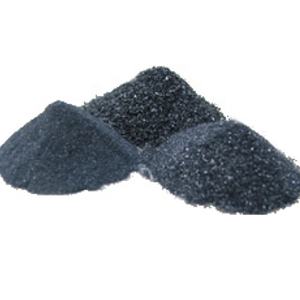
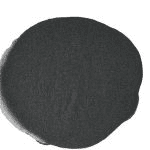
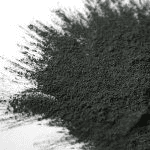
Boron Carbide Powder is not an easy chemical substance; it is a carefully engineered synthetic material, renowned for being one of the hardest compounds recognized to date, ranking third behind ruby and cubic boron nitride. This fine, generally black or dark grey powder acts as the foundational feedstock for manufacturing high-performance elements and is additionally used straight in different abrasive and protecting applications. Its preternatural hardness, combined with a low density, makes it a superlative option to more pricey and larger materials, directly translating to exceptional efficiency in weight-sensitive and high-wear environments.
1.2 The Intricate Chemical Tapestry
The impressive homes of Boron Carbide Powder are born from its unique and durable chemical structure. Its regular chemical formula is represented as B FOUR C, indicating a carbon atom within a boron-rich structure. However, its make-up is much more properly referred to as a single-phase material with a homogeneity array from roughly B FOUR C to B ₁₀. ₅ C. The atomic structure is defined by legendary 12-atom icosahedra located at the vertices of a rhombohedral system cell, with a 3-atom linear chain connecting them along the longest diagonal. This creates an exceptionally strong, covalently bonded latticework that is in charge of the material’s epic hardness and excellent thermal stability. The strong covalent bonds and the intricate structure make it an unparalleled option for extreme problems.
2. The Awesome Core Characteristics of Boron Carbide Powder
The exceptional chemical structure materializes in a collection of extremely convincing residential properties.
2.1 A Pantheon of Physical Prowess
The physical features of Boron Carbide Powder are absolutely remarkable.
Extreme Solidity: It boasts a Vickers solidity of over 30 Grade point average, making it an optimal product for unpleasant and armor-piercing applications.
Reduced Thickness: With a thickness of around 2.52 g/cm TWO, it provides an extraordinary hardness-to-weight ratio, which is vital for individual and vehicle armor.
High Melting Point: It exhibits a melting point of around 2,450 °C, guaranteeing stability in high-temperature atmospheres.
Substantial Thermoelectric Characteristics: It can work as a p-type semiconductor at high temperatures, allowing its use in innovative power conversion applications.
| Boron Carbide Properties | |
| Other Names | B4C, B4C powder, black diamond, boron carbide powder, boron-carbon refractory ceramic |
| CAS No. | 12069-32-8 |
| Compound Formula | B4C |
| Molecular Weight | 55.26 |
| Appearance | Gray to Black Powder |
| Melting Point | 2763 °C |
| Boiling Point | 3500 °C |
| Density | 2.52 g/cm3 |
| Solubility in H2O | Insoluble |
| Electrical Resistivity | 0 to 11 10x Ω-m |
| Poisson’s Ratio | 0.17-0.18 |
| Tensile Strength | 350 MPa (Ultimate) |
| Thermal Conductivity | 31 to 90 W/m-K |
| Thermal Expansion | 4.5 to 5.6 µm/m-K |
| Vickers Hardness | 26 Mpa |
| Young’s Modulus | 240 to 460 Gpa |
| Exact Mass | 56.037222 |
2.2 A Collection of Chemical Inertness
The chemical qualities are similarly excellent, developing a durable protection against destruction.
Impressive Chemical Security: It has high resistance to assault by the majority of acids and alkalis, making it ideal for severe chemical settings.
Superior Neutron Absorption Ability: The high neutron absorption cross-section of the boron-10 isotope (B¹⁰) makes it an important product for atomic power plant control rods and protecting.
2.3 Unrivaled Functional Tenacity
The harmony of physical and chemical homes bestows unequaled functional benefits.
Superior Abrasive Performance: Its severe firmness ensures amazing resistance to use, making it highly effective for unpleasant water-jet cutting, lapping, and polishing.
Excellent Ballistic Performance: The mix of high hardness and low thickness allows for the fabrication of lightweight, yet highly reliable, body and automobile shield systems.
Neutron Shielding Ability: Its capability to soak up neutrons without forming long-lived radioactive isotopes is vital for the security and control of nuclear fission reactions.
3. An Honest Assessment: The Merits and Limitations
A balanced point of view is critical for making a notified material choice.
3.1 The Compelling Variety of Benefits
The benefits of Boron Carbide are extremely convincing.
Unequaled Hardness-to-Weight Ratio: Its combination of extreme hardness and reduced thickness is unrivaled amongst engineering ceramics.
Outstanding Use Resistance: Parts made from Boron Carbide exhibit incredibly long life spans in rough environments.
High-Temperature Security: It maintains its mechanical properties at elevated temperature levels where several steels and various other porcelains would certainly fail.
Impressive Nuclear Properties: Its neutron absorption ability is an essential property in the nuclear market.
3.2 The Pragmatic Acknowledgment of Drawbacks
While awesome, Boron Carbide is not a cure-all for all applications.
Intrinsic Brittleness: Like many sophisticated porcelains, it is vulnerable to cracking under influence or tensile tension, which can limit its usage in some architectural applications.
Difficulty in Sintering: Accomplishing high density without ingredients calls for very high temperatures and pressures, making the manufacturing of huge, intricate sintered components testing and pricey.
Oxidation at Heats: It can oxidize in air at temperatures above 500 ° C, developing boron oxide and CO2, which requires safety environment in high-temperature applications.
4. The Large Domain of Applications
The energy of Boron Carbide, in both powder and strong forms, contributes across an impressive array of high-stakes sectors.
Abrasive Blasting and Water-Jet Cutting: The powder is use as an abrasive medium for reducing hard products and for surface therapy.
Ballistic Shield: Sintered Boron Carbide plates are the gold standard for high-performance individual body armor and armored vehicle defense.
Nuclear Market: Utilized in powder type as a protective material and in sintered form for control rods and neutron absorbers in nuclear reactors.
Nozzles and Put-On Components: Sintered products are used for sandblasting nozzles, birthing seals, and various other components based on severe rough wear.
Refractory Applications: Its high melting point makes it suitable for specialized high-temperature refractory products.
5. The Paramount Difference: Powder vs. Sintered Products
The choice between Boron Carbide Powder and its sintered product equivalent is a calculated choice based upon the intended function and application needs.
The Synergistic Relationship: It is vital to identify that these two forms are not rivals, but sequential phases in a worth chain. The quality, purity, and fragment dimension circulation of the Boron Carbide Powder are foundation elements that directly dictate the efficiency, reliability, and residential or commercial properties of the last sintered product. A top-quality sintered component can not be produced from a substandard powder.

6. Conclusion: A Critical Option for Peak Performance
Choosing between Boron Carbide Powder and Sintered Products is not a matter of prevalence; however, of application-specific suitability. The powder supplies unequaled adaptability as a basic material for processing, abrasion, and additive functions. The sintered item delivers powerful structural efficiency for end-use elements demanding severe solidity, impact resistance, and ballistic protection. By comprehending their distinct chemical designs, core features, and this fundamental difference, you encourage yourself to specify the right form of Boron Carbide for your job. This understanding makes certain ideal efficiency, maximizes return on investment, and gives a formidable one-upmanship in pressing the boundaries of what is highly possible.
Supplier
RBOSCHCO is a trusted global Boron Carbide Powder supplier & manufacturer with over 12 years experience in providing super high-quality chemicals and Nanomaterials. The company export to many countries, such as USA, Canada, Europe, UAE, South Africa,Tanzania,Kenya,Egypt,Nigeria,Cameroon,Uganda,Turkey,Mexico,Azerbaijan,Belgium,Cyprus,Czech Republic, Brazil, Chile, Argentina, Dubai, Japan, Korea, Vietnam, Thailand, Malaysia, Indonesia, Australia,Germany, France, Italy, Portugal etc. As a leading nanotechnology development manufacturer, RBOSCHCO dominates the market. Our professional work team provides perfect solutions to help improve the efficiency of various industries, create value, and easily cope with various challenges. If you are looking for Boron Carbide Powder, please feel free to contact us.
Tags: boron carbide powder,b4c powder,boron carbide powder price