Professional and high-quality metal alloys, ceramic products and concrete additives | RBOSCHCO

At the beginning of this article, let’s summarize the major events in alumina ceramics in 2025:
1. US Final Ruling on Anti-dumping and Countervailing Duty Case Against Chinese Sol-Gel Alumina Ceramic Abrasives
The US ultimately determined that Chinese-exported products of this type were being dumped and subsidized, harming its domestic industry, and will impose high tariffs. This will have a significant impact on the export business of relevant Chinese abrasive companies.
2. Release of the National Standard for “Alumina Ceramic Guide Rails for Lithography Machines.”
The group standard led by Shandong Guiyuan Company was released, filling a domestic gap and marking a dual breakthrough in technology and standards for core components of lithography machines. This is a landmark event in breaking foreign monopolies.
3. USTC Develops High-Performance Biomimetic Alumina Ceramics with Tunable Colors
Academician Yu Shuhong’s team, inspired by mother-of-pearl, developed a new type of biomimetic composite material. Its fracture toughness and impact resistance are more than 3 and 4 times that of commercial products, respectively, and it also has tunable color and wave-transmitting functions, showing great potential in military and aerospace fields.
4. Xi’an Petroleum University Makes Progress in Directionally Solidified Eutectic Ceramics
The research team prepared Al2O3 eutectic ceramics using seed crystal technology, improving mechanical properties by coordinating morphology and orientation, providing a new strategy in order to developing high-performance high-temperature structural materials.
5. The 8th New Ceramic Technology and Industry Summit Forum
Industry barometer: This is a core platform for understanding cutting-edge technologies and market trends. There were discussions specifically addressing the “bottleneck” problems in alumina.
In these major events concerning alumina ceramics, we see the rise of domestically produced alumina products attracting international attention, the application of high-end alumina ceramics in high-precision products, and the continuous exploration, research, and development of new functions in the field of alumina ceramics, demonstrating the vigorous vitality of the alumina ceramic industry.
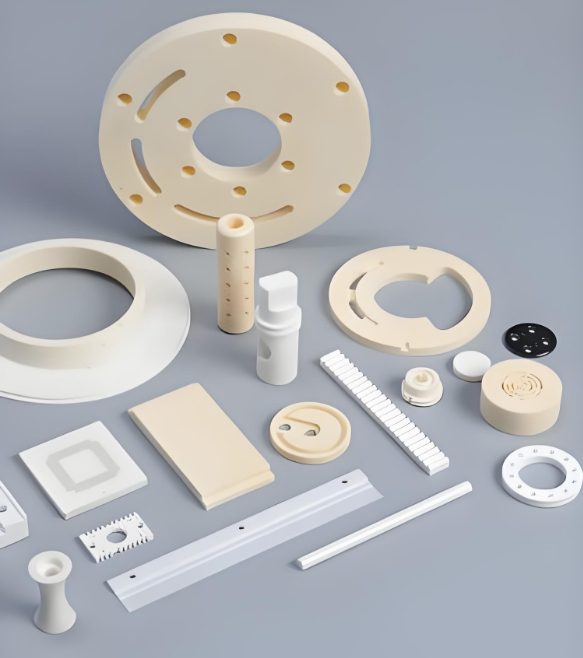
Industrial backbone: The legend and future journey of alumina ceramics
In the vast star map of human materials, there is a star that is not dazzling, but it always silently exudes the light of the foundation that supports civilization. It shuttles between the microscopic universe of the chip and the living structure of the bone, standing between the hot exhaust flame of the rocket and the precision of the operating table, becoming an invisible backbone connecting cutting-edge technology with human needs. It is neither gold nor jade, but it has tenacity that surpasses metal; it is simple and unadorned, but quietly beats the pulse of the information age.
It is alumina ceramics-a legendary material that completely reshapes the definition of “ceramic”, breaks physical boundaries with hard-core properties, and continues to expand the frontiers of industry and technology. This article will reveal its extraordinary characteristics of subverting common sense, analyze its unfathomable development potential, and outline its intertwined and infinitely extended application domain.
I. Revolutionary “Extraordinary Functions”: When Ceramics Are No Longer Fragile
Traditional ceramics are treated with caution due to their “fragility,” but advanced engineering ceramics, represented by high-purity alumina (usually Al₂O₃ content >90%), have reshaped the possibilities of materials with a series of almost extreme performance combinations.
Firstly, it possesses an ultimate “indestructible” nature. Its Mohs hardness reaches 9, second only to diamond and a few superhard materials. This gives it unparalleled wear resistance. In industrial environments full of slurry and dust, wear-resistant liners, sealing rings, and bearings made of alumina ceramics can last ten or even dozens of times longer than steel parts, earning them the title of “never-wearing industrial armor.”
Secondly, it possesses the spirit of “true gold in the face of fire.”The Alumina ceramics can maintain structural stability at extremely high temperatures of 1650°C to 1800°C, without oxidation or softening. This characteristic makes it the undisputed guardian of high-temperature industries, from refractory linings in steel smelting to thermal protection components in aerospace engines, building an invisible heat-resistant Great Wall.
Thirdly, it is an “absolute barrier” in the field of insulation. In harsh electrical environments of high temperature, high frequency, and high voltage, metals fail, and plastics melt, while alumina ceramics maintain extremely high resistivity and extremely low dielectric loss. It is therefore the ideal choice for integrated circuit substrates and high-end insulators, paving a smooth and reliable “insulation highway” for the torrent of electronic information.
Fourth, alumina ceramics have excellent chemical inertness and can withstand erosion from a variety of extreme media. It maintains extremely high chemical stability even when exposed to strong acids, strong bases or molten metals. This characteristic makes it an ideal material for key components of chemical pump valves, biomedical implants and precision analytical instruments, providing a reliable guarantee for the purity and operating safety of the process.
Fifth, it also has excellent biocompatibility and can be called a “biomimetic bone” material. High-purity alumina is non-toxic and biologically inert. It can coexist harmoniously with human tissues. After precision polishing, its surface is smooth and extremely wear-resistant. Since the 1970s, it has been used as the core material of artificial hip joints and knee joint ball heads. It has been successfully implanted into millions of patients, significantly extending the service life of the prosthesis and improving its reliability. It has become a successful example of the intersection of materials science and life sciences.

II. The Future “Evolutionary Code”: Unlimited Development Potential
Alumina ceramics have not stopped at their inherent advantages; their future development potential points to deeper performance breakthroughs and broader application integration, with the core evolution revolving around three main directions: “stronger and tougher,” “more precise,” and “smarter.”
1. Toughening Revolution: Challenging the “Achilles’ Heel” of Brittleness
Brittleness is its biggest weakness. Currently, through cutting-edge technologies such as zirconia toughening, whisker/fiber composites, and biomimetic layered structure design, scientists are striving to give it the characteristic of “overcoming hardness with softness.” For example, zirconia phase transformation toughening technology allows the ceramic to generate micro-region volume expansion during crack propagation, actively “resisting” the crack and increasing toughness several times. In the future, alumina ceramic structural components with metal-like impact resistance are expected to shine in fields such as aircraft engines and high-performance braking systems.
2. Precision Manufacturing: “Exquisite Craftsmanship” at the Micro- and Nano-Scale
With the maturation of ceramic 3D printing (photopolymerization, binder jetting), micro-injection molding, and ultra-precision machining (laser, ultrasound) technologies, alumina ceramics are breaking through the shape limitations of traditional sintering. In the future, we will see ceramic micro-electromechanical systems (MEMS) sensors, micro-reactors, and customized medical implants with extremely complex shapes and dimensional accuracy reaching micrometers or even nanometers, achieving a leap from “macro components” to “micro-functional devices.”
3. Functional Composites: A “Material Symphony” of Cross-Disciplinary Integration
By compounding with other materials, alumina ceramics are deriving new functions. For example, high-thermal-conductivity ceramic substrates compounded with copper and silver are the cornerstone of heat dissipation for 5G/6G communication and third-generation semiconductor power devices; through surface functionalization modification, they can be made into efficient catalytic carriers or bioactive coatings. In the future, alumina ceramics may serve as both structural supports, circuit carriers, and energy transmission media, becoming a truly multifunctional integrated platform.
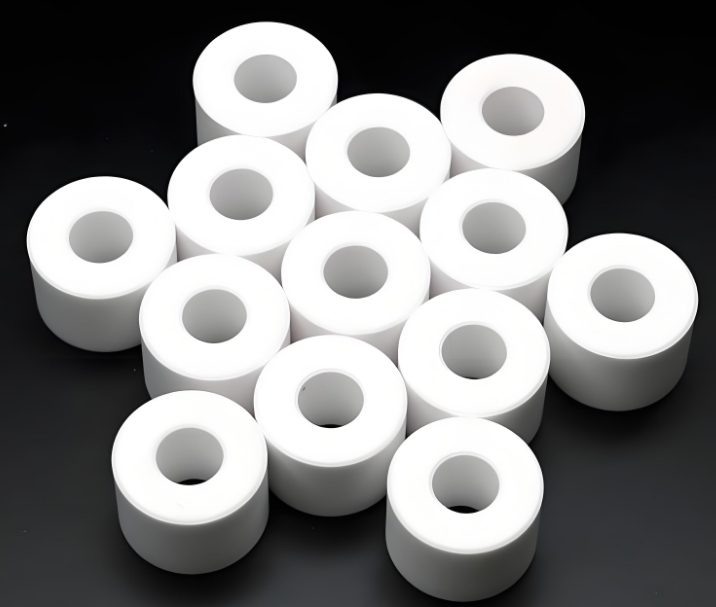
III. The Intertwined “Application Landscape”: An Ubiquitous Cornerstone
Thanks to the aforementioned properties and potential, the application of alumina ceramics has permeated every core area of modern technology, building a vast and sophisticated “ceramic empire.”
Electronics and Information Industry: The “Invisible Cornerstone” of the Digital World
From the radio frequency component substrates of smartphones to the casings of optical communication modules in data centers, and the insulating and heat-dissipating substrates of power modules in new energy vehicles, alumina ceramics ensure the high-speed and stable transmission and processing of massive amounts of data. Without it, the skyscrapers of the modern electronics industry would be impossible to build.
High-End Equipment Manufacturing: A “Reliable Partner” in Extreme Conditions
In CNC machine tools, it serves as high-speed spindle bearings; in oil drilling, it is a wear-resistant and corrosion-resistant mud pump component; in textile machinery, it is a high-speed yarn guide. It allows equipment to operate stably in more extreme and efficient environments, improving overall industrial levels.
New Energy and Green Technologies: A “Key Driver” of Sustainable Development
In solid oxide fuel cells (SOFCs), it is the core material of electrolytes and interconnects; in lithium-ion/sodium-ion batteries, it is a high-performance separator coating; in photovoltaic and wind power equipment, it is a key component that is weather-resistant and corrosion-resistant. It is a crucial link in the breakthrough of clean energy conversion and storage technologies.
Life and Health Field: The “Artificial Bones” and “Precision Tools” that Protect Life
In addition to artificial joints, alumina ceramics are also used in dental implants, orthopedic screws, and high-precision surgical instruments (such as ultrasonic bone scalpel tips). Its excellent biocompatibility and wear resistance are helping more patients regain a high quality of life. Defense and Frontier Exploration: The “Special Guardians” of Cutting-Edge Technology

From the wave-transparent fairing of missiles to composite armor plates, from the high-precision attitude control bearings of satellites to the thermal protection systems of deep space probes, alumina ceramics have excellent high temperature stability, extreme environmental tolerance, and lightweight and high strength characteristics., silently build a security barrier in the national defense and aerospace fields, and continue to promote the expansion of human understanding of space and technological boundaries.
Conclusion
The development process of alumina ceramics is an evolutionary epic of human civilization in which materials continuously break through physical boundaries and deeply empower human civilization. It has evolved from the traditional perception of “fragile and fragile” to the “industrial skeleton” that supports modern high-tech systems. Facing the future, with the continuous deepening of toughening technology, precision engineering and multidisciplinary integration, this “industrial tooth” will become stronger, smarter, and more deeply integrated into the era of the Internet of Everything. It has gone beyond the scope of the material itself to become a platform for enabling innovation, a symbol of the spirit of technology-witnessing how humans use scientific wisdom and engineering ingenuity to temper ancient silicates into the key to opening the future world. In the global pursuit of extreme performance and sustainable development, the legend of alumina ceramics is still continuing and a new and more breakthrough chapter is being opened.
RBOSCHCO is a trusted global Alumina Ceramic Products supplier & manufacturer with over 12 years experience in providing super high-quality chemicals and Nanomaterials. The company export to many countries, such as USA, South Africa,Tanzania,Kenya,Egypt,Nigeria,Cameroon,Uganda,Turkey,Mexico,Azerbaijan,Belgium,Cyprus,Czech Republic, Brazil, Chile, Argentina, Dubai, Japan, Korea, Vietnam, Thailand, Malaysia, Indonesia, Australia,Germany, France, Italy, Portugal UAE etc. As a leading nanotechnology development manufacturer, RBOSCHCO dominates the market. Our professional work team provides perfect solutions to help improve the efficiency of various industries, create value, and easily cope with various challenges. If you are looking for Alumina Ceramic Products, please feel free to contact us.
RELATED POSTS
Comparison Of The Properties Of Potassium Silicate Powder And Sodium Silicate Powder In Industrial Applications
Which Nanomaterials are used in cosmetics?

How Nitinol Is Shaped and Its Medical Applications

Bismuth Oxide Powder

Polycarboxylate water-reducing agent powder: a “money-saving tool” in the construction industry, you must know these new developments!