Professional and high-quality metal alloys, ceramic products and concrete additives | RBOSCHCO

In the ever-growing field of materials science, new ideas appear all the time. Among these advances, one special group of materials is drawing the attention of researchers and engineers. A key example here is Ti₃AlC₂. It is part of an interesting family called MAX phase materials.

So, what makes Ti₃AlC₂ so special? Put simply, it has a unique mix of properties. It seems to bring together the best of two worlds. For example, it has the toughness and conductivity of metals. At the same time, it also has the strength and durability of ceramics. This combination makes it truly stand out.
In this article, we will take a close look at Ti₃AlC₂. We will explain what it actually is. We will also explore why its properties are so exceptional. Then, we will see where it can be used in practice. Finally, we will discuss what the future may hold for this versatile material.
To make things easy to follow, we will break down complex ideas into simple, short sentences. We will also use connecting words to ensure the text flows smoothly. Additionally, we will present important data in clear tables. This will help you understand and remember the key information better.
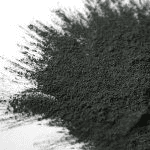
What Exactly is Ti₃AlC₂? Understanding Its Composition and Structure
Let’s start with the basics. Ti₃AlC₂ is a ternary layered carbide. “Ternary” means it is composed of three primary elements: Titanium (Ti), Aluminum (Al), and Carbon (C). The “layered” part is crucial to understanding its magic.
It is a proud member of the MAX phase family. The name “MAX” is not just a brand; it’s a descriptive formula:
M stands for a transition metal (here, Titanium).
A stands for an element from the A-group of the periodic table (here, Aluminum).
X stands for either Carbon or Nitrogen (here, Carbon).
So, in Ti₃AlC₂, the “M” is Ti, the “A” is Al, and the “X” is C. Think of its structure like a microscopic sandwich or a deck of very strong cards. Layers of titanium and carbon atoms are tightly bonded together, creating sheets that are extremely hard and stable, much like a ceramic. These rigid sheets are then separated by layers of aluminum atoms. The bonds within these aluminum layers are more metallic and ductile. This ingenious layered architecture is the secret. It allows the material to be machinable like a metal (you can cut it or drill it without it shattering) while retaining the incredible strength and heat resistance of a ceramic.
The Superpowers of Ti₃AlC₂: A Detailed Look at Its Properties This hybrid structure gifts Ti₃AlC₂ with a rare combination of properties that are usually mutually exclusive. Instead of listing them, let’s visualize its capabilities through a comprehensive table that compares its performance across different categories.
Transforming Industries: The Application Landscape of Ti₃AlC₂
The properties listed above are not just lab-bench trophies. They have direct, powerful implications for several high-tech industries facing significant challenges.
1. Aerospace and Aviation: Conquering Extreme Environments
Modern jet engines and hypersonic vehicles push materials to their absolute limits. Components inside engines face temperatures well over 1000°C, tremendous pressures, and rapid temperature changes. Traditional materials often struggle with these conditions. This is where Ti₃AlC₂ shines. Its high melting point, strength at elevated temperatures, and—most uniquely—its crack self-healing ability make it an ideal candidate for jet engine turbine blades, heat shields, and exhaust components. Using Ti₃AlC₂ could allow engines to run hotter and more efficiently, leading to greater thrust, better fuel economy, and reduced emissions. Furthermore, because it is relatively lightweight for its strength, it contributes to the overall goal of reducing aircraft weight.
2. Nuclear Energy: The Quest for Safer and More Robust Reactors
Following major nuclear incidents, the global community has intensified the search for Accident Tolerant Fuel (ATF) technologies. A key component is the fuel cladding—the protective tube that holds nuclear fuel pellets. Current cladding is made from zirconium alloys, which can react dangerously with steam at high temperatures during an accident, producing explosive hydrogen gas. Ti₃AlC₂ offers a revolutionary alternative. Its superior oxidation resistance makes it much more stable in steam. As our table shows, in a severe accident scenario, it could maintain its protective integrity 8-10 times longer than zirconium, creating a vital safety buffer. Additionally, its exceptional resistance to swelling under neutron bombardment means fuel rods could last longer and operate more reliably under normal conditions, potentially improving the efficiency and economics of nuclear power.
3. Next-Generation Energy Storage: The Gateway to MXenes
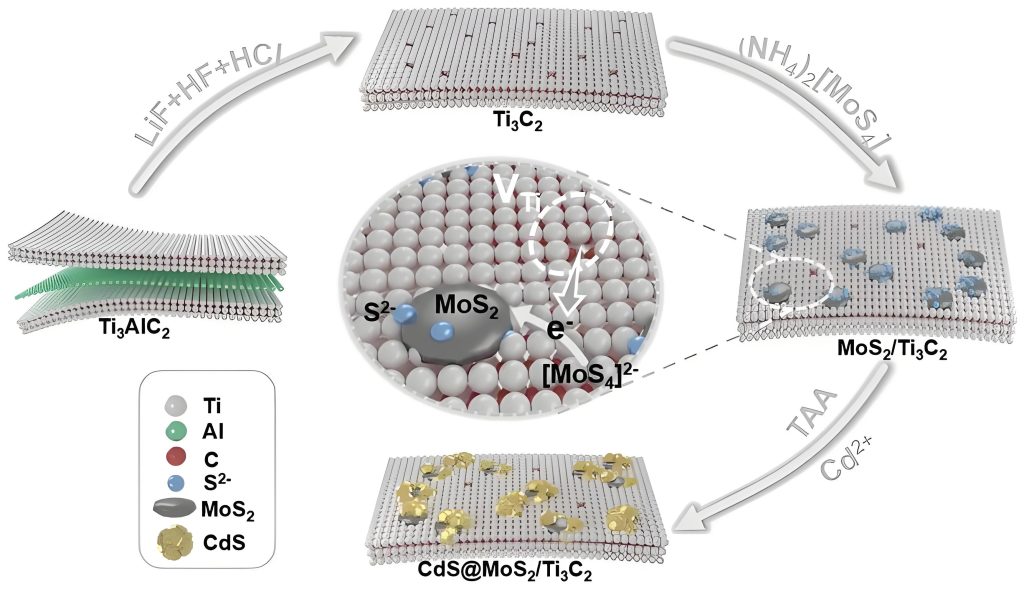
One of the most dynamic research areas stemming from Ti₃AlC₂ is its role as a precursor for MXenes. Through a controlled chemical process (like etching in a dilute acid solution), the aluminum layers are selectively removed. This causes the material to delaminate into atomically thin, two-dimensional sheets called Ti₃C₂Tₓ MXene. These MXene sheets are conductive, hydrophilic (they like water), and have a colossal surface area. In energy storage, they are being intensely studied for use in:
Supercapacitors: Devices that charge and discharge in seconds, useful for regenerative braking in vehicles or providing bursts of power.
Lithium-ion and Beyond Lithium Batteries: MXenes like Ti₃C₂Tₓ show a “pseudocapacitive” energy storage mechanism. This allows them to accept and release charge incredibly quickly (hence the excellent 100C rate performance) while also being very stable over thousands of cycles. This research could pave the way for electric vehicle batteries that charge in 5-10 minutes and smartphones that gain a day’s power in seconds.
4. Other Promising Applications
The potential uses extend further. Its good electrical conductivity and unique machinability make it suitable for advanced electrical contacts, wear-resistant coatings, and heating elements. Its biocompatibility is also under investigation for possible use in medical implants that are strong, corrosion-resistant, and compatible with the human body.
The Frontier of Knowledge: Current Research and Material Optimization
The development of Ti₃AlC₂ is an active and ongoing journey. Scientists are not just using it as-is; they are learning how to tweak and improve it for specific tasks. A major research focus is elemental doping—adding small amounts of other elements to the crystal structure to enhance certain properties.
A compelling example comes from recent work by the Green Metallurgy team at the University of Science and Technology Beijing. They wanted to improve the material’s already good oxidation resistance for ultra-high-temperature applications. They systematically studied what happens when you dope Ti₃AlC₂ with Tin (Sn). Their sophisticated approach, combining computer simulations with real-world experiments, yielded a critical insight: doping is a balancing act. They found that adding too much Sn (more than 10 mol%) was actually harmful. At high concentrations, the tin oxide (SnO₂) formed during oxidation interferes with the natural formation of a smooth, continuous protective layer of aluminum oxide (Al₂O₃) on the surface. This flawed layer then allows more oxygen to attack the material, reducing its overall antioxidant properties.
This kind of research is invaluable. It moves us from trial-and-error to “materials by design.” It provides a precise recipe book for creating optimized versions of MAX phases. Engineers can now design materials with just the right amount of doping to achieve the perfect balance of properties, whether for a jet engine part that needs maximum oxidation resistance or a nuclear coating that requires optimal radiation stability.
The Path Forward: Challenges and Future Prospects
Of course, the road from a promising lab material to a widely adopted industrial solution has hurdles. The primary challenges are scalable and cost-effective manufacturing. Producing high-purity, dense Ti₃AlC₂ in large volumes is more complex and expensive than producing conventional metals. Furthermore, integrating it into existing manufacturing supply chains and component designs requires dedicated engineering effort and qualification testing.
Despite these challenges, the outlook is overwhelmingly positive. As fundamental research provides a deeper understanding and processing technologies mature, production costs are anticipated to fall steadily. This downward cost trend will unlock commercialization in more and more sectors. We can envision a future where Ti₃AlC₂ and its MXene derivatives transition from specialized applications in aerospace and nuclear sectors to broader markets. They could become key enablers in our daily lives—from ensuring a more stable and safe energy grid to powering electric transportation with batteries that eliminate “range anxiety,” and even enabling new forms of flexible electronics.
In summary, Ti₃AlC₂ is a flagship material of modern science. It exemplifies how breaking down traditional boundaries between material classes (metals vs. ceramics) can lead to extraordinary breakthroughs. By offering a versatile toolkit of properties—strength, toughness, self-healing, stability, and transformability into 2D forms—it provides elegant solutions to some of society’s most demanding technological problems in energy, transportation, and safety. As exploration and innovation continue, Ti₃AlC₂ is poised to move from the laboratory’s “starry sky” into the foundation of our future technological landscape, shining brightly as a material that truly makes a difference.
Supplier
RBOSCHCO is a trusted global Ti₃AlC₂ supplier & manufacturer with over 12 years experience in providing super high-quality chemicals and Nanomaterials. The company export to many countries, such as USA, Canada, Europe, UAE, South Africa,Tanzania,Kenya,Egypt,Nigeria,Cameroon,Uganda,Turkey,Mexico,Azerbaijan,Belgium,Cyprus,Czech Republic, Brazil, Chile, Argentina, Dubai, Japan, Korea, Vietnam, Thailand, Malaysia, Indonesia, Australia, Germany, France, Italy, Portugal etc. As a leading nanotechnology development manufacturer, RBOSCHCO dominates the market. Our professional work team provides perfect solutions to help improve the efficiency of various industries, create value, and easily cope with various challenges. If you are looking for Ti₃AlC₂, please send an email to: sales1@rboschco.com