Professional and high-quality metal alloys, ceramic products and concrete additives | RBOSCHCO

Recrystallized Silicon Carbide Ceramic (RSIC) is a high-performance advanced ceramic material that has revolutionized industrial manufacturing with its exceptional thermal, mechanical, and chemical properties. As a professional foreign trade company focusing on advanced ceramic products, we have been committed to providing high-quality Recrystallized Silicon Carbide Ceramic products to global customers, helping industries solve core challenges in extreme working conditions. With years of experience in foreign trade and deep cooperation with top RSIC manufacturers, we have built a complete supply chain, covering product R&D, production, quality inspection, and international logistics, ensuring that our products meet the strict standards of European, American, Asian, and other global markets. In this blog, we will comprehensively introduce the basic knowledge, core characteristics, manufacturing process, typical applications, and our company’s product advantages of Recrystallized Silicon Carbide Ceramic, helping you better understand this high-value material and find the most suitable solution for your business needs.
What is Recrystallized Silicon Carbide Ceramic (RSIC)?
1.1 Definition and Core Characteristics
Recrystallized Silicon Carbide Ceramic, referred to as RSIC, is a type of pure silicon carbide ceramic material prepared by a high-temperature recrystallization sintering process without adding any sintering aids. Different from other silicon carbide ceramic varieties (such as reaction-sintered silicon carbide and hot-pressed silicon carbide), RSIC achieves the bonding between silicon carbide grains through the evaporation-condensation mechanism during the high-temperature sintering process (usually above 2000°C), forming a dense and pure crystal structure. This unique preparation method endows RSIC with a series of irreplaceable core characteristics, making it the preferred material for extreme working conditions in various industries.
The core feature of Recrystallized Silicon Carbide Ceramic is its ultra-high purity—usually, the silicon carbide content is more than 99%, and there are almost no impurity phases, which ensures its excellent stability in high-temperature, corrosive, and other harsh environments. In addition, RSIC has excellent high-temperature resistance, mechanical strength, wear resistance, corrosion resistance, and thermal shock resistance, which can maintain stable performance in environments that ordinary metals and other ceramic materials cannot withstand. It is precisely because of these advantages that RSIC has been widely used in metallurgy, chemical industry, new energy, glass, semiconductor, and other high-end industrial fields, becoming an important support for industrial upgrading and technological progress. As a professional外贸 supplier, we strictly control the purity and performance of each batch of RSIC products, ensuring that they can adapt to the diverse and harsh working conditions of global customers.
1.2 Difference Between RSIC and Other Silicon Carbide Ceramics
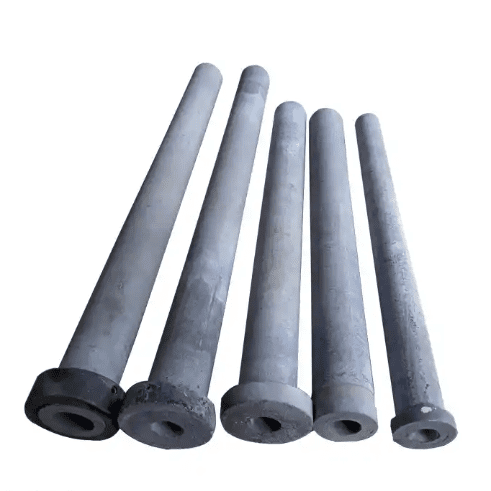
It can be seen from the above table that Recrystallized Silicon Carbide Ceramic has obvious advantages in high-temperature resistance, purity, corrosion resistance, and thermal shock resistance, and its cost is more reasonable than hot-pressed silicon carbide, which is a high-performance and cost-effective advanced ceramic material. For industries that need to work in extremely high-temperature, corrosive, and high-wear environments, RSIC is undoubtedly the ideal choice. Our company focuses on providing high-quality RSIC products, and we can also provide customized solutions according to the specific performance and application needs of customers, helping customers reduce costs while improving production efficiency.
Core Properties of Recrystallized Silicon Carbide Ceramic
The wide application of Recrystallized Silicon Carbide Ceramic is inseparable from its excellent comprehensive properties. These properties are determined by its unique crystal structure and preparation process, and each property plays a key role in different industrial scenarios. As a professional supplier, we have a deep understanding of the performance requirements of RSIC in various industries around the world, and we strictly control the product quality to ensure that each batch of RSIC products can exert their excellent properties in practical applications. Next, we will detailedly introduce the core properties of RSIC and their practical significance in industrial applications.
2.1 Exceptional High-Temperature Stability
High-temperature stability is one of the most prominent advantages of Recrystallized Silicon Carbide Ceramic. Due to its pure silicon carbide crystal structure and strong covalent bond connection between grains, RSIC can maintain stable physical and chemical properties in extremely high-temperature environments. Unlike ordinary metals that soften, deform, or oxidize rapidly at high temperatures, RSIC can be used for a long time at 1600°C, and its short-term peak temperature resistance can reach 1800°C, which is far higher than other ceramic materials and metal materials. This makes RSIC an irreplaceable material in high-temperature industrial fields such as metallurgy and new energy.
In addition, RSIC has excellent high-temperature strength retention. At 1400°C, its bending strength can still maintain more than 60% of the room temperature strength, while high-chromium cast iron, a common high-temperature metal material, has a strength retention rate of only 30% at 800°C. This characteristic ensures that RSIC can still bear a certain mechanical load in high-temperature environments without deformation or fracture, which is crucial for high-temperature industrial equipment such as industrial furnaces and molten metal processing equipment. Our RSIC products have passed strict high-temperature performance testing, and the high-temperature stability meets the standards of European and American markets, which can fully meet the needs of global customers in extreme high-temperature working conditions.
2.2 Excellent Mechanical Strength and Wear Resistance
Recrystallized Silicon Carbide Ceramic has excellent mechanical strength and wear resistance, which is due to its dense crystal structure and high hardness. At room temperature, the bending strength of RSIC can reach 400-600 MPa, and the Vickers hardness is 2200-3500 kgf/mm², which is second only to diamond and boron carbide. Its wear resistance is 20 times that of high-chromium cast iron and 5-10 times that of alumina ceramics, which can effectively resist the wear caused by friction, impact, and erosion in industrial production. This excellent wear resistance can greatly extend the service life of equipment and reduce the frequency of maintenance and replacement.
In practical applications, RSIC products (such as wear-resistant linings, nozzles, and guide rollers) can maintain a long service life in harsh wear environments, reducing the frequency of equipment maintenance and replacement, and further reducing production costs for enterprises. For example, in the steel continuous casting process, the RSIC guide roller can withstand the wear of high-temperature steel billets and the erosion of steel slag, and its service life is 3-5 times that of traditional metal guide rollers. Our company’s RSIC wear-resistant products are widely used in metallurgical, mining, and other industries around the world, and have won unanimous praise from customers for their excellent wear resistance and long service life.
2.3 Superior Corrosion Resistance and Chemical Inertness
Recrystallized Silicon Carbide Ceramic has extremely high chemical inertness and excellent corrosion resistance, which can resist the erosion of most acids, alkalis, salts, and molten metals. The core reason is that RSIC has a pure silicon carbide structure, and there are no impurity phases that are easy to react with corrosive media. In high-temperature oxidation environments, RSIC will form a dense SiO₂ passivation layer on the surface, which can effectively isolate the internal material from the oxidation medium and slow down the oxidation rate, ensuring the long-term stability of the material in oxidation environments. This makes RSIC suitable for use in harsh corrosive environments such as the chemical and pharmaceutical industries.
Specifically, in acidic media (such as sulfuric acid, hydrochloric acid), the corrosion rate of RSIC is lower than 0.01 g/m²·h; in alkaline media containing Na₂O, its corrosion resistance is 5-10 times that of alumina ceramics; in molten salt environments (such as NaCl, MgSO₄), the corrosion rate of RSIC is 1000-10000 times lower than that of stainless steel, and there is no intergranular corrosion risk. This excellent corrosion resistance makes RSIC widely used in chemical, metallurgical, and other industries that involve corrosive media. We can provide RSIC products with different corrosion resistance levels according to the specific corrosive environment of customers, ensuring that the products can work stably for a long time.

2.4 Excellent Thermal Shock Resistance and Thermal Conductivity
Thermal shock resistance refers to the ability of a material to resist damage when subjected to sudden changes in temperature, which is an important performance index for materials used in high-temperature alternating environments. Recrystallized Silicon Carbide Ceramic has excellent thermal shock resistance, which is due to its low thermal expansion coefficient and high thermal conductivity. The thermal expansion coefficient of RSIC is 4.0-4.5×10⁻⁶/K, which is only 1/2 of alumina and 1/4 of 316L stainless steel, so the thermal stress generated by temperature changes is small. This can effectively avoid cracking or damage to the material caused by sudden temperature changes.
At the same time, the thermal conductivity of RSIC is as high as 35-200 W/m·K, which is about 6 times that of stainless steel and 3-5 times that of alumina ceramics. High thermal conductivity enables RSIC to quickly transfer heat, making the surface temperature distribution uniform, reducing the risk of local overheating, and further improving its thermal shock resistance. In practical applications, RSIC can withstand an instantaneous temperature gradient of 250-300°C without cracking, which is crucial for equipment such as roller kilns and high-temperature annealing furnaces that need to be heated and cooled rapidly. Our RSIC products have been tested in various thermal shock environments, and their performance is stable and reliable, which can meet the needs of different industrial scenarios.
2.5 Low-Density and Lightweight Advantage
Compared with traditional metal materials and other heavy ceramic materials, Recrystallized Silicon Carbide Ceramic has the advantage of low density and lightweight. The density of RSIC is about 3.2 g/cm³, which is only 1/3 of metal materials (such as stainless steel with a density of about 7.9 g/cm³) and slightly lower than other silicon carbide ceramics. This lightweight advantage can effectively reduce the weight of equipment, reduce the load of the equipment’s supporting structure, and further save energy consumption during equipment operation. For industries that pursue energy conservation and emission reduction, RSIC is an ideal material choice.
For example, in the field of new energy (such as solar thermal power generation), RSIC is used to make heat absorber tubes. Its lightweight characteristics can reduce the load of the solar thermal power generation system, improve the stability of the system, and at the same time reduce the energy consumption required for system operation. In addition, in the aerospace field (non-military), RSIC’s lightweight and high-temperature resistance also make it have broad application prospects in high-temperature components of aircraft engines. Our company can provide lightweight RSIC products according to the needs of customers, helping customers achieve energy conservation and emission reduction goals while ensuring product performance.
| Performance/Feature | Recrystallized Silicon Carbide Ceramic (RSIC) | Reaction-Sintered Silicon Carbide (RBSC) | Hot-Pressed Silicon Carbide (HPSC) |
| Preparation Process | High-temperature recrystallization sintering (above 2000°C), no sintering aids, grain bonding through evaporation-condensation mechanism | Reaction sintering at 1450-1600°C, adding silicon as a binder, forming new silicon carbide through reaction to fill pores | Hot pressing sintering at 1800-2000°C under high pressure, adding a small amount of sintering aids |
| Silicon Carbide Purity | ≥99%, high purity, almost no impurities | 85-90%, containing residual silicon and other impurities | 95-98%, higher purity than RBSC |
| High-Temperature Resistance | Long-term use at 1600°C, short-term peak resistance up to 1800°C | Long-term use at 1300-1400°C, limited high-temperature stability | Long-term use at 1500-1600°C, good high-temperature performance |
| Mechanical Strength (Room Temperature) | Bending strength: 400-600 MPa, hardness: 2200-3500 kgf/mm² | Bending strength: 220-260 MPa, hardness: 1800-2200 kgf/mm² | High-temperature recrystallization sintering (above 2000°C), no sintering aids, grain bonding through the evaporation-condensation mechanism |
| Corrosion Resistance | Excellent, resistant to most acids, alkalis, and molten salts, corrosion rate lower than 0.01 g/m²·h in acidic media | Good, but residual silicon is easy to corrode in strong alkali environments | Excellent, similar to RSIC, but affected by sintering aids |
| Thermal Shock Resistance | Excellent, can withstand 250-300°C instantaneous temperature gradient without cracking | Good, but slightly inferior to RSIC | Good, but brittle and easy to crack under severe temperature changes |
| Cost | Medium to high, higher than RBSC, lower than HPSC | Lowest, suitable for large-scale and low-cost applications | Highest, limited to high-end precision applications |
| Typical Applications | Mechanical seals, wear-resistant parts, and general high-temperature components | Bending strength: 500-700 MPa, the highest hardness among the three | Precision electronic components, high-pressure corrosion-resistant parts |
Typical Applications of Recrystallized Silicon Carbide Ceramic
Due to its excellent comprehensive performance, Recrystallized Silicon Carbide Ceramic has been widely used in various high-end industrial fields, solving the core pain points of enterprises in extreme working conditions. With the continuous development of industrial technology, the application scope of RSIC is still expanding. As a professional外贸 supplier, we have rich experience in providing RSIC products for global customers in various industries, and we are familiar with the application needs of different industries. Next, we will introduce the typical applications of RSIC in major industries, hoping to help you find the application scenarios suitable for your business.
3.1 Metallurgical Industry: The Core Material for High-Temperature Equipment
The metallurgical industry is one of the main application fields of Recrystallized Silicon Carbide Ceramic. In the metallurgical process (such as steelmaking, non-ferrous metal smelting), there are a lot of high-temperature, high-wear, and high-corrosion environments, which have high requirements for the performance of equipment materials. RSIC, with its excellent high-temperature resistance, wear resistance, and corrosion resistance, has become the core material for high-temperature equipment in the metallurgical industry. Our RSIC products are widely used in metallurgical enterprises around the world and have achieved good application effects.
Typical applications in the metallurgical industry include:
- Continuous Casting Guide Rollers: In the steel continuous casting process, the guide roller needs to withstand the high temperature of 900-1400°C and the wear and erosion of steel billets and steel slag. The RSIC guide roller can maintain stable performance in this environment, with a service life of 3-5 times that of traditional metal guide rollers. After using RSIC guide rollers, the surface crack rate of continuous casting billets can be reduced from 1.2% to 0.3%, and the annual maintenance cost can be reduced by 60%.
- Furnace Linings and Radiation Tubes: High-temperature furnaces are important equipment in the metallurgical industry, and their linings and radiation tubes need to withstand extremely high temperatures and corrosive gases. RSIC furnace linings and radiation tubes have excellent high-temperature resistance and corrosion resistance, which can extend the service life of the furnace and reduce maintenance costs. Our RSIC furnace linings and radiation tubes are customized according to the size and performance requirements of the furnace, ensuring a perfect fit and stable performance.
3.2 Chemical Industry: Corrosion-Resistant Core Components
The chemical industry involves a variety of corrosive media such as acids, alkalis, and salts, which have strict requirements on the corrosion resistance of equipment components. Recrystallized Silicon Carbide Ceramic has excellent corrosion resistance and chemical inertness, which can resist the erosion of most corrosive media, making it an ideal material for corrosion-resistant components in the chemical industry. Our RSIC products have been widely used in chemical enterprises in Europe, America, and Asia, and have won the trust of customers.
Typical applications in the chemical industry include corrosion-resistant nozzles, reaction vessel linings, and pipeline components. For example, RSIC nozzles are used in chemical spraying systems, which can withstand the erosion of corrosive media and have a long service life, reducing the frequency of nozzle replacement. RSIC reaction vessel linings can prevent the corrosion of the reaction vessel by corrosive materials, ensuring the safety and stability of the reaction process. In addition, RSIC pipeline components are used in the transportation of corrosive media, which can avoid pipeline leakage and ensure the smooth progress of production.
3.3 New Energy Industry: Key Materials for Energy Conservation and Emission Reduction
With the rapid development of the new energy industry, the demand for high-performance materials is increasing. Recrystallized Silicon Carbide Ceramic, with its excellent high-temperature resistance, thermal conductivity, and lightweight advantage, has become a key material in the new energy industry, especially in solar thermal power generation, wind power, and other fields. Our company has carried out in-depth cooperation with new energy enterprises around the world, providing high-quality RSIC products to help the development of the new energy industry.
In solar thermal power generation, RSIC is used to make heat absorber tubes and heat exchange components. Its high thermal conductivity can improve the heat absorption efficiency of the system, and its high-temperature resistance can ensure stable operation in high-temperature environments. The lightweight advantage of RSIC can reduce the load of the solar thermal power generation system, improve the stability of the system, and reduce energy consumption. In wind power, RSIC is used to make wear-resistant components of wind turbine generators, which can withstand the wear of wind and sand and extend the service life of the generator.
3.4 Glass and Semiconductor Industry: High-Precision Auxiliary Materials
The glass and semiconductor industry has high requirements for the precision and high-temperature resistance of auxiliary materials. Recrystallized Silicon Carbide Ceramic has excellent high-temperature resistance, wear resistance, and dimensional stability, which can meet the requirements of the glass and semiconductor industry for auxiliary materials. Our RSIC products have high precision and stable performance, which can meet the high standards of the glass and semiconductor industry.
In the glass industry, RSIC is used to make guide rollers, nozzles, and other components in glass production lines. Its high-temperature resistance can withstand the high temperature of molten glass, and its wear resistance can ensure a long service life. RSIC guide rollers can ensure the smooth transportation of glass sheets, reducing the defect rate of glass products. In the semiconductor industry, RSIC is used to make sensor protection sleeves and high-temperature furnace components, which can withstand the high temperature and corrosive environment in the semiconductor manufacturing process, ensuring the stability and reliability of the manufacturing process.
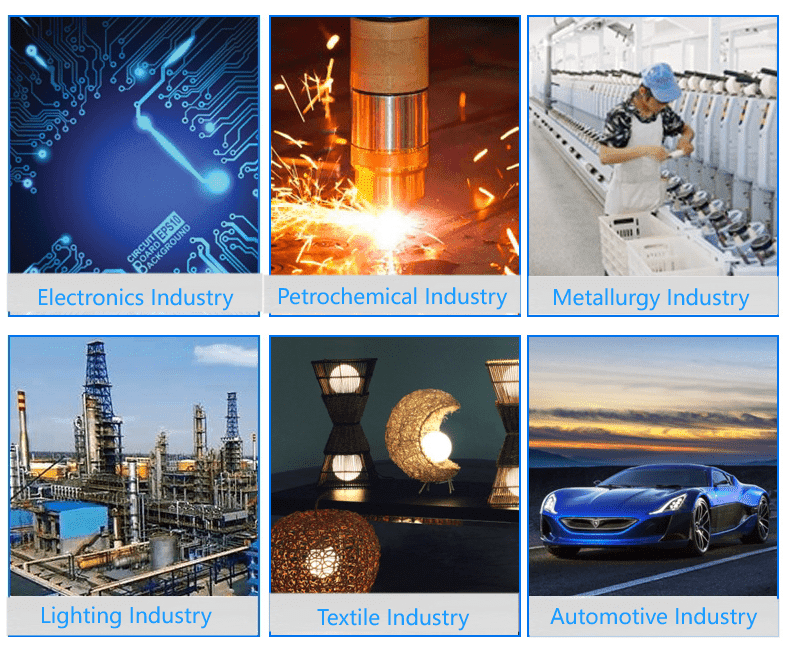
Recrystallized Silicon Carbide Ceramic is a high-performance advanced ceramic material with excellent high-temperature resistance, mechanical strength, wear resistance, corrosion resistance, and other characteristics, which has broad application prospects in metallurgy, chemical industry, new energy, glass, semiconductor, and other industries. As a professional supplier of RSIC products, we are committed to providing global customers with high-quality products and customized solutions, helping customers solve core challenges in extreme working conditions and achieve cost reduction and efficiency increase. If you have any needs for Recrystallized Silicon Carbide Ceramic products, please contact us, and we will provide you with professional services and the most suitable solutions.
Supplier
RBOSCHCO is a trusted global RSIC supplier & manufacturer with over 12 years of experience in providing super high-quality chemicals and Nanomaterials. The company export to many countries, such as USA, Canada, Europe, UAE, South Africa, Tanzania, Kenya, Egypt, Nigeria, Cameroon, Ugand, Turkey, Mexico, Azerbaijan Be lgium, Cyprus, Czech Republic, Brazil, Chile, Argentina, Dubai, Japan, Korea, Vietnam, Thailand, Malaysia, Indonesia, Australia, Germany, France, Italy, Portugal etc. As a leading nanotechnology development manufacturer, RBOSCHCO dominates the market. Our professional work team provides perfect solutions to help improve the efficiency of various industries, create value, and easily cope with various challenges. If you are looking for RSIC, please feel free to contact us.