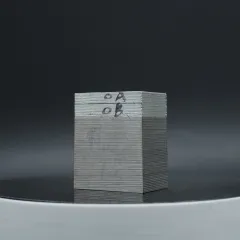
Professional and high-quality metal alloys, ceramic products and concrete additives | RBOSCHCO


PRODUCT PARAMETERS
Description
Product Overview
Aluminum-based titanium diboride (Al-TiB₂) composite material is a new type of metal matrix composite made with an aluminum alloy as the matrix and titanium diboride (TiB₂) ceramic particles as the reinforcement phase, produced through in-situ synthesis or powder metallurgy processes. Titanium diboride features a high melting point, high hardness, excellent electrical and thermal conductivity, and good wettability with molten aluminum, making it an ideal reinforcement for aluminum-based composites.
This material combines the lightweight characteristics of aluminum alloys with the high strength, wear resistance, and conductivity of TiB₂. It is widely used in aerospace, defense equipment, electronic packaging, and the aluminum electrolysis industry.
Key Features
- High Specific Strength and Stiffness: The addition of TiB₂ reinforcement significantly improves the material’s strength and elastic modulus while maintaining a low density (approximately 2.8–3.2 g/cm³), achieving excellent structural efficiency.
- Excellent Wear Resistance: With a hardness of up to 34 GPa (about 3400 HV), TiB₂ provides the composite with outstanding anti-wear performance, suitable for high-friction conditions.
- Good Electrical and Thermal Conductivity: TiB₂ itself exhibits metallic conductivity (resistivity approximately 14.4 μΩ·cm), allowing the composite to maintain good overall electrical and thermal conductivity.
- High-Temperature Stability: TiB₂ can resist oxidation in air at temperatures up to 1000–1100°C, enabling the composite to operate reliably at elevated temperatures for extended periods.
- Excellent Wettability with Molten Aluminum: The superior wettability between TiB₂ and molten aluminum gives it unique advantages in aluminum electrolysis cathode materials and aluminum-based composites.
- Uniform Distribution of Reinforcement Phase: In-situ synthesis allows TiB₂ particle sizes to be controlled between 0.01–5.0 micrometers, ensuring uniform distribution and strong interfacial bonding.
Main Technical Parameters
| Parameter Category | Specification | |
| Material Composition | Al + TiB₂ (Volume fraction 10% – 40%) | |
| Physical Properties | Density | 2.8 – 3.2 g/cm³ (Pure TiB₂: 4.52 g/cm³) |
| Melting Point of TiB₂ | 2980 – 3230 °C | |
| Mechanical Properties | Tensile Strength | 300 – 550 MPa (depending on reinforcement content) |
| Elastic Modulus | 90 – 120 GPa | |
| Microhardness | 150 – 250 HV (matrix); TiB₂ particles: 34 GPa | |
| Elongation | 2% – 8% | |
| Electrical Properties | Resistivity | 5 – 15 μΩ·cm (depending on TiB₂ content) |
| Thermal Properties | Coefficient of Thermal Expansion | (16 – 20) × 10⁻⁶ /K (adjustable) |
| Thermal Conductivity | 120 – 200 W/(m·K) | |
| Oxidation Resistance | ≥500 °C (composite); TiB₂ up to 1000 °C | |
Application Areas
- Aluminum Electrolysis Industry: Used as cathode coating material in aluminum electrolytic cells. The excellent wettability of TiB₂ with molten aluminum reduces energy consumption and extends cell life.
- Defense and Armor Protection: Serves as a reinforcement component in armor materials, often combined with boron carbide or silicon carbide to produce composite armor with high impact resistance.
- Aerospace and High-End Equipment: Utilized in manufacturing structural components requiring high specific strength and wear resistance, such as engine parts, high-temperature crucibles, and sealing elements.
- Electronic Packaging and Conductive Components: Its good conductivity makes it suitable for electrical contact parts, high-temperature electrodes, and conductive/thermally dissipative packaging housings.
- Tools and Wear-Resistant Parts: Used to produce wire drawing dies, extrusion dies, sandblasting nozzles, cutting tools, and other wear-resistant tooling.

Specifications and Customization Services
We offer various product forms and specifications based on customer requirements:
| Product Form | Typical Specifications (Customizable) | Process Characteristics |
| Plates/Thick Sheets | Thickness: 2 – 50 mm; Width ≤600 mm; Length ≤3000 mm | Powder metallurgy + Hot rolling |
| Rods/Tubes | Diameter: 10 – 200 mm; Length ≤2000 mm | Extrusion molding |
| Custom Shapes | According to drawings | Near-net shaping + Precision machining |
| Castings | As per requirement | Stir casting + Pressure infiltration |
| TiB₂ Content | 10%, 20%, 30%, 40% (by volume) | Adjustable based on performance needs |
Usage Instructions and Precautions
- Machining: Can be machined using cemented carbide or PCD tools for turning, milling, drilling, etc. Due to the high hardness of TiB₂ particles, lower cutting speeds and appropriate feed rates are recommended to extend tool life.
- Joining Methods: Can be joined via friction stir welding, laser welding, brazing, or mechanical fastening (bolts, rivets). Special validation of welding processes is recommended.
- Heat Treatment: Appropriate heat treatments (e.g., T6 tempering) can be applied based on the aluminum alloy matrix to optimize mechanical properties.
- Storage Conditions: Store in a dry, clean indoor environment at 15°C – 30°C with relative humidity ≤60%. Avoid contact with corrosive substances.
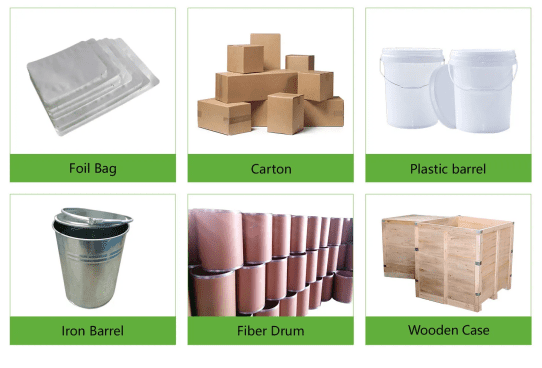
Packaging and Transportation
- Packaging: Products are wrapped in anti-rust paper and plastic film, with buffering materials between plates/rods. Outer packaging consists of reinforced wooden or iron crates for moisture and shock protection.
- Transportation: Suitable for road, rail, and sea freight. Avoid severe impact, compression, and exposure to rain during transit.
5 FAQs: Aluminum-Based Titanium Diboride (Al-TiB2)
1. What is Al-TiB₂?
It is a lightweight metal matrix composite combining an aluminum alloy with hard titanium diboride (TiB₂) ceramic particles for enhanced strength and wear resistance.
2. What are its main advantages?
High specific strength, excellent wear resistance, good electrical/thermal conductivity, and superior wettability with molten aluminum.
3. Where is it primarily used?
Key applications include aluminum electrolysis cathodes, aerospace structural parts, defense armor, electronic packaging, and wear-resistant tooling.
4. How is it manufactured?
Common methods include in-situ synthesis (reacting Ti and B within molten Al), powder metallurgy, and stir casting.
5. Can the material properties be customized?
Yes, the volume fraction of TiB₂ (typically 10–40%) and product forms (plates, rods, coatings) can be tailored to specific performance needs.
REQUEST A QUOTE
RELATED PRODUCTS
High-Quality Zirconium-Steel Clad Plate for Corrosion Resistance Zirconium-Steel Cladding Plates for Industrial Use
Aluminum-copper alloy forging
Metal Composite Materials Ti Titanium Clad Copper Rod Bars for Electrowinning Industry
Titanium Copper Plate Titanium Copper Clad Sheet
Zr/Steel refractory metal clad plate steel plate