Professional and high-quality metal alloys, ceramic products and concrete additives | RBOSCHCO



PRODUCT PARAMETERS
Description
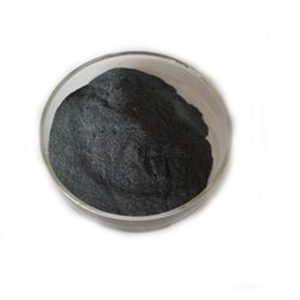
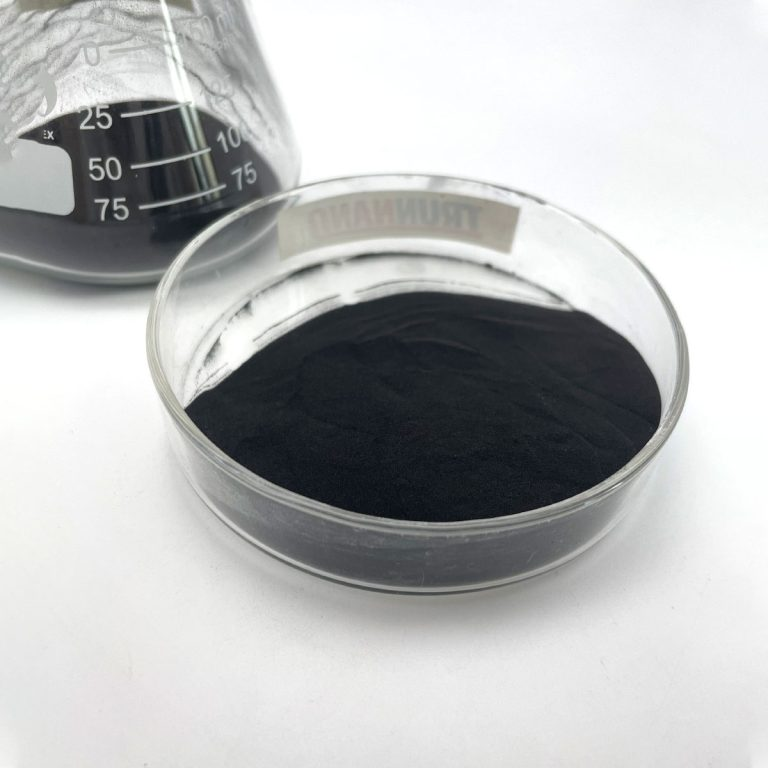
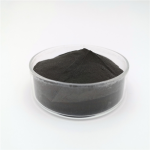
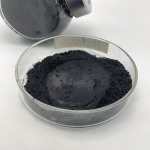
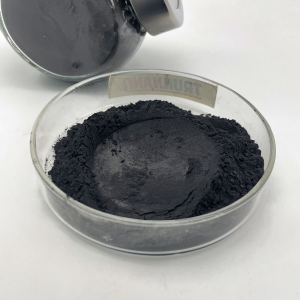
Overview of Resin-Based Hard Carbon
Our resin-based hard carbon is synthesized primarily from phenolic resin and epoxy resin precursors, delivering electrochemical performance comparable to biomass-derived hard carbon while offering superior batch-to-batch consistency. This material meets the stringent requirements for commercial sodium-ion battery applications and has been widely adopted by leading industry players. Among hard carbon precursors, phenolic resin stands out with its high carbon yield and excellent reversible capacity, demonstrating significant commercial potential.
Features of Resin-Based Hard Carbon
- Unmatched Consistency & Controllability
Synthetic resins are chemically uniform with minimal inter-batch variation, ensuring product consistency and structural repeatability far superior to biomass-based hard carbon—ideal for large-scale production where uniformity is critical. - Ultra-High Purity & High Capacity Output
Using synthetic resin precursors results in extremely low impurity content, enabling high specific capacity output. - Designable Initial Coulombic Efficiency
Through pore-forming agent addition and crosslinking agent modification strategies, the initial Coulombic efficiency of phenolic resin-based hard carbon can be precisely tailored to meet specific application requirements. - Excellent Mechanical Strength
The phenolic resin carbon skeleton, after high-temperature carbonization, exhibits high single-particle strength (250–400 MPa). As an anode material, it effectively resists volume expansion during charge/discharge cycles, maintaining electrode structural integrity. - Highly Tunable Structure
By adjusting the polymerization degree, crosslinking density of the resin precursor, and carbonization process parameters, the interlayer spacing, pore structure, and specific surface area can be precisely controlled for targeted sodium storage performance optimization.
Technical Parameters of Resin-Based Hard Carbon
| Parameter | Unit | Specification | Test Method / Instrument |
|---|---|---|---|
| Particle Size – D10 | µm | 1.8 ± 2 | Laser Diffraction Particle Size Analyzer |
| Particle Size – D50 | µm | 7.0 ± 2 | Laser Diffraction Particle Size Analyzer |
| Particle Size – D90 | µm | 13.0 ± 3 | Laser Diffraction Particle Size Analyzer |
| Particle Size – D100 | µm | ≤ 21.0 | Laser Diffraction Particle Size Analyzer |
| Moisture | % | ≤ 1.0 | Moisture Analyzer |
| pH Value | – | 7.0 – 11.0 | pH Meter |
| Ash Content | % | ≤ 0.3 | Muffle Furnace Calcination |
| Tap Density | g/cm³ | 0.75 ± 0.05 | Tap Density Tester |
| Compacted Density | g/cm³ | 1.0 ± 0.1 | Compaction Density Tester |
| Specific Surface Area (BET) | m²/g | ≤ 5 | BET Surface Area Analyzer (Static Method) |
| Initial Charge Capacity (0.1C/0.1C, 0–2.5 V) | mAh/g | 320 ± 10 | Neware Battery Test System |
| Initial Coulombic Efficiency | % | ≥ 90 | Neware Battery Test System |
Notes:
- NMP-based coin cell formulation: HC : SP : PVDF = 92 : 4 : 4 (by weight).
- Aqueous formulation recommended: HC : SP : CMC : SBR = 94 : 2 : 1.5 : 2.5 (by weight).
Applications of Resin-Based Hard Carbon
Sodium-Ion Batteries:
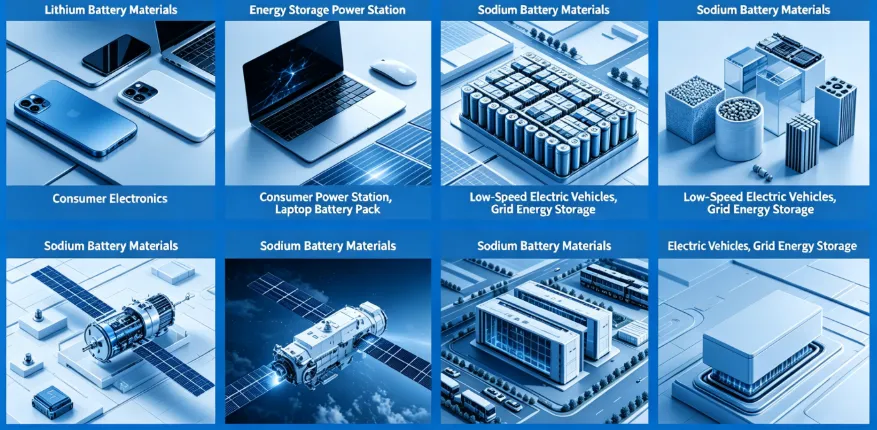
- Electric two-wheelers / low-speed electric vehicles
- Large-scale energy storage systems (grid frequency regulation, commercial & industrial storage)
- Low-temperature charging and high-rate discharge scenarios (performance已验证)
- Sodium battery applications requiring high consistency, high initial efficiency, and moderate cost tolerance
Lithium-Ion Batteries:
- High-rate power batteries (EV start-stop, model aircraft, power tools)
- High-energy-density consumer electronics (smartphones, digital devices)
- Energy storage systems demanding high capacity and long cycle life
- Fast-charging batteries capable of 30C high-current discharge
Silicon-Carbon Anode Carrier Application:
- Phenolic resin-based porous carbon frameworks serve as ideal carrier materials for CVD-processed silicon-carbon anodes. The controllable micro/mesopore structure, excellent anti-swelling properties, and superior pressure resistance enable uniform silane deposition, delivering high initial efficiency and extended cycle life.
Carbon Capacitor Applications:
- Suitable for high-power-density and high-energy-density capacitive energy storage devices.
Company Profile
Luoyang Tongrun Nano Technology Co., Ltd. (TRUNNANO) is a global supplier and manufacturer of high-performance battery materials. We specialize in lithium-ion, sodium-ion, and other advanced battery materials, serving 3C electronics, power batteries, and energy storage systems.
Our products include nano cobalt oxide, nano manganese oxide, silicon-carbon anode materials, hard carbon, NFPP, alumina, boron nitride, and more. All are produced under strict quality control, supported by our in-house lab and professional technical team.
If you are looking for reliable battery materials, feel free to contact us or send an inquiry.
Payment Methods
L/C, T/T, Western Union, Paypal, Credit Card, etc.
Shipment
By sea, by air, or by express upon payment receipt.
Package of Resin-Based Hard Carbon
Option 1 – Bulk Bag (Ton Bag)
- Net weight: 300 kg/bag
- Outer bag: 780 × 780 × 600 mm
- Inner liner: 830 mm (W) × 650 mm (H)
- Storage & handling: Keep dry; store on pallets; max stack height: 2 layers
Option 2 – Carton + Aluminum Laminated Film / PE Bag
- Net weight: 20 kg/carton (4 × 5 kg bags)
- Inner packaging: 5 kg/bag in aluminum-laminated film or PE bag
- Carton dimensions: 600 × 500 × 400 mm
- PE bag dimensions: 600 × 400 mm
- Storage & handling: Keep dry; store on pallets; max stack height: 3 layers
Transport & Storage
- Store in a dry, well-ventilated area free from contaminants.
- Handle with care during transport to avoid damage to inner sealed bags. Do not place heavy or sharp objects on cartons to prevent packaging damage.
5 FAQs of Resin-Based Hard Carbon
Q1: How does resin-based hard carbon compare to biomass-based hard carbon?
Resin-based hard carbon offers significantly better batch-to-batch consistency and purity due to its synthetic origin, while delivering comparable electrochemical performance. It is preferred for large-scale industrial production where uniformity is critical.
Q2: What is the typical single-particle strength of this material?
The phenolic resin carbon skeleton exhibits a single-particle compressive strength of 250–400 MPa, providing excellent resistance to volume expansion during cycling.
Q3: Can this product be used in lithium-ion batteries as well?
Yes, it is suitable for high-rate lithium-ion applications such as EV start-stop systems, power tools, and fast-charging batteries (up to 30C), as well as high-energy-density consumer electronics.
Q4: What is the silicon-carbon carrier application mentioned?
Our phenolic resin-based porous carbon can be used as a carrier scaffold for CVD silicon deposition, enabling uniform silicon infiltration with controlled porosity for high-performance silicon-carbon composite anodes.
Q5: How should the material be stored after opening?
After opening the vacuum packaging, any unused material must be immediately resealed under vacuum and stored in a dry environment (RH ≤ 30%). It is recommended to use the opened material within 48 hours.
REQUEST A QUOTE
RELATED PRODUCTS

Carbon-Coated Tin C@Sn Composite Anode – High-Capacity Sodium-Ion Battery Negative Electrode

Silicon Oxycarbide SiOC Anode Material High‑Capacity Long‑Cycle
Silicon-Based Anode Material Series TRGY-2 Battery Anode Material
Anthracite-Based Porous Carbon for Si/C and Sodium-Ion Batteries
Pre-Magnesium Silicon-Oxygen-Carbon Pre-Mg-SiOC High-Efficiency Anode Material