Professional and high-quality metal alloys, ceramic products and concrete additives | RBOSCHCO

When purchasing foaming agents, many customers ask the same question: Why are some foaming agents more expensive than others? Can the cheaper ones actually get the job done?
That’s a fair question.
Foaming agents on the market fall into two main categories: protein-based and synthetic. Protein-based ones cost more. Synthetic ones cost less. But there’s a reason for the price difference—and it’s not just about the price tag. It’s about foam stability, closed-cell ratio, and ultimately, the strength of the concrete you’re producing.
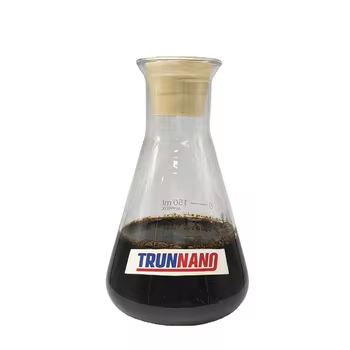
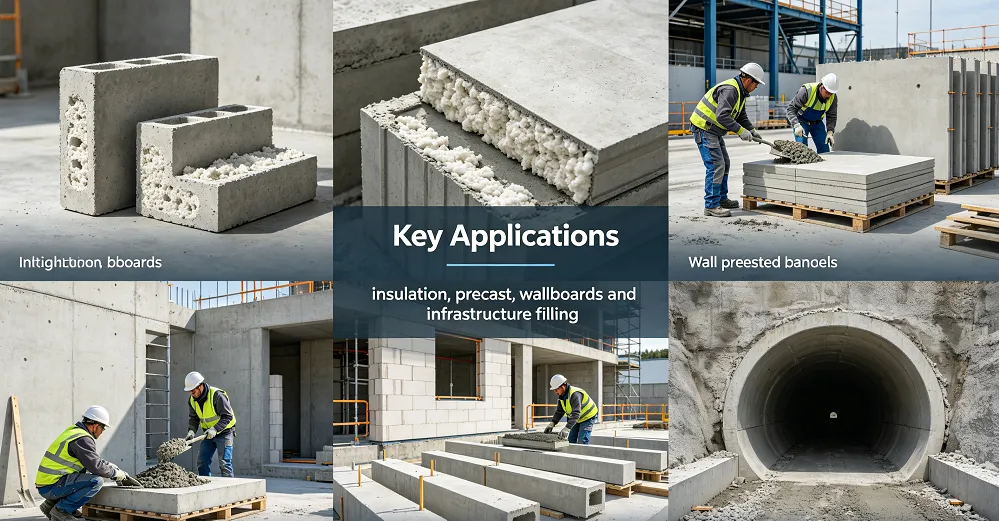
TR-B foaming agent is a protein-based foaming agent derived from natural proteins, offering significant advantages in foam stability and closed-cell structure. It is suitable for lightweight concrete, insulation blocks, wallboards, and various foamed concrete applications.
This article compares protein-based and synthetic foaming agents across three dimensions—performance, cost, and application scenarios—to help you make the right choice for your project.
Why Protein-Based Foaming Agents Deliver Superior Stability
The advantage of protein-based foaming agents comes down to one thing: the bubble membrane.
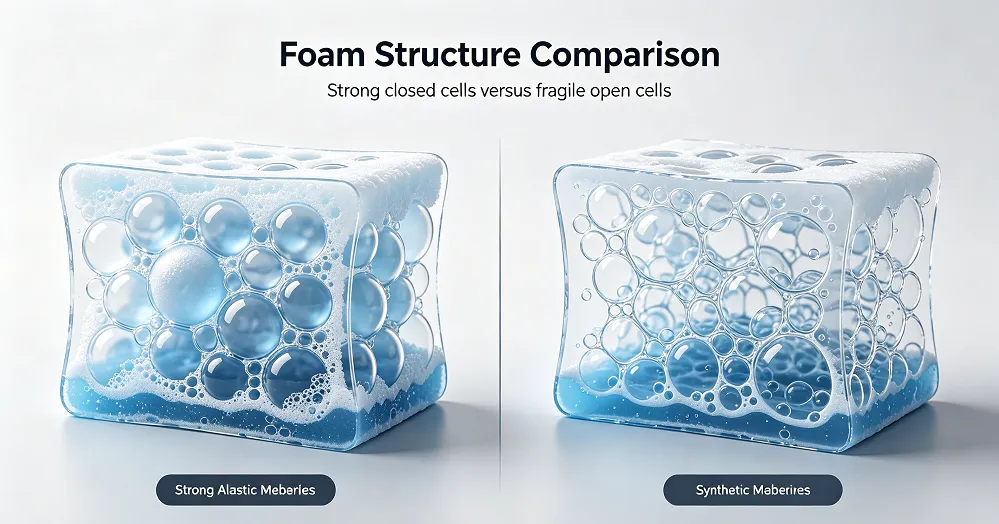
TR-B foaming agent is made from hydrolyzed animal proteins. The protein molecules form a strong, elastic membrane around each bubble—like a fine mesh that locks the air inside. When squeezed, the membrane deforms but doesn’t break. When the pressure is released, it springs back to its original shape.
This “resilience” delivers real, measurable benefits:
Exceptional foam stability. Protein-based foams resist collapse during mixing, pumping, and pouring. The bubble membranes stay intact even under pressure, ensuring consistent foam quality throughout the production process.
High closed-cell ratio. Most bubbles are closed spheres, not interconnected pores. Closed cells trap air inside each bubble, which is essential for thermal insulation and water resistance. Open-cell structures, by contrast, allow air and moisture to circulate freely—defeating the purpose of lightweight insulation concrete.
Extended stability. The foam structure can remain stable for up to 6 hours at room temperature, allowing for long-distance transport and complex construction schedules without compromising performance.
Excellent cement compatibility. Protein-based formulations work well with all types of cement, lime, stone powder, fly ash, and sand, making them versatile across different production setups.
Environmental safety. Derived from natural proteins, TR-B foaming agent is non-toxic, biodegradable, and free from formaldehyde, ammonia, heavy metals, and halogens.
Adjustable foam density. Foam density can be precisely controlled within a specific range to meet different application requirements.
Synthetic foaming agents, on the other hand, have much more fragile bubble membranes. They can create foam, but the membranes are thin and prone to collapse under pressure. During mixing, they hold up reasonably well. But once pumping begins, the pressure builds, and the bubbles start to break. When bubbles break, the air escapes, and the pores in the concrete become interconnected—compromising both strength and insulation.
Synthetic Foaming Agents: The Cost of “Cheaper”
Synthetic foaming agents certainly have their advantages: they foam quickly, produce large volumes of foam, and cost less. For some undemanding applications, they work just fine.
But there’s a gap between “good enough” and “excellent”—and it shows up in three critical areas:
Poor foam stability. The bubble membranes in synthetic foaming agents are fragile. During pumping and mixing, they break easily. Broken foam means interconnected pores. Interconnected pores mean lower strength and reduced thermal insulation. For building components where thermal performance matters, this is a serious limitation.
Lower closed-cell ratio. Synthetic foams tend to produce more open-cell structures where bubbles are interconnected. The problem with open cells is that air can circulate through them—which means heat can too. Thermal insulation performance drops significantly compared to closed-cell foams.
Significant pumping loss. During long-distance pumping, synthetic foams lose volume noticeably. By the time the foam reaches the job site, half of it may have collapsed. Controlling density becomes a guessing game, and consistency suffers.
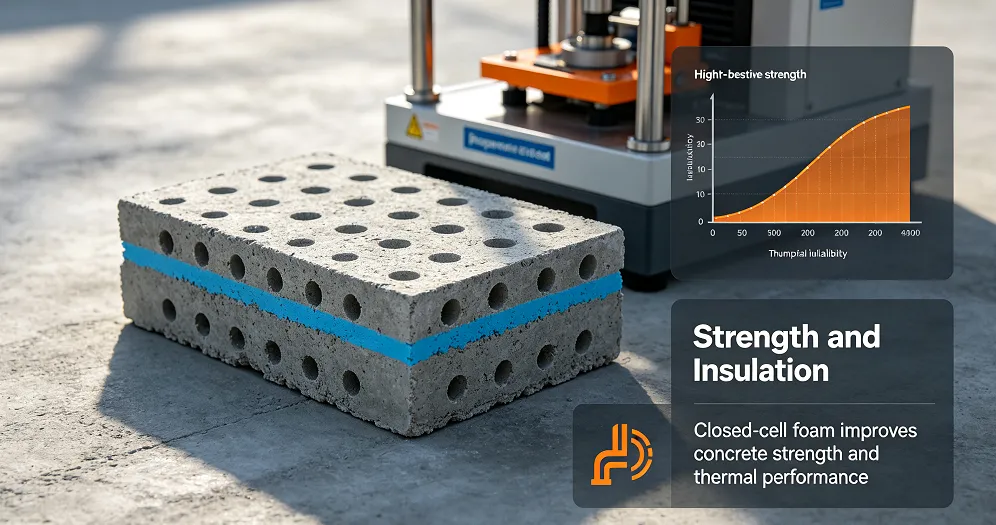
Reduced concrete strength. The open-cell structure and foam collapse lead to lower compressive strength compared to protein-based alternatives. For structural or semi-structural applications, this can be a deal-breaker.
Potential environmental concerns. Some synthetic formulations contain surfactants that may not be biodegradable. For projects pursuing green building certifications like LEED or BREEAM, this can be a disqualifying factor.
Protein-Based vs. Synthetic Foaming Agents: A Side-by-Side Comparison
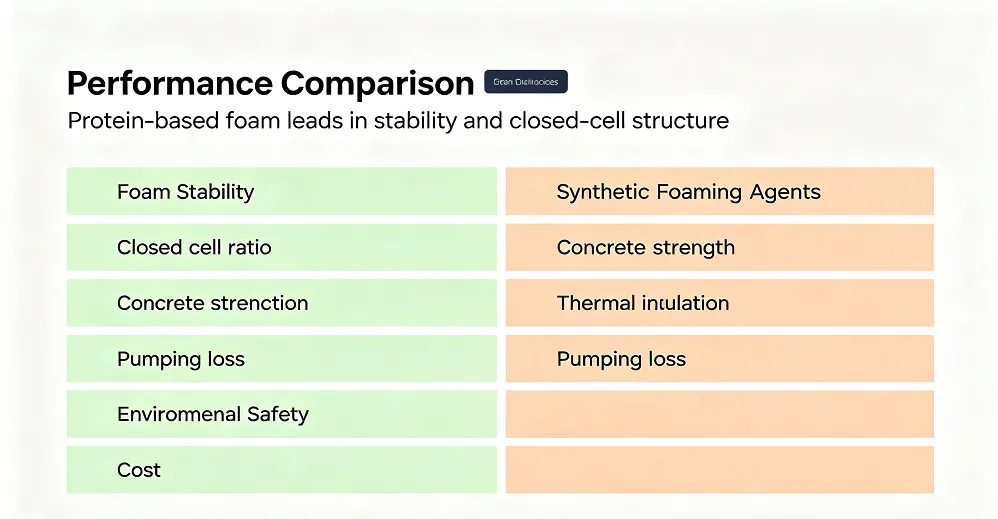
| Aspect | Protein-Based Foaming Agent (TR-B) | Synthetic Foaming Agent |
|---|---|---|
| Foam Stability | Excellent — strong, elastic bubble membranes | Moderate — fragile bubble walls |
| Closed-Cell Ratio | High — mostly closed spherical bubbles | Lower — more open-cell structures |
| Concrete Strength | Higher — uniform pore structure | Lower — connected pores weaken matrix |
| Thermal Insulation | Excellent — closed-cell structure traps air | Moderate — open cells allow heat transfer |
| Pumping Loss | Minimal — foam remains stable during transport | Significant — foam collapses under pressure |
| Environmental Safety | Natural proteins, biodegradable | Synthetic surfactants, may not biodegrade |
| Material Cost | Moderate | Lower |
| Foaming Ratio | High | Higher |
| Compatibility | All cement types | Varies by formulation |
| Foam Stability Duration | ~6 hours at room temperature | Significantly shorter |
The comparison is clear: while synthetic foaming agents offer cost advantages in non-critical applications, protein-based foaming agents like TR-B deliver superior performance across the metrics that matter most for quality lightweight concrete—foam stability, closed-cell ratio, and final concrete strength.
When to Choose Protein-Based Foaming Agents
The choice between protein-based and synthetic foaming agents should be guided by the specific requirements of each project. Here are clear guidelines to help you decide:
Choose protein-based foaming agents when:
Compressive strength is critical. Projects requiring structural or semi-structural lightweight concrete—such as load-bearing walls, precast panels, and floor systems—benefit from the higher strength provided by closed-cell foam structures. The uniform pore distribution of protein-based foams ensures consistent strength throughout the finished product.
Thermal insulation is a priority. Building insulation applications—roof insulation, exterior wall systems, underfloor heating—demand the superior thermal performance of closed-cell structures. The lower thermal conductivity of closed-cell foam concrete can significantly reduce building energy consumption over its lifetime.
Long-distance pumping is required. Protein-based foaming agents maintain foam integrity during transport and pumping, minimizing volume loss. For projects where concrete must be pumped to high floors or over long distances, this stability is essential.
Precast production is involved. Consistent quality and stable closed-cell structures are essential for reliable precast manufacturing. Protein-based foams deliver the batch-to-batch consistency that precast operations require.
Environmental and safety standards are strict. Residential, indoor, and green building applications benefit from the non-toxic, biodegradable nature of protein-based formulations. Projects pursuing LEED or BREEAM certification can gain points by using environmentally responsible materials.
Long-term durability matters. Protein-based foams produce concrete with better freeze-thaw resistance and lower water absorption, extending the service life of building components.
Choose synthetic foaming agents only when:
Cost is the primary concern. Non-critical filling and backfill applications may accept the trade-offs of synthetic formulations—provided that foam stability and strength are not essential.
Strength and insulation are not important. Temporary structures or non-load-bearing applications with minimal performance requirements may be suitable for synthetic foams.
The project is small-scale. For small jobs where pumping distance is short and quality requirements are modest, synthetic foams may be adequate.
The Growing Lightweight Concrete Market
The lightweight concrete market is experiencing rapid growth, driven by several converging trends:
Prefabricated and modular construction. The shift toward off-site construction methods is increasing demand for consistent, high-performance lightweight concrete materials. Precast manufacturers need reliable foam stability and predictable performance—exactly what protein-based foaming agents deliver.
Green building standards. Stricter energy codes and green building certifications (LEED, BREEAM, etc.) are driving adoption of lightweight, insulated building materials. Building owners and developers are increasingly prioritizing thermal performance and energy efficiency.
Expanding foamed concrete applications. Beyond traditional blocks and wall panels, foamed concrete is finding new applications in infrastructure repair, void filling, bridge deck construction, tunnel backfilling, and even 3D concrete printing. Each new application places specific demands on foam quality and stability.
Energy efficiency regulations. As building energy codes become more stringent worldwide, the demand for high-performance insulation materials continues to rise. Foamed concrete with high closed-cell ratios offers one of the most cost-effective thermal insulation solutions available.
As the lightweight concrete market grows, the demand for high-quality foaming agents rises accordingly. Protein-based foaming agents like TR-B are well-positioned to meet this growing demand, offering the stability, performance, and consistency that manufacturers require. The market is moving away from “just foam” toward “stable, closed-cell, high-strength foam”—and protein-based products are leading that shift.
Supplier
RBOSCHCO is a trusted global chemical material supplier and manufacturer with over 12 years of expertise in providing super high-quality chemicals and nanomaterials. The company has a professional technical department and quality supervision department, a well-equipped laboratory with advanced testing equipment, and a dedicated after-sales customer service center. TRUNNANO supplies high-quality TR-B protein-based foaming agent for lightweight concrete, insulation blocks, wallboards, and other foamed concrete applications. The company serves clients across more than 50 countries and offers comprehensive technical support, from product selection to application guidance. If you are looking for a high-performance foaming agent for your lightweight concrete production, please feel free to contact us.
RELATED POSTS

Technical Guide: How To Choose The Particle Size Of Boron Carbide Podwer According To The Application?
How to Use concrete fibers to prevent concrete cracking
Silicon Carbide Materials, Semiconductor Devices, and Wafer Applications
NiFe₂O₄ Anode Material Market 2026: Raw Material Squeeze, Production Hurdles and Commercial Pathways
Metal vs. Ceramic Ball Bearings: A Performance and Cost Comparison
