Professional and high-quality metal alloys, ceramic products and concrete additives | RBOSCHCO

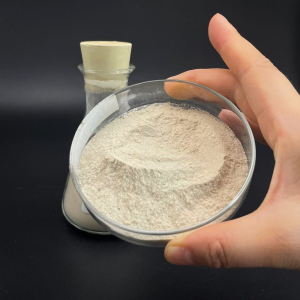
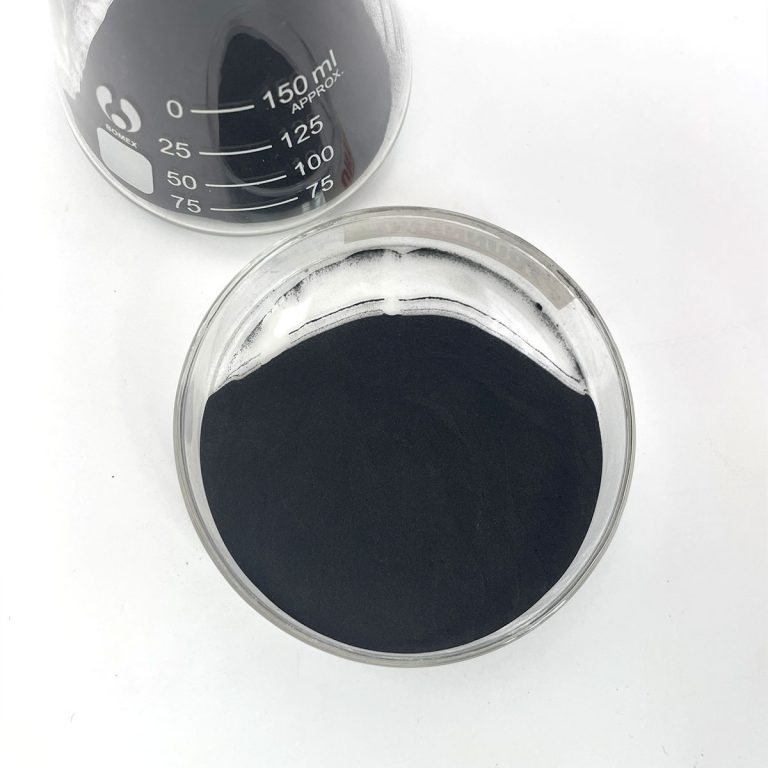
Nickel ferrite (NiFe₂O₄) nanoparticles have emerged as a key advanced material in energy storage technology, particularly as a high-performance lithium-ion battery anode material with significant advantages over conventional graphite anodes. With global demand increasing for high-energy-density batteries in electric vehicles, portable electronics, and renewable energy storage, the development of advanced anode materials continues to accelerate. However, the pathway from laboratory innovation to commercial production is increasingly constrained by raw material supply tightness and manufacturing scale-up challenges. The core advantage of NiFe₂O₄ nanoparticles lies in their ultra-high theoretical capacity, stable inverse spinel structure, and excellent electrochemical performance. When engineered at the nanoscale, NiFe₂O₄ exhibits a significantly larger specific surface area, a higher density of active sites, and shorter ion diffusion pathways. As a next-generation anode material navigating a complex 2026 market landscape of supply constraints and production hurdles, NiFe₂O₄ is driving innovation in battery technology while facing the realities of industrial scale-up.

Synthesis Methods and Process Technologies: Overcoming Production Hurdles
The journey from laboratory synthesis to industrial-scale production of nickel ferrite nanoparticles presents several significant production hurdles. Understanding these process technologies is essential for manufacturers seeking to commercialize NiFe₂O₄ anodes.
Nickel ferrite nanoparticles can be synthesized through various routes, each offering distinct advantages for controlling particle size, morphology, and crystallinity. The choice of synthesis method directly impacts the electrochemical performance of the final product and determines whether a process can be scaled economically.
Sol-gel method – This approach enables precise control over stoichiometry and produces highly homogeneous nanoparticles with narrow size distribution. The process involves hydrolysis and condensation of metal precursors, followed by drying and calcination. While widely adopted for laboratory-scale production and research applications, its complex processing steps and relatively low yield present production hurdles for industrial scale-up.
Co-precipitation method – A cost-effective and scalable route suitable for industrial production. Metal salts are precipitated from aqueous solution under controlled pH and temperature conditions, yielding fine particles with good crystallinity. This method offers simplicity and high yield, making it one of the most promising pathways for overcoming commercial production hurdles.
Hydrothermal method – Conducted in sealed autoclaves at elevated temperatures and pressures, this method produces highly crystalline particles with well-controlled morphology. It is particularly effective for achieving specific particle shapes and sizes, though high-pressure equipment requirements add to production complexity.
Combustion method – A rapid, energy-efficient approach using organic fuels to generate high temperatures for instant synthesis. This method is suitable for large-scale production but requires careful control to maintain product consistency, with less uniform morphology representing a key production hurdle.
| Synthesis Method | Key Advantages | Key Challenges | Scalability |
|---|---|---|---|
| Sol-gel | High purity, narrow distribution | Complex process, low yield | Low |
| Co-precipitation | Scalable, cost-effective | Broader size distribution | High |
| Hydrothermal | High crystallinity, shape control | High pressure equipment | Medium |
| Combustion | Fast, energy-efficient | Less uniform morphology | High |
Production Optimization and Quality Control: Addressing Manufacturing Bottlenecks
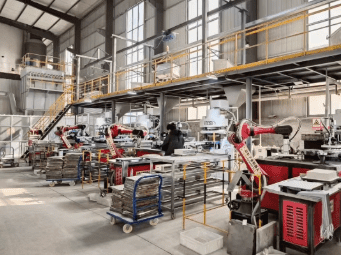
Transitioning from laboratory synthesis to industrial production presents several manufacturing bottlenecks that require careful process optimization. Addressing these production hurdles is critical for achieving commercial viability.
Purity control – High-purity precursors and controlled reaction conditions are essential to minimize impurities that can degrade electrochemical performance. Impurity levels must be tightly controlled to ensure consistent battery performance, but sourcing high-purity raw materials has become increasingly challenging amid the 2026 raw material squeeze.
Particle size distribution – Uniform particle size is critical for achieving consistent electrochemical properties. Advanced milling and classification techniques are employed to narrow the size distribution and remove oversize or undersize particles. This ensures reliable electrode fabrication and predictable battery performance, though it adds to production costs and complexity.
Batch-to-batch consistency – Industrial production requires rigorous quality control protocols to ensure every batch meets specifications. This includes monitoring of particle size, specific surface area, crystallinity, and purity through standardized testing methods such as TEM, SEM, XRD, and BET analysis. Maintaining consistency across thousands of batches is one of the most significant production hurdles for commercial manufacturers.
Doping strategies – Doping with elements such as cobalt (Co), bismuth (Bi), gadolinium (Gd), or neodymium (Nd) can further optimize magnetic and electrochemical performance. Doping levels must be precisely controlled to achieve the desired property enhancements without introducing detrimental effects, requiring additional process control measures.
Composite formation – NiFe₂O₄ composites well with carbon materials including MWCNTs, graphene, and activated carbon. These composites enhance electrochemical performance, cycling stability, and electrical conductivity. The composite preparation process requires careful dispersion and integration techniques to maximize synergistic effects, representing both an opportunity and a production hurdle for manufacturers.
Market Trends and Raw Material Supply Dynamics
The global demand for nickel-bearing advanced materials continues to grow, driven by the accelerating adoption of electric vehicles, energy storage systems, and portable electronics. As battery manufacturers seek higher energy density and improved cycling performance, materials like NiFe₂O₄ are attracting increasing attention as next-generation anode candidates. This growing interest is reshaping supply and demand dynamics across the advanced materials value chain.
Global market expansion – Energy storage and electric vehicle markets are experiencing sustained growth across multiple regions. The transition toward cleaner energy systems continues to drive demand for high-performance battery materials. As battery manufacturers seek to differentiate their products through improved energy density and safety, advanced anode materials are positioned for long-term growth.
Material demand trends – The battery industry’s ongoing pursuit of higher capacity and longer cycle life is creating new opportunities for advanced materials like NiFe₂O₄. While conventional graphite anodes remain the industry standard, the limitations of graphite in meeting future energy density requirements are prompting manufacturers to explore alternative materials. This trend favors the development and adoption of high-capacity conversion-type anode materials.
Regional market developments – North American and European markets are seeing growing investment in domestic battery material production capacity. These developments are creating new opportunities for advanced material suppliers as regional supply chains develop. Asian markets, which have long dominated battery manufacturing, continue to expand production capacity while also investing in next-generation material development, including nickel ferrite-based products.
Production cost considerations – Raw material costs and production efficiencies remain central to the commercial viability of advanced anode materials. As manufacturing processes mature and scale up, production costs are expected to decline, improving the competitiveness of NiFe₂O₄ relative to established materials. The overall trend across the industry is toward more efficient, cost-effective production methods for advanced battery materials.
Commercialization Progress and Future Outlook
Nickel ferrite nanoparticles are advancing from research-stage materials toward commercial adoption in lithium-ion battery anodes. Several factors are shaping the commercial pathways for this next-generation anode material:
Performance validation – Extensive research has demonstrated the superior capacity, rate capability, and cycling stability of NiFe₂O₄ anodes. However, challenges remain in achieving long-term cycling stability and rate capability comparable to graphite at scale. Ongoing research is addressing these production hurdles through doping, composite formation, and nanostructure engineering, creating clearer commercial pathways for industrial adoption.
Cost reduction trends – As production scales up and manufacturing processes mature, the cost of NiFe₂O₄ nanoparticles is expected to decrease. Improvements in process efficiencies support this trend, making process optimization increasingly important for commercial viability.
Emerging applications – Beyond lithium-ion battery anodes, NiFe₂O₄ nanoparticles are being explored for sodium-ion batteries, supercapacitors, microwave absorption, catalysis, and biomedical applications. These emerging applications will diversify market opportunities and create additional commercial pathways for producers.
Sustainability considerations – Longer-lasting, high-performance battery materials reduce the frequency of battery replacements and minimize material waste. The industry is increasingly focused on sustainable sourcing and production practices, which is becoming an important factor in material selection and supply chain decisions.
While challenges remain in scaling production and reducing costs, the outlook for NiFe₂O₄ nanoparticles remains positive as the global energy storage market continues its rapid expansion. Continued innovation in synthesis, doping, and composite strategies will further enhance the commercial viability of this promising material.

Commercialization Progress and Future Outlook: Pathways to Market
Nickel ferrite nanoparticles are advancing from research-stage materials toward commercial adoption in lithium-ion battery anodes. Several factors are shaping the commercial pathways for this next-generation anode material in the 2026 market landscape:
Performance validation – Extensive research has demonstrated the superior capacity, rate capability, and cycling stability of NiFe₂O₄ anodes. However, challenges remain in achieving long-term cycling stability and rate capability comparable to graphite at scale. Ongoing research is addressing these production hurdles through doping, composite formation, and nanostructure engineering, creating clearer commercial pathways for industrial adoption.
Cost reduction – As production scales up and manufacturing processes mature, the cost of NiFe₂O₄ nanoparticles is expected to decrease. The general oversupply in the nickel market, combined with improving process efficiencies, supports this trend. However, raw material supply tightness for battery-grade intermediates may offset some of these cost reductions, making process optimization increasingly important for commercial viability.
Emerging applications – Beyond lithium-ion battery anodes, NiFe₂O₄ nanoparticles are being explored for sodium-ion batteries, supercapacitors, microwave absorption, catalysis, and biomedical applications. These emerging applications will diversify market opportunities and create additional commercial pathways for producers.
Sustainability considerations – Longer-lasting, high-performance battery materials reduce the frequency of battery replacements and minimize material waste. However, raw material sourcing sustainability remains a concern, particularly regarding nickel from Indonesian HPAL operations and the associated environmental footprint. Addressing these sustainability challenges through responsible sourcing practices will be essential for long-term commercial pathways.
While challenges remain in scaling production and reducing costs amid raw material constraints, the outlook for NiFe₂O₄ nanoparticles remains positive as the global energy storage market continues its rapid expansion. Continued innovation in synthesis, doping, and composite strategies will further enhance the commercial viability of this promising material.

Supplier
RBOSCHCO is a trusted global supplier and manufacturer of high-performance battery materials, including nickel ferrite (NiFe₂O₄) nanoparticles, with over 12 years of experience in providing super high-quality chemicals and nanomaterials. The company exports to many countries, such as USA, Canada, Europe, UAE, South Africa, Tanzania, Kenya, Egypt, Nigeria, Cameroon, Uganda, Turkey, Mexico, Azerbaijan, Belgium, Cyprus, Czech Republic, Brazil, Chile, Argentina, Dubai, Japan, Korea, Vietnam, Thailand, Malaysia, Indonesia, Australia, Germany, France, Italy, Portugal, and more. As a leading nanotechnology development manufacturer, RBOSCHCO dominates the market. Our professional work team provides perfect solutions to help improve the efficiency of various industries, create value, and easily cope with various challenges. If you are looking for high-quality nickel ferrite (NiFe₂O₄) nanoparticles for battery anode applications, please feel free to contact us.
RELATED POSTS

Aerogel: Why Is It Called “Strong Smoke”?

Core Characteristics and Category Comparison of Silicon Carbide Crucibles

From Circuit Substrates to Artificial Joints: The Versatile Applications of Alumina Ceramics
Choosing the Best Termal Insulation Material: Fumed Silica vs. Aerogel vs. Hollow Glass Microspheres
From Batteries to Glass — What Can One Batch of Lithium Carbonate Actually Do?