Professional and high-quality metal alloys, ceramic products and concrete additives | RBOSCHCO

In the wave of continuous innovation in industrial materials technology, the market’s demand for materials with high conductivity and excellent corrosion resistance is becoming increasingly urgent. With the development of global industries towards high efficiency, harsh working conditions, and long-term stable operation, traditional single metals are no longer able to meet increasingly complex comprehensive performance requirements. Copper, known for its conductivity, holds a significant position in the electrical field. However, it faces the weakness of easy corrosion in humid, salty, or chemically corrosive environments, leading to frequent equipment maintenance and operational interruptions. Although titanium material has excellent corrosion resistance due to its dense oxide layer on the surface, its conductivity is relatively limited, making it difficult to adapt to high current load applications. In this context, high-quality titanium copper plates have emerged – they integrate the excellent conductivity of copper with the stable corrosion resistance of titanium through advanced metallurgical composite processes, achieving a “synergistic advantage” of material properties and creating a “1+1>2” composite effect. This innovative material not only solves the technological bottlenecks that have long constrained the development of multiple industries but also becomes an important force in promoting the upgrading of key fields such as new energy, ocean engineering, and high-end manufacturing.

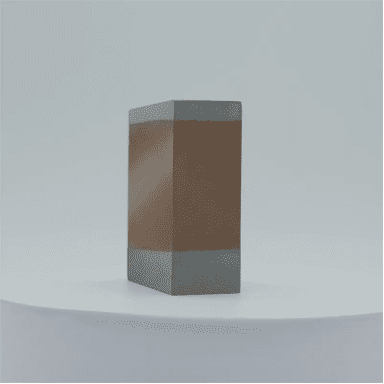
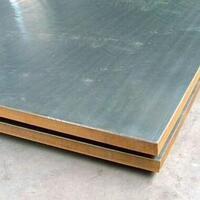
The Ingenious Structure of Titanium Copper Clad Plate
The key to the excellence of titanium copper composite panels lies in their unique “one in one” process. Imagine that it is not simply pressing titanium and copper sheets together, but using advanced technologies such as explosive bonding and precision rolling to truly ‘grow’ the two metals together at the atomic level. In this way, there are no gaps, bubbles, or weak surfaces inside the board, forming a seamless whole.
This deep bonding method makes its bonding interface exceptionally firm, with a shear strength of over 150MPa, which is 30% higher than the general international standard. So, even under repeated cold and hot shocks from -50 ℃ to 200 ℃, or mechanical vibrations, it can remain stable without delamination, making it particularly suitable for harsh industrial environments.
Moreover, its structural design is very flexible and practical, and can be customized as needed, like “tailoring to fit”:
Outer layer (titanium layer): The thickness is usually between 0.5 and 3 millimeters, like a sturdy armor, specifically designed to resist various corrosion and protect the copper core inside. Inner core (copper layer): The thickness is generally 3 to 20 millimeters, and it is the main force for conducting current and heat, exerting the excellent electrical and thermal conductivity inherent in copper.
Conventional environment (such as seaside power stations): Industrial pure titanium (TA1/TA2) combined with oxygen-free copper (T2/TU1) is sufficient.
Harsh environment (such as chemical, marine): It is recommended to use TA10 titanium (containing palladium), which is more resistant to chloride ion corrosion, combined with high-purity copper (TU2).
High-strength scenarios (such as some precision mechanical components): If higher strength is required, TC4 titanium alloy can also be used in combination with brass (H62).
| Parameter | Details |
|---|---|
| Material Composition | Titanium layer + Copper layer (e.g., Ti Gr1/Gr2 + C11000/C10200) |
| Thickness Ratio | Customizable (e.g., 10% Ti + 90% Cu, or other ratios as required) |
| Density | ~6.0 – 8.9 g/cm³ (varies based on thickness ratio) |
| Tensile Strength | 300 – 500 MPa (depends on bonding quality and material grades) |
| Yield Strength | 200 – 400 MPa (varies based on material grades and thickness ratio) |
| Elongation | 20% – 40% (depends on material grades and bonding quality) |
| Thermal Conductivity | ~20 W/m·K (Titanium) + ~400 W/m·K (Copper) |
| Electrical Conductivity | ~3% IACS (Titanium) + ~100% IACS (Copper) |
| Corrosion Resistance | Excellent (Titanium layer provides high corrosion resistance) |
| Bonding Strength | ≥150 MPa (typical for explosion-bonded or roll-bonded clad plates) |
| Operating Temperature | -200°C to 300°C (-328°F to 572°F) (depends on application) |
| Applications | Heat exchangers, condensers, chemical reactors, marine engineering, etc. |
Superior Corrosion Resistance of Titanium Copper Clad Plate
Titanium has established a benchmark in the field of industrial corrosion resistance due to its natural ability to form a dense and stable oxide film (TiO ₂) on its surface. As a composite layer, this “protective shield” can effectively isolate various harsh media such as seawater, dilute acid, alkali solution, chlorine gas, and even high-temperature steam, protecting the copper core layer inside. The data shows that its annual corrosion rate in seawater is less than 0.01mm, and its corrosion resistance far exceeds that of stainless steel and carbon steel; Even in an acidic environment of 80 ℃, its corrosion can be ignored, while pure copper will quickly fail under the same conditions.
The revolutionary advantage of this material lies in the synergistic anti-biofouling ability of titanium and copper. Under the protection of the titanium layer, copper-based materials can control the release of copper ions (rate>8mg/cm ² · d), which can effectively inhibit the attachment of marine organisms and is environmentally friendly. For example, in the application of a certain offshore platform in the South China Sea, after being used for seawater cooling pipelines, biological fouling was reduced by 90% compared to pure titanium, and the maintenance cycle was extended from 3 months to 1 year, saving more than $200000 in costs per year. At the same time, in high-temperature and highly corrosive chemical environments such as PTA reactors and chlor-alkali electrolysis tanks, it can maintain structural integrity for more than ten years, significantly better than traditional titanium materials in durability and full life cycle cost.
Excellent Conductivity of Titanium Copper Clad Plate
The titanium copper composite plate not only combines the anti-corrosion advantages of titanium with the conductivity characteristics of copper, but also achieves efficient unity of protection and performance through precise layer thickness control and advanced composite technology. Its copper substrate ensures excellent conductivity and thermal conductivity: the conductivity can reach 60% -80% of pure copper (according to IACS standards), far exceeding the level of titanium alloy by about 2%, and can be optimized to over 85% for high current requirements; The thermal conductivity coefficient reaches 54W/m · K, which is three times that of titanium steel composite plate and 1.5 times that of titanium aluminum composite plate, respectively. It can achieve rapid heat dissipation under high load conditions.
In high-current application scenarios, the performance advantages of this material are particularly significant. For example, in the battery connectors of the 800V high-voltage platform of new energy vehicles, a structure of a 1mm titanium layer combined with a 5mm copper layer can control the temperature rise within 30 ℃ under a continuous current of 1500A, significantly lower than the industry safety threshold of 50 ℃. At the same time, its creep resistance is improved by 40% compared to pure copper, effectively avoiding deformation and increased contact resistance during long-term use, ensuring the long-term safety and stability of the battery system.
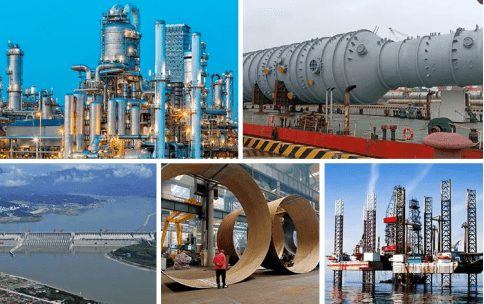
Cross-Industry Applications of Titanium Copper Clad Plate
Power & New Energy: Reliability for High-Voltage Systems
In the power sector, especially in coastal and offshore regions, corrosion from salt spray, humidity, and marine aerosols poses a severe threat to grid equipment. Titanium copper clad plates are widely used in coastal substations, cross-sea cable joints, and high-voltage switchgear components, as their corrosion resistance ensures stable performance for over 30 years—twice the service life of traditional tin-plated copper and aluminum alloys. This reliability is critical for maintaining grid stability in harsh coastal climates, where equipment failure can lead to large-scale power outages. For new energy vehicles and energy storage systems, the material’s unique balance of conductivity, corrosion resistance, and thermal management makes it indispensable. In addition to battery connectors, it is used in on-board charging modules (OBC), power distribution units (PDU), and liquid-cooled plates, enabling safer, more efficient energy transfer in 800V high-voltage platforms and accelerating heat dissipation in dense battery packs. This not only extends battery lifespan but also shortens charging time, addressing key pain points in the new energy industry.
Marine Engineering & Shipbuilding
Titanium copper composite panels have shown excellent adaptability and reliability in responding to the harsh challenges of marine environments. They are designed to overcome composite threats such as saltwater corrosion, biofouling, wet dry alternation, and mechanical stress, and have become the preferred material in the fields of marine engineering and shipbuilding.
This material has been successfully applied to key parts such as ship propulsion motor windings, carrier-based aircraft charging devices, seawater cooling pipelines, ship hull anti-corrosion coatings, and submarine propulsion systems. Especially in submarine propulsion systems, compared to traditional copper nickel alloys, titanium copper composite plates exhibit excellent resistance and stability under long-term seawater immersion conditions, with a performance improvement of up to 5 times, significantly ensuring quiet navigation and operational reliability in deep-sea environments.
Chemical & Electrolysis Industry
In the fields of strong corrosion, such as electrolysis and chemical engineering, titanium copper composite plates are gradually replacing traditional materials due to their excellent comprehensive performance. In the chlor-alkali industry, when this material is used as an anode, the voltage fluctuation of the tank is less than 0.05V, which reduces the energy consumption per ton of caustic soda production by about 30 kWh. In PTA reactors and other equipment, it can achieve stable operation without corrosion for more than ten years, with maintenance costs reduced by 50% compared to titanium-lined steel plates. In wet metallurgy, as a cathode plate, it has the advantages of uniform conductivity, corrosion resistance, and easy peeling, significantly improving production efficiency and product purity.
Electronics & Precision Manufacturing
With the increasing miniaturization, high integration, and high power of electronic components, material performance requirements are constantly improving. In the application of 5G base station RF chip heat dissipation, the thin titanium copper composite plate with a thermal expansion coefficient of 0.5+1.0mm is highly matched with the ceramic substrate (about 17-19 × 10 ⁻⁶/K), which can effectively avoid cracking caused by thermal stress, ensure reliable bonding between layers after high-temperature welding, and significantly improve the stability and service life of base station equipment during long-term outdoor operation.
As the core material of the resonant cavity mirror holder for fiber lasers, titanium copper composite plates can achieve temperature uniformity of ± 2 ℃ in high power density environments, effectively suppressing thermal deformation of optical lenses and improving the cutting accuracy of precision machining equipment by up to 15%. Its clean surface, corrosion resistance, and resistance to oxidation and pollution make it an ideal choice for fields such as semiconductor packaging, precision connectors, and high-reliability medical electronics that require high hygiene and stability.
Why Choose Our Premium Titanium Copper Clad Plate?
1. Excellent composite quality
We adopt advanced explosive composite and cold rolling refining processes to ensure a titanium copper interface bonding strength exceeding 150MPa. Each board undergoes comprehensive ultrasonic testing to achieve 100% bonding coverage. Even under extreme temperature cycles of -50 ℃ to 200 ℃, the performance remains stable after 10000 tests.
2. Flexible customization capability
We can provide comprehensive, customized solutions based on your specific needs:
Thickness combination: titanium layer (0.3-5mm) and copper layer (2-30mm) in any ratio
Material selection: Multiple combinations of titanium alloys (TA1/TA2/TA10/TC4) and copper materials (T2/TU1/TU2/H62)
Size specifications: maximum width of 2500mm, length up to 12 meters
Professional optimization: Material formula optimization for special working conditions such as high chlorine, high temperature, and high pressure
3. Reliable quality assurance
We implement strict quality control throughout the entire process:
Performance testing: covering corrosion resistance (salt spray/acid immersion/seawater immersion), conductivity (IACS), bonding strength (shear/tensile), and dimensional accuracy
Compliant with: Fully meets domestic and international standards such as ASTM B898 and GB/T 8547
Complete traceability: Raw material certificates, production records, and testing reports are provided for each batch of products
In an era where material performance directly impacts operational competitiveness, choosing the right composite material can make all the difference. Our premium titanium copper clad plates are engineered to exceed your expectations, with superior bonding quality, customized solutions, rigorous quality control, and comprehensive technical support. Whether you operate in a harsh marine environment, a high-precision electronic manufacturing facility, or a large-scale chemical plant, our products will elevate your operations by delivering uncompromised conductivity, corrosion resistance, and long-term reliability. Don’t let traditional materials hold back your innovation—choose our premium titanium copper clad plate today and experience the transformative difference in performance and value. Contact our technical team now to discuss your specific needs and get a tailored solution designed for your industry.
Supplier
RBOSCHCO is a trusted global Titanium Copper Clad Plate supplier & manufacturer with over 12 years of experience in providing super high-quality chemicals and Nanomaterials. The company export to many countries, such as USA, Canada, Europe, UAE, South Africa, Tanzania, Kenya, Egypt, Nigeria, Cameroon, Ugand, Turkey, Mexico, Azerbaijan Be lgium, Cyprus, Czech Republic, Brazil, Chile, Argentina, Dubai, Japan, Korea, Vietnam, Thailand, Malaysia, Indonesia, Australia, Germany, France, Italy, Portugal etc. As a leading nanotechnology development manufacturer, RBOSCHCO dominates the market. Our professional work team provides perfect solutions to help improve the efficiency of various industries, create value, and easily cope with various challenges. If you are looking for Titanium Copper Clad Plate, please feel free to contact us.
RELATED POSTS

Revolutionizing High-Tech Applications: How Silicon Carbide and Tantalum Carbide Lead the Charge in Advanced Material Solutions

The Change Of Aerogel Blanket In Vehicle Noise Insulation And Warmth Insulation

Application of Nano-Silicon Powder in Solar Cells: Potential Products for Price Reduction and Efficiency Enhancement

Aluminum Nitride vs Silicon Carbide Plates: Properties, Applications & Key Differences
Lithium Nitride Powder: The Next-Generation Material Powering the Global Energy Transition
