Professional and high-quality metal alloys, ceramic products and concrete additives | RBOSCHCO

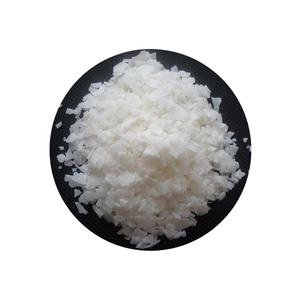
Solid silicon dioxide is an inorganic powder raw material widely used in the industrial field. With its advantages of high hardness, high wear resistance, chemical stability, and good insulation, it is widely used in industries such as coatings, ceramics, chemicals, and new materials. However, silica powder has a large specific surface area and high surface energy, and is prone to agglomeration, settling, and delamination in liquid silicon systems, colloidal systems, and slurry systems, seriously affecting product flatness, stability, and finished product quality. Solid Silica Dispersant is a specialized functional additive designed to solve the problem of powder agglomeration. Unlike liquid dispersants, its solid form is convenient to store, has strong compatibility, and a wider range of adaptability systems. It can efficiently improve the dispersion uniformity and suspension stability of silica powder in the liquid phase. Solid-state silica dispersants have become the core additives for improving the quality of silicon-based materials in industrial scenarios such as colloidal silica, liquid silica, and silicate density control.
Core formula composition of solid silica dispersant
Solid silica dispersant is a powder composite additive made by compounding inorganic activated components and organic modified components. The formula ratio is scientifically stable, solvent-free, and non-volatile, suitable for various dry and wet dispersion systems. The core components have clear functions and synergistic effects.
1. Organic activated dispersed components
The core formula adopts polymer-activated powder material, which has excellent surface activity and adsorption performance, and can quickly adsorb on the surface of silica powder particles, changing the surface charge characteristics of the powder. This component can effectively break the molecular attraction between silica particles, prevent particle adsorption and aggregation, and improve the compatibility of the powder with water, solvents, and resin systems, solving the problems of hydrophobicity, difficulty in wetting, and uneven dispersion of the powder, and improving the dispersion effect from the root.
2. Inorganic stabilizing auxiliary components
Formulated with high-purity inorganic stabilizing agents, it can be adapted to colloidal silicon and silicate systems, accurately regulate silicate density, and avoid sedimentation and delamination problems caused by density imbalance in the system. At the same time, this component can improve the overall uniformity of the slurry, enhance the stability of the suspension system, extend the storage period of silicon-based slurry, adapt to the production standards of chemical suspension systems, and conform to the stability principle of chemical suspension systems.
3. Anti-caking modified components
Solid dosage forms are prone to moisture and clumping, which affects their effectiveness. Therefore, specialized anti-clumping and flow-modifying components are added to the formula. It can ensure that the dispersant powder is loose, fine, and has good fluidity. It can dissolve and disperse quickly during feeding without residue or agglomeration. It is suitable for automated feeding production processes and greatly improves industrial production efficiency.
Core decentralized working principle
The action logic of solid silica dispersant relies on the triple mechanism of chemical modification, electrostatic repulsion, and steric hindrance, combined with the principle of chemical suspension system, to achieve long-term uniform dispersion of silica powder and completely solve the problem of powder agglomeration and settling.
1. Surface Wetting Modification Mechanism
Pure silica powder has strong surface polarity and poor wetting performance, making it difficult to evenly spread in organic and aqueous systems. After the dispersant is added to the system, it will quickly wrap around the silica particles, reduce the surface tension of the powder, improve the wetting performance of the particles and enable the originally hydrophobic and difficult to disperse powder to quickly fuse with the medium, initially achieving uniform dispersion and eliminating local agglomeration, white spots and particle accumulation problems.
2. Electrostatic repulsion dispersion mechanism
Dispersant-modified components can make the surface of silica particles carry uniform negative charges. According to the principle of repulsion of the same charge, strong electrostatic repulsion is formed between particles, completely breaking the particle aggregation structure, preventing secondary adsorption and aggregation of small particles, and allowing the powder to be uniformly suspended in the system, which conforms to the core principle of stable suspension in chemistry.

3. Spatial Resistance Stability Mechanism
In high-concentration systems of colloidal silicon and liquid silicon, electrostatic repulsion is limited, while dispersants can form a dense polymer adsorption layer on the surface of particles, constructing a steric hindrance barrier. Even if the system concentration and density fluctuate, it can also effectively block particle contact, avoid particle agglomeration and sedimentation, ensure the uniform and stable colloidal silicon gel system, and give full play to the advantages of colloidal silicon application.
Core application advantages of solid silica dispersant
Compared to traditional liquid dispersants, solid silica dispersants are suitable for production scenarios of silicon-based materials, with prominent advantages in dosage form, more stable performance, lower usage costs, and are suitable for industrial mass production.
Solid powder is non-volatile, leak-free, and not easily deteriorated. It can be stored for a long time at room temperature and sealed, without the need for special storage conditions such as low temperature and light avoidance. Compared with liquid dispersants, it has lower transportation costs and smaller storage losses, making it suitable for factory bulk stocking and long-term use.
It can widely adapt to water-based systems, oil-based systems, colloidal silicon systems, silicate slurry, and liquid silicon suspension systems, without chemical reaction with the substrate, affecting the silica density index, damaging the colloidal silicon gel structure, and retaining the physical and chemical properties of the silicon-based material to the greatest extent.
Uniformly dispersed silica powder can fully exert its wear resistance, hardening, filling, and shading effects, improving the quality of finished products such as coatings, ceramics, and composite materials. At the same time, it can reduce the amount of powder added, decrease raw material loss, reduce the problem of slurry layering and scraping, and effectively reduce the production and repair costs of enterprises.
Mainstream industrial decentralized application scenarios
Relying on excellent dispersion stability, solid silica dispersants are widely used in various silicon-based materials and powder modification industrial scenarios, covering multiple fields such as fine chemicals, new materials, building materials, coatings, etc.
During the preparation of colloidal silicon gel and the preparation of liquid silicon slurry, the addition of solid dispersant can stabilize the suspension system, avoid the agglomeration and sedimentation of silicon particles, ensure that colloidal silicon particles have uniform size, high transparency and strong stability, and maximize the use of colloidal silicon gel benefits, which are suitable for the production of fine coatings, precision ceramics, and electronic materials.
Silicon dioxide is a commonly used wear-resistant, matting, and anti-settling filler in coatings. After modification with dispersants, the powder is evenly dispersed in the coating system, without particle precipitation or paint film particle sensation, which can improve the flatness, wear resistance, and weather resistance of coatings, and enhance the quality of high-end industrial coatings and anti-corrosion coatings.
In the sintering production of ceramic bodies and silicon-based new materials, uniformly dispersed silica powder can make the raw material ratio of the body more balanced, resulting in a dense structure and uniform strength after sintering, effectively reducing the probability of ceramic cracking and deformation, and improving the yield of high-end precision ceramics and functional powder materials.
In the production of silicate building materials and foamed silicon-based materials, dispersants can stabilize the slurry density, regulate the uniform suspension system, avoid problems such as uneven strength and appearance defects caused by slurry density stratification, and ensure stable performance and batch consistency of building materials products.
Supplier
RBOSCHCO is a trusted global solid silica dispersant supplier & manufacturer with over 12 years of experience in providing super high-quality chemicals and Nanomaterials. The company export to many countries, such as USA, Canada, Europe, UAE, South Africa, Tanzania, Kenya, Egypt, Nigeria, Cameroon, Ugand, Turkey, Mexico, Azerbaijan Be lgium, Cyprus, Czech Republic, Brazil, Chile, Argentina, Dubai, Japan, Korea, Vietnam, Thailand, Malaysia, Indonesia, Australia, Germany, France, Italy, Portugal etc. As a leading nanotechnology development manufacturer, RBOSCHCO dominates the market. Our professional work team provides perfect solutions to help improve the efficiency of various industries, create value, and easily cope with various challenges. If you are looking for solid silica dispersant, please feel free to contact us.
RELATED POSTS

Molybdenum disulfide nanoelectromechanical system ultra-thin ultra-small ultra-low power consumption
Using Concrete Fibers for Industrial Floor Crack Control
Which materials can be used in automotive coatings?
What are Silica Nanoparticles used for?
What is the function of titanium nitride coating
