Professional and high-quality metal alloys, ceramic products and concrete additives | RBOSCHCO

When engineers and materials scientists look for ceramics that can handle extreme heat, two names come up again and again: alumina and mullite. Both are oxide-based engineering ceramics with impressive high-temperature credentials. But they’re not interchangeable. Choosing the wrong one can mean the difference between a component that lasts decades and one that fails within months.
Alumina is the workhorse of advanced ceramics—hard, strong, and widely available. Mullite is the specialist—less well-known but with a unique set of properties that make it indispensable in certain applications. The question is not which one is “better,” but which one fits your specific requirements.
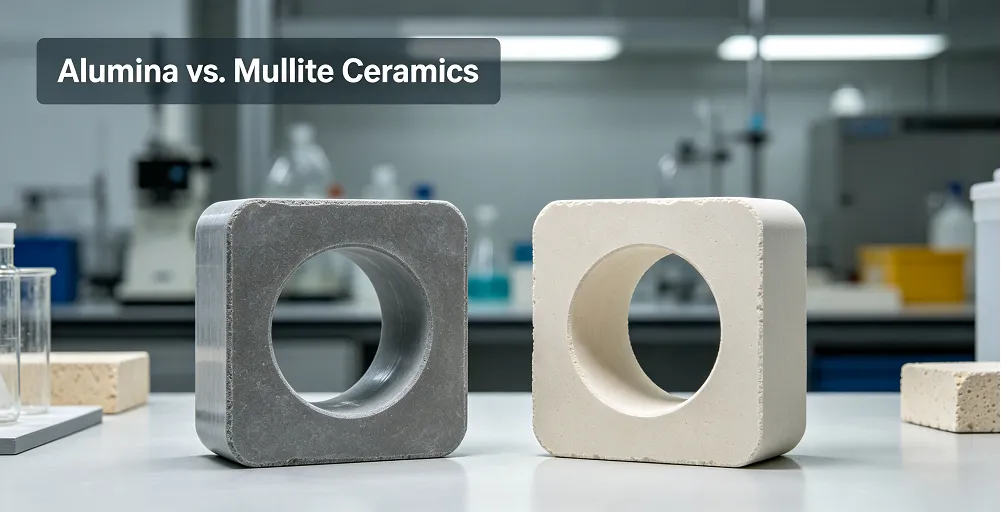
What Are Alumina and Mullite?
Alumina is a pure oxide ceramic with the chemical formula Al₂O₃. It typically contains a high percentage of aluminum oxide and is one of the most widely used engineering ceramics in the world. Its crystal structure is dense and tightly packed, giving it exceptional hardness and mechanical strength . Alumina is often the first choice for applications that require high wear resistance, chemical inertness, and good electrical insulation.
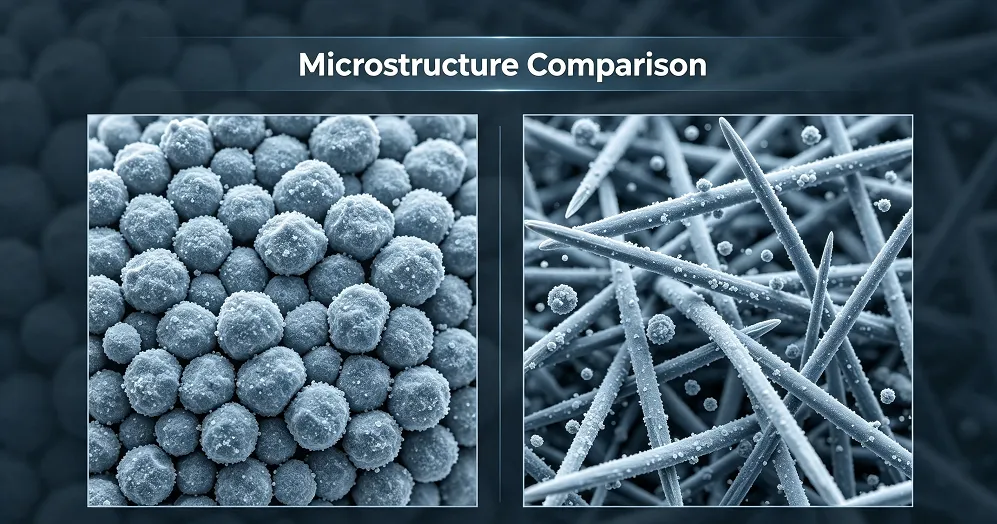
Mullite, on the other hand, is an aluminosilicate with the chemical formula 3Al₂O₃·2SiO₂ . It is a compound of alumina and silica, and its crystal structure is more open, with needle-like grains that interlock to form a strong network. Mullite is the only stable crystalline phase in the Al₂O₃–SiO₂ binary system at high temperatures under atmospheric pressure .
Mullite’s name comes from the Isle of Mull in Scotland, where it was first identified as a natural mineral. But in industrial applications, it’s almost always synthesized from alumina and silica sources, making it a highly engineered material with consistent, predictable performance.
Alumina vs. Mullite: Mechanical Properties Comparison
When evaluating alumina vs. mullite for any application, mechanical properties are usually the first consideration. The differences between alumina and mullite in this area are significant and directly impact which material is suitable for which application.
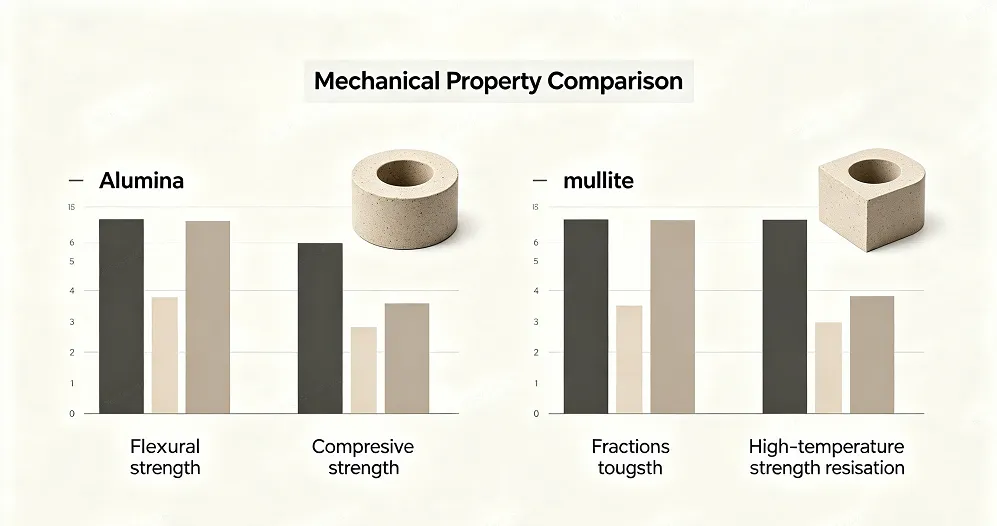
Alumina is the clear winner in raw strength and hardness. It offers superior compressive strength, significantly higher flexural strength, and much better fracture toughness compared to mullite . This means alumina components can handle heavier mechanical loads and are less likely to crack under stress. When your application involves wear, impact, or heavy loading, alumina is typically the safer choice.
But mullite holds its own in a key area: high-temperature strength retention. While alumina‘s mechanical properties decline at elevated temperatures due to creep, mullite maintains its strength much better at extreme temperatures . Its creep rate at high temperatures is exceptionally low, making it a serious candidate for applications where strength at extreme temperatures matters more than room-temperature toughness .
The structural difference explains this behavior. Alumina’s dense, close-packed structure gives it excellent room-temperature properties but makes it more susceptible to grain boundary sliding at high temperatures. Mullite’s needle-like interlocking grains provide a more stable microstructure that resists deformation even at 1400°C and above.
Alumina vs. Mullite: Thermal Properties Comparison
Thermal performance is another critical dimension in the alumina vs. mullite decision. The two materials behave very differently when exposed to heat, and understanding these differences is essential for proper material selection .
Mullite has a distinct advantage in thermal conductivity: it is significantly lower than alumina. This makes mullite a much better thermal insulator—a critical property for kiln furniture, furnace linings, and other high-temperature insulation applications where heat retention or uniform temperature distribution is important.
Alumina, with its higher thermal conductivity, is better at transferring heat away from components. This can be an advantage or a disadvantage depending on the application. For cutting tools or heat sinks, high conductivity is desirable because it dissipates heat quickly. For thermal barriers, it is not.
In terms of thermal expansion, mullite also has an edge. Its lower coefficient of thermal expansion compared to alumina means it experiences less dimensional change during heating and cooling cycles . This contributes to its superior thermal shock resistance and makes mullite a preferred material for applications that undergo rapid temperature changes.
Mullite has been shown to have approximately three times higher thermal shock resistance than alumina, as validated by quench testing of dense reference materials . This difference arises from mullite’s lower thermal expansion and lower elastic modulus, which together reduce thermal stress magnitude under transient thermal gradients.
Alumina vs. Mullite: Corrosion and Chemical Resistance
Both alumina and mullite have excellent chemical stability, but they perform differently in specific corrosive environments. Understanding these differences is important when selecting materials for applications involving aggressive chemicals or high-temperature vapors .
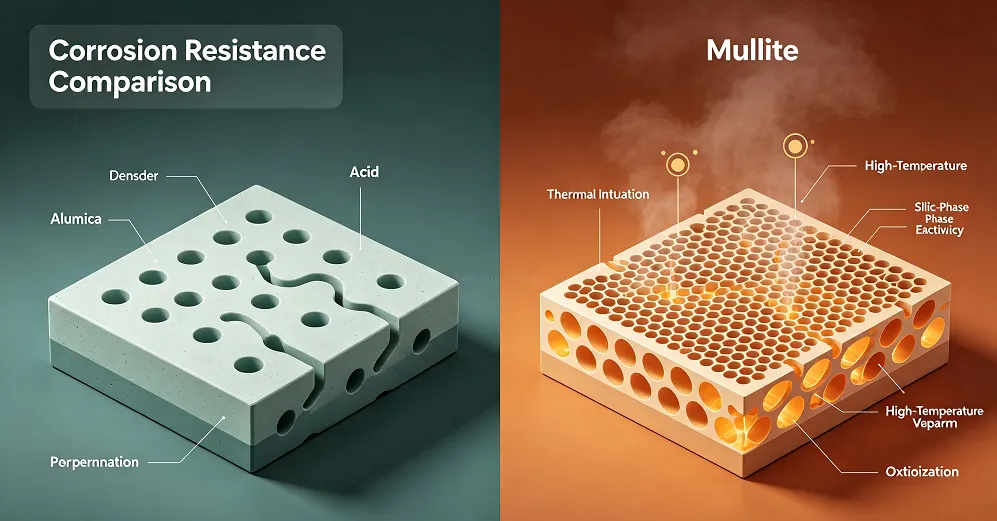
Alumina, being chemically inert and nearly pure oxide, is highly resistant to most acids and alkalis. Its dense microstructure leaves few pathways for corrosive agents to penetrate, making it a reliable choice for chemical processing equipment and environments with aggressive media.
Mullite‘s silica content can make it more susceptible to attack by some aggressive chemicals, particularly strong alkalis that can react with the silica phase. However, mullite‘s lower thermal conductivity makes it more suitable for thermal insulation applications where corrosion resistance is also required. For applications that need both thermal insulation and chemical resistance, alumina-mullite composites often provide the optimal balance.
In oxidizing environments at high temperatures, both materials form protective oxide layers that limit further degradation. However, the presence of silica in mullite can be advantageous in some high-temperature oxidation scenarios, as silica scales tend to be more protective than alumina scales under certain conditions.
Alumina Applications: Where Alumina Excels
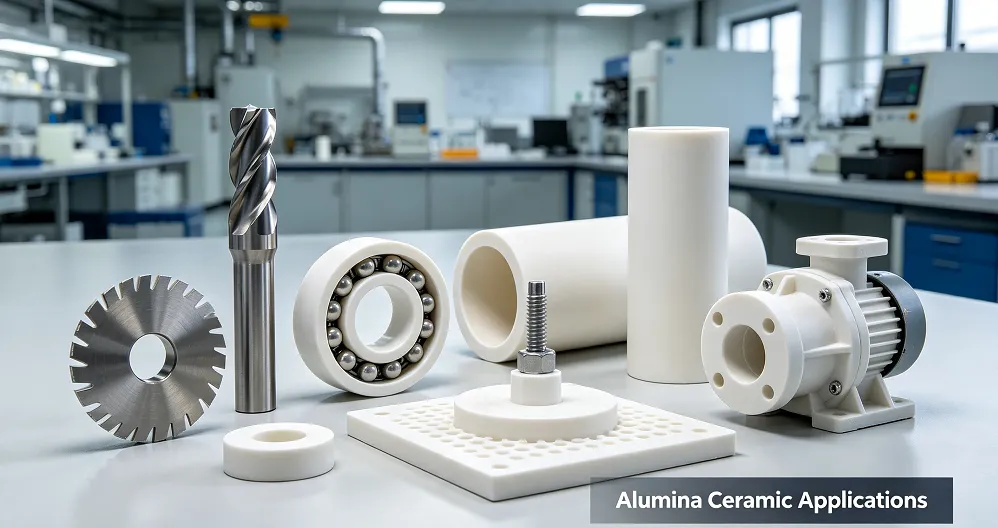
Alumina is the ceramic equivalent of a Swiss Army knife. It’s used across a wide range of industries because of its excellent mechanical properties, high hardness, and chemical stability. When engineers need a material that can handle wear, impact, and aggressive environments at moderate to high temperatures, alumina is often the first choice .
Key applications include:
- Ceramic cutting tools and wear components — Alumina‘s hardness and wear resistance make it ideal for abrasive environments where components must withstand continuous friction and impact.
- High-temperature furnace tubes and liners — Its high melting point and structural stability at elevated temperatures are major advantages for high-temperature processing equipment .
- Electrical insulators and substrates — Alumina‘s high dielectric constant and low dielectric loss make it suitable for electronic applications where reliable insulation is critical.
- Seal rings, bearings, and pump components — Its mechanical strength and corrosion resistance extend component life in demanding conditions.
- Catalyst substrates and biomedical implants — Recent applications include electronic circuits, optical components, and biomaterials where alumina‘s biocompatibility and inertness are valuable.
The main limitation of alumina is its tendency to creep above a certain temperature. At these temperatures, grain boundary sliding can lead to gradual deformation, which may be unacceptable in precision applications. It’s also denser and heavier than mullite, which can be a disadvantage in applications where weight matters.
Mullite Applications: Where Mullite Excels
Mullite‘s strengths lie in applications where thermal shock resistance, low thermal expansion, and high-temperature stability are critical. While alumina may be stronger at room temperature, mullite often outperforms it in high-temperature environments where thermal cycling and thermal gradients are present .
Key applications include:
- Kiln furniture and furnace linings — Mullite‘s low thermal conductivity and excellent thermal shock resistance make it the preferred choice for high-temperature kiln components. The lighter weight of mullite-based kiln furniture can also lead to significant energy savings by reducing heat retention and allowing faster heating and cooling cycles.
- High-temperature thermal insulation — Porous mullite ceramics are used as thermal barriers in aircraft coatings, furnace insulation, and high-temperature filters where thermal insulation is the primary requirement.
- Ceramic engine components — Mullite‘s ability to maintain strength at extreme temperatures makes it a candidate for heat engines where lightweight and high-temperature stability are required .
- Electronic substrates and microwave components — Mullite‘s low dielectric constant and low loss tangent make it attractive for microwave integrated circuits and high-frequency communication systems .
- High-temperature protective coatings — Mullite coatings for silicon carbide components can protect against oxidation at extreme temperatures, extending the life of critical components in harsh environments.
- Glass melting furnace refractories — Mullite and mullite-corundum refractories are extensively used in glass-melting furnace construction and repair, particularly for regenerator walls and lower structures .
Mullite‘s main limitation is its lower room-temperature mechanical properties compared to alumina. For applications that require both high-temperature stability and high mechanical strength, alumina-mullite composites are often used to combine the best of both materials.
Alumina vs. Mullite: Making the Right Choice
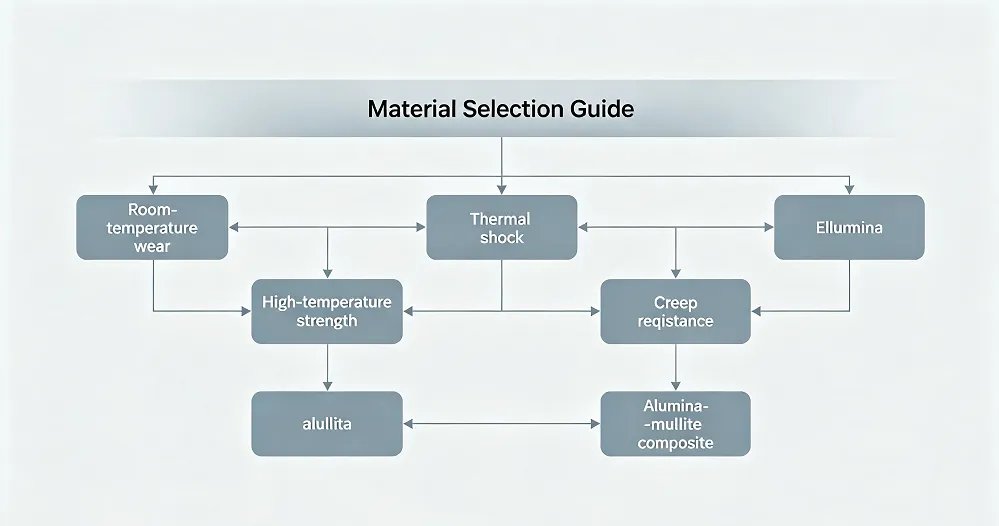
The choice between alumina and mullite ultimately depends on what you need from the material. There’s no universal “better” ceramic—only the one that fits your specific requirements.
Choose Alumina when:
- Room-temperature hardness and wear resistance are critical
- Chemical resistance in aggressive environments is required
- Cost is a primary consideration
- High mechanical strength is needed for load-bearing applications
- High thermal conductivity for heat dissipation is desirable
Choose Mullite when:
- High-temperature strength retention above 1000°C is essential
- Thermal insulation (low thermal conductivity) is required
- Thermal shock resistance is critical due to rapid temperature changes
- Weight reduction is important
- Low dielectric loss for electronic applications is needed
- Creep resistance at extreme temperatures is the primary concern
Practical Examples
If you need a wear-resistant component for a high-speed cutting tool operating at moderate temperatures, alumina is the better choice. Its hardness and toughness will extend tool life and maintain cutting precision.
If you need a furnace liner that will endure thousands of heating and cooling cycles without cracking, mullite is your material. Its low thermal expansion and thermal shock resistance will keep it intact even under severe thermal cycling .
If you need both — high-temperature stability and mechanical strength — consider alumina-mullite composites. These materials can offer significantly improved wear resistance while benefiting from mullite‘s thermal properties.
If you’re working on electronic packaging for high-frequency devices, mullite‘s low dielectric constant and low loss tangent make it a strong candidate. Its thermal properties also help manage heat dissipation in compact electronic assemblies.
Supplier
RBOSCHCO is a globally recognized chemical material supplier and manufacturer with over 12 years of expertise in providing super high-quality chemicals and nanomaterials. The company has a professional technical department and quality supervision department, a well-equipped laboratory with advanced testing equipment, and a dedicated after-sales customer service center. RBOSCHCO supplies high-quality alumina powder, mullite powder, and other advanced ceramic materials for high-temperature, wear-resistant, and electronic applications . The company serves clients across more than 50 countries and offers comprehensive technical support, from material selection to application guidance. If you are looking for high-quality alumina or mullite powder, please feel free to contact us.
RELATED POSTS
Scientific News Boron Nitride Graphene Mixture May Be Suitable For Next-Generation Green Cars
Iron Boride FeB Powder: Innovative materials lead new changes in the steel and new energy industries
3D Printing Inconel 718-2
High-Purity Crystalline Silica Powder for Semiconductor and Industrial Applications

What is Hollow Glass Sphere Used For?
