Professional and high-quality metal alloys, ceramic products and concrete additives | RBOSCHCO

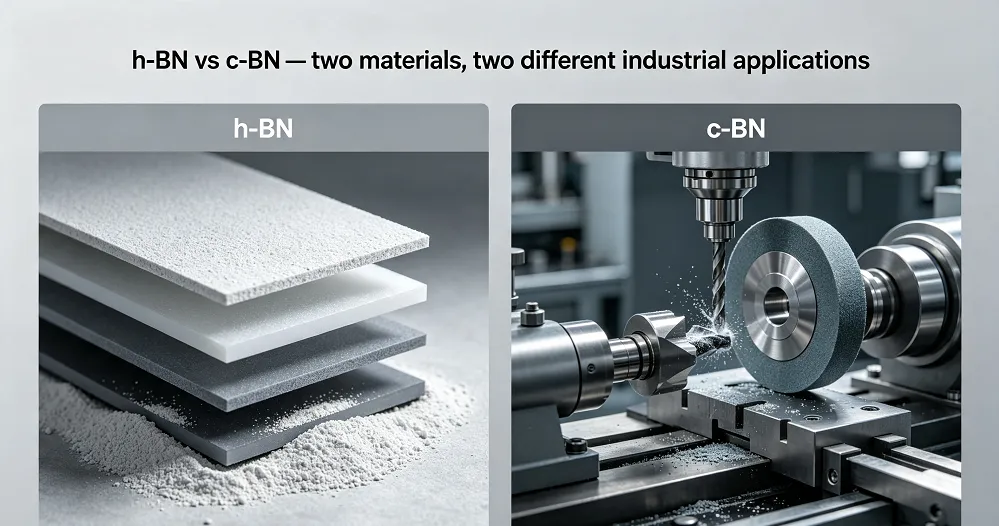
If you’ve ever come across boron nitride (BN) in a product specification, you might have noticed something confusing: the same chemical formula, but two completely different materials. One is soft enough to use as a lubricant. The other is hard enough to cut steel. Same elements. Different structures. Different properties. Different applications.
This isn’t a typo—it’s polymorphism. Boron nitride exists in several crystal forms, but the two most important ones are hexagonal boron nitride (h-BN) and cubic boron nitride (c-BN). The difference between them comes down to how the boron and nitrogen atoms are arranged. And that difference changes everything.
The Carbon Connection
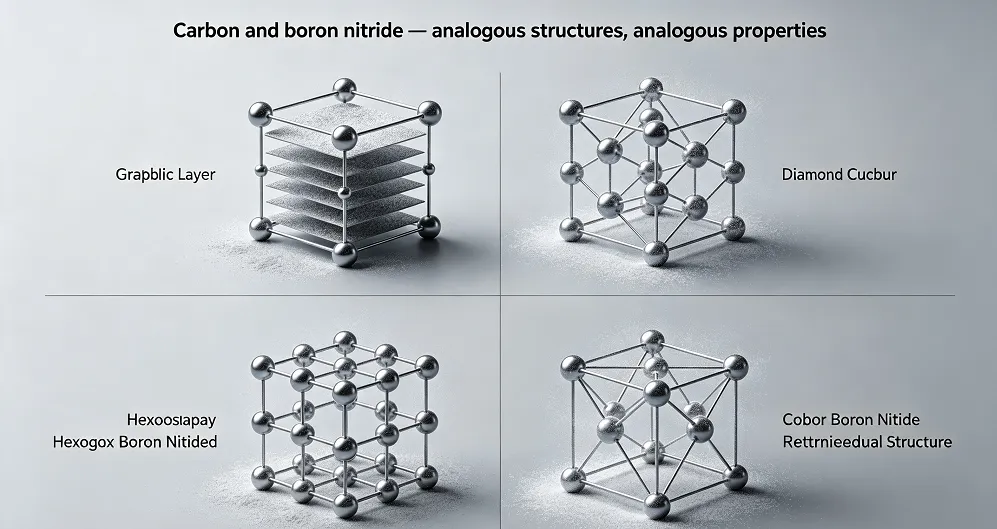
To understand boron nitride, it helps to look at carbon. Carbon has two well-known forms: graphite and diamond. Both are pure carbon. Both have the same atoms. But graphite is soft and layered. Diamond is the hardest natural material known.
Boron nitride is the same story. It’s iso-electronic with carbon, meaning it has the same number of valence electrons. And it follows the same structural logic:
- h-BN is analogous to graphite — layered, soft, lubricious
- c-BN is analogous to diamond — hard, strong, abrasive-resistant
Hexagonal BN is often called “white graphite” because of its graphite-like layered structure. Cubic BN, on the other hand, is second only to diamond in hardness. Same material, two completely different personalities.
This structural similarity to carbon isn’t just a curiosity—it’s a practical guide. If you understand the difference between graphite and diamond, you already understand the difference between h-BN and c-BN. The same logic applies: one is soft because of weak interlayer forces, the other is hard because of strong three-dimensional bonding.
Hexagonal Boron Nitride (h-BN) — The Soft Side
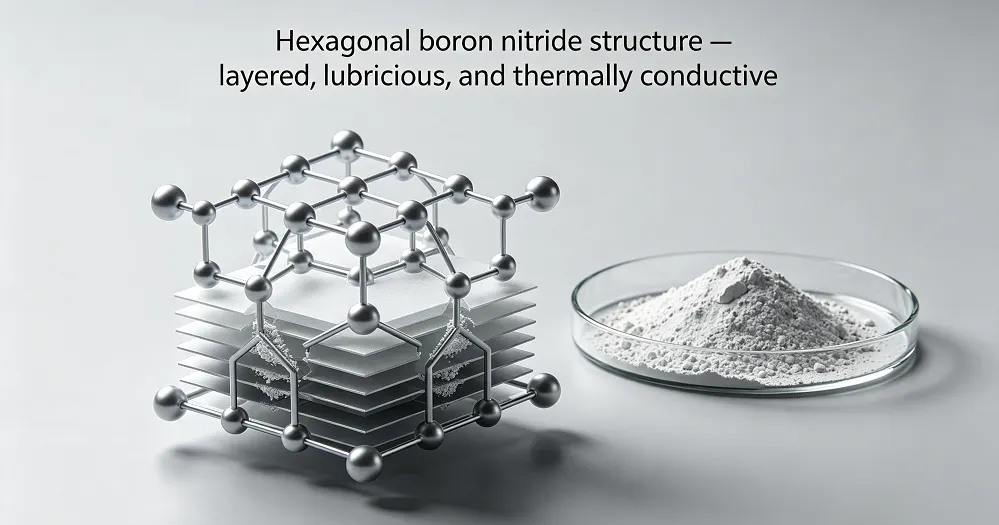
h-BN is the more common and widely used form of boron nitride. Its structure consists of layers of hexagonal rings made of alternating boron and nitrogen atoms. These layers are held together by weak van der Waals forces, which means they can slide past each other easily. The in-plane bond between boron and nitrogen is strong—almost as strong as the carbon-carbon bond in diamond—but the interlayer forces are weak.
This layered structure gives h-BN its key properties:
Excellent lubricity. The weak interlayer bonding means h-BN acts as a solid lubricant, especially in high-temperature or vacuum environments where liquid lubricants fail. This makes it valuable for aerospace, high-temperature machinery, and metal forming applications. Unlike graphite, which requires moisture or adsorbed gases to lubricate effectively, h-BN lubricates well even in dry environments.
High thermal conductivity. Unlike graphite, which is electrically conductive, h-BN is an excellent thermal conductor but a strong electrical insulator. Its in-plane thermal conductivity is among the highest of any ceramic material. This combination of high thermal conductivity and electrical insulation makes it invaluable for thermal management in electronic devices, power modules, and battery systems.
Chemical stability. h-BN is chemically inert, resistant to oxidation, and stable at high temperatures. It doesn’t react with most acids, alkalis, or molten metals, which makes it suitable for refractory applications, corrosion-resistant coatings, and high-temperature crucibles. Its stability in air extends to around 900°C, and in inert atmospheres it can withstand even higher temperatures.
Dielectric properties. With a wide band gap (approximately 5.9 eV), h-BN is an excellent electrical insulator. This is why it’s used in electronic packaging, high-frequency components, and as a substrate for 2D materials. Its low dielectric constant and low loss tangent make it particularly attractive for high-frequency electronics where signal integrity is critical.
Biocompatibility and safety. h-BN is considered safe and non-toxic, which is why it appears in products as diverse as cosmetics, coatings, and lubricants. It does not produce toxic byproducts when degraded or exposed to high temperatures, unlike some other ceramic materials.
Because of its unique combination of properties, h-BN is used across multiple industries: as a lubricant additive, a thermal interface material, a ceramic additive, a release agent, and a protective coating.
Cubic Boron Nitride (c-BN) — The Hard Side
c-BN is the extreme opposite of h-BN. While h-BN is soft and layered, c-BN has a diamond-like cubic structure. The boron and nitrogen atoms are bonded in a three-dimensional tetrahedral network—the same arrangement as carbon atoms in diamond. This structure locks the atoms in place and resists deformation, resulting in extreme hardness.
This structure gives c-BN its extreme properties:
Exceptional hardness. c-BN is the second-hardest known material, surpassed only by diamond. This makes it the material of choice for cutting, grinding, and machining hard materials. In industrial applications, c-BN tools can maintain their cutting edge far longer than conventional tool materials, even when machining hardened steels and superalloys.
High thermal stability. Unlike diamond, which oxidizes at around 800°C, c-BN remains stable at much higher temperatures. It can withstand temperatures above 1900°C without oxidizing. This makes it suitable for machining ferrous materials, where diamond would fail due to chemical reaction with iron at high temperatures.
Wide band gap. c-BN has a slightly wider band gap than h-BN (approximately 6.3 eV vs 5.9 eV), making it an even better electrical insulator. This property also gives it potential for use in high-power and high-frequency electronic devices, though its high cost limits such applications.
Chemical inertness. Like h-BN, c-BN is chemically stable and resistant to corrosion. But its hardness makes it particularly useful in applications where wear resistance is critical. Unlike diamond, which can react with ferrous metals at high temperatures, c-BN remains inert.
c-BN is the dominant material for cutting tools used in machining hardened steels, cast irons, and superalloys. It’s also used in grinding wheels, abrasive powders, and wear-resistant coatings. Unlike diamond, c-BN doesn’t react with iron at high temperatures, which makes it indispensable in ferrous metalworking. In the automotive industry, c-BN tools are used to machine engine components, transmission parts, and brake components, all of which require high precision and surface finish.
The Phase Transition: How h-BN Becomes c-BN
h-BN and c-BN aren’t isolated materials—they’re connected by a phase transition. Under high pressure and high temperature, h-BN can transform into c-BN. This transition is similar to how graphite transforms into diamond, but the conditions required for BN are even more extreme.
The transformation typically requires extreme conditions: pressures above 8 GPa and temperatures around 3000 K for direct conversion. With catalysts, the required conditions can be moderated, but it’s still a high-energy process. This is why c-BN is more expensive and less widely available than h-BN. The synthesis process is energy-intensive and requires specialized equipment. But it’s worth it for applications that demand the hardness and thermal stability of c-BN.
The phase transformation isn’t one-way. Under certain conditions, c-BN can also transform back to h-BN, particularly under high temperatures and specific processing conditions. Recent research has shown that during spark plasma sintering, c-BN can convert to high-quality h-BN, which is an area of ongoing study. This transformation has implications for the processing of BN-based composites and the design of high-temperature components.
h-BN vs c-BN: What Makes Them Different
| Structure | Layered, graphite-like | 3D tetrahedral, diamond-like |
| Hardness | Soft, lubricious | Extremely hard (second to diamond) |
| Thermal Conductivity | High (in-plane) | High |
| Electrical Insulation | Excellent | Excellent |
| Band Gap | ~5.9 eV | ~6.3 eV |
| Stability | Stable at ambient conditions | Stable, but requires HTHP to synthesize |
| Key Applications | Lubricants, thermal management, coatings, ceramics | Cutting tools, abrasives, wear-resistant coatings |
| Cost | More affordable | More expensive |
| Production | Widely available, easier to produce | Requires high-pressure, high-temperature synthesis |
Both forms of BN are valuable, but for completely different reasons. h-BN is the go-to material for thermal management, lubrication, and electrical insulation. c-BN is the go-to material for cutting and grinding hard materials. The choice between them depends entirely on the application.
h-BN in Battery Applications
Nano hexagonal boron nitride (h-BN) is increasingly being used in battery applications because of its unique combination of properties. Its high thermal conductivity allows it to dissipate heat from battery cells, reducing localized hot spots and mitigating thermal runaway risks. Its excellent electrical insulation ensures that this heat dissipation doesn’t come at the cost of short circuits.
In separator coatings, h-BN improves thermal stability, mechanical strength, and electrolyte wettability. Coated separators show significantly better thermal shrinkage resistance and flame retardancy, which directly translates to improved battery safety. The two-dimensional morphology of nano h-BN also helps to suppress dendrite growth, extending cycle life.
As an electrode additive, h-BN can improve cycling stability by buffering volume expansion during charge/discharge. In silicon anodes, h-BN forms a flexible protective layer that reduces SEI film breakage and provides rapid lithium-ion diffusion channels. This improves initial Coulombic efficiency and extends cycle life.
These properties make h-BN a versatile additive across multiple battery components, including thermal interface materials, separator coatings, electrode formulations, and electrolytes. It’s not just a material—it’s a solution to several of the biggest challenges in battery technology.
Which One Does Your Product Use?
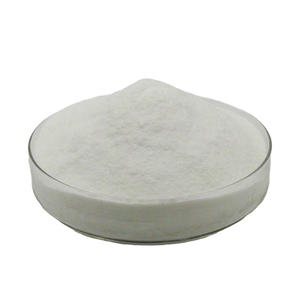
The product you are looking at is nano hexagonal boron nitride (h-BN)—the soft, layered, electrically insulating form of boron nitride. It is the more widely available and versatile form, used in applications where thermal conductivity, electrical insulation, and chemical stability are needed.
If your application requires:
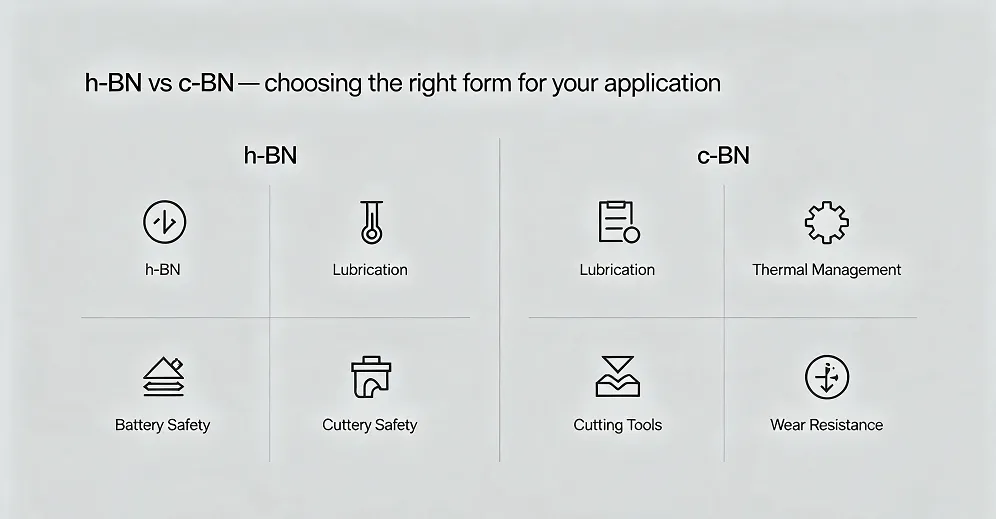
- Thermal management without electrical conductivity → h-BN is the answer.
- High-temperature lubrication → h-BN is the answer.
- Cutting hardened steel → c-BN is the answer.
- Wear-resistant coatings → c-BN is the answer
- Battery safety and performance → h-BN is the answer
They’re not interchangeable. They’re not even close. But they do share one thing: they’re both boron nitride, and they’re both essential to modern industry.
Supplier
RBOSCHCO is a globally recognized chemical material supplier and manufacturer with over 12 years of expertise in providing super high-quality chemicals and nanomaterials. The company has a professional technical department and quality supervision department, a well-equipped laboratory with advanced testing equipment, and a dedicated after-sales customer service center. RBOSCHCO supplies high-quality nano hexagonal boron nitride (h-BN) and other advanced materials for thermal management, electronic insulation, and high-temperature applications. The company serves clients across more than 50 countries and offers comprehensive technical support, from material selection to application guidance. If you are looking for high-quality nano h-BN powder, please feel free to contact us.