Professional and high-quality metal alloys, ceramic products and concrete additives | RBOSCHCO

12Supplier
1. Introduction to High-Temperature Battery Manufacturing Challenges
1.1 The Extreme Environment of Battery Synthesis
The production of advanced battery materials—such as high-nickel ternary cathodes, solid-state electrolytes, and next-generation anodes—requires extreme high-temperature processing. During these sintering and calcination stages, the active materials become highly reactive.
1.2 The Twin Threats: Oxidation and Contamination
At these elevated temperatures, two major threats can ruin a batch of battery material:
- Oxidation: Uncontrolled oxygen ingress can alter the crystal structure of the battery material, leading to capacity loss and degraded electrochemical performance.
- Contamination: When active materials react with the furnace fixtures or crucibles, trace impurities (like metals or carbon) can leach into the battery powder, destroying cycle life and safety.
1.3 How Boron Nitride Film Provides a Solution
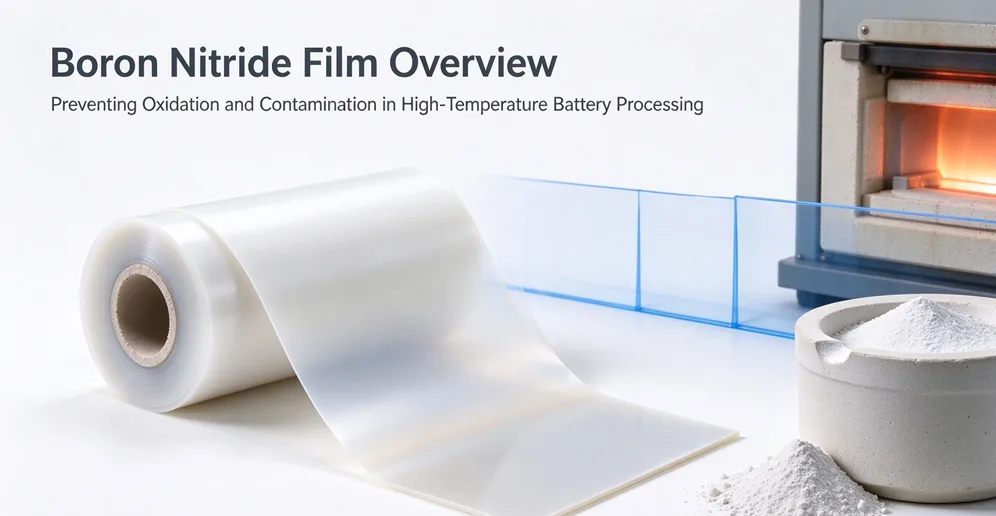
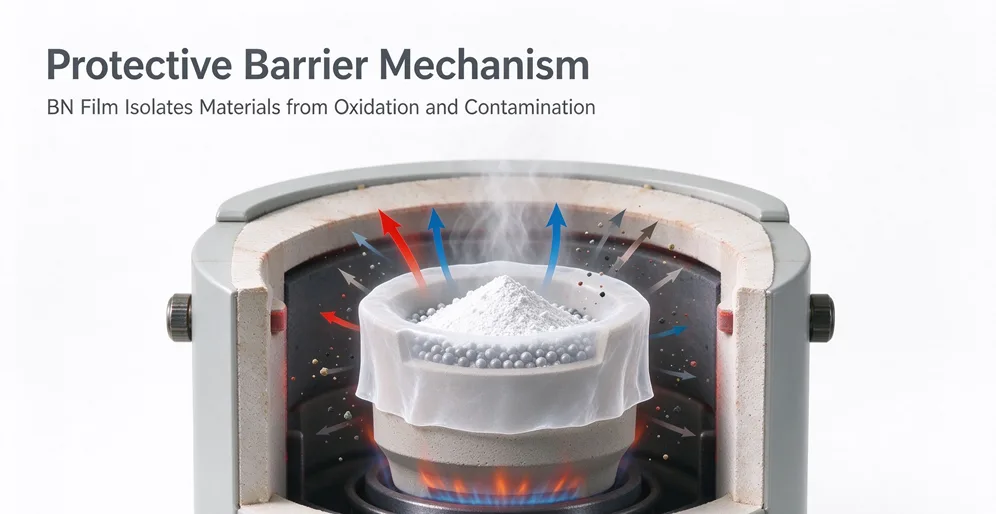
Boron Nitride Film is an advanced ceramic material engineered to provide a stable, chemically inert barrier. Whether used as a protective coating on furnace equipment or as a functional interface layer in battery components, Boron Nitride Film isolates reactive materials from their environment, preventing both oxidation and contamination during critical high-temperature processes.
2. Understanding the Basics of Boron Nitride Film
2.1 What Is Boron Nitride Film?
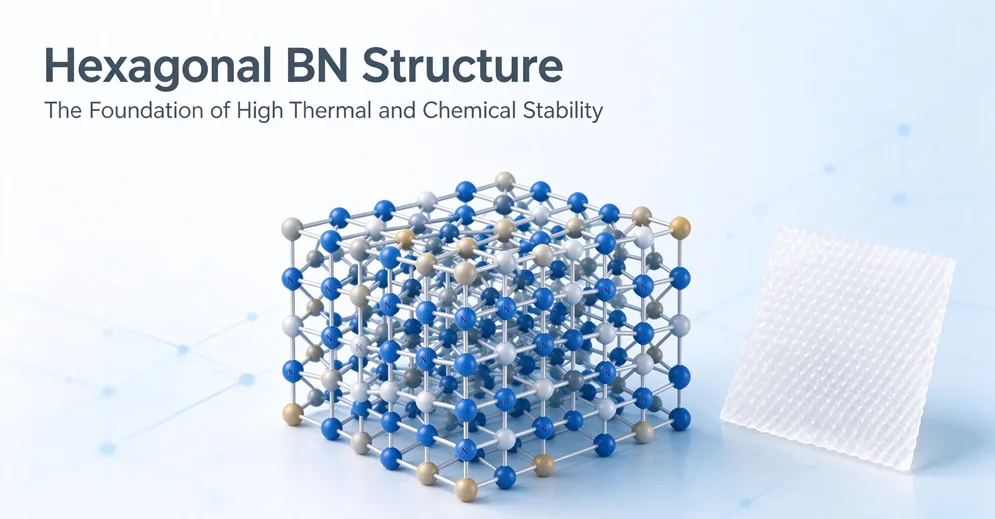
Boron Nitride Film is a thin layer composed of boron and nitrogen atoms. Depending on the crystal structure, it can exist as hexagonal boron nitride (h-BN) or cubic boron nitride (c-BN). In high-temperature battery processing, the h-BN phase is widely used due to its exceptional thermal stability and chemical inertness.
The film can be deposited using various methods, including Chemical Vapor Deposition (CVD), Physical Vapor Deposition (PVD), or applied as a coating suspension.
2.2 Key Properties of Boron Nitride Film
Boron Nitride Film offers a combination of properties that make it ideal for battery material processing:
- Chemical Stability: The film is highly resistant to chemical reactions at high temperatures, preventing acid, base, and molten salt attack.
- High Thermal Conductivity: It efficiently dissipates heat, ensuring uniform temperature distribution during sintering.
- Electrical Insulation: Despite its thermal conductivity, BN film acts as an excellent electrical insulator, preventing unwanted short circuits.
- Non-Wetting: It resists adhesion from molten materials and reactive powders.
- High Temperature Resistance: With a melting point around 3000°C, it remains stable in extreme environments.
3. Why Oxidation and Contamination Are Critical Issues
3.1 The Impact of Oxidation
Oxygen reacts readily with active battery materials at high temperatures. This oxidation alters the stoichiometry, creates inactive phases, and drastically reduces the specific capacity and energy density of the final battery.
3.2 The Catastrophic Effect of Impurities
Battery manufacturers demand ultra-high purity. If a crucible or furnace fixture sheds even trace amounts of metal into the cathode powder, those impurities catalyze electrolyte decomposition, cause gas generation, and lead to rapid capacity fade. Boron Nitride Film acts as an inert barrier, preventing direct contact between the reactive battery material and the substrate, eliminating the risk of contamination.
4. How Boron Nitride Film Solves These Problems
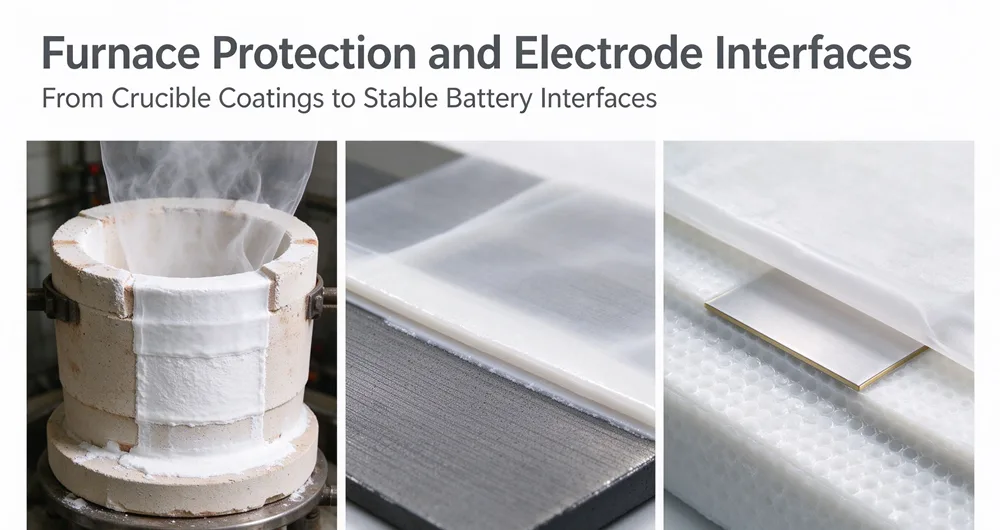
4.1 Enhancing Battery Electrode Interfaces
Beyond protecting furnace equipment, Boron Nitride Film can be directly applied to battery electrodes. Research shows that BN-coated electrodes can boost the performance and safety of lithium-ion batteries by providing a stable interface between the electrolyte and electrode materials, reducing side reactions and suppressing oxidation.
4.2 Creating a Chemically Inert Release Layer
When applied to crucibles or setters used in sintering, Boron Nitride Film creates a highly stable, non-stick barrier. It prevents reactive precursors from fusing to the container, which not only prevents contamination but also ensures high product yield and reduces downtime for cleaning.
4.3 Thermal Management During Processing
The high thermal conductivity of Boron Nitride Film ensures that heat is distributed evenly across the material being processed. This uniformity is essential for achieving consistent crystal growth and avoiding localized overheating or thermal stress.
4.4 Protecting Equipment from Corrosive Attack
Molten salts and alkaline precursors used in cathode synthesis are highly corrosive. Boron Nitride Film serves as a protective coating that extends the service life of expensive crucibles, graphite fixtures, and furnace components.
5. Key Technical Specifications of Boron Nitride Film
| Property | Specification | Notes |
|---|---|---|
| Thermal Conductivity | Up to ~200 W/m·K (in-plane) | Highly dependent on crystal orientation and purity. |
| Electrical Resistivity | > 10¹³ Ω·cm | Excellent electrical insulation property. |
| Dielectric Constant | ~4-6 (for h-BN) | Reduces parasitic capacitance in electronic devices. |
| CTE | ~2.5 × 10⁻⁶/K (for h-BN) | Close to silicon, beneficial for semiconductor applications. |
| Melting Point | ~3000°C | High thermal stability. |
| Chemical Stability | Stable in many acids and bases | Exceptional resistance to chemical attack. |
| Band Gap | ~5.9 eV (for h-BN) | Wide bandgap material. |
6. Matching Boron Nitride Film to Your Application
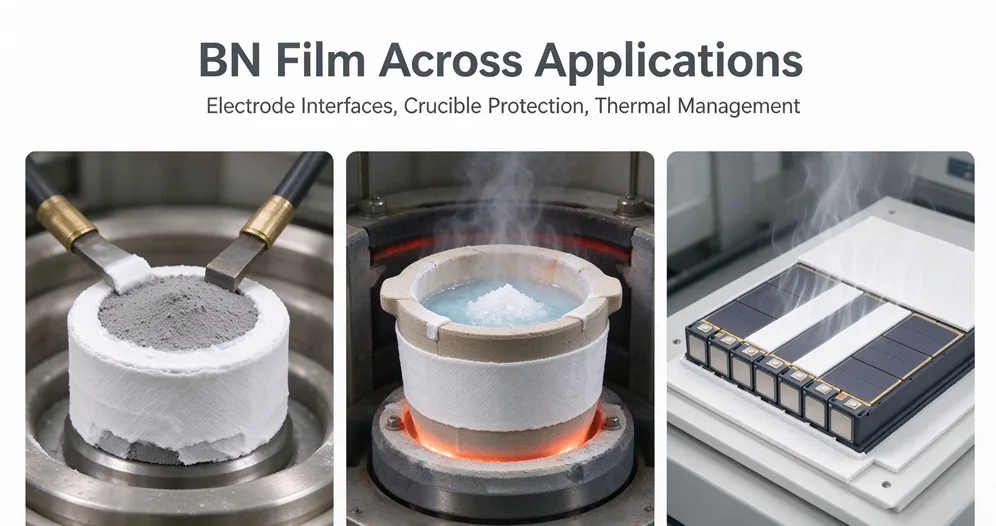
6.1 Battery Electrode Coatings
Boron Nitride Film can be integrated into battery electrodes to provide a stable interface, preventing side reactions with the electrolyte and improving the safety and cycle life of lithium-ion batteries.
6.2 Crucible and Furnace Fixture Protection
Applying Boron Nitride Film to crucibles, setters, and kiln furniture prevents oxidation of the fixtures and ensures that the battery powder does not stick or become contaminated by the container material.
6.3 High-Purity Sintering
For the synthesis of solid-state electrolytes or high-nickel cathodes, the use of Boron Nitride Film creates a local environment that protects the material from trace impurities and oxidation, ensuring the final product meets rigorous purity standards.
6.4 Thermal Interface Materials
In battery packs or power electronics, Boron Nitride Film is used as a thermally conductive yet electrically insulating layer, efficiently dissipating heat while preventing short circuits.
7. Common Misconceptions About Boron Nitride Films
7.1 “BN Films Are Only for Electronics”
While Boron Nitride Film is highly valued in the semiconductor and electronics industry for its low dielectric constant and thermal conductivity, its chemical inertness and high-temperature stability make it equally critical in battery manufacturing and metallurgy.
7.2 “A Thin Film Cannot Provide Adequate Protection”
Unlike polymer films, Boron Nitride Film is a ceramic barrier. Even at nanometer or micrometer thicknesses, it retains exceptional chemical stability and thermal resistance, effectively isolating the substrate from harsh environments.
7.3 “BN Films Are Difficult to Apply in Industrial Settings”
Boron Nitride Film can be deposited using scalable methods such as CVD, PVD, or applied as a specialized coating, making it adaptable to various industrial processes and substrate shapes.
7.4 “Graphite Fixtures Are Sufficient Without a Coating”
Graphite is commonly used in high-temperature furnaces, but it is prone to oxidation and can introduce carbon contamination. Coating graphite with Boron Nitride Film creates a protective, electrically insulating barrier that extends fixture life and ensures battery material purity.
8. Quick Evaluation Checklist
Before selecting Boron Nitride Film for your battery processing, verify:
- Required thermal conductivity
- Substrate material (metal, graphite, ceramic)
- Operating temperature and atmosphere
- Chemical compatibility with the specific battery precursors
- Electrical insulation requirements
- Required film thickness and deposition method
- Supplier quality and technical support
9. Real-World Application Scenarios
9.1 Protecting Graphite Fixtures in Cathode Sintering
A battery materials manufacturer applied Boron Nitride Film to graphite setters used in the sintering of high-nickel cathodes. The BN barrier prevented the molten precursors from reacting with the graphite, eliminating carbon contamination and improving the cycle life of the final battery.
9.2 Enhancing Electrode Interface Stability
A research team utilized Boron Nitride Film as a coating on lithium-ion battery electrodes. The electrically insulating, chemically stable layer provided a stable interface, suppressing unwanted side reactions between the electrode and the electrolyte, and improving the overall safety and performance of the cell.
10. Frequently Asked Questions (FAQs)
Q1: What is a Boron Nitride Film?
Boron Nitride Film is a thin layer made of boron and nitrogen atoms. It is widely used in high-tech industries due to its unique combination of high thermal conductivity, electrical insulation, and chemical stability.
Q2: How does BN Film prevent oxidation in battery materials?
Boron Nitride Film acts as a dense, chemically inert barrier. By separating the reactive battery material from the surrounding oxygen or substrate, it prevents oxidation and unwanted chemical reactions during high-temperature sintering.
Q3: Can BN Film be used at very high temperatures?
Yes. Hexagonal boron nitride has a melting point around 3000°C. Boron Nitride Film maintains its structural integrity and protective properties even in extreme high-temperature environments.
Q4: Is BN Film electrically conductive?
No. Boron Nitride Film is an excellent electrical insulator. This is crucial for battery applications, as it prevents short circuits and unwanted electrochemical side reactions.
Q5: How is BN Film applied to equipment?
Boron Nitride Film can be deposited using techniques such as Chemical Vapor Deposition (CVD), Physical Vapor Deposition (PVD), or applied as a specialized coating suspension, depending on the substrate and application.
Q6: Does BN Film improve battery performance?
Yes. When used as a protective coating on furnace equipment, it prevents contamination, leading to higher purity battery materials. When used as an electrode coating, it can improve the stability and safety of the battery by providing a stable interface.
11. What Boron Nitride Film Means for Advanced Battery Materials
Boron Nitride Film is a critical enabler for the next generation of high-performance batteries. By providing an ultra-stable, chemically inert, and non-wetting barrier, it solves the twin challenges of oxidation and contamination during high-temperature synthesis.
As the battery industry moves toward higher energy densities and more sensitive chemistries (such as high-nickel and solid-state systems), the demand for advanced protective materials like Boron Nitride Film will only continue to grow.
Supplier
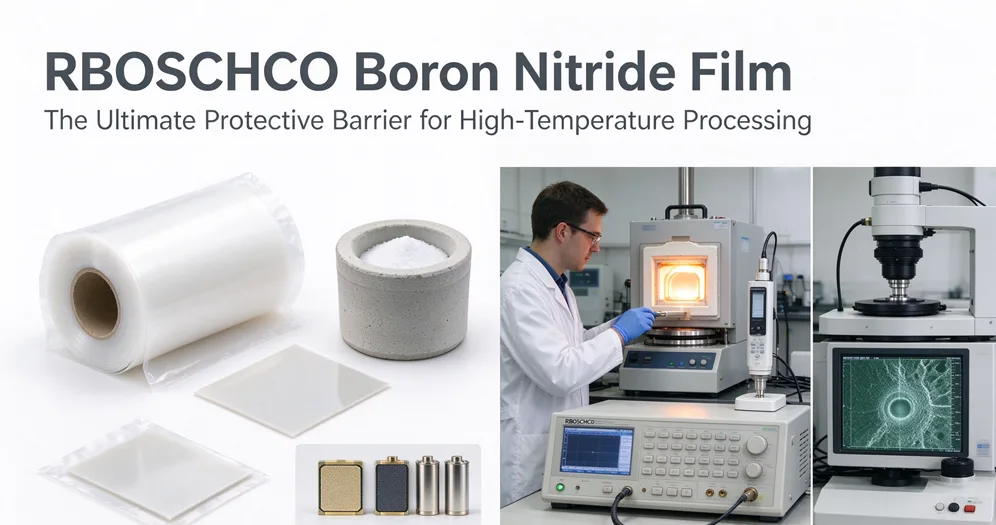
RBOSCHCO is a trusted global chemical material supplier and manufacturer with over 12 years of experience in providing high-quality chemicals and nanomaterials, including boride powder, nitride powder, graphite powder, sulfide powder, and 3D printing powder. The company has a professional technical department and quality supervision department, a well-equipped laboratory with advanced testing equipment, and a dedicated after-sales customer service center. RBOSCHCO supplies Boron Nitride Film worldwide, suitable for protecting crucibles and furnace fixtures, enhancing electrode interfaces, and ensuring high-purity sintering in battery manufacturing. The company offers comprehensive technical support, from product selection to application guidance. If you are looking for high-quality Boron Nitride Film for high-temperature battery processing, please feel free to contact us.
RELATED POSTS

The Application of Tantalum Carbide in the Field of Ceramics

3D printing martensitic steel technology breakthrough can print any shape car parts without defects

Silicon dioxide powder is widely used, promoting technological innovation in multiple fields
Application of cadmium selenide powder in electronic and photoelectric fields
How to strip boron nitride